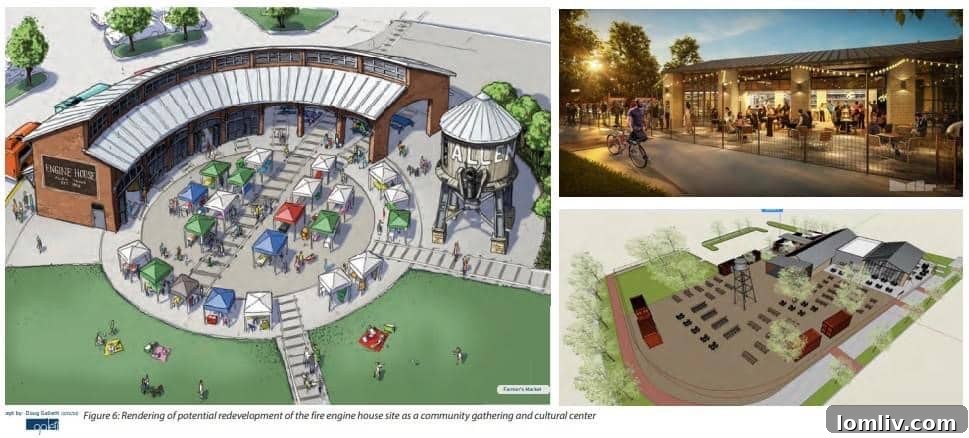
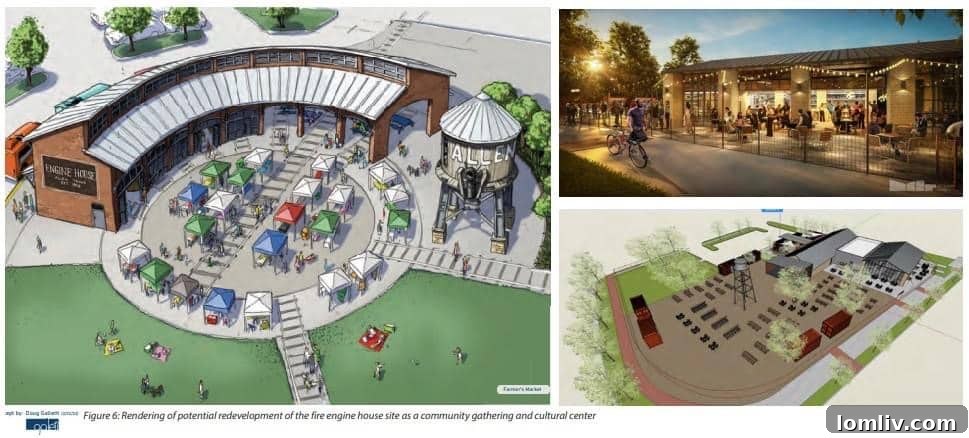
A recent and comprehensive report from a dedicated steering committee, presented to the Allen City Council last month, delivered some thought-provoking news regarding the city’s core. The findings were candid: “There is no heart of Allen right now. No true destination.” This statement, while somber, has become a pivotal call to action, highlighting the pressing need for a vibrant, central hub that genuinely reflects Allen’s identity and serves as a gathering place for its community members and visitors.
However, this honest assessment is not without hope. Following a year of intensive community engagement and collaborative work with renowned urban planning experts at Stantec consultants, a robust, 183-page plan has emerged. This meticulously crafted document outlines a clear path to breathe new life into the Collin County city, transforming its downtown into the vibrant heart it deserves.
“It provides a comprehensive vision, strategic goals, and a detailed implementation plan designed to revitalize Allen’s downtown and solidify its position as the city’s vibrant heart,” stated a social media post from City Hall, directly linking to the full July 12 meeting video. This proactive approach signifies the city’s commitment to fostering a dynamic and engaging urban environment.
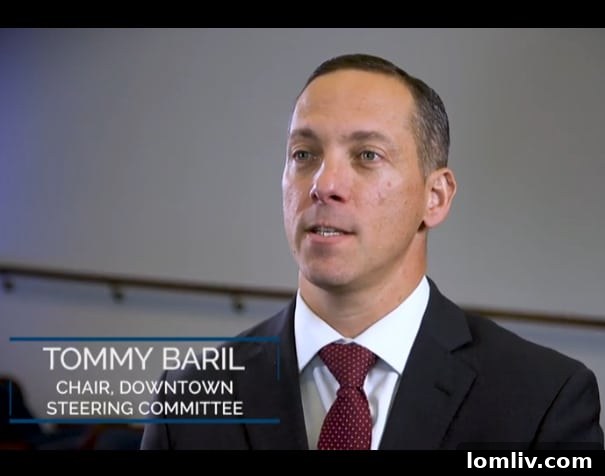
Understanding the scale of such an undertaking, Downtown Steering Committee chairman Tommy Baril wisely cautioned, “This isn’t going to happen overnight. We recognize that; we acknowledge that.” This sentiment sets a realistic expectation, emphasizing that the Downtown Allen Revitalization Plan is a long-term, strategic endeavor requiring sustained effort and community dedication.
The initial phase of the plan proposes a strategic repurposing of the downtown core area. This crucial zone encompasses Main Street, which is envisioned as a central artery, a new community plaza designed to foster social interaction, and the city’s historic old post office, which could be reimagined for modern civic or commercial use. Steering committee members anticipate that this foundational investment will inspire property owners in the adjacent east and west downtown areas to follow suit, initiating a wave of new development and vital redevelopment projects that align with the overarching vision.
“I believe there are several impactful ‘wins’ within this plan that will significantly contribute to both economic revitalization and broader community development,” Baril noted, expressing optimism for the future of Allen, Texas. He added, “We anticipate that housing, particularly within the mixed-use areas, will emerge relatively quickly in both the west and east downtown sectors. This rapid integration of residential spaces is key to establishing a lively, round-the-clock downtown environment.”
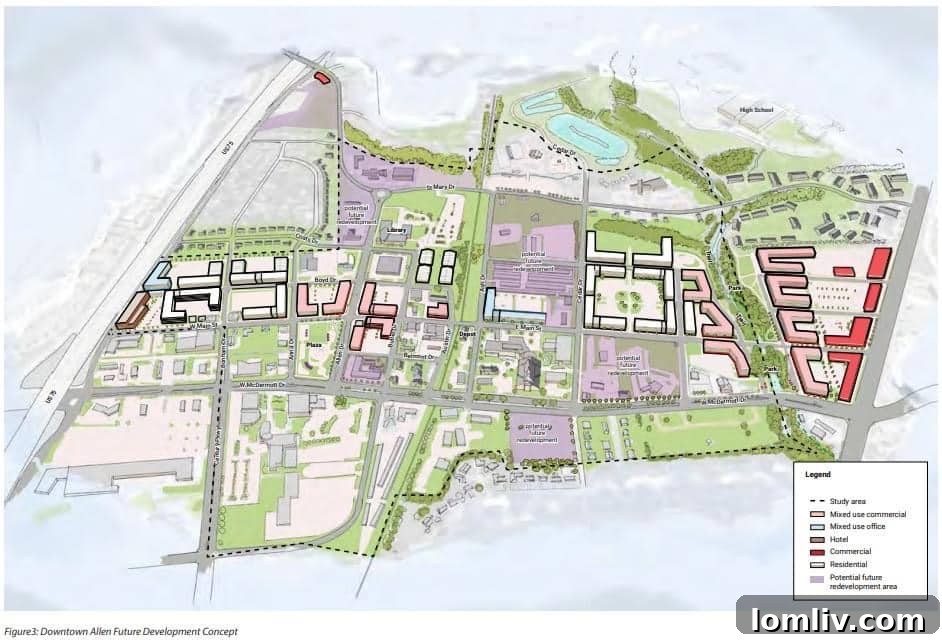
The comprehensive implementation plan delves into various strategic actions, including essential regulatory adjustments such as significant zoning changes designed to support the new urban fabric. It also emphasizes a crucial downtown rebranding initiative to forge a fresh identity, along with substantial public improvements to infrastructure and aesthetics, and ongoing monitoring mechanisms to ensure the plan’s successful execution and adaptability. This holistic approach ensures that the transformation is not merely cosmetic but structural and sustainable.
While the detailed plan offers a robust framework for the City Council’s consideration and future reference, it is important to note that no specific developments or immediate changes to Downtown Allen’s land use were formally considered or approved during the July 12 meeting. However, Mayor Ken Fulk assured the community that change is indeed on the horizon and will be swift. His declaration signals a strong commitment from city leadership to move forward with the revitalization efforts.
“We are eager to begin and don’t want to delay in taking action,” Mayor Fulk affirmed. He highly commended the steering committee’s exceptional work, stating, “[The steering committee] did a heck of a job pulling all this together. The attention to detail, the thoroughness, the fact that [they] conducted all this at the speed of business… I truly appreciate the extensive citizen engagement we witnessed. [They] established a process that allowed this to be a truly citizen-driven result, providing us with recommendations that we can now carefully consider and act upon decisively.” This emphasis on community involvement underscores the democratic and collaborative spirit behind the Downtown Allen Revitalization.
Strategic Housing Development for a Vibrant Downtown Allen
In addition to meticulously gathering feedback from a diverse and expansive segment of the community—ranging from local business owners to high school students—the steering committee actively engaged with key downtown property owners and prominent developers. This broad consultation ensured a balanced perspective, addressing both community aspirations and practical development considerations for the future of Allen’s downtown.
The innovative housing approach meticulously outlined in the revitalization plan fundamentally underscores a critical concept: a truly vibrant and sustainable downtown requires a thriving residential population to support its businesses, cultural institutions, and public spaces. Residents are the lifeblood that ensures continuous activity and economic vitality, transforming downtown from a nine-to-five district into a bustling, round-the-clock community hub.
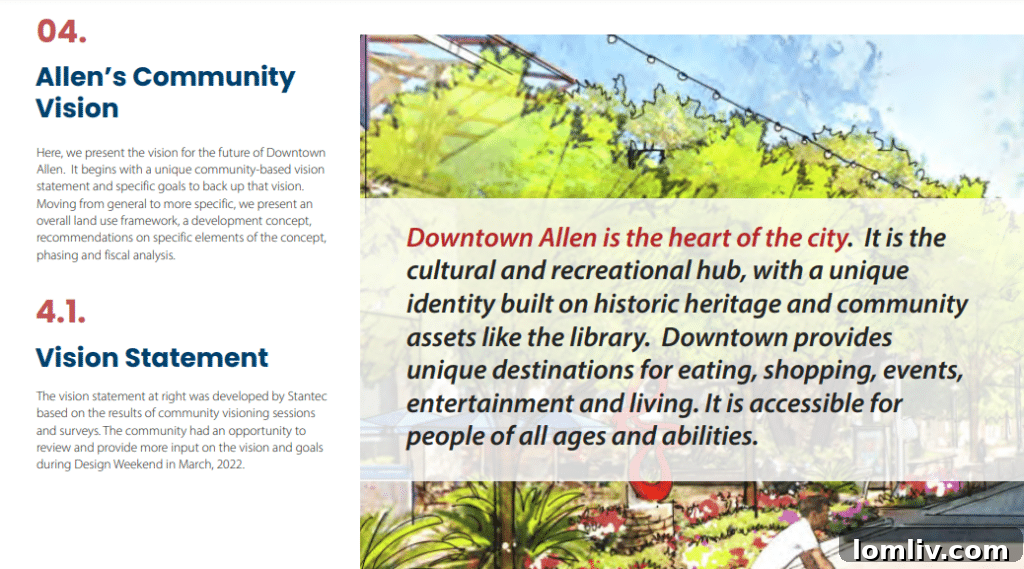
“There has been significant support for more housing downtown, reflecting a clear community desire for urban living options,” Baril acknowledged. However, he also noted, “there was also significant concern about the potential impacts to adjacent single-family neighborhoods.” This highlights the delicate balance the plan aims to strike, integrating new housing while preserving the character and quality of life in established residential areas within Allen.
The plan’s comprehensive approach to housing within Downtown Allen includes several key strategies:
- Managed Density Residential Developments: Encouraging residential developments in the west and east parts of downtown, carefully adhering to the currently allowable density of 32 units per acre. This ensures growth is responsibly managed and integrated.
- Prioritizing Mixed-Use Development: Emphasizing mixed-use developments over purely residential projects. This approach aims to create less overall density and fewer multi-family residential units downtown than currently permitted by zoning, fostering a more balanced and diverse urban environment. This includes a strict requirement for active, commercial ground-floor uses along prominent corridors like Allen Drive and Main Street, as well as adjacent to Cottonwood Creek Park, ensuring continuous street-level vibrancy.
- City-Wide Housing Gap Analysis: Initiating a thorough city-wide housing gap analysis. This critical study will precisely determine the specific types of housing most needed across Allen and identify which types would be most appropriate and beneficial for the downtown area. The analysis will encompass, but not be limited to, assessing the extent of any shortage, demand, or both, for privately-owned residences, including those within multi-family units, to inform strategic development.
- Targeted Housing Incentives: Implementing strategic incentives specifically designed to encourage the development of the identified types of housing that are most needed within the city, particularly in the downtown core.
“As far as housing, we heard a resounding call for diversity,” Baril explained, referencing the extensive public feedback meticulously gathered by the steering committee. This feedback indicated a desire for a range of housing types to cater to different demographics and income levels, contributing to a truly inclusive Allen downtown.
The committee also engaged in thorough discussions regarding density and the appropriate number of stories for new constructions, ensuring compatibility with adjacent residential neighborhoods. The steering committee worked in close collaboration with developers of the Calder property situated east of downtown and with Wolverine Interests, a key landowner adjacent to Allen’s established Whisenant Estates neighborhood. These partnerships are crucial for integrated and harmonious development.
“Every property owner in this central business district possesses the right to develop housing in their area, and many have expressed a clear intention to do so,” Baril stated. “Our objective has been to meticulously identify and address community concerns, especially given the proximity of a single-story neighborhood just to the north. One of our key aspirations is that Wolverine Interests will collaborate with the neighborhood to create a significant greenspace buffer. We would also strongly encourage a strategic setback and a gradual step-up in building height, perhaps starting with two-story townhomes before transitioning to the four stories they are currently permitted to build, ensuring a smooth transition in urban scale.”
Innovative Land Use Framework for Sustainable Growth in Downtown Allen
The sophisticated land use framework developed by the Downtown Allen Steering Committee represents a significant step beyond the city’s existing comprehensive plan and zoning maps. As Baril elucidated, its primary purpose is “to provide detailed recommendations on the strategic location of specific uses, carefully informed by the existing urban context and invaluable community input.” This ensures that development is not only compliant but also harmonious and beneficial.
Among the comprehensive recommendations for Downtown Allen’s future land use are:
- Core Mixed-Use: This designates a unique, four-block area as the veritable heart of downtown Allen. It will feature dynamic mixed-use developments, characterized by active street-level businesses—such as retail, cafes, and restaurants—with inviting living opportunities situated directly above. To facilitate this distinctive vision, a new, specialized zoning sub-district may be established here.
- General Mixed-Use: Strategically slated for the northwest corner of Allen Drive and Main Street, extending along Cottonwood Creek, and encompassing other potential future redevelopment areas. These mixed-use zones are designed to include vibrant, active street-level uses (such as diverse restaurants, inviting cafes, lively bars, and ample outdoor seating), complemented by possible living spaces, modern offices, or innovative creative spaces on upper floors. Sites situated just off Main Street and Allen Drive are also earmarked for potential redevelopment into versatile commercial and/or office spaces, ensuring a dynamic blend of functions.
- Community Spaces: Acknowledging the crucial role of public amenities, this category includes vital civic and institutional uses (such such as a modern library, city hall, and the re-envisioned old post office site). It also dedicates significant areas to parks, recreation, and open spaces, encompassing facilities like a senior recreation center, The Edge Skate Park, Hydrous Wake Park, the future Downtown Allen Community Plaza, and the serene Cottonwood Creek Park. These spaces are central to fostering community well-being and interaction.
- Commercial: Designated areas for pure commercial and non-residential development are strategically located along major thoroughfares such as US-75, Allen Drive between Boyd and Coats, and along Greenville Road. These locations are best suited for businesses requiring high visibility and accessibility, ensuring robust economic activity.
- Bike/Pedestrian Connections: Identified as high-priority areas for enhancing urban mobility and quality of life, these connections will be meticulously designed to provide safe and aesthetically pleasing routes along Allen Drive, Main Street, St. Mary Drive, Cottonwood Creek, and Ash Street. The emphasis is on seamless integration with the existing city trail system, promoting active transportation and connecting various parts of Allen for residents and visitors alike.
“Twelve months ago, the city council made an outstanding decision. You all empowered the community to dare to dream and collectively develop a vision that was truly by the community and for the community,” Baril passionately articulated during the July 12 meeting. He further elaborated on the foundational principles, stating, “Each community member consciously set aside their individual ideas at the door. We were very clear, very explicit, that this process was not about personal agendas; it was not about their singular ideas. Instead, we established three core values to guide our work: unwavering community focus, selfless stewardship of the city’s future, and absolute transparency in all our dealings.” This emphasis on collaborative spirit was vital for the Downtown Allen Revitalization Plan.
Allen City Council members unanimously agreed at the meeting to thoroughly review the extensive report meticulously produced by the steering committee. They expressed their firm intention to take swift and decisive action to identify crucial funding sources and to set the transformative plan in motion without undue delay. This collective resolve signals a new chapter for Allen, Texas.
“We need to make decisions pretty quickly so we can get this show on the road,” Mayor Fulk reiterated, highlighting the urgency and commitment of city leadership to bring the vision of a revitalized Downtown Allen to fruition for the benefit of all its residents and businesses.