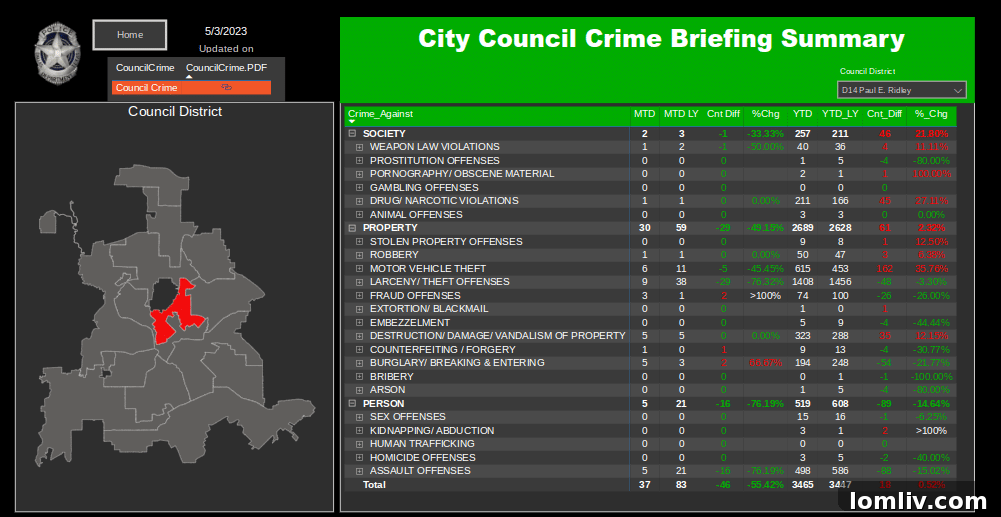
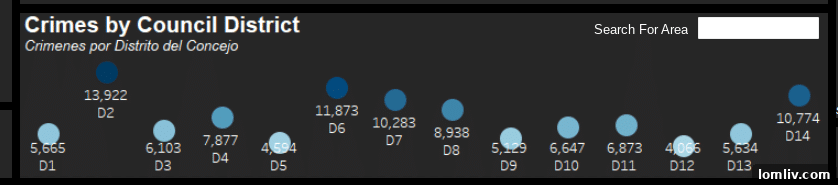
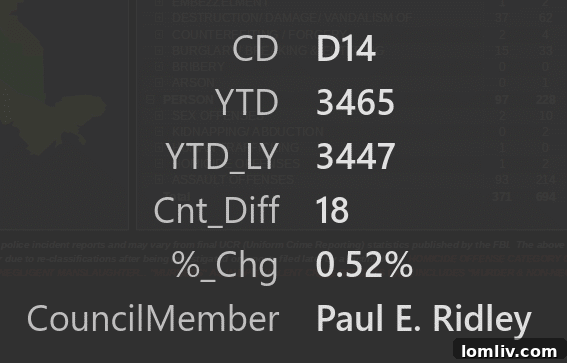
In the vibrant heart of Dallas, District 14 finds itself at a critical juncture, navigating the complex intersection of public safety, housing availability, and urban development. While the district’s overall crime rate has shown remarkable stability, fluctuating less than 1 percent year-to-date from 2022, a simmering conflict over short-term rentals (STRs) has reached a boiling point. Residents in East Dallas and downtown neighborhoods are sharply divided on this contentious issue, which is poised for a decisive vote this week at the Dallas City Council.
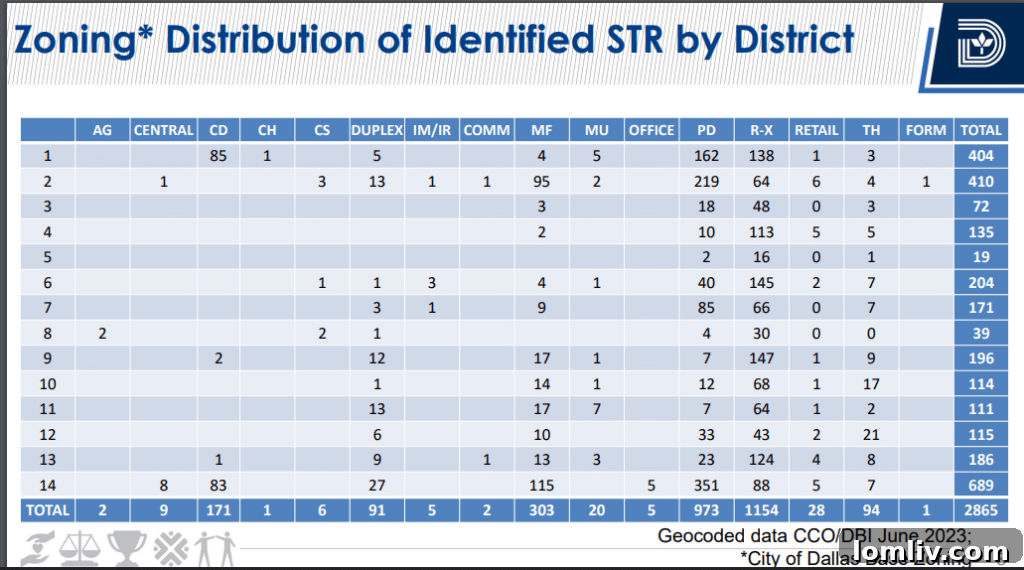
District 14 stands out as the epicenter of Dallas’s short-term rental debate, boasting the highest concentration of registered STRs by a significant margin. Data presented at a recent Dallas City Council meeting revealed that approximately 1,800 STRs are currently registered across the city, with an additional 1,300 applications pending approval. A substantial portion of these, around 689 properties, are situated within District 14, highlighting why this area is ground zero for the discussion on how to regulate these increasingly popular lodging options.
For many residents, the proliferation of STRs has brought unwelcome changes to their communities. Figures like Norma Minnis and Olive Talley from East Dallas have emerged as prominent voices advocating for stricter controls. Over the past year, they have vociferously campaigned against the negative impacts associated with “party houses,” neighborhood nuisances, and the perception of increased crime in areas dominated by rental properties. Their testimonies paint a picture of residential tranquility disrupted by transient guests and commercial activity.
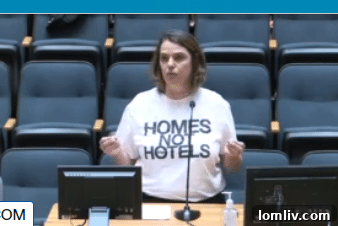
During a passionate City Council meeting in April, Talley underscored the urgency of the situation, stating, “It’s time to fix the problem and end the civil war that’s raging in our neighborhoods over short-term rentals that are destroying our neighborhoods and eroding our housing market.” Her stark ultimatum, “That’s the choice: homes or hotels,” encapsulates the prevailing sentiment among residents who feel their communities are being transformed from residential havens into commercialized zones. These concerns extend beyond mere noise complaints, encompassing issues like parking congestion, trash accumulation, and a general erosion of community cohesion that long-term residents cherish.
However, the narrative surrounding short-term rentals in District 14 is not monolithic. On the other side of the debate are dedicated, taxpaying STR operators, many of whom are also long-term residents of East Dallas. They present compelling arguments against a blanket ban or restrictive zoning changes, emphasizing the significant economic contributions STRs make to the local economy and to individual livelihoods. These operators often highlight their commitment to responsible hosting, adhering to local regulations, and providing a high-quality experience for visitors.
Rob Stokes, another District 14 resident and STR operator, voiced his apprehension during a June 7 council briefing. He pointed to recent state legislation, specifically Texas Senate Bill 929, which he believes could mandate municipalities to compensate STR operators for lost income if a city fails to grandfather them into new ordinances. This legislative wrinkle adds another layer of complexity to the debate, placing a potential financial burden on the city should a restrictive policy be enacted without careful consideration. Stokes passionately articulated his personal stake, asserting, “I’m in a district with the highest number of STRs. We stand to lose the most. We are not being heard or represented even though we are good hosts. I’m here fighting for my livelihood.” His plea underscores the economic realities for many who rely on STR income to support their families or supplement their primary earnings, turning the debate from a simple nuisance issue into a matter of economic justice for some. This segment of the community seeks reasonable regulation that allows responsible operators to continue their businesses while addressing legitimate community concerns.
Understanding Crime in Dallas’s District 14
Delving into the public safety aspect, District 14 generally boasts an enviable position within the City of Dallas, with its murder rate and overall crime rate ranking among the lowest city-wide. This stability, however, doesn’t negate specific concerns that arise in community discussions. The most frequently reported crimes in D14 include theft, vandalism, and assault. Notably, only one of these categories—vandalism and destruction of property—registered an increase over the past year. While these statistics provide a macro view, the perception of safety, particularly in residential areas impacted by STRs, often diverges from official numbers.
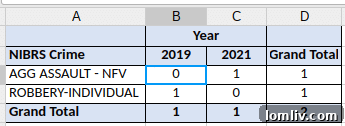
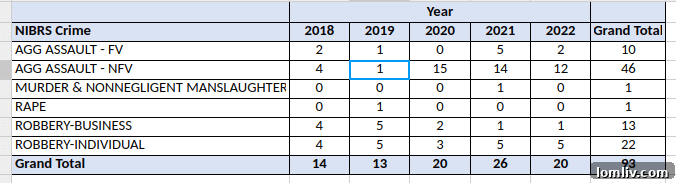
To provide further context, a local reporter from daltxrealestate.com initiated an open records request to gather data on violent crimes in various Dallas shopping centers since 2018. The findings offered intriguing insights. At the Lakewood Shopping Center on Gaston Avenue, for instance, records showed only two violent incidents over a five-year period: a robbery in 2019 and an aggravated assault in 2021. This starkly contrasts with the Bishop Arts District, a much larger and more densely populated commercial area, which reported nearly 100 violent crimes during the same timeframe. While acknowledging that comparing a small community shopping center to a major entertainment district isn’t an exact “apples-to-apples” comparison, the data underscores a key point: in District 14, community dialogue often features more complaints about the perceived safety and nuisance issues related to short-term rentals than about traditional shopping center crime.
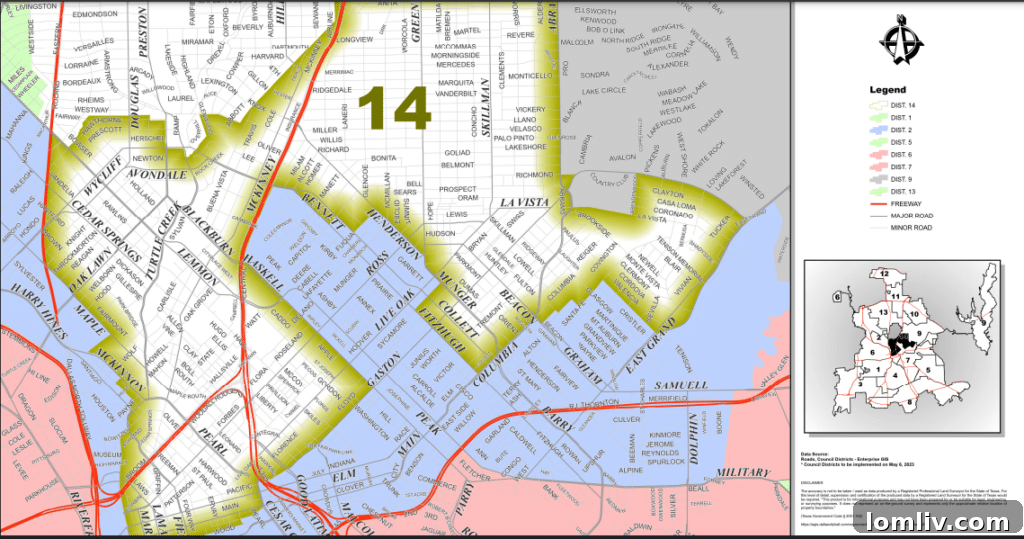
It’s also worth noting the demographic makeup of District 14, which is among the least diverse in Dallas, with 67 percent of its residents identifying as white. This demographic reality, alongside new redistricting maps approved last year and effective since May 6, could subtly influence how community concerns are voiced and perceived. These demographic and geographic shifts are part of the broader context in which the STR debate unfolds.
Further complicating the data analysis is the state of the Dallas Police Department’s crime dashboard. Due to a recent ransomware attack on city servers, the dashboard has not been updated for over a month, meaning the available statistics only track reported crimes up to a certain point. Police Chief Eddie Garcia has also candidly acknowledged that staffing shortages within the department have led to increased response times, especially for calls deemed lower priority. This operational challenge adds to the difficulty of accurately assessing and responding to complaints, particularly those related to nuisance issues at STRs which may not always escalate to high-priority crime calls.
Despite the challenges in direct data correlation, residents from various districts across Dallas shared harrowing accounts during a June 7 council meeting. They described witnessing shootings, prostitution, and uncontrolled parties at STRs operating within their residential neighborhoods, painting a vivid picture of the disruptive impact these properties can have on the fabric of a community. These anecdotes, while not always reflected in official crime statistics, contribute significantly to the widespread call for tighter regulations.
Crime, Housing, and Short-Term Rentals: The Policy Debate
The policy debate surrounding short-term rentals in District 14 is spearheaded by Councilman Paul Ridley, a seasoned architect, urban planner, and attorney. Ridley, who was convincingly re-elected last month with 62.52 percent of the vote, has been a staunch advocate for what he terms the “Keep It Simple Solution” (KISS) in addressing the STR dilemma. This solution, recommended by the City Plan Commission, proposes defining STRs as a “lodging use” and consequently zoning them out of single-family residential neighborhoods. The underlying philosophy of KISS is to restore the residential character of communities and protect the traditional housing market from commercial intrusion.
During a recent council briefing on STRs, Councilman Ridley, alongside several of his colleagues, rigorously questioned Julia Ryan, the Planning and Urban Design Director. They challenged her opinion that a strict zoning solution might not be the most effective approach to mitigate problem properties. Ryan, in turn, suggested a potentially more plausible solution: simplifying the development and zoning process by integrating stronger, clearer regulations directly into the existing STR registration ordinance. Her rationale hints at a desire for administrative efficiency and the belief that a well-enforced regulatory framework could address nuisances without outright bans.
However, Ridley and several other council members expressed that a staff recommendation advocating for such a nuanced approach wasn’t strictly necessary, implying their preference for a more decisive legislative action. Ridley was particularly critical of Ryan’s informal recommendation. He articulated his concerns, stating, “We’ve heard Ms. Ryan talk about her informal recommendation today, which is to define STRs as lodging use but inexplicably allow them in residential zoning districts where our current lodging uses are not permitted.”

He further elaborated on his opposition, highlighting that Ryan’s recommendation seemed primarily based on “administrative convenience,” rather than addressing what he considers a more fundamental issue. “What it’s really missing is a consideration of a penultimate issue that we have been skirting all day in this discussion,” Ridley continued, identifying this crucial issue as “housing.” He passionately argued that the estimated 5,000 housing units currently operating as STRs are effectively removed from the long-term rental market for Dallas residents. Instead, these units are “being devoted to visitors, to tourists.” This diversion, Ridley contends, exacerbates Dallas’s housing affordability crisis. He firmly believes that the KISS ordinance, by returning these units to the long-term housing supply, would consequently “have the effect of reducing rental rates with the influx of new supply of housing, reducing costs of single-family home purchases, and will allow us to address our significant shortfall of affordable housing in this city.”
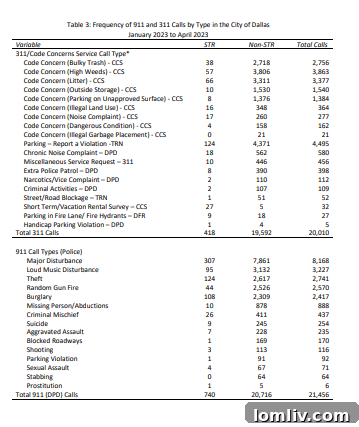
Beyond the housing argument, Councilman Ridley also voiced strong criticism regarding the crime statistics presented at the June 7 council briefing. He suggested that the data was an attempt to downplay the true crime impact attributed to STRs when compared to non-STR properties. For those seeking a deeper dive into the quantitative aspects of this debate, a comprehensive white paper titled “An Analysis of the Impact of STR on Public Safety and Nuisance Calls, June 5, 2023,” compiled by Dallas Chief Data Officer Brita Andercheck, offers valuable insights and detailed numerical analysis.
Can Banning Neighborhood STRs Truly Reduce Crime?
The central question of whether high crime rates are directly attributable to residential STRs, and if so, whether problem properties can be effectively regulated or removed without unfairly penalizing responsible operators, remains a point of considerable contention. Opinions diverge sharply on the efficacy of different policy approaches.
A spokesperson from the Dallas Police Department (DPD) offered a pragmatic view during the June 7 council meeting, clarifying the department’s operational stance. “The Dallas Police Department doesn’t respond to the location because of the type of location,” the spokesperson explained. “We get a 911 call, we go. Our main mission is the preservation of life, then property… I don’t know if STRs more than any other place are creating more crime. There’s just no way for us to answer that question.” This statement highlights the inherent difficulty in directly correlating crime incidents with STR status, as DPD’s primary mandate is to respond to calls for service regardless of property type, focusing on the incident itself rather than the nature of the occupancy.
Despite the statistical ambiguity and the complexities of legislative action, there appears to be a broad consensus among all stakeholders involved in the debate: a unified desire to eliminate “party houses” and prevent instances of violence in residential neighborhoods. Whether the ultimate solution lies in stringent regulations, comprehensive zoning changes, or an innovative alternative approach, the shared goal is to restore peace and safety to Dallas communities.
As the city council gears up for a momentous decision, City Manager T.C. Broadnax has already played a pivotal role. He recently issued a comprehensive memo outlining the city staff’s “collective recommendation” on STRs to the council members, providing a consolidated expert view to inform the upcoming vote. The highly anticipated vote on this critical matter is officially scheduled for June 14. The outcome will undoubtedly reshape the landscape of short-term rentals, housing, and neighborhood quality of life across Dallas, with District 14 at the forefront of this defining decision.