
In a time of unprecedented global health challenges, local communities across the United States grappled with the difficult task of balancing public safety with economic stability. Collin County, Texas, found itself at the forefront of this dilemma in March 2020, as officials introduced a distinctive, modified approach to COVID-19 containment. On March 24, residents were urged to “stay home,” yet businesses were simultaneously encouraged to “stay open,” leading to a complex and often debated mandate. This unique strategy, termed “Stay Home, Work Smart,” aimed to mitigate the spread of the novel coronavirus while striving to protect the financial well-being of the thriving North Texas economy. However, this dual message left many citizens and business owners with more questions than clear-cut answers, sparking widespread discussion across the county.
Collin County Judge Chris Hill presented the “Stay Home, Work Smart” measures during a press conference, emphasizing the importance of keeping the economy vibrant even amidst a public health crisis. “I’m announcing new ‘stay home, work smart’ measures in which residents should stay home except for travel to essential activities,” Judge Hill stated, elaborating on the core principle: “To protect the financial well-being of our Collin County economy, it is critical that we keep people at work.” He reiterated this sentiment multiple times, asserting that “All businesses, all jobs, and all workers are essential to the financial health of our local economy and therefore essential to the financial health and wellbeing of Collin County citizens.” This broad definition of “essential” diverged significantly from federal guidelines and sparked immediate reactions from the community.
Public Reaction to Collin County’s “Stay Home, Work Smart” Order
The county’s innovative, albeit somewhat paradoxical, directive elicited a mixed bag of responses from residents watching the live-streamed press conference. Many expressed confusion and frustration over what appeared to be conflicting messages. Carrolyn Edmonson Moebius articulated a common sentiment, asking, “I would like to know what are the parameters to consider closing some ‘essential businesses.’ His definition of essential business is all businesses.” This highlighted the lack of specificity that troubled some residents.
Small business owners, in particular, voiced concerns about the practical implications of the order. Cyrus Laali, a Plano small business owner, pointed out the inherent contradiction: “‘Stay home’ to citizens and ‘stay open for business’ for business owners is a direct contradiction for small business owners. How are small business owners supposed to create revenue with no customers?” The challenge of maintaining operations without a customer base became a critical point of contention, questioning the feasibility of the “Work Smart” aspect when the “Stay Home” guidance would naturally reduce foot traffic.
However, not all reactions were critical. Some residents believed that Collin County’s approach struck a necessary balance between health precautions and economic preservation. Caley Rosenberg of Richardson commented, “Stay home if you need. Work from home if possible. [Collin County Judge Chris Hill] is trying to keep the economy alive and also people safe.” This perspective underscored the difficulty of the situation and the desire for a solution that didn’t completely shut down the economy, acknowledging the long-term impacts of such measures.
Decoding “Essential Businesses”: Federal Guidance vs. Local Interpretation
A key aspect of Collin County’s strategy, and one that drew considerable attention, was the definition of “essential businesses.” Judge Hill’s press conference notably did not differentiate between businesses deemed essential by federal standards and those he considered vital to the local economy. This created a distinct contrast with widely adopted federal advisories.
The Department of Homeland Security (DHS) had previously issued advisory guidance on March 19, outlining categories of workers essential to critical infrastructure. As reported by Business Insider, while not a federal directive in itself, the DHS recommendations provided a framework for what sectors were crucial for maintaining societal functions during a crisis. These included:
- Food & Agriculture: Supermarkets, grocery stores, big-box stores selling groceries, farmers’ markets, food banks, and businesses involved in agriculture and food processing. These ensure access to vital sustenance.
- Healthcare & Public Health: Pharmacies, healthcare operations, and veterinary clinics. Critical for medical care and maintaining community health.
- Community Services: Garbage collection, convenience stores, discount stores, post offices, and shipping businesses. These maintain basic civic functions and access to goods.
- Infrastructure & Transportation: Gas stations, auto-repair shops, warehousing, storage, distribution, and transportation services (including airlines, taxis, rideshare programs, and vehicle rentals). Essential for logistics, supply chains, and mobility.
- Financial Services: Banks. Necessary for economic transactions and financial stability.
- Education & Childcare: Daycare centers and educational institutions (for facilitating distance learning). Supports essential workers and continued learning.
- Retail & Support Services: Hardware stores and businesses that provide necessities to shelters and economically disadvantaged people. Crucial for maintenance, repairs, and supporting vulnerable populations.
- Ancillary Services: Businesses that directly enable other essential businesses to operate. This broad category ensures the functionality of the entire essential ecosystem.
While the federal guidance aimed to ensure the continuity of critical services, Judge Hill’s broader assertion that “all businesses…are essential” presented a different paradigm. This interpretation aimed to prevent a complete economic shutdown, acknowledging the intricate web of small and large enterprises that form the county’s financial backbone. For instance, the real estate sector actively lobbied Governor Greg Abbott to classify real estate services as essential, a designation that title companies already held. This local flexibility allowed Collin County businesses more latitude than those in areas with stricter interpretations of “essential,” yet it also fueled the confusion about how residents were expected to “stay home” while patronizing “open” businesses.
The Rising Tide: Collin County’s COVID-19 Case Overview
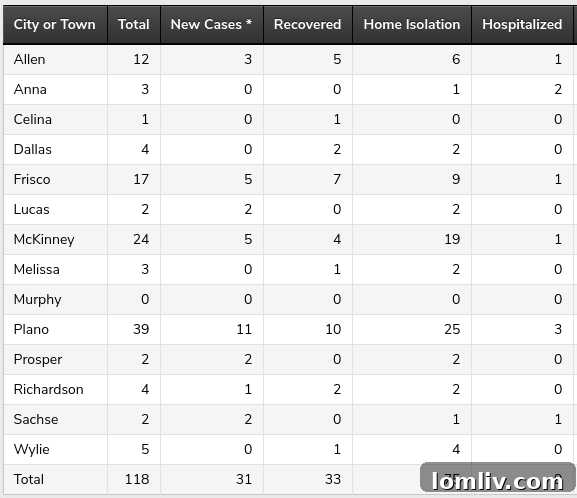
The “Stay Home, Work Smart” order was issued against a backdrop of rapidly increasing COVID-19 cases in Collin County and across North Texas. As of March 28, a total of 118 individuals had confirmed positive for COVID-19 within Collin County. While this number reflected a growing challenge, it’s also important to note that, according to Judge Hill, 547 COVID-19 tests in the county had returned negative results, indicating a significant testing effort.
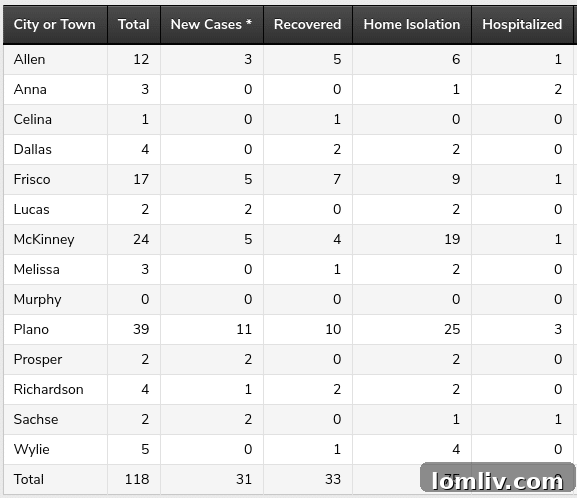
The progression of confirmed cases in Collin County painted a clear picture of the pandemic’s acceleration:
- March 9: The First Case. The county’s initial confirmed case involved a Frisco man in his late 30s who tested “presumptive positive.” His wife and their three-year-old child also subsequently tested positive, highlighting early family cluster transmission.
- March 18: A Tragic Milestone. The county reported its tenth confirmed case, tragically involving a 64-year-old Plano man who died in a local hospital. While he had an underlying medical condition, his infection with COVID-19 underscored the severity of the virus. Due to reporting specifics, officials could not definitively state if his infection was local or travel-related, or if COVID-19 was the direct cause of death, but it marked the county’s first known fatality associated with the virus.
- Rapid Escalation:
- March 19: 18 total cases
- March 20: 27 total cases
- March 21: 31 total cases
- March 22: 38 total cases
- March 23: 45 total cases
- March 24: 53 total cases (the day the “Stay Home, Work Smart” order was issued)
- March 25: 66 total cases
- March 26: 88 total cases
- March 27: 118 total cases
Analysis of individual cases revealed various transmission vectors and demographic impacts within Collin County, as reported by county officials up to March 24 (listed here in reverse chronological order for clarity of progression):
- A 72-year-old Frisco male, hospitalized without underlying conditions.
- A 35-year-old Melissa woman with recent domestic travel.
- A 42-year-old Melissa man with underlying health conditions and recent domestic travel.
- A 41-year-old Frisco man with underlying health conditions.
- The 50th case (March 24): A 77-year-old Richardson woman with recent international travel.
- A 27-year-old McKinney man with close contact to a confirmed case.
- A 61-year-old Allen woman, close contact with another COVID-19 person.
- A 63-year-old Allen woman, close contact with another confirmed case.
- A 54-year-old Allen man.
- A 29-year-old Dallas man, no known underlying conditions or recent travel, suggesting potential community spread.
- A 26-year-old Plano woman, no reported travel or underlying conditions, also indicating community spread.
- A 43-year-old McKinney man, no reported recent travel, no underlying conditions, but required hospitalization.
- A 34-year-old McKinney woman, international travel, no underlying conditions.
- A 39-year-old Allen woman, recent U.S. travel, no underlying conditions.
- The 40th case (March 23): A 27-year-old Anna man, recent U.S. travel, no underlying conditions.
- A 49-year-old Plano man, no reported underlying conditions.
- A 47-year-old McKinney man, recent U.S. travel, no underlying conditions. (Another 47-year-old McKinney man with similar profile)
- A 46-year-old Plano man, no known travel outside the county or underlying conditions.
- A 50-year-old Plano woman, no underlying conditions, close contact with a confirmed case.
- A 7-year-old Allen girl, recent U.S. travel, no underlying conditions.
- A 51-year-old Allen man, no underlying conditions, close contact with a confirmed case.
- A 45-year-old Plano man, no reported travel, underlying health condition.
- A 56-year-old McKinney woman, no reported travel or underlying medical conditions.
- A 45-year-old Wylie woman, no recent travel.
- The 30th case (March 21): A 61-year-old Frisco man, no reported travel.
- A 38-year-old Plano man, traveled outside the U.S.
- A 56-year-old Plano woman, U.S. travel.
- A 20-year-old Frisco woman, underlying health conditions, no reported travel.
- A 49-year-old Richardson woman, international travel, underlying health condition.
- A 73-year-old Dallas man, U.S. travel, no underlying health conditions.
- A 67-year-old Plano woman, recent U.S. travel, no underlying health conditions.
- A 48-year-old Plano man, no reported travel or underlying health conditions.
- A 51-year-old McKinney man, no underlying health conditions or recent travel. (Another 51-year-old McKinney man with similar profile)
- The 20th case (March 20): A 56-year-old Wylie woman, U.S. travel, no underlying health conditions.
- A 67-year-old Plano man, international travel, no underlying health conditions.
- A 57-year-old Richardson man, no underlying health conditions.
- A 58-year-old Melissa resident, underlying medical condition, tested positive while traveling out of state and self-isolated there.
- A 42-year-old Plano woman, underlying health condition.
- A 46-year-old Allen man, underlying health condition, hospitalized.
- A 37-year-old McKinney woman, underlying health condition.
- A 54-year-old Anna man, underlying health conditions.
- A 38-year-old Plano man, no underlying health conditions.
- A 39-year-old McKinney man, no underlying medical conditions.
- The 10th confirmed case (March 18): The aforementioned 64-year-old Plano man who passed away.
- A 32-year-old Plano woman, no underlying health conditions.
- A 32-year-old Frisco man, no underlying health conditions.
- A 56-year-old Plano man, no underlying health conditions.
- A 47-year-old Plano woman, no underlying health conditions.
- A 40-year-old Frisco woman, no underlying medical conditions.
- A 35-year-old McKinney man, no underlying medical condition.
- The 1st case (March 9): The Frisco man in his late 30s and his family.
This detailed breakdown underscored the rapid progression of the virus, its presence across various Collin County cities, and the differing circumstances of each case, from international travel to close contact, and presumptive community transmission. The data served as a critical foundation for local health officials and policy makers in shaping their response.
A Patchwork of Orders: Shelter-in-Place Across North Texas Cities and Counties
The Collin County “Stay Home, Work Smart” order was part of a broader, yet uncoordinated, regional response to the COVID-19 pandemic in North Texas. Texas Governor Greg Abbott had publicly stated on Sunday, March 22, his decision not to issue a statewide shelter-in-place order. Instead, he opted to delegate this critical decision-making authority to individual city and county leaders. The Governor’s recommendations included avoiding gatherings of 10 or more people and had already mandated the closure of all Texas restaurant dining rooms, bars, gyms, and schools a few days prior, on Friday, March 20. This devolved approach led to a diverse landscape of local mandates, creating a complex situation for residents and businesses operating across municipal and county lines.
Collin County’s “Stay Home, Work Smart” was one variation of several modified shelter-in-place orders emerging across Texas. The slogan “Stay Home, Work Safe” was first adopted by Harris County Judge Lina Hidalgo, as reported by the Austin American-Statesman, setting a precedent for localized, nuanced directives.
Denton County’s “Stay at Home” Mandate
Immediately adjacent to Collin County, Denton County officials implemented a more stringent “stay at home” mandate for all residents, encompassing cities like Lewisville, Flower Mound, Highland Village, Denton, and portions of Dallas and Plano that fall within its boundaries. This order, which commenced at 11:59 p.m. on Wednesday, March 25, was initially set to last until March 31. As of March 28, Denton County had reported 148 confirmed cases of the Coronavirus, indicating a significant number of infections requiring a more restrictive approach.
Dallas County’s “Stay Home, Stay Safe” Plan
Further south, Dallas County Judge Clay Jenkins enacted a comprehensive “Stay Home, Stay Safe” shelter-in-place plan on March 22. This order significantly restricted Dallas County residents from leaving their homes for any purpose other than essential tasks, such as obtaining food, medical care, or working in essential sectors. The city of Richardson, which spans both Dallas and Collin Counties, quickly followed suit on March 23 with its own shelter-in-place order, highlighting the challenges of managing public health across administrative boundaries. The city of Garland, located entirely within Dallas County, also adopted a similar shelter-in-place order. By March 28, Dallas County had the highest number of confirmed cases in the region, with 439 infections, underscoring the urgency behind its stricter measures.
Tarrant County’s Shelter-in-Place
To the west, Tarrant County Judge Glen Whitley also issued a shelter-in-place order, directing all residents to stay at home from 11:59 p.m. on March 24 until April 7. This mirrored the more restrictive approach seen in Dallas and Denton counties. Tarrant County reported 128 confirmed cases as of March 28, indicating a similar pattern of community spread as its neighbors.
The varying directives across these contiguous counties created a complex and sometimes confusing environment for residents and businesses. A person might live in Collin County under “Stay Home, Work Smart” but work in Dallas County under a stricter “Stay Home, Stay Safe” mandate, requiring careful navigation of differing rules. These localized decisions highlighted the strain on local governance during an unprecedented crisis, as leaders attempted to tailor responses to their specific epidemiological and economic situations while residents sought clarity and consistency.
For those wishing to understand the full context of Collin County’s original announcement, the entire press conference with Judge Chris Hill can be viewed via the provided link:
Essential Resources and Information for North Texas Residents
During these uncertain times, access to reliable and up-to-date information is paramount. Several governmental and academic institutions provided critical data and guidance on the evolving COVID-19 situation.
Federal and National Government Resources
For a broader perspective and comprehensive data:
- Johns Hopkins University COVID-19 Dashboard: A globally recognized and constantly updating dashboard providing real-time data on confirmed cases, deaths, and recoveries worldwide.
- CDC’s National Information Page: The U.S. Centers for Disease Control and Prevention offers official updates on cases within the United States, typically refreshed at noon from Monday through Friday, with data cutoff at 4 p.m. the preceding day.
- CDC’s Travel Restrictions Database: Essential for travelers, this database provides detailed information on travel advisories and restrictions by country.
State and Local Government Updates
For specific information pertaining to Texas and its counties:
- Dallas County Health and Human Services (DCHHS) Updates: Official communications and advisories from Dallas County’s public health authority.
- Dallas County COVID-19 Dashboard: A daily updated dashboard providing testing data and other key metrics for Dallas County.
- Dallas County In-depth Data Analysis: Detailed epidemiological reports from DCHHS, updated twice weekly.
- City of Dallas COVID Updates: Information specific to the city of Dallas, including local ordinances and preparedness measures.
- Collin County Health and Human Services News and Advisories: Official news releases and health guidance from Collin County.
- Collin County Judge Chris Hill’s Official Website: Provides updates and specific details regarding the county’s COVID-19 response and orders.
- City of Frisco Coronavirus Information Page: Offers continuous updates on closures, local preparedness, and health information for Frisco residents.
- Tarrant County COVID Updates: Comprehensive information from Tarrant County Public Health regarding the pandemic.
- Denton County COVID Updates: The official hub for data and information on the coronavirus situation in Denton County.
These resources offer vital information for residents, businesses, and concerned citizens to stay informed and make responsible decisions in response to the ongoing pandemic.