In the dynamic world of real estate, understanding market trends and economic indicators is paramount for anyone involved, from first-time homebuyers to seasoned investors. While economic reports can often be dense and full of jargon, the Real Estate Center at Texas A&M University consistently distinguishes itself by providing clear, concise, and incredibly insightful analyses. This commitment to clarity ensures that crucial information is accessible to a broad audience, not just economists. The work of their expert team, including Luis Torres, Jim Gaines, and Mark Dotzour, exemplifies this dedication. Having personally witnessed Torres’s compelling presentations at events like the National Association of Real Estate Editors conference in Houston, and having collaborated with Gaines and Dotzour, it’s evident that their ability to distill complex data into digestible insights is truly exceptional. Their reports serve as an invaluable compass, guiding stakeholders through the intricate landscape of the housing market with understandable narratives and actionable intelligence.
The annual outlook published by the Real Estate Center is a eagerly anticipated resource, offering a comprehensive overview of the upcoming year’s potential trajectories. As we delve into these detailed projections, one critical metric that invariably garners significant attention is inventory – specifically, the concept of “months of inventory.” This indicator is far more than just a number; it serves as a powerful barometer for housing demand and a direct influencer on pricing strategies across the market. Grasping the true meaning behind these inventory figures is essential for homeowners, potential buyers, sellers, and real estate professionals alike, as it dictates the pace, competitiveness, and overall health of the residential property landscape. A deeper examination reveals how fluctuations in inventory levels can either empower buyers with more choices or grant sellers a distinct advantage, fundamentally shaping transaction outcomes and market sentiment.
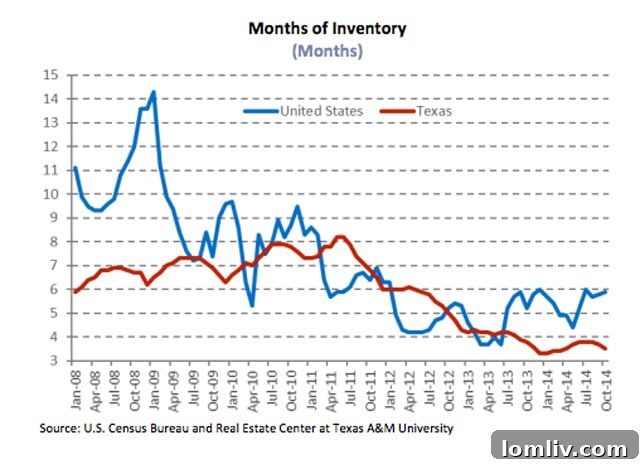
Months of inventory essentially calculates how long it would take for all the current homes on the market to sell, given the current sales pace, if no new homes were added. This metric is a cornerstone of real estate market analysis because it provides immediate insight into the balance between supply and demand. A balanced market is typically characterized by four to six months of inventory, indicating that neither buyers nor sellers hold a dominant position. When inventory levels fall below this threshold, it signals a seller’s market, where demand outstrips supply, leading to increased competition among buyers, quicker sales, and often, rising home prices. Conversely, when inventory rises above six months, it suggests a buyer’s market, where supply exceeds demand, giving buyers more negotiation power and potentially leading to longer listing times and price reductions. Understanding these dynamics is crucial for making informed decisions, whether you’re listing a property or searching for a new home, as market conditions can significantly impact financial outcomes and strategic planning.
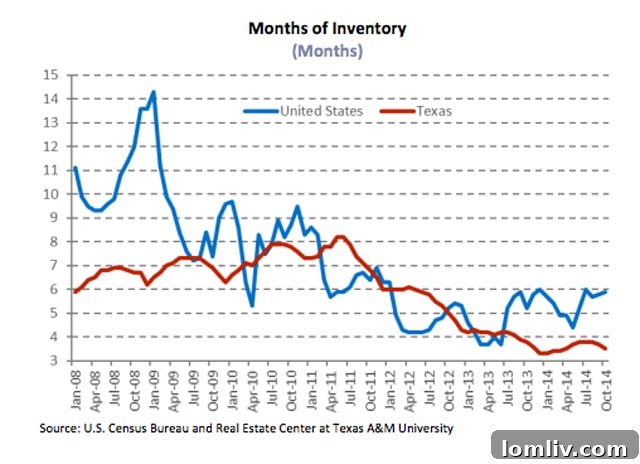
The reports from the Real Estate Center have consistently highlighted a particularly tight housing market in Texas over recent years. Specifically, “Since late 2013, months of inventory has been less than four months in Texas, indicating a very tight housing market that puts upward pressure on home prices,” as the report’s summary starkly outlines. This sustained period of low inventory has profound implications, creating an environment where properties are in high demand and buyers often face intense competition. Such conditions naturally lead to escalating home values, challenging affordability for many and reshaping investment strategies. The persistent imbalance signifies that the supply of available homes has simply not kept pace with the robust and growing demand across the state, a trend that has been particularly pronounced in some of Texas’s most vibrant metropolitan statistical areas (MSAs).
The disparity between supply and demand is not uniform across Texas but is acutely felt in its major economic hubs. The report points out that “The demand for homes has far outpaced the supply, especially in the major MSAs such as Austin and Houston.” These cities, renowned for their booming economies, job growth, and quality of life, have experienced significant population influxes, fueling an insatiable appetite for housing. Austin, with its thriving tech industry and vibrant culture, consistently ranks among the fastest-growing cities in the nation, putting immense strain on its housing supply. Similarly, Houston, a global energy capital and a diverse economic powerhouse, sees continuous demand from relocating professionals and expanding families. In these markets, the challenge for buyers is not merely finding a home but securing one amidst fierce bidding wars and rapidly appreciating prices, underscoring the urgency of the inventory crisis.
Several critical factors contribute to this persistent shortage of housing supply. The report identifies two primary culprits: “The development of lots and limited labor for new home construction have affected the supply of Texas homes for sale.” The availability of buildable land, especially within desirable urban and suburban corridors, is shrinking, and the process of developing new lots faces numerous hurdles. These can include stringent zoning regulations, environmental considerations, infrastructure requirements, and the rising cost of land acquisition, all of which slow down the pipeline for new residential developments. Furthermore, the construction industry has grappled with significant labor shortages for years. A scarcity of skilled tradespeople – from carpenters and plumbers to electricians and roofers – means that even when lots are available, the pace of new home construction is inherently constrained, directly impacting the ability of builders to meet the escalating housing demand. These combined factors create a bottleneck that prevents the market from self-correcting through increased supply, thus perpetuating the tight inventory conditions.
Beyond the immediate impact on home prices, this chronic low inventory environment has broader economic and social ramifications. For prospective homebuyers, especially first-time buyers and those with moderate incomes, the rising cost of housing can lead to significant affordability challenges. Many find themselves priced out of desirable neighborhoods or even entire cities, forcing them to commute longer distances or delay homeownership altogether. This can also stifle economic mobility and exacerbate wealth inequality, as home equity often represents a significant portion of a household’s net worth. For existing homeowners, while rising equity might seem beneficial, it can also make it difficult to “move up” into larger homes without taking on substantially more debt. Businesses, too, feel the effects, as high housing costs can make it harder to attract and retain talent, impacting regional economic competitiveness and growth strategies. Therefore, the issue of inventory extends far beyond individual transactions, touching upon the very fabric of community and economic well-being.
The tight market conditions also influence investor behavior and strategic decisions. When home prices are steadily appreciating, as they have been in Texas, properties become attractive assets for real estate investors. These investors might acquire properties for a variety of reasons: to renovate and flip for a quick profit, to hold as rental income generators, or to capitalize on long-term appreciation. Their participation, while often bringing capital and improvements to properties, can sometimes add to the demand pressure in an already constrained market. Their buying activities further reduce the available inventory for owner-occupants, potentially contributing to the bidding wars and upward price movements. This cycle creates a complex interplay where high prices attract more investment, which in turn can further fuel price increases, creating a dynamic that requires careful monitoring by market analysts and policymakers to ensure market stability and accessibility for all buyers.
Given these pronounced market conditions and the significant upward trajectory of home prices, a pertinent question naturally arises, as highlighted by the Real Estate Center’s report: Will there be an increase in inventory for 2015 as investors unload properties to take advantage of high prices? While 2015 is now in the rearview mirror, the underlying dynamics of this question remain perpetually relevant to market analysis. The decision for investors to sell is multifaceted, often driven by the desire to realize substantial capital gains accumulated during a period of rapid appreciation. As prices peak or show signs of plateauing, investors may strategically choose to cash out, locking in profits and potentially reallocating their capital elsewhere. This strategic divestment, particularly by large-scale or institutional investors, could inject a significant number of previously off-market or rental properties back into the sales inventory, thereby altering the supply-demand balance. Such a shift could provide much-needed relief to a tight market, offering more options for traditional homebuyers and potentially moderating the pace of price growth. Predicting the exact timing and scale of such investor-driven inventory increases is challenging, as it depends on a confluence of factors, including interest rate movements, broader economic outlooks, and individual investment strategies, but it remains a critical factor in understanding potential market shifts.
The actions of investors are not solely based on maximizing immediate profits. Other considerations, such as changes in interest rates, property tax increases, or evolving rental market conditions, can also influence their decision to sell. For instance, if interest rates rise significantly, the cost of holding investment properties with mortgages increases, potentially making some ventures less profitable and prompting sales. Similarly, if property taxes become burdensome, or if rental yields begin to decline due to increased supply in the rental market, selling might become a more attractive option than continued ownership. The collective impact of these individual investor decisions, especially if a critical mass chooses to sell simultaneously, could lead to a noticeable uptick in available homes. This influx of supply would undoubtedly alter the market landscape, possibly transitioning from a staunch seller’s market towards a more balanced environment, or even, in a more extreme scenario, a buyer’s market, depending on the volume of new listings relative to sustained demand. Monitoring investor sentiment and activity is therefore a vital component of forecasting future inventory trends and overall market direction.
Ultimately, the continuous analysis provided by institutions like the Real Estate Center at Texas A&M University is indispensable. Their ability to translate complex economic data into accessible reports empowers individuals and businesses to make more informed real estate decisions. Whether you are contemplating a home purchase, planning to sell a property, or strategizing investments, understanding key indicators like months of inventory and the factors influencing it is fundamental. The ongoing dialogue about supply, demand, and investor influence on market conditions underscores the ever-present need for reliable, expert analysis to navigate the often-unpredictable currents of the real estate market. Staying informed through these invaluable resources ensures that stakeholders are well-equipped to adapt to changing market dynamics and capitalize on opportunities while mitigating risks.
For those eager to delve deeper into the data and the expert analysis that underpins these critical observations, the full report offers a wealth of information. We strongly encourage you to read the whole thing and take a look at the illuminating graphs and detailed statistics. Engaging with the comprehensive insights provided by the Real Estate Center will undoubtedly enhance your understanding of the current market climate and future projections. After reviewing the full report, we invite your thoughts: What are your predictions for the balance of supply and demand in the coming year, particularly in light of investor behavior and ongoing development challenges? Do you foresee a significant shift in inventory levels, or will the Texas housing market continue its trajectory of tight supply and upward price pressure? Your perspectives contribute to a richer understanding of these complex market forces.