Unveiling the Future of Fair Park: A Comprehensive Look at the Humann Plan for Dallas’ Iconic Landmark
Fair Park, a cherished historical and cultural landmark in Dallas, stands at a pivotal moment in its long history. As a vibrant hub for major events like the State Fair of Texas, a repository of significant Art Deco architecture, and a vital community asset, its future has been a subject of intense discussion and numerous proposals. Recently, the focus has sharpened on the ambitious “Humann Plan,” a comprehensive vision for the revitalization and sustainable management of this sprawling complex. This article delves into the details of a crucial community meeting where the plan was presented, exploring its key components, the challenges it addresses, and the ongoing dialogue surrounding its implementation.
Fair Park at a Crossroads: The Community Meeting and the Humann Plan Introduction
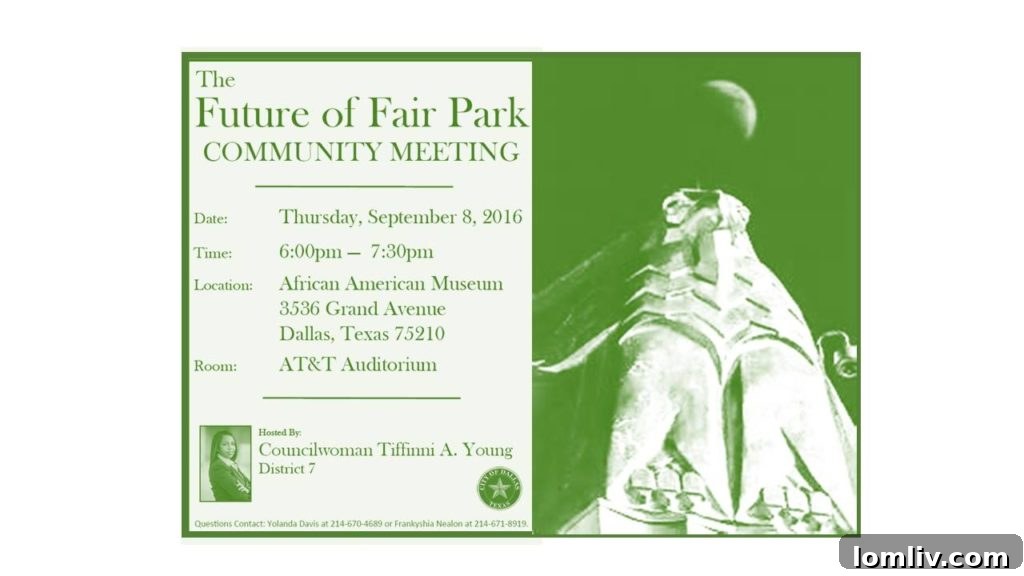
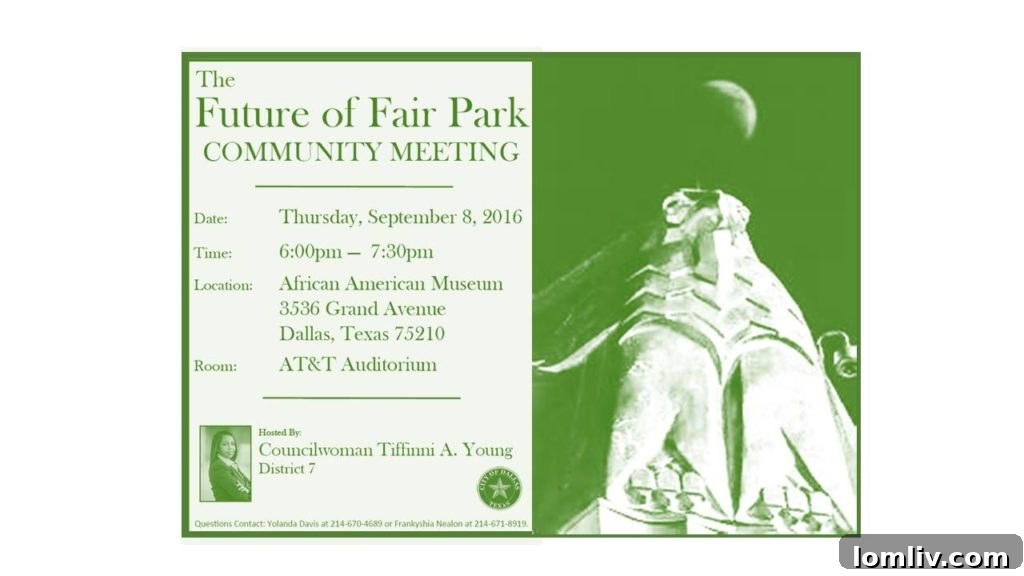
On a recent Thursday evening, the African American Museum within Fair Park buzzed with anticipation as Dallas City Councilwoman Tiffinni Young, representing District 7, convened a critical meeting. The primary objective was to thoroughly inform her constituents about the intricacies of the Humann Plan for Fair Park. This gathering served as a vital platform for stakeholders, community members, and city officials to engage directly with the proposed blueprint for the park’s future.
The presentation began with John Jenkins from the Dallas Park & Recreation Board, who laid out the foundational elements and core principles of the ambitious proposal. Following this introductory segment, Walt Humann, the visionary behind the plan, took the stage. With microphone in hand, Humann delved into the specifics, articulating his detailed strategy for Fair Park’s revitalization. The meeting concluded with Councilwoman Young, who offered closing remarks and outlined the next steps for public engagement.
For those unable to attend, video recordings of the entire meeting are available. These recordings, produced by The Foundation for Community Empowerment, an organization founded by Don Williams, offer a comprehensive review of the discussions. The content has been thoughtfully divided into eight distinct segments, capturing the presentations by Mr. Jenkins, Mr. Humann, and Councilwoman Young.
Community Engagement: Q&A Versus Breakout Sessions
A notable aspect of the meeting’s format stirred considerable discussion among attendees. Instead of opening the floor for an immediate question-and-answer session following the presentations, Councilwoman Young announced a different approach: attendees would be divided into breakout groups. These groups would then engage with specific city officials: one group with Councilwoman Young herself, another with Mr. Humann, and a third with Councilman Adam McGough.
Councilmembers Young, McGough, and Monica Alonzo play crucial roles in this process. They are the three Dallas City Council members who have been specifically tasked with negotiating and refining the proposed contract, which was initially presented at the Dallas City Council briefing on August 29. Their involvement underscores the significance of these discussions in shaping the final agreement.
The decision to utilize breakout groups instead of a direct public Q&A session raised eyebrows among some attendees. One gentleman, reflecting on his extensive experience with seminars, noted the unusual nature of this format. While breakout groups are common during larger conferences, using them after a main presentation without a subsequent collective report-back was perceived as unconventional. For this attendee, it unfortunately served as another instance of what he believed to be the City’s reluctance to openly engage with the alternative Fair Park Foundation plan. The underlying question remained: why forgo a direct, open Q&A with the entire audience?
Navigating Legalities: The RFP Controversy and Official Reassurance
A significant point of contention surrounding the Humann Plan and the broader Fair Park management contract has been the absence of a formal Request for Proposal (RFP) process. State law typically mandates an RFP for large-scale public contracts to ensure transparency, competitive bidding, and fair consideration of all potential solutions. Fellow Dallas City Council member Philip Kingston, among others, has vocalized concerns that bypassing an RFP could pose legal challenges to the proposed agreement.
In a direct conversation with Councilman Adam McGough after the meeting, this question was posed: did he foresee the lack of an RFP process becoming a problem? McGough’s response was unequivocal: “No,” he stated firmly. He assured that city attorneys had thoroughly reviewed the matter and provided their legal opinion, affirming that there was no issue. This reassurance from city legal counsel suggests a belief that the current approach is compliant with existing regulations, potentially through specific exemptions or interpretations of state law.
Earlier in the discussions, there had been whispers among attendees about private funds that were either incoming or imminent, which might satisfy the legal requirements circumventing a traditional RFP. McGough reiterated the city’s legal position, confirming, “The city attorneys say it’s okay.” His background as a general commercial litigation attorney on the negotiation panel adds a layer of professional insight to the legal complexities of the deal, though the underlying concerns about competitive transparency persist among some public watchdogs.
Walt Humann’s Vision: Addressing Infrastructure, Funding, and Competition
A central tenet of Walt Humann’s presentation revolved around a pragmatic approach to Fair Park’s revitalization. He emphasized that the immediate priority must be the comprehensive repair and restoration of the park’s aging buildings. This initial investment, he argued, is crucial for attracting new businesses, events, and ultimately, substantial future funding. Humann clarified a common misconception, stating that his plan extends far beyond mere cosmetic fixes for existing structures. While building refurbishment is foundational, the broader vision encompasses a holistic transformation designed to ensure Fair Park’s long-term vibrancy and economic self-sufficiency.
Humann underscored the difficulty of securing significant donations for an infrastructure perceived as neglected. “Donors won’t want to donate new money with the buildings in their current state,” he asserted, encapsulating the ‘spend money to attract money’ philosophy. He acknowledged past mistakes, particularly an “inappropriate level of funding for the upkeep of the buildings,” which led to the current state of disrepair. To counter this, his plan incorporates “generous adjustments upwards for inflation,” aiming to prevent future funding shortfalls and ensure sustained maintenance.
Moreover, Humann candidly addressed the fierce competition in the venue market. “If we think these people are going to come here and throw money here, no!” he exclaimed, highlighting the harsh reality that Fair Park operates within a competitive ecosystem. Venues in neighboring Arlington, the rapidly developing Frisco, and even Dallas’ own Uptown at the American Airlines Center, all vie for the same events, concerts, and conventions. Fair Park must modernize and offer compelling value to remain relevant and attractive in this landscape.
Master Planning and Innovative Solutions
Humann’s vision also includes the development of a comprehensive master plan, with a commitment to immediate action on tangible projects. The very first initiative under this plan would be the creation of a significant neighborhood park, envisioned to be “50 million times larger than a postage stamp,” or at least substantially larger and more impactful than Dallas’ highly successful Klyde Warren Park. This suggests a desire to create a green space that deeply integrates with and benefits the surrounding communities, serving as a catalyst for local engagement and urban renewal.
Securing funding remains a critical challenge. Humann articulated the need for strong municipal backing: “No one is going to fund Fair Park unless the City backs Fair Park first,” he explained, stressing the importance of the City of Dallas demonstrating its commitment as a prerequisite for attracting private and philanthropic investment. This emphasizes a public-private partnership model where the city’s initial endorsement provides the necessary confidence for external funding.
Addressing the practicalities of a sprawling urban park, Humann also tackled the contentious issue of parking. While the plan aims to significantly increase green space, he clarified that removing 100 percent of the concrete parking is simply not feasible. “We have parking needs,” Walt emphasized, acknowledging the requirements of major events like the State Fair, Gexa Pavilion, and the Music Hall. The proposal includes a 650-slot underground parking garage, but Humann expressed a desire to explore “dual use” solutions for the existing parking lots that must remain. He mused on innovative ideas, such as utilizing roll-up covering materials, similar to those seen in professional football and soccer stadiums, to transform parking areas into temporary green spaces or event zones when not in use for vehicles. However, he cautioned that turning all parking into multi-use park space would require significant investment in drainage and irrigation, making it a complex endeavor.
A Look Back: The Briscoe Carpenter Livestock Center
The conversation around Fair Park’s future often draws parallels with past projects and partnerships. An illuminating article from the Dallas Business Journal in 2014 detailed a significant real estate partnership between the city and The State Fair of Texas, focusing on enhancements to the fair’s livestock events:
To help enhance the livestock events at the fair, Glieber plans to improve the quality of the facilities. Already, the fair is undergoing a renovation of its livestock auction facility.
The arena soon will be torn down so that crews can build the 55,000 square-foot Briscoe Carpenter Livestock Center, a project with a price tag upwards of $14 million. The center is the result of a partnership between the city of Dallas and the fair, both of which will own the facility.
This 2014 article offers a valuable historical perspective, prompting questions about the success and lessons learned from such collaborations. It has been two years since that article was published, making it pertinent to inquire about the performance of this specific partnership between the city and the State Fair. Crucially, attendees wondered: is the Briscoe Carpenter Livestock Center, a significant infrastructure project, adequately addressed or integrated into the comprehensive scope of the current Humann Plan? Understanding the outcome of previous joint ventures can provide critical insights into the feasibility and potential challenges of the proposed new management structure and development initiatives for Fair Park.
Continuing the Dialogue: Upcoming Discussions and Public Engagement
The recent community meeting was just one chapter in the ongoing narrative of Fair Park’s future. The public dialogue continued with an eagerly anticipated panel discussion held on Saturday morning at Paul Quinn College. This event, sponsored by the African American Leadership Institute, brought together a formidable lineup of key figures in Dallas’ political and civic landscape. The panel included Mayor Rawlings, Walt Humann himself, Don Williams, State Senator Royce West, Dallas County Commissioner John Wiley Price (whose presence always guarantees lively debate!), and Michael Phillips, the acclaimed author ofWhite Metropolis.
Reports from this discussion suggested a highly spirited exchange, described by some as being “full of fireworks.” Such a robust debate among influential leaders is indicative of the complexity and passion surrounding Fair Park’s future. The insights and perspectives shared by this diverse group are invaluable for shaping a truly inclusive and sustainable path forward for the park. We anticipate sharing video recordings of this compelling panel discussion very soon, offering further transparency and depth to the public discourse.
Fair Park’s Path Forward: A Call for Unified Vision and Action
The Humann Plan represents a significant and detailed proposal for the revitalization of Fair Park, an undeniable jewel in Dallas’ crown. From addressing long-standing infrastructure neglect and navigating complex legal frameworks to envisioning new community spaces and confronting fierce market competition, the plan touches upon nearly every aspect of the park’s operation and potential. The ongoing discussions, whether in formal city council briefings or animated community meetings, underscore the deep public interest and the critical importance of getting this right.
The dialogue surrounding the plan highlights a delicate balance between preserving Fair Park’s rich legacy and propelling it into a dynamic, sustainable future. It calls for strategic investment, innovative urban planning, and a unified vision from city leaders, community stakeholders, and private partners alike. As Dallas continues to grow and evolve, the revitalization of Fair Park offers a unique opportunity to create a more vibrant, accessible, and economically robust destination for all its citizens and visitors for generations to come. The coming months will be crucial as the city deliberates, negotiates, and ultimately decides on the blueprint that will guide Fair Park’s next chapter.
Watch the Fair Park Community Meeting Videos
Below, you can access the full series of video recordings from the community meeting, capturing the presentations and discussions that unfolded: