The dynamic real estate landscape of North Texas experienced significant shifts in the final quarter of 2018, painting a complex picture of growth tempered by declining sales volumes. While Dallas-Fort Worth celebrated reaching record home prices throughout the year, the region also witnessed a notable dip in home sales during Q4. Adding to the buzz, the Arlington Black Chamber of Commerce prepared to host its impactful Hard Hat Construction Expo, bringing together industry leaders and minority-owned businesses. This comprehensive report delves into these critical developments, offering an insightful look into the North Texas housing market, national trends, and the economic forces shaping the industry.
North Texas Housing Market: A Closer Look at Q4 2018 Trends
The fourth quarter of 2018 presented a nuanced scenario for the North Texas housing market. Despite a continued rise in the median home price, the overall volume of home sales registered a downturn, reflecting a market that was simultaneously appreciating in value but experiencing reduced transaction activity. According to a detailed report compiled by Texas A&M’s Real Estate Center, home sales across North Texas declined by a notable 7.6 percent in the final three months of 2018.
During this period, the total number of residential transactions in the area fell to 22,402. Conversely, the median home price for North Texas saw a healthy increase of 2.4 percent over the year, reaching $260,000. This disparity between rising prices and falling sales suggests a market influenced by various factors, including persistent demand meeting constrained supply, and potentially evolving affordability challenges for some buyers.
Understanding Inventory Levels and Market Dynamics
A critical indicator of market health, months of inventory, saw a significant increase of 32.5 percent, rising to 2.5 months. While this represents a notable jump, it’s essential to understand that a balanced market typically hovers around six months of inventory. The 2.5-month figure still signifies a strong seller’s market, where homes sell relatively quickly due to limited supply. The increase, however, could be an early signal of market adjustments, perhaps with fewer buyers entering the market or more sellers listing their properties.
Residential property listings also saw a considerable rise, increasing by 29.4 percent in 2018 to a total of 20,627 listings. This influx of available properties, coupled with declining sales, could indicate a slight easing of the tight supply conditions that have characterized the North Texas market for some time. However, the market remains highly competitive, particularly in certain price segments.
Analysis of Sales Dips Across Price Points
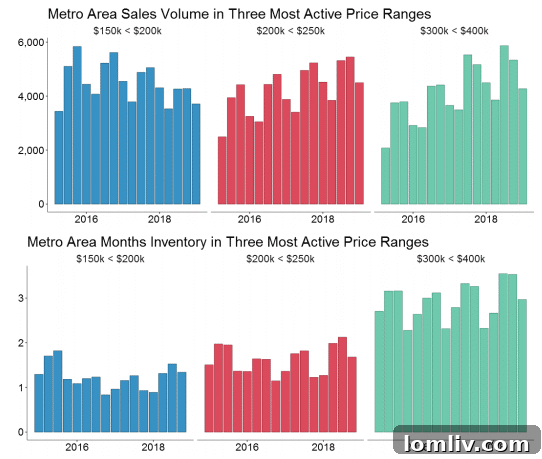
The report highlighted specific price ranges where sales experienced notable declines. Sales of homes priced between $200,000 and $250,000 dipped marginally from 4,520 to 4,497 transactions. A more substantial drop was observed in the $300,000 to $400,000 segment, which fell from 4,494 to 4,274 sales. The most significant decline occurred in the $150,000 to $200,000 price range, where sales decreased from 4,309 to 3,713.
These sales reductions, particularly in the lower and middle price tiers, are largely attributable to a severe lack of inventory rather than a lack of buyer demand. The report explicitly noted that the $200,000 to $250,000 price point had only 1.68 months of inventory, while the $150,000 to $200,000 range was even tighter at 1.34 months. This scarcity means that even eager buyers struggled to find suitable homes within these budgets, directly impacting the number of completed transactions. This persistent challenge of limited affordable housing options underscores the need for more diverse housing solutions in the region.
New Construction and Broader Market Influences
The new construction market also saw a slight adjustment, with the median price of newly constructed single-family homes falling by 0.6 percent to $327,960. This marginal decrease could signal builders adjusting their strategies in response to market conditions, or it could reflect a shift in the types of new homes being brought to market. Despite the dip, the North Texas region continues to be a hub for new residential development, driven by robust population growth and a thriving job market.
The overall health of the North Texas economy, characterized by strong job creation and corporate relocations, continues to underpin the demand for housing. However, rising interest rates throughout 2018, coupled with escalating home prices, began to test the limits of affordability for some prospective homeowners. This delicate balance between sustained demand and increasing costs will be a crucial factor in shaping the market’s trajectory in the coming years.
Arlington Black Chamber of Commerce to Host Premier Hard Hat Expo
In a significant effort to foster economic growth and opportunity within the construction sector, the Arlington Black Chamber of Commerce announced its highly anticipated Hard Hat Construction Expo. Billed as the “largest construction business expo in the Southwest,” this event is strategically designed to connect property owners and general contractors with certified minority-owned construction businesses.
Scheduled for March 5, from 3 p.m. to 8 p.m., the expo took place at Eddie Deen’s Ranch, located at 944 S. Lamar St. in Dallas. The event serves as a vital platform for networking, collaboration, and showcasing the capabilities of minority enterprises in the booming construction industry of the DFW metroplex. It highlights the chamber’s commitment to ensuring equitable participation in the region’s economic prosperity.
Attendees of the Hard Hat Construction Expo benefited from a range of valuable opportunities. The agenda included structured round table meetings, providing an intimate setting for meaningful discussions and potential partnerships. Beyond formal meetings, the expo facilitated extensive networking opportunities, allowing participants to forge new connections and strengthen existing relationships within the industry. The evening culminated with a dinner, offering a relaxed environment for continued engagement and community building. This event underscores the vibrant role of the Arlington Black Chamber of Commerce in supporting and elevating diverse businesses within the North Texas economic landscape. For more information regarding past events or future initiatives, interested parties were encouraged to visit the Chamber’s official platforms.

Record Gains: Home Sellers Experienced 12-Year High in 2018 Profits
The year 2018 proved to be exceptionally lucrative for home sellers across the United States, with an average profit margin reaching a 12-year high. A comprehensive report from ATTOM Data Solutions, the 2018 U.S. Home Sales Report, revealed that sellers saw their homes increase in value by an impressive average of $61,000 from their original purchase price. This significant gain highlights a robust seller’s market, driven by sustained demand and appreciating property values.
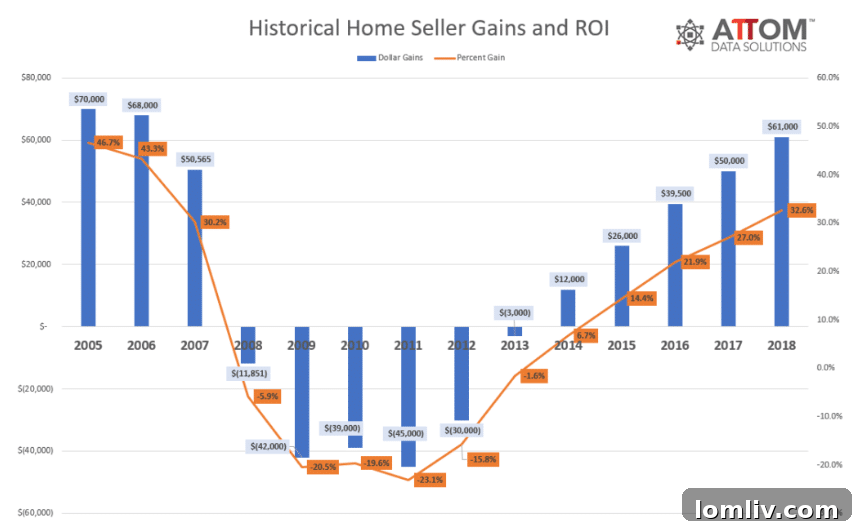
Comparing this to previous years, the trajectory of profit growth is clear: in 2017, the average gain was $50,000, and two years prior, in 2016, it stood at $39,500. The $61,000 average profit translates to an approximate 32.6 percent return on investment (ROI) relative to the original purchase price, marking a substantial increase from the 27 percent ROI recorded in 2017. These figures underscore a period of significant wealth accumulation for homeowners, particularly those who had owned their properties for several years.
Expert Insights on Market Performance and Future Outlook
Todd Teta, Chief Product Officer at ATTOM Data Solutions, provided valuable context on these findings. “While 2018 was the most profitable time to sell a home in more than 12 years, those along the coasts, reaped the most gains. However, those are the same areas where homeowners are staying put longer,” Teta stated. His comments point to regional variations in market performance and the interesting trend of longer homeownership durations in highly profitable coastal markets, potentially contributing to inventory constraints.
Teta also offered a cautious outlook on the immediate future. He acknowledged the continued strength of the economy and historically low home loan rates as ongoing supportive factors for the housing market. However, he also identified “potential clouds on the horizon.” These concerns include the diminishing effects of the previous year’s tax cuts, particularly the limits on homeowner tax deductions, and the slow but steady upward creep of mortgage rates. These evolving economic conditions, according to Teta, “could dampen the potential for home price gains in 2019,” suggesting a possible moderation in the rapid appreciation seen in 2018.
Dallas-Fort Worth and Texas Market Highlights
Locally, the Dallas-Fort Worth metropolitan area stood out as one of 88 out of 127 tracked metros that achieved new record home price peaks in 2018. This performance solidifies DFW’s position as a vibrant and highly sought-after real estate market, benefiting from strong economic fundamentals and continuous population influx. The region’s ability to consistently reach new price milestones reflects sustained demand and confidence in its long-term growth prospects.
Beyond DFW, Texas as a whole emerged as a significant hotspot for FHA (Federal Housing Administration) loans. The state accounted for an impressive six out of the top ten metro areas nationally with the highest share of FHA sales. These included McAllen (26.3 percent), El Paso (25.3 percent), Amarillo (23.0 percent), and Beaumont-Port Arthur (22.7 percent). The prevalence of FHA loans in these areas indicates a market where government-backed mortgages play a crucial role, often assisting first-time homebuyers or those with lower down payments. Nationally, buyers utilizing FHA loans comprised 10.6 percent of all single-family home and condo purchases during 2018, underscoring their importance in facilitating homeownership across diverse economic segments.
Alternative Perspectives on Home Sales
Understanding the intricacies of the housing market often requires looking beyond conventional metrics and considering various data visualizations and expert interpretations. Market analysts frequently employ diverse methods to illustrate trends and provide deeper insights into buyer and seller behavior. These alternative views can offer different angles on the same data, helping to clarify complex market dynamics and inform future forecasts.
well, here’s another way of looking at existing home sales pic.twitter.com/E8HV8jTpJ4
— Leonard Kiefer (@lenkiefer) January 22, 2019
This visualization, shared by Leonard Kiefer, presents an interesting perspective on existing home sales. Such graphical representations are invaluable for distilling large datasets into easily digestible formats, allowing for quick identification of patterns, anomalies, and underlying market narratives that might not be immediately apparent from raw numbers. They help market participants, from real estate professionals to potential homebuyers, gain a more comprehensive understanding of the forces at play in the ever-evolving housing sector.
Conclusion: Navigating a Shifting Real Estate Landscape
The North Texas real estate market, much like the broader national landscape in 2018, presented a paradox of record-setting price gains alongside a contraction in sales volume. While homeowners enjoyed significant returns on their investments, particularly those in appreciating markets like Dallas-Fort Worth, the fourth quarter saw a cooling in transactional activity. This shift was largely influenced by tight inventory in key price segments, evolving affordability dynamics, and the subtle impact of rising interest rates.
Looking ahead, the market appears poised for continued evolution. The strong economic fundamentals in North Texas, including robust job growth and corporate expansions, will likely sustain demand. However, the expert warnings about potential dampening effects from tax deduction limits and incrementally rising mortgage rates suggest that 2019 may bring a more balanced, albeit less rapidly appreciating, market. Events like the Hard Hat Construction Expo underscore the ongoing vitality of the construction sector and the commitment to inclusive economic development. For both buyers and sellers, understanding these multifaceted trends and adapting to the nuances of a shifting real estate landscape will be key to success in the coming years.