
Community Unites: Dallas’ Legacy of Love Monument Vandalized, Then Restored
An act of hateful vandalism struck the heart of Dallas’ LGBT community in Oak Lawn, but the spirit of unity and resilience shone brighter, leading to swift restoration.

A Swift Response to a Hateful Act: Community Rises Against Vandalism
In a heartwarming display of community solidarity, the hateful graffiti that recently defaced prominent LGBT landmarks in Dallas’ vibrant Oak Lawn neighborhood was swiftly and completely removed. Brandon Meeks of OSME Power Washing Services generously donated his time and expertise, meticulously power washing away the offensive markings. His act of kindness, coupled with the immediate outrage and action from community leaders, underscored a powerful message: hate will not be tolerated, and the community will always stand united.
Meeks’ exceptional work and compassionate spirit were widely praised. For any future power washing needs, whether for a residential patio or an entire home, Brandon Meeks comes highly recommended for his professionalism and, as demonstrated, his big heart. He can be reached at [email protected].
Understanding the Disturbing Incident: Vandalism Strikes Oak Lawn
The weekend saw an unsettling wave of vandalism sweep through at least two significant locations within Dallas’ historic Oak Lawn area. Among the targets was the Legacy of Love Monument, an iconic landmark deeply cherished by the city’s LGBT community. Early Sunday morning, these sites were marred by crude red paint, leaving residents and community leaders bewildered and heartbroken. Such acts inevitably provoke the question: what motivations lie behind individuals who commit such destructive and targeted acts?
At the Legacy of Love Monument, strategically located at the bustling intersection of Cedar Springs Road and Oak Lawn Avenue, vandals scrawled the numbers “666”. This particular symbol carries a heavy weight of negative connotation, especially within a religiously-charged context, and its placement on a monument dedicated to love and remembrance was a clear act of provocation and malice.
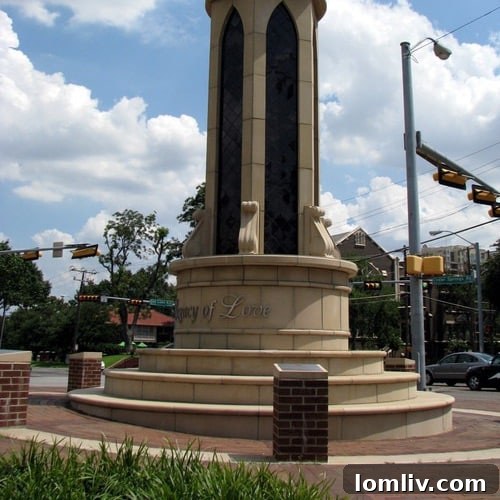
A Community’s Heartbreak: Brenda Marks and the Oak Lawn Committee
The Legacy of Love Monument, an impressive 35-foot structure, serves not only as a beacon of pride for the LGBT community but also as a solemn memorial. It is meticulously maintained by the dedicated Oak Lawn Committee, an organization committed to preserving the beauty and historical significance of the neighborhood. The news of the vandalism brought profound sadness to its members and, particularly, to its president, Brenda Marks.
Brenda Marks expressed her deep sorrow upon learning about the incident from a friend. She highlighted the stark difference between accidental damage and intentional destruction. “Over the past few years, the Oak Lawn Committee has spent nearly $15,000 on repairs from car crashes,” she explained. These were unfortunate but unintentional incidents. However, the deliberate defacement of the monument struck a much deeper, more painful chord.
“This one broke my heart,” Marks confided. “The symbol, it’s the mark of the devil on a monument that’s dedicated to those who have lost their lives to AIDS.” Her words underscore the profound disrespect shown by the vandals to both the living members of the community and the memory of those who perished during the AIDS crisis—a period of immense suffering and loss for the LGBT community.
In response to this deeply personal attack, Marks, along with several courageous volunteers, spent their afternoon tirelessly cleaning the monument. Their swift action was not just about removing paint; it was a powerful statement of resilience, defiance, and unwavering commitment to the values the monument represents.
The Symbolism of “666”: An Act of Religious Bigotry
The choice of “666” as the graffiti’s message is particularly insidious. Widely recognized as a symbol associated with the Antichrist or the devil in certain Christian interpretations, its use here is undeniably a religious, anti-LGBT slur. This specific number, often referred to as the “number of the beast,” carries connotations of evil, damnation, and opposition to divine will. When scrawled upon a monument that commemorates lives lost and celebrates love within the LGBT community, it transforms into an overt expression of hate, bigotry, and a veiled threat.
While some might humorously recall “666” as the title of a progressive rock double album by Aphrodite’s Child, released in 1972 (a nostalgic nod for many, even this author), it is highly improbable that the vandals were making an obscure musical reference. The context of its application, especially on a monument dedicated to AIDS victims and the broader LGBT community, strongly indicates a deliberate attempt to intimidate, dehumanize, and express profound prejudice, weaponizing religious symbolism for hateful purposes.
Widespread Defacement: Cathedral of Hope and Dallas Observer Also Targeted
The Legacy of Love Monument was not the sole target of this disturbing spate of vandalism. The attackers also defaced the Cathedral of Hope, an internationally recognized church with a substantial gay and lesbian membership, located near Cedar Springs and Inwood roads. The same “666” graffiti was discovered brazenly painted on the church’s driveway, a direct assault on a spiritual home for many members of the LGBT community.
Adding to the unsettling pattern, the Dallas Morning News also reported that the building housing the Dallas Observer, situated at Maple and Oak Lawn avenues, was similarly defaced. This broader targeting suggests a calculated effort to spread fear and disrespect across multiple significant sites within the Oak Lawn district, impacting not only community landmarks but also institutions dedicated to journalism and public discourse.
Oak Lawn: A Historical Beacon of Inclusivity and Resilience
To fully grasp the impact of these acts of vandalism, it’s essential to understand the historical and cultural significance of Oak Lawn. For decades, Oak Lawn has served as the heart of Dallas’ LGBT community—a cherished sanctuary, a vibrant cultural hub, and a place where individuals could find acceptance, solidarity, and joy. It is home to numerous LGBT-owned businesses, community centers, and landmarks that celebrate the community’s rich history, struggles, and triumphs.
The Legacy of Love Monument, in particular, stands as a poignant reminder of the community’s journey, commemorating those lost to the AIDS epidemic and honoring the enduring strength of survivors and advocates. Attacks on such symbols are not merely property damage; they are direct assaults on the identity, history, and collective memory of a community that has often fought for its right to exist and thrive in peace. Such acts underscore the ongoing need for vigilance and solidarity in protecting these vital spaces and the people they represent.
Moving Forward: Uniting Against Hate and Upholding Values
The immediate and powerful response from the Oak Lawn community, exemplifying courage and unity, sends an unmistakable message: acts of hatred will not diminish the spirit of inclusivity and love that defines this vibrant neighborhood. The swift cleanup orchestrated by Brenda Marks and volunteers, followed by the generous contribution of Brandon Meeks, demonstrates a profound commitment to restoring not just physical spaces, but also the sense of safety and pride within the community.
These incidents serve as a stark reminder that while progress has been made, prejudice and intolerance continue to exist. It reinforces the critical importance of community vigilance, mutual support, and the continuous effort to educate and advocate for acceptance. By standing together, Dallas’ Oak Lawn community reaffirms its unwavering dedication to creating a welcoming and respectful environment for all, ensuring that symbols of love and remembrance will always triumph over hate.