The urban landscape of Dallas is on the cusp of a transformative decision. While not always the most captivating topics, essential infrastructure projects like street repairs and drainage improvements are universally recognized as the bedrock of a thriving city. Dallas leadership, acutely aware of these fundamental needs, is preparing for a monumental $1 billion bond election scheduled for May 2024. This forthcoming vote represents a critical juncture for the city, aiming to address years of deferred maintenance and lay the groundwork for future growth and resilience. The bond initiative is not merely about patching potholes; it’s a comprehensive strategy to enhance the quality of life, ensure public safety, and foster equitable development across all Dallas communities.
Extensive community outreach has consistently highlighted infrastructure and public safety as paramount concerns for Dallas residents. Insights gleaned from a comprehensive community survey, which engaged approximately 100 residents from each of the city’s 14 council districts, unequivocally demonstrated these priorities. This initial feedback has guided the preliminary discussions and framework for the bond package, emphasizing that the city’s decision-makers are responsive to the voice of their constituents. The upcoming bond election is a direct response to these expressed needs, reflecting a commitment to invest in the tangible improvements that directly impact daily lives.
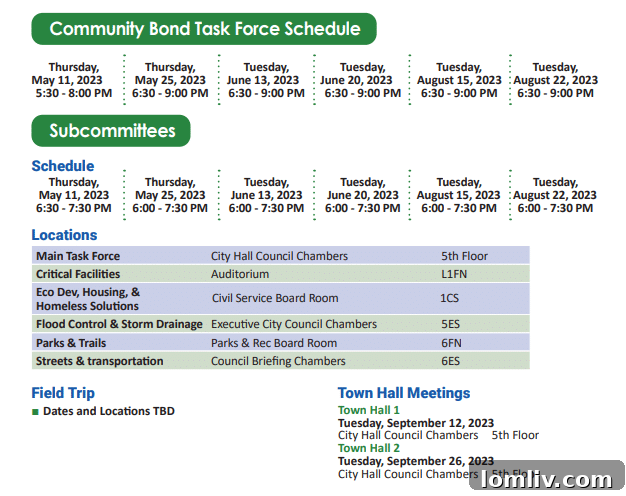
Beyond initial surveys, the city has launched a more targeted survey to meticulously gauge how residents envision the allocation of the proposed $1 billion in bond funds. This detailed feedback mechanism ensures that the final list of projects aligns as closely as possible with citizen expectations. Furthermore, a series of proactive town hall meetings are currently underway, complemented by intensive sessions held by various task forces and committees. These collaborative gatherings serve as vital platforms for dialogue, allowing community members, experts, and city officials to collectively scrutinize potential projects, evaluate their feasibility, and determine which initiatives will ultimately be included in the bond proposal. This multi-layered approach to public engagement underscores the city’s dedication to transparency and inclusive decision-making throughout the bond development process.
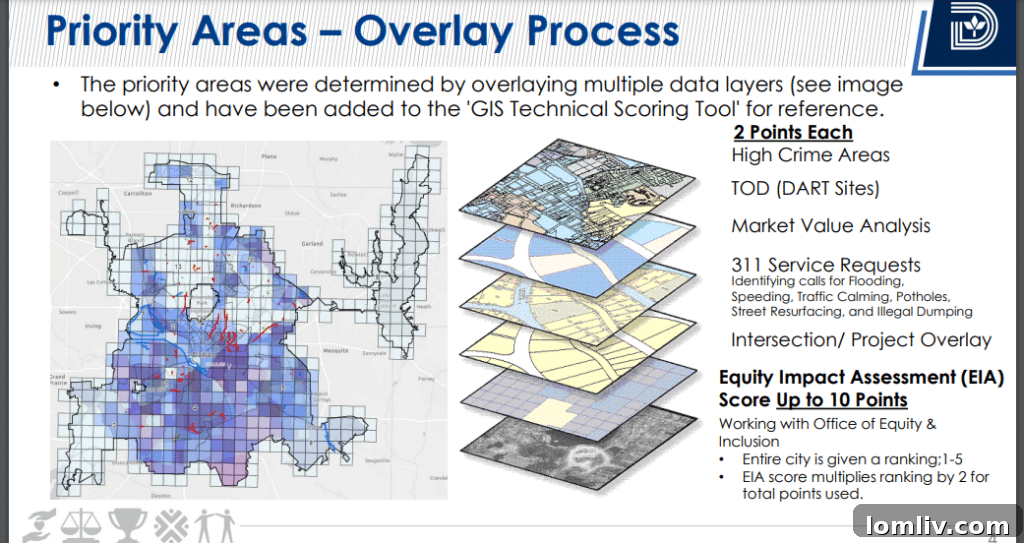
The intricate process of shaping the 2024 bond election was further illuminated during a pivotal briefing to the Dallas City Council on June 21. Interim Director of Bond and Construction Management, Jennifer Nicewander, presented comprehensive details outlining the proposed framework, project categories, and the rigorous selection criteria. Her presentation provided a crucial update on the bond’s progress, emphasizing the strategic planning and careful consideration being applied to each potential investment. City leaders anticipate that the Citizens Bond Task Force will deliver a finalized, recommended list of bond projects by November, setting the stage for another critical council briefing in December. This meticulous timeline ensures thorough review and public discourse before the bond election goes to the voters in May 2024, offering ample opportunity for citizens to understand the proposed investments and their potential impact on Dallas.
Equity, Gentrification, and Fair Fund Allocation in Dallas
One of the most pressing and frequently debated issues confronting the Dallas City Council during the bond allocation process is the intricate balance between equity and equality. As council members delve into project data and advocate for needs within their respective districts, the broader challenge revolves around whether to distribute funds evenly across all districts or to strategically concentrate resources in historically underserved areas. These communities often face a greater deficit in basic infrastructure and public services, where the needs are not just about convenience but often pertain to fundamental human rights, such as adequate drainage or safe housing. This philosophical and practical debate highlights the complex socio-economic dynamics at play within Dallas, compelling city leaders to consider the long-term implications of their funding decisions on community well-being and social justice.

The dire consequences of neglected infrastructure were vividly articulated by District 13 Councilmember Gay Donnell Willis during the June 21 briefing. She underscored the severe challenges faced by several neighborhoods in her district, where residents are forced to evacuate their homes annually due to heavy rainfall in North Texas. “They’re having to move out of their homes once a year,” she stated, highlighting the profound disruption to their quality of life. Willis passionately argued against prioritizing commercial centers, schools, and hospitals at the expense of residential areas. “I don’t want to overlook the neighborhoods in this. While our commercial centers, schools, and hospitals are kind of marquee on this sort of thing, I don’t want to trade residents and their homes in for that.” Her plea emphasized that a truly equitable bond package must safeguard the fundamental stability and safety of Dallas residents in their homes.

Adding another critical layer to the discussion, District 2 Councilman Jesse Moreno expressed deep concern over the impact of gentrification on bond fund eligibility. He highlighted how communities that historically met the criteria for receiving bond funds in previous cycles are now being inadvertently excluded due to recent development. “What I keep going back to is gentrification that we’ve seen in communities that have previously been meeting that criteria for census tracts for the past three bonds but now they’re left out because now you have a million-dollar house next to a home that’s $200,000,” Moreno explained. This paradoxical situation means that rising property values, often driven by new luxury developments, can skew economic indicators and render long-standing low-income areas ineligible for crucial funding. He stressed the need for a more nuanced approach, advocating to “drill down deeper than ZIP codes and census tracts” to truly understand and address the needs of these evolving neighborhoods, ensuring that the bond benefits all residents, not just those in areas with stagnant or decreasing property values.

In response to concerns about eligibility criteria, City Manager T.C. Broadnax clarified the distinctions between federal and municipal funding methodologies. He noted that while the federal government often relies on U.S. Census tracts for fund allocation, the city of Dallas does not strictly adhere to this method when funding local projects. “I understand the undercurrent and the purpose of that, particularly given the recent escalations and how there is some spottiness in neighborhoods when it comes to values around property,” Broadnax acknowledged. However, he emphasized a crucial distinction: “Please understand that I don’t think those decisions, particularly at the census tract level, are about the property values in the area. They’re about the incomes of the individuals in the area. I think we’re mixing apples and oranges.” This clarification aimed to reorient the discussion towards income-based needs rather than property values alone, ensuring that funding mechanisms genuinely address economic disparity rather than being skewed by market fluctuations.
Innovative solutions to these complex allocation challenges are also being explored. District 9 Councilmember Paula Blackmon, for instance, proposed an intriguing incentive-based approach. She suggested prioritizing street repaving projects for homeowners who agree to adopt certain city services, such as opting for “front trash service” instead of relying on traditional service alleys. This idea aims to foster greater community engagement and efficiency in service delivery, potentially allowing the city to stretch its bond dollars further by encouraging residents to participate in solutions that benefit the collective. Such creative proposals underscore the council’s commitment to not only addressing immediate infrastructure needs but also to developing sustainable, community-driven improvements that enhance urban living.
Addressing Dallas’s Housing and Homelessness Crisis with Bond Funds
While technical criteria for infrastructure projects are typically well-defined, the approach to housing and homelessness projects within the 2024 bond package has taken a slightly different path. Unlike other council priorities where specific metrics dictate project selection, detailed technical criteria for housing and homelessness initiatives were not presented in the same manner. Instead, as Jennifer Nicewander, the city’s Bond and Construction Management Director, explained, “For housing and economic development, there’s a pot of money so those projects become available.” She further elaborated on the city’s role: “The City is there to bridge the gap for financing the project to get that to completion.” This flexible, fund-based approach aims to provide critical support for projects that address Dallas’s severe housing affordability challenges and persistent homelessness, recognizing the diverse and often complex nature of these initiatives.
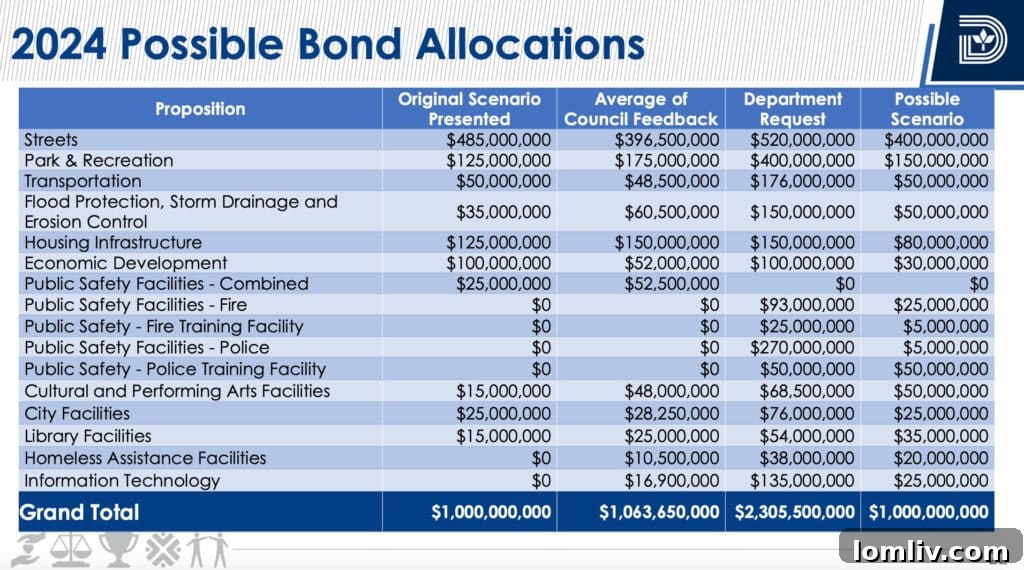
The magnitude of Dallas’s housing crisis necessitates a substantial commitment. The City Council has indicated an expectation of at least $100 million to be allocated for housing and homelessness projects on the May 2024 ballot. However, many housing advocates argue that this figure falls short of the true need. Adam Lamont, a founding member of Dallas Neighbors for Housing, voiced this concern, stating, “The gap between ‘average of council feedback’ and the ‘possible scenario’ in terms of dollars is wider for housing than any other category in the bond. That’s unacceptable. Our advocacy on the bond can create thousands more affordable units.” This sentiment reflects a broader call for more ambitious investment to tackle the city’s severe shortage of affordable housing options and to effectively address the growing issue of homelessness.
Further solidifying the push for increased housing investment, the Dallas Housing Coalition recently launched with a clear objective: to advocate for a robust $200 million allocation for housing within the upcoming bond package. This powerful coalition brings together a diverse group of stakeholders, including builders, developers, trade associations, corporate partners, nonprofits, and engaged residents. Their collective focus is to collaboratively address the multifaceted housing crisis confronting the city, pushing for solutions that can create thousands of desperately needed affordable units and support comprehensive initiatives to combat homelessness. The unified front presented by this coalition underscores the widespread recognition that a significant, dedicated investment is essential to stabilizing communities and ensuring housing security for all Dallasites.
The urgency of the housing situation was further emphasized by Councilmember Willis, who highlighted the demographic reality of her district. “30,000 people in her district are in multifamily units,” she noted, pointing out a critical lack of homeownership opportunities. “There’s no homeownership there,” she said, expressing concern about the potential negative impacts on these residents. “That’s 30,000 people who may suffer because they’re being thrown into a ZIP code with nice, single-family homes. I don’t think any of us want to see that, to Councilmember Moreno’s point.” Her remarks underscore the need for bond funds to support diverse housing types, including pathways to homeownership, to prevent displacement and ensure that economic development benefits all segments of the population, rather than exacerbating existing disparities.
Councilmember Cara Mendelsohn brought attention to another frequently overlooked segment of Dallas residents: those residing in portions of Denton and Collin counties that fall within Dallas City Council District 12. She pointed out that these areas are home to thousands of affordable housing units and individuals who have been underserved and neglected for years. “They don’t vote. They have not had representation for a long time,” Mendelsohn lamented, highlighting a systemic issue of disenfranchisement. “I know I talk about Denton and Collin County a lot, but I need to because sometimes even here at City Hall, people forget that it’s actually part of our city.” Despite District 12 being geographically small, its residents contribute significantly through taxes, directly or indirectly, and are in dire need of essential services. Mendelsohn’s advocacy ensures that the bond discussions consider the comprehensive needs of all Dallas citizens, regardless of their location within the city’s complex jurisdictional boundaries, striving for a bond package that truly reflects the spirit of inclusive urban development.