The real estate landscape is a dynamic and ever-evolving sector, profoundly influenced by economic shifts, demographic trends, and even political currents. This week’s comprehensive real estate roundup delves into several crucial areas, ranging from the burgeoning political influence of renters in upcoming elections to the subtle shifts in major urban rental markets. We also explore ambitious new mixed-use developments poised to reshape suburban communities and uncover intriguing insights into which markets are fostering long-term residency among homeowners. These diverse stories collectively paint a vivid picture of a market in flux, offering valuable perspectives for homeowners, prospective buyers, renters, and developers alike.
Renters Emerge as a Pivotal Force in the Political Landscape
The escalating national housing crisis has propelled affordability and housing policy to the forefront of political discourse, transforming renters into an increasingly significant voting bloc. A groundbreaking study conducted by Apartment List illuminates this shift, revealing a notable surge in political engagement among renters as housing concerns become more prominent in public awareness. This trend suggests that candidates in the upcoming 2020 Democratic primaries, and indeed future elections, would be wise to pay close attention to the unique economic perspectives and voting patterns of this growing demographic.
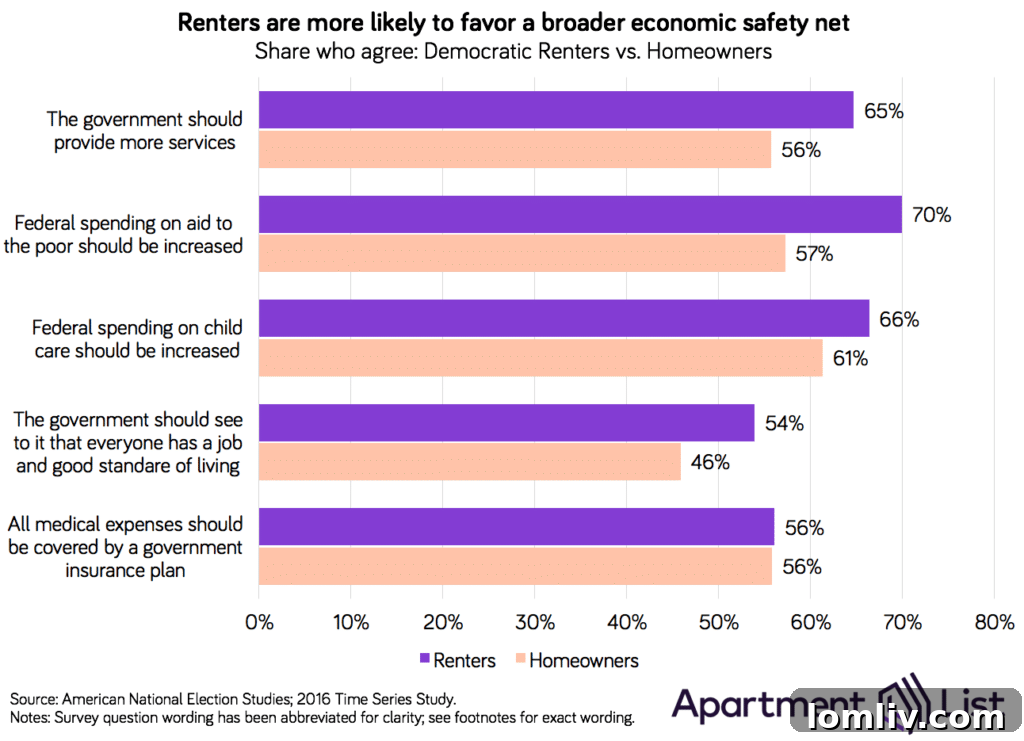
The Apartment List study uncovered several key findings that underscore the increasing influence and distinct political leanings of renters:
- Strong Democratic Affiliation and Progressive Economic Views: Renters consistently vote for Democratic candidates at a rate exceeding 2:1 when compared to other parties. More significantly, even within the Democratic party, renters demonstrate more progressive economic viewpoints than homeowners. For instance, a substantial 70 percent of Democratic renters advocate for increased spending on aid to the poor, a figure notably higher than the 57 percent observed among homeowners. This disparity highlights a greater sense of economic vulnerability or perhaps a deeper understanding of systemic economic challenges among those who do not own property.
- Favorability Towards Progressive Candidates: This progressive inclination translates directly into primary elections. In the 2016 Democratic primaries, 46 percent of renters cast their votes for Bernie Sanders, a significantly higher proportion than the 34 percent of homeowners who supported him. This trend suggests that platforms emphasizing wealth redistribution, social safety nets, and systemic economic reforms resonate strongly with the renter population, who often face greater financial insecurity and feel the brunt of rising housing costs and stagnant wages.
- Higher Independent Identification with Progressive Leanings: A remarkable 39 percent of renters identify as independents, a figure considerably higher than the independent share among homeowners. Crucially, these independent renters tend to hold progressive views, particularly concerning economic equity, which often align them with the Democratic party’s broader platform. This makes them a critical swing demographic for candidates who can effectively address their concerns about housing affordability, income inequality, and economic opportunity. Their independent status means they are less tied to party lines and could be swayed by policies that directly impact their financial well-being and ability to secure stable housing.
These findings collectively indicate that the housing crisis is not merely an economic issue but a potent political one. As rental costs continue to strain household budgets across the nation, candidates who articulate clear, actionable plans to address housing affordability, tenant rights, and broader economic equity are likely to find a receptive and motivated audience among the millions of American renters. Their growing engagement and distinct policy preferences signal a potentially transformative force in future electoral outcomes, making them a demographic that political campaigns can ill afford to overlook.
Source: Apartment List
Navigating the Dynamics of Texas’s Evolving Rental Market
Texas, a state renowned for its rapid population growth and robust economy, presents a complex and varied picture when it comes to its rental market. While individual city trends can fluctuate, a recent analysis from the January Texas Rent Report, meticulously compiled by RENTCafe, reveals an interesting duality: while the average rent in key metropolitan areas like Dallas has seen a modest month-to-month and year-over-year ascent, the broader trend across many large Texas cities indicates a slight decline in rental rates during the same period. This nuanced situation reflects the interplay of supply, demand, and ongoing economic development across the Lone Star State.
Daniel Coste, a Communications Specialist involved in the RENTCafe report, highlighted several significant findings derived from an examination of 56 cities across Texas, offering a granular look at where renters can expect to find varying market conditions:
- Austin’s Continuous Ascent: Among Texas’s major urban centers, Austin experienced the most substantial yearly increase in rental costs. The average rent in the state capital reached $1,431, marking a notable $65 increase compared to the previous year. This surge is largely attributable to Austin’s booming technology sector and its reputation as a magnet for young professionals and businesses, driving intense demand in a relatively constrained housing supply.
- Dallas’s Steady Growth: The average rent in Dallas climbed to $1,245, reflecting a solid annual growth rate of 3.8 percent, or an increase of $46. Dallas continues to attract corporate relocations and job seekers, contributing to a consistent demand for housing that keeps rental prices on a steady upward trajectory.
- Fort Worth’s Significant Jump: Rent prices in Fort Worth saw a considerable jump of $44 since last year, with the average rate settling at $1,135 in January. Fort Worth’s affordability relative to Dallas, coupled with its own economic growth and development, makes it an attractive option for many, subsequently pushing rental costs higher.
- Houston’s Slower Increase: Out of all the large cities in Texas, Houston recorded the slowest yearly increase in rent, a modest $16. Rents in the sprawling Bayou City were clocked in at an average of $1,110. While Houston’s economy is robust, particularly in energy and healthcare, its vast geographic size and more extensive housing stock often allow for a less volatile rental market compared to its fast-growing counterparts.
- San Antonio’s Moderate Rise: The average rental rate in San Antonio reached $1,040, approximately $25 more than the previous year. San Antonio, with its rich cultural heritage and growing job market, offers a relatively more affordable living experience than some of its Texas peers, yet still experiences consistent upward pressure on rents due to steady demand.
- Flower Mound’s Premium Pricing: Interestingly, apartments in Flower Mound stand out as the state’s most expensive for renters, with prices reaching an average of $1,617. This affluent suburb, known for its high quality of life, excellent schools, and strong community amenities, commands premium rental rates despite not being a major metropolitan core, reflecting its desirability among those seeking upscale suburban living.
These figures underscore the diverse economic engines and varying developmental stages across Texas. While some cities grapple with escalating affordability challenges due to rapid influxes of residents and job growth, others maintain a more stable, albeit still growing, rental market. For both renters and real estate investors, understanding these localized trends is crucial for making informed decisions in a state that continues to be a focal point for internal migration and economic opportunity.
Source: RENTCafe
Allen Embraces Future-Forward Urbanism with Transformative Mixed-Use Project
In a significant move poised to redefine its urban landscape, the Allen City Council last month gave its unanimous approval for a monumental 80-acre mixed-use development. This ambitious project, now officially named “The Avenue,” is designed to foster a vibrant, self-sustaining community where residents can seamlessly live, work, shop, and socialize within a single, dynamic environment. The approval marks a pivotal moment for Allen, signaling its commitment to progressive urban planning and catering to the evolving demands of its growing population.
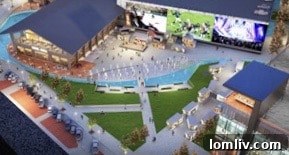
Strategically situated at the southwest corner of the bustling Texas 121 and Alma Road intersection, The Avenue boasts an enviable location offering excellent connectivity and visibility. This prime positioning will undoubtedly contribute to its success as a major destination within the North Texas region. Previously conceptualized as the Allen Sports Village, the scope of this new construction has expanded dramatically to incorporate a comprehensive array of uses, creating a truly integrated urban experience.
The development blueprint for The Avenue is impressive in its scale and diversity. It includes an expansive 1 million square feet of state-of-the-art office space, designed to attract businesses and create numerous job opportunities within the city. Complementing the commercial elements, the project will feature 65 meticulously planned single-family homes, offering traditional residential options, alongside an impressive 1,600 urban residential units. These urban units are designed to cater to a diverse demographic, from young professionals to empty nesters seeking a dynamic, low-maintenance lifestyle with immediate access to amenities. Furthermore, the development will incorporate three modern hotels, catering to business travelers and tourists, and a substantial 275,000 square feet dedicated to retail and restaurant spaces. This vast commercial footprint ensures a wide variety of shopping, dining, and entertainment options for both residents and visitors.
Beyond its sheer size, The Avenue distinguishes itself with innovative architectural and experiential elements. Reports indicate a unique approach to retail and dining, with many of the shops and dining venues slated to be built within cleverly repurposed old shipping containers. This sustainable and trendy design choice adds a distinct modern aesthetic and creates a unique, vibrant atmosphere. Furthermore, a central food hall will serve as a culinary hub, offering diverse gastronomic experiences, while a meticulously designed central outdoor plaza, complete with engaging water features, will serve as the heart of the community. This plaza is envisioned as a gathering space for events, recreation, and social interaction, fostering a strong sense of community within the development. The Avenue represents more than just a collection of buildings; it is a meticulously crafted vision for a future-forward community that blends commerce, living, and leisure in an intelligent, sustainable, and aesthetically pleasing manner, solidifying Allen’s position as a forward-thinking city in the thriving Dallas-Fort Worth metroplex.
Source: Texas A&M University Real Estate Center
Unpacking Homeowner Longevity: Where Buyers Plant Roots for Decades
The Dallas-Fort Worth (DFW) metropolitan area has long been a powerful magnet for new residents, drawing in a steady stream of individuals and families from across the country. This consistent influx is driven by a compelling combination of factors: a thriving technology job market, the significant financial advantage of no state income tax, and a generally more affordable housing market compared to coastal urban centers. People are undoubtedly moving to DFW in droves, but a more nuanced question arises: where do people actually plant roots and stay for the long haul?
The prominent real estate blog 55places undertook an insightful study to investigate precisely this question – the longevity of homeownership in various markets. Their findings offer a fascinating contrast to the widely publicized narrative of DFW’s growth, revealing that no city in Texas, despite its economic dynamism, made it into the top 10 markets where homeowners tend to stay for extended periods.

Tricia Harte, the outreach manager for 55places, elaborated on the study’s methodology and objectives in a press release. “55places recently analyzed more than 300 cities and identified which real estate markets are dominated by the least tenured homeowners — residents who have owned their house for less than 10 years,” she explained. “Conversely, the study also identified where in the US homeowners are staying put the longest.” This dual approach allowed for a comprehensive understanding of market stability versus transience.
The results highlighted a distinct pattern, with the top cities where homeowners have lived for more than 30 years often representing areas with unique socio-economic and cultural characteristics. These “sticky” markets include a diverse mix: Detroit, Michigan; Daly City, California; Cleveland, Ohio; Berkeley, California; Honolulu, Hawaii; Pittsburgh, Pennsylvania; Buffalo, New York; Miami Gardens, Florida; Birmingham, Alabama; and Inglewood, California. This list presents an interesting blend of resilient Rust Belt cities, historically significant urban centers, and some high-cost coastal areas.
Several factors likely contribute to the extraordinary homeowner longevity observed in these cities. In many older industrial cities like Detroit, Cleveland, Pittsburgh, and Buffalo, decades of family roots, strong community ties, a lower cost of living over time, and a deeply ingrained sense of local identity often encourage residents to stay. Despite economic downturns, these cities boast a strong sense of place and heritage that fosters long-term commitment. In contrast, cities like Berkeley, Daly City, and Honolulu, while having high costs of living, might see long-term ownership driven by strong job markets that offer stable employment over decades, deeply established communities, and the sheer challenge and cost of moving once settled. Miami Gardens and Birmingham represent distinct regional cultural hubs where family and community networks are particularly strong.
This study provides valuable insights into the concept of “stickiness” in housing markets. While DFW continues to attract new talent and offer opportunities, the 55places report suggests that its growth might be characterized by a more transient population, possibly due to job hopping, upward mobility, or a less entrenched generational presence. Understanding these long-term trends is crucial for urban planners, community developers, and policymakers aiming to foster not just growth, but also enduring community stability and resident satisfaction in their respective regions.
Source: 55places