The quiet residential streets of Preston Royal, Dallas, were shattered by a senseless act of violence on Memorial Day, sending shockwaves through the community. Leslie Squair Baker, a beloved mother and dedicated professional, was tragically murdered in her own driveway during what police have identified as an apparent carjacking. This brutal incident sparked an intensive investigation, leading to the arrest of multiple suspects and revealing a complex web of criminal activity. This article delves into the details of the crime, the painstaking police work, the backgrounds of the accused, and the ongoing quest for justice for Leslie Baker.
The Tragic Events of Memorial Day
On May 25, 2020, Memorial Day, the life of Leslie Squair Baker, 59, was abruptly ended in a horrifying encounter outside her home. Around 5:00 p.m., as Baker arrived at her residence in the 6100 block of Royalton Drive, just north of Royal Lane, she was confronted by assailants in her driveway. Her family was inside the house at the time, unaware of the terror unfolding mere feet away. While speaking to a friend on the phone, Baker uttered the chilling words, “I’m being robbed,” as she attempted to back away from her attackers. The assailants opened fire, fatally wounding her.
Responding officers discovered Baker slumped and shot in her car, a scene that underscored the sudden and brutal nature of the crime. She was immediately rushed to a nearby hospital, but despite the rapid response, she was pronounced dead approximately thirty minutes later. The community reeled from the news, grappling with the shock that such a violent crime could occur in their peaceful neighborhood.
Leslie Baker: A Life Remembered
Leslie Squair Baker was more than just a victim; she was a vibrant individual whose life touched many. At 59, she was a devoted mother to two college-age children, a detail confirmed by the Dallas Police. Her husband, Robert H. Baker, is a respected real estate broker in the area. Professionally, Leslie made significant contributions as a marketing executive at Texas Healthcare Resources in Plano, where her colleagues knew her for her dedication and expertise. Her sudden passing left an immense void in the lives of her family, friends, and professional circle, transforming a day of remembrance into a day of profound grief.
The Relentless Pursuit of Justice: Dallas Police Investigation
The Dallas Police Department launched an immediate and comprehensive investigation into Leslie Baker’s murder. The incident, an apparent carjacking, galvanized detectives who worked tirelessly to bring the perpetrators to justice. Their swift and deft detective work yielded early results, with an initial suspect, a 16-year-old minor, taken into custody within days, followed by the arrest of four others in connection with the crime. The commitment of law enforcement to resolving this case was evident from the outset.
Surveillance Cameras: A Critical Tool
A crucial element in the rapid progression of the investigation was the widespread use of surveillance technology. Neighbors’ security cameras played a tremendous role, providing vital clues that helped police identify the assailants and their vehicle. One camera poignantly captured the sound of gunshots, while others showed a silver Nissan sedan blocking Baker’s car in her driveway before speeding away from the scene after the shooting. This digital evidence proved indispensable, allowing investigators to piece together the sequence of events and track the suspects’ movements.
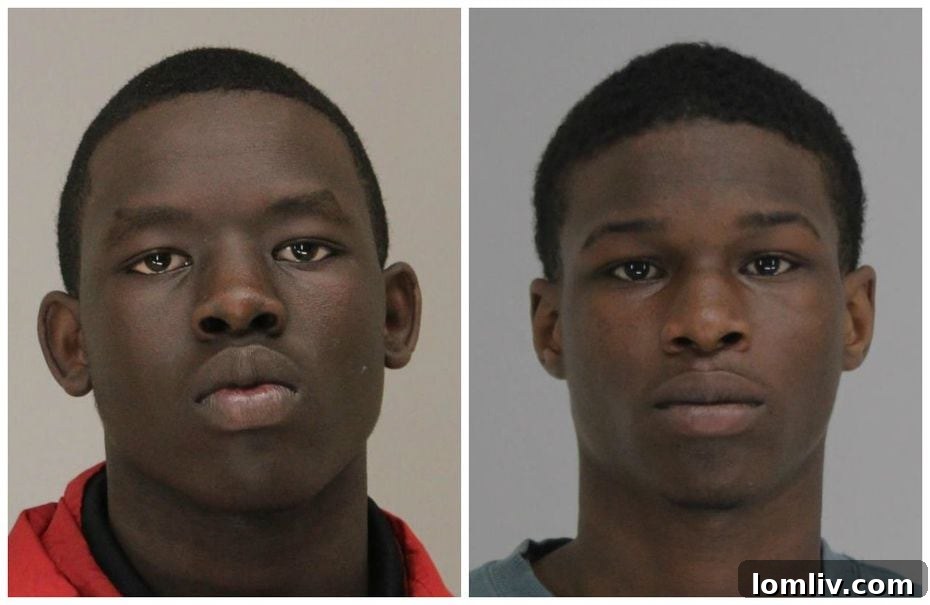
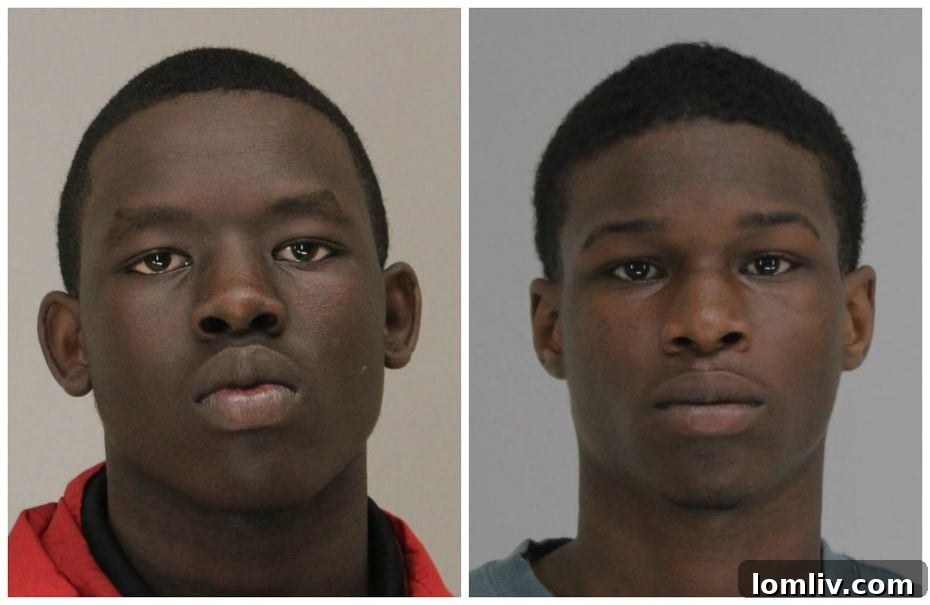
Further analysis of surveillance footage revealed more damning evidence. The same silver Nissan, later identified as stolen in a carjacking on May 15 in southeast Oak Cliff, was scanned at a tollbooth on the Dallas North Tollway shortly after Baker’s murder. Following the tollbooth sighting, police tracked the vehicle to a business parking lot on Ferguson Road in Far East Dallas. Surveillance footage from this location clearly showed three individuals exiting the car: Deng Chen Ajack, Antony Isaiah Taylor, and a juvenile male. These critical pieces of visual evidence proved instrumental in narrowing down the list of suspects and building a robust case against them.
Key Suspects Apprehended: Deng Chen Ajack and Antony Isaiah Taylor
As the investigation deepened, two more individuals, Deng Chen Ajack, 19, and Antony Isaiah Taylor, 18, were arrested and now face one count each of capital murder in connection with Leslie Baker’s death. These arrests brought a new layer of complexity to the case, particularly concerning the past legal history of one of the accused.
Deng Chen Ajack’s Troubled Past and Deferred Adjudication
The arrest of Deng Chen Ajack brought to light a significant detail: his previous encounter with the justice system. It was revealed that Ajack had been arrested and placed on deferred adjudication following an aggravated robbery on March 10, 2019. In that shocking incident, he was accused of pulling a woman down a flight of stairs by her hair, threatening her with a gun – a first-degree felony. Judge Anthony Randall presided over the case that resulted in the deferred adjudication, a legal process where a defendant pleads guilty or no contest, but the judge postpones a final judgment and places them on probation. If the defendant successfully completes the probation terms, the charge may be dismissed, allowing them to avoid a formal conviction. This prior leniency, given the severity of the subsequent capital murder charge, sparked considerable debate and concern regarding the effectiveness of such judicial measures in preventing repeat offenses.
6-21-2019_-_Judicial_Confes… by Joanna England on Scribd
6-21-2019_-_Judgment_-_Crim… by Joanna England on Scribd
Antony Isaiah Taylor: Claims and Contradictions
Antony Isaiah Taylor eventually turned himself in to authorities, and with his lawyer present, he provided a statement to detectives. Taylor claimed that on May 25, Ajack and a juvenile, who was driving the Nissan, picked him up. He stated that the juvenile had a gun, and he even posed with the weapon next to the car. Taylor admitted they were driving around and smoking marijuana, but he denied any knowledge of a plan to rob Leslie Baker. His account of the shooting was that he was in the car when he heard the gunshots, having ducked down in the back seat after the juvenile parked behind Baker’s car and approached her. He further stated that Ajack then moved to the driver’s seat, and the three drove off once the juvenile returned to the car.
Taylor’s credibility was further questioned when he admitted to cutting off his dreadlocks two days after the murder, claiming it was because he was going to get a job. However, police affidavits indicate that investigators expressed strong disbelief regarding Taylor’s claims of ignorance about the robbery. Their skepticism was fueled by additional evidence linking Taylor and his accomplices to a string of violent incidents following Baker’s murder.
Connecting the Crimes: A Pattern of Violence
The investigation into Leslie Baker’s murder quickly uncovered connections to other violent crimes, painting a disturbing picture of the suspects’ activities. Detectives were able to link the gun used to kill Baker to another shooting that occurred on the same night.
The Second Shooting: A Lyft Driver Targeted
In this separate but connected incident, a Lyft driver was dropping off passengers along East R.L. Thornton Freeway in Far East Dallas when a silver Nissan Sentra drove by. One of the passengers reportedly recognized the car’s driver, a young man with dreadlocks, who then fired several shots at the Lyft driver’s vehicle. The driver later positively identified Taylor in a photo lineup as the individual who had shot at his car. This critical piece of evidence, coupled with ballistic matches from the casings found at Baker’s murder scene, strongly implicated Taylor and his associates in a broader pattern of dangerous behavior.
The Richardson Carjacking
Beyond the Lyft driver shooting, police also linked Ajack, Taylor, and the juvenile to a carjacking that occurred the following day in Richardson. This continuous pattern of criminal activity involving the same individuals and the same stolen vehicle further solidified the police’s conviction that Taylor’s claims of ignorance about the robbery were unfounded. The cumulative evidence suggested a coordinated and ongoing spree of violence and theft by the group.
The Path to Justice: Legal Proceedings and Community Expectations
With mounting evidence and admissions, the legal process against the accused moved forward swiftly.
Antony Isaiah Taylor was booked into the Dallas County jail following his surrender. In addition to the capital murder charge related to Leslie Baker, he faces a charge of aggravated assault related to the second shooting involving the Lyft driver. His bail has been set at a substantial $850,000, reflecting the gravity of the charges against him and the perceived flight risk.
Deng Chen Ajack was taken into custody on a Monday, and police confirmed that he admitted his involvement in Leslie Baker’s shooting. As of this report, bail for Ajack had not yet been set, indicating the severe nature of the capital murder charge and the ongoing legal assessments. Capital murder in Texas carries exceptionally harsh penalties, including the possibility of life imprisonment or, in some cases, the death penalty, underscoring the serious legal challenges the defendants now face.
Community Impact and Broader Implications
The murder of Leslie Baker reverberated deeply within the Preston Royal community and beyond. It highlighted vulnerabilities in even seemingly safe suburban neighborhoods and fueled discussions about public safety, the effectiveness of the justice system, and the challenges of repeat offenders. The revelation of Ajack’s prior deferred adjudication, especially in the context of such a violent subsequent crime, ignited public debate on judicial leniency and its potential consequences.
The role of community vigilance and technology, particularly neighbor surveillance cameras, in aiding law enforcement was also underscored. This case serves as a stark reminder of the devastating impact of violent crime on individuals and communities, emphasizing the critical importance of effective law enforcement, robust judicial processes, and community collaboration in maintaining peace and order. As the legal proceedings unfold, the community remains united in its desire for justice for Leslie Baker and her grieving family.
Conclusion
The tragic Memorial Day murder of Leslie Squair Baker in Preston Royal remains a deeply painful event for the Dallas community. However, the diligent work of the Dallas Police Department has led to the apprehension of key suspects, Deng Chen Ajack and Antony Isaiah Taylor, who now face capital murder charges. Their arrests, along with the detailed investigation that connected them to other violent acts, represent significant steps towards achieving justice. While the legal journey is complex and ongoing, the unwavering commitment to holding those responsible accountable offers a measure of hope for closure and healing for Leslie Baker’s family and the entire community.