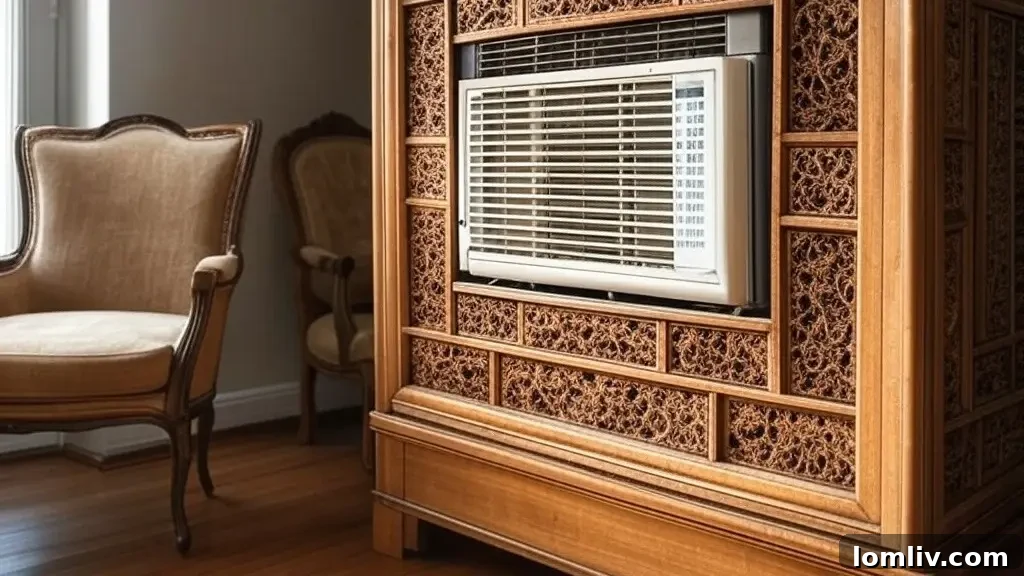
Every summer, as temperatures soar, our outdoor spaces become sanctuaries for relaxation and enjoyment. Yet, a common eyesore often disrupts the meticulously cultivated beauty of our backyards: the air conditioning unit. This bulky, metal box, standing starkly against lush greenery or pristine landscaping, can detract significantly from the aesthetic appeal of a garden that you’ve poured countless hours into perfecting. It’s not just about an awkward appearance; the unit’s industrial design fundamentally clashes with the natural or designed tranquility of an outdoor living area. I, like many homeowners, have personally experienced the frustration of an unsightly AC unit spoiling the view from my patio or the overall ambiance of my carefully crafted garden space.
The quest for a solution began with a simple desire: to seamlessly integrate this necessary household appliance into its natural surroundings. However, this seemingly straightforward task presented two crucial challenges. Firstly, any concealment method chosen had to prioritize the optimal performance of the AC unit. Restricting airflow or hindering maintenance access could lead to decreased efficiency, higher energy bills, and even premature unit failure. Secondly, the solution needed to be more than just a cover-up; it had to be a creative enhancement that would elevate the backyard’s overall design, rather than merely hiding an existing flaw. The goal was to transform an eyesore into an attractive, harmonious feature of the outdoor landscape.
The Art of Blending Function with Outdoor Aesthetics
One serene afternoon, while enjoying the tranquility of my garden, an idea sparked: hiding the AC unit didn’t have to be a mundane chore. Instead, it could be an engaging and rewarding family project. I enlisted my sons, turning the challenge into an opportunity for collaborative creativity. Our initial brainstorm centered on a fundamental principle: any chosen solution must complement the existing outdoor space, enhancing its beauty rather than detracting from it. This meant meticulously balancing aesthetic appeal with practical considerations. Paramount among these considerations was ensuring the AC unit retained sufficient airflow for proper operation and remained easily accessible for routine maintenance and servicing.
My sons, with their youthful enthusiasm, initially suggested boxing the unit in completely or creating a solid, impenetrable cover. This common misconception about AC unit concealment provided a valuable teaching moment. I explained that the air conditioning condenser, the outdoor component of an HVAC system, requires a constant, unimpeded intake of air to efficiently dissipate heat from your home. Boxing it in would severely restrict this vital airflow, leading to the unit working harder, consuming more energy, and potentially overheating, which could shorten its lifespan significantly. We discussed how a poorly ventilated unit could lead to higher utility bills, reduced cooling capacity, and costly repairs down the line.
Our early attempts included exploring pre-fabricated wooden screens, hoping they would simply mask the unit. However, many of these screens, while providing concealment, often looked like another awkward, out-of-place object trying to hide something. They lacked integration and often felt like an afterthought. Next, we considered planting tall shrubs around the unit. While a natural approach, this also presented challenges. Shrubs grow slowly, meaning the unit would remain exposed for an extended period. Furthermore, as they mature, dense foliage could still impede airflow. Maintenance became another concern; dead leaves and debris from plants could easily accumulate within the unit, hindering its performance and requiring constant clean-up. The need for periodic pruning and ensuring accessibility for professional HVAC technicians also became clear limitations.
Discovering Creative and Effective AC Unit Hiding Ideas

The initial setbacks left me momentarily frustrated, prompting a deep dive into the vast resources of home improvement blogs, gardening forums, and visual platforms like Pinterest. What I discovered was a treasure trove of innovative ideas that went beyond mere concealment. The concept shifted from simply “hiding” the AC unit to “transforming” it into an integrated design feature that would actively enhance the overall aesthetic of my outdoor space. This research phase was crucial, as it opened my eyes to possibilities I hadn’t considered.
I consulted with friends and fellow garden enthusiasts, gathering diverse perspectives. One friend suggested utilizing decorative lattice panels to construct a stylish enclosure, emphasizing their ability to provide both concealment and sufficient airflow. Another proposed building a small, custom-designed shed that could ingeniously double as practical garden storage, offering a dual-purpose solution. These conversations highlighted the importance of ventilation and access while sparking new creative avenues.
Despite the promising suggestions, some initial attempts still felt either too obvious, drawing attention to the very thing we were trying to hide, or lacked the desired aesthetic charm for our specific backyard design. It became clear that professional insights were invaluable. Leading experts in air conditioning services in Dallas, for instance, consistently advise homeowners to prioritize both the unit’s efficiency and its discreet integration. They stress that any enclosure must allow for unobstructed airflow and easy access for maintenance to prevent costly repairs and ensure optimal performance. This professional guidance reinforced our commitment to finding a solution that was both beautiful and functional.
Further exploration on visual platforms like Pinterest provided countless examples of integrating AC units into existing garden features. Ideas ranged from creating a custom planter box around the unit, allowing for vibrant floral displays on top, to incorporating it into a trellis system adorned with elegant climbing plants. These approaches resonated deeply, offering solutions that felt organic, natural, and truly transformative for our backyard.
Putting Creative Ideas Into Practice: A Step-by-Step AC Enclosure Project

After extensive research and careful consideration of various options, my family and I decided on a combination of lattice panels and climbing plants. This solution perfectly balanced aesthetics with functionality, allowing the AC unit to blend seamlessly into the garden while ensuring it received the necessary ventilation. The lattice offered a structured yet open design, providing privacy without impeding airflow, and the climbing plants would add a natural, organic layer of beauty. Here’s a detailed, step-by-step account of how we brought this vision to life:
- Thorough Research and Decision-Making: Our initial phase involved meticulously weighing the pros and cons of each potential hiding strategy. We carefully considered material costs, construction complexity, long-term maintenance, and, most importantly, the impact on AC unit performance. The lattice panel and climbing plant combination emerged as the frontrunner due to its natural look, excellent airflow capabilities, and relatively straightforward installation process. We also appreciated its potential for customization to match our garden’s existing style.
- Material Procurement: With a clear plan, we gathered our materials. This included durable wooden lattice panels, sturdy weather-resistant posts for structural support, and a selection of fast-growing, hardy climbing plants. We also procured high-quality, weather-resistant outdoor paint, carefully choosing a color that would complement our garden’s existing decor, ensuring a cohesive and integrated look.
- Precise Measurement and Construction: Accuracy was paramount. We carefully measured the area surrounding the AC unit, ensuring ample clearance on all sides as recommended by HVAC professionals (typically 2-3 feet) to facilitate proper airflow and prevent overheating. Small, yet deep, holes were dug for the support posts at each corner of the planned enclosure, ensuring a stable foundation. The lattice panels were then securely attached to these posts, creating a robust and visually appealing enclosure that maintained critical distance from the AC unit.
- Strategic Planting of Climbing Vines: To achieve a natural, lush appearance, we planted fast-growing climbing vines at the base of each lattice panel. We selected species known for their vigorous growth and low maintenance requirements, ensuring they would quickly cover the lattice and seamlessly integrate the structure into the surrounding garden. Initial training of the vines helped guide their growth in the desired direction.
- Ensuring Accessibility for Maintenance: Recognizing the critical need for unobstructed access for future AC maintenance and repairs, we ingeniously incorporated a small, hinged door into one of the lattice panels. This thoughtful design element provides effortless entry for professional technicians to conduct routine servicing, coil cleaning, or emergency repairs, all without compromising the decorative integrity of the enclosure.
- Finishing Touches and Integration: The final step involved applying the weather-resistant paint to the lattice panels. This not only protected the wood from the elements but also allowed us to blend the enclosure perfectly with the color palette of our garden. The result was a stunning, natural, and seamless cover for the AC unit, transforming it from an eyesore into an attractive, integrated garden feature.
Navigating Challenges and Ensuring AC Performance

Embarking on a DIY project like concealing an AC unit comes with its unique set of challenges. Addressing these proactively is crucial for both the aesthetic outcome and, more importantly, the long-term health and efficiency of your air conditioning system. We encountered several key hurdles during our project, each requiring careful consideration and a well-thought-out recovery plan:
- Maintaining Proper Airflow: This was, without a doubt, the paramount concern. Blocked vents or insufficient space around the AC unit can severely impact its efficiency, leading to higher energy consumption, increased wear and tear on components, and even unit breakdown. We meticulously ensured that there was an adequate distance—at least 2 to 3 feet—between the lattice panels and all sides of the AC unit. This crucial clearance allows the condenser to draw in and expel air freely, preventing overheating and maintaining optimal performance.
- Ensuring Accessibility for Maintenance: An AC unit requires regular professional maintenance to operate efficiently and reliably. This includes coil cleaning, refrigerant checks, and general inspections. Our solution for this challenge was the strategically placed hinged door within one of the lattice panels. This design ensures that HVAC technicians can easily access the unit for servicing without having to dismantle the entire enclosure, saving time and potential damage to our carefully constructed screen.
- Managing Plant Growth: The speed at which climbing vines grow and cover the lattice was an initial uncertainty. While fast growth is desirable for quick concealment, overly aggressive growth can lead to issues such as vines potentially growing into the unit itself, blocking vents, or causing damage. To mitigate this, we sought expert advice from local plant nurseries. They helped us select hardy, fast-growing vine species that are relatively easy to prune and manage. Regular pruning became a part of our garden maintenance routine, ensuring the plants remained aesthetically pleasing while never obstructing the AC unit’s functionality.
Addressing these challenges head-on, with careful planning and expert advice, resulted in a truly exceptional outcome. My once unsightly AC unit is now a seamlessly integrated, beautiful part of my garden, blending harmoniously with its surroundings while continuing to function perfectly and efficiently.
Exploring Other AC Unit Hiding and Efficiency Options

Beyond our specific lattice and climbing plant solution, homeowners have a myriad of options for both concealing their AC units and enhancing their overall home energy efficiency. It’s worth noting that modern AC units are significantly more energy-efficient—often around 50% more—than models from the 1990s. Upgrading to a modern, high-efficiency HVAC system can not only beautify your space but also drastically reduce energy costs and contribute to a greener, more sustainable environment. Many contemporary units also feature quieter operation and smart home integration, adding further value.
For concealment, the AC unit can be cleverly incorporated into a larger garden feature, making it disappear within the landscape. A popular approach is a decorative trellis, a framework of light wooden or metal bars. Vines or flowering plants can be trained to grow over it, creating a vibrant green wall that conceals the unit behind lush foliage. This not only hides the AC but also adds vertical interest and a touch of elegance to your garden design. Trellises come in various styles, from rustic to modern, offering versatility for any backyard aesthetic.
Another excellent option is a small pergola. A pergola provides a more substantial structure that can support not only climbing plants but also hanging planters, wind chimes, or outdoor lighting fixtures, transforming the area into a charming focal point. Its open design is crucial, as it ensures that air can still flow freely around the AC unit, preventing any detrimental impact on its performance. Both trellis and pergola designs can be engineered with removable or hinged panels, which is an invaluable feature for providing easy and complete access for professional HVAC maintenance and repairs, ensuring the longevity of your unit without compromising the garden’s beauty.
My journey to transform my air conditioning unit from an unavoidable eyesore into an integrated garden feature has been incredibly rewarding. This project taught me the importance of thoughtful planning, understanding technical requirements, and the joy of creating something beautiful with my family. Before embarking on any concealment project, I highly recommend ensuring your AC unit is in top working condition; a well-maintained unit is a prerequisite for long-term efficiency and performance. Throughout this process, I engaged with my sons at every step, not only teaching them about practical home improvement but also about the balance between design and functionality.
For any homeowner in the Dallas area, I cannot stress enough the value of professional air conditioning services in Dallas. Most HVAC technicians in Dallas are experienced, licensed, and offer professional, reliable support that can make all the difference in maintaining the beauty and comfort of your home. From routine maintenance checks that prevent costly breakdowns to expert advice on unit placement or efficiency upgrades, their professional guidance ensures your system operates optimally. They truly have you covered, allowing you to enjoy a perfectly climate-controlled home and a beautifully harmonious outdoor space.