Navigating Dallas’s Urban Future: The Sam’s Club Cityplace Controversy
 The proposed Sam’s Club development near Dallas’s vibrant Cityplace area has sparked considerable debate and concern among residents, urban planners, and local businesses. What was initially envisioned as a progressive, mixed-use urban village is now mired in controversy over the potential placement of a large-format retail store. The public hearing, a crucial step in the approval process, has been predictably delayed, shifting the spotlight onto the transparency and long-term vision for this pivotal Dallas neighborhood.
Public Hearing Postponement and Community Concerns
The highly anticipated public hearing regarding the proposed Sam’s Club near Cityplace, originally scheduled for an earlier date, has been officially postponed until July 10th. This delay, while perhaps offering more time for deliberation, also raises questions about public engagement, especially with the summer months typically seeing reduced attendance at civic meetings. The core of the controversy lies in persistent allegations and insinuations that the developer, Trammell Crow Co., attempted to bypass established procedures, effectively “slipping this by” the city’s plan commission.
Further fueling public skepticism are claims that the rezoning adjustments were presented under the guise of accommodating an “East Village” – a concept of a walkable, urban neighborhood. Critics also allege that the traffic study, a vital component for assessing the project’s impact, may have been “cooked” to favor the development. Such accusations undermine public trust and highlight the need for greater transparency and accountability in large-scale urban development projects. The community’s apprehension is palpable; many fear that crucial decisions will be made during a period when public participation might be at its lowest, potentially leading to outcomes that do not truly reflect the best interests of Dallas residents.
The Evolving Vision: From Mixed-Use to Big Box?
To fully understand the current debate, it’s essential to revisit the initial plans for this significant tract of land adjacent to Cityplace. Back in 2013, over a year prior to the Sam’s Club proposal, Trammell Crow Co. outlined an ambitious vision for a major retail and apartment project. Detailed filings with the city of Dallas revealed plans to redevelop more than half of the northern side of the tract into an urban mixed-use development, a concept widely praised for its potential to inject vitality and modern amenities into the area.
“In filings with the city of Dallas, Crow is seeking to rebuild more than half of the north side of the tract with an urban mixed-use development. Some of the existing office buildings on the property would continue to house a data center and other uses. Crow officials on Monday would not comment on the pending project or provide any details of the development. The planned retail project has the potential to become a high-profile restaurant and shopping destination serving the neighborhood.”
At the time, industry experts like Clay Smith of Jones Lang LaSalle highlighted the strong retail demand in the urban core, particularly for mixed-use developments, and noted a growing trend of demand shifting towards the east side of the freeway. This earlier narrative painted a picture of a sophisticated, integrated development that would foster a dynamic urban environment, complete with high-profile restaurants and diverse shopping options. However, despite these promising initial statements and speculative portrayals of a premier destination, Trammell Crow officials notably refrained from commenting on their specific plans, leaving much to interpretation.
The stark contrast between this earlier vision of a pedestrian-friendly, high-end “East Village” and the current proposal for a conventional big-box retailer like Sam’s Club is at the heart of the community’s frustration. Many feel that the current proposal deviates significantly from the initial promise, potentially sacrificing long-term urban design goals for short-term retail convenience. This shift in proposed use raises questions about whether the developer genuinely intends to deliver on the promise of a vibrant, walkable community or if the “East Village” concept was merely a preliminary framework to gain initial approvals.
Unpacking the Controversies: Traffic, Design, and Urban Integration
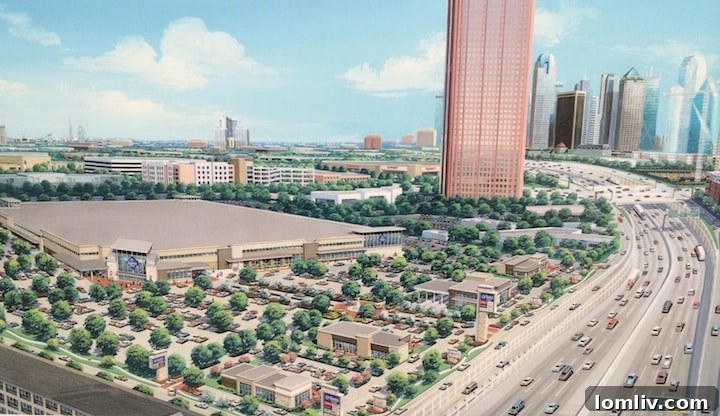
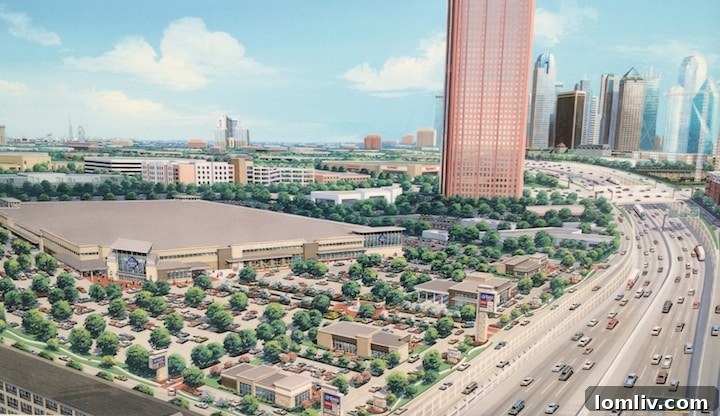
The proposal to site a Sam’s Club, a typically large-footprint wholesale store, in an area intended for a walkable, urban neighborhood like Cityplace sparks numerous critical questions regarding traffic, urban design, and overall community integration. The accusations of a “cooked” traffic study are particularly alarming, given the potential for increased congestion on already busy Dallas streets. A big-box store inherently generates a high volume of vehicular traffic – often with larger trucks for deliveries and a continuous flow of member vehicles. Such an influx could severely strain local infrastructure, impact pedestrian safety, and detract from the very walkability that the “East Village” concept promised.
Beyond traffic, the aesthetic and environmental implications are significant. Traditional Sam’s Club stores are characterized by their expansive, often flat and heat-absorbing roofs, accompanied by vast swaths of black asphalt parking lots. These design elements are antithetical to modern sustainable urban development: they contribute to the urban heat island effect, significantly raising ambient temperatures in surrounding areas, and create impermeable surfaces that exacerbate stormwater runoff issues. In a city like Dallas, which is striving for more sustainable and pedestrian-friendly urban environments, such a design choice would be a step backward.
Furthermore, the notion of placing a large-format retail store in close proximity to residential and office spaces within an urban core presents a fundamental challenge to the principles of mixed-use development. While some argue that a Sam’s Club could benefit small businesses in the vicinity by offering wholesale goods, critics point to the existence of at least two other Sam’s Clubs not far from the proposed site. This raises doubts about the necessity and unique value proposition of adding another in a highly developed urban location. The concern is that it could introduce an out-of-place retail typology that disrupts the intended urban fabric rather than enhancing it, potentially creating a monolithic retail experience instead of a diverse, local-centric one.
A Vision for an “Urban-Hip” Sam’s Club: Blending Commerce with Community
Instead of merely accepting a traditional big-box model, there’s a powerful argument to be made for a more innovative and contextually sensitive approach – an “urban-hip” Sam’s Wholesale Club that aligns with contemporary urban planning principles and community aspirations. This vision would radically depart from the conventional suburban superstore by embracing sustainable design and a more integrated urban footprint. Imagine a Sam’s Club that redefines the big-box experience:
- Sustainable Architecture: Ditching the expansive, heat-absorbing flat roof for a green roof or a visually appealing, architecturally integrated structure that minimizes environmental impact and enhances aesthetic appeal.
- Eco-Friendly Parking Solutions: Replacing vast black asphalt parking lots, which contribute significantly to the urban heat island effect, with permeable surfaces like crushed stone, complemented by strategically placed native grass circles and mature trees. This reduces runoff, filters pollutants, and mitigates heat.
- Reduced Parking Footprint: Acknowledging the urban context, the store would feature less traditional car parking, instead emphasizing spaces for ride-sharing services (Uber/Lyft), taxis, and dedicated facilities for cyclists and pedestrians. This encourages multi-modal transportation and reduces reliance on private vehicles.
- Smaller, Integrated Store Format: Instead of a monolithic structure, the store could be designed on a smaller scale, akin to the highly successful Central Market at Preston/Royal – a model that demonstrates how a specialty grocery can be both high-volume and integrated into a more sophisticated retail environment.
- Vertical Integration and Mixed-Use: Embracing true mixed-use development by incorporating office spaces or even residential units above the retail component. This would maximize land use efficiency, create a vibrant 24/7 environment, and provide a seamless blend of living, working, and shopping.
This forward-thinking model presents Sam’s Club with an unparalleled opportunity to showcase a new prototype store. Such an innovative design would not only appeal to the “eco hipster” demographic but would also address many of the fundamental concerns raised by the community. It’s a chance to demonstrate how large-scale retail can evolve to be a beneficial, integrated component of a modern urban landscape, rather than a disruptive imposition. By adopting these principles, the developer could transform a contentious proposal into a beacon of sustainable and community-centric urban development, potentially turning widespread grievances into enthusiastic support.
The Path Forward: Community Engagement and Sustainable Decisions
The delayed public hearing on July 10th represents a critical juncture for the Cityplace development and for Dallas’s broader commitment to thoughtful urban planning. This moment calls for more than just a procedural vote; it demands robust community engagement, transparent decision-making, and a clear articulation of a long-term vision that genuinely serves the public interest. The debate over the Sam’s Club proposal underscores a larger tension: how to balance economic development with sustainable urban design, community needs, and the preservation of quality of life in evolving neighborhoods.
For Dallas to continue its trajectory as a dynamic, livable city, future developments, particularly in sensitive urban core areas, must prioritize design excellence, environmental responsibility, and genuine community integration. The City of Dallas, Trammell Crow Co., and Sam’s Club have an opportunity to set a new standard. Rather than simply pushing through a project that generates significant public opposition, they can engage in a collaborative process to refine the proposal, explore innovative alternatives, and ultimately deliver a development that both meets commercial objectives and enhances the urban fabric. This would involve listening carefully to resident feedback, re-evaluating the proposed design against the original “East Village” concept, and considering how a large retailer can truly become a positive, integrated part of a vibrant, walkable neighborhood.
The time has come for creative solutions that move beyond traditional big-box models and embrace the potential of urban retail to be a catalyst for sustainable growth and community prosperity. Dallas deserves developments that reflect its aspirations as a modern, forward-thinking city – not those that merely replicate suburban paradigms within its bustling urban core. The outcome of this discussion will not only shape the future of Cityplace but also set a precedent for how Dallas approaches urban development for years to come.