By Lydia Blair
Special Contributor
Navigating Real Estate Closing Day Challenges: A Comprehensive Guide
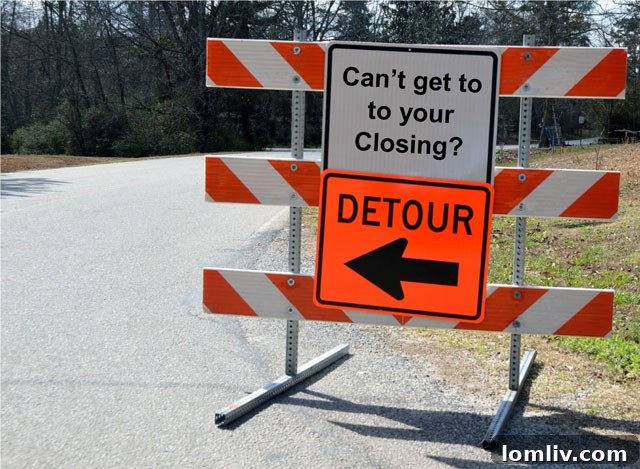
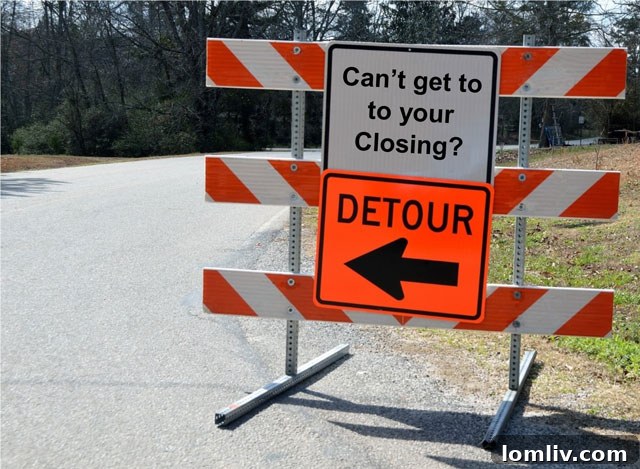
The journey to owning or selling a home is often filled with excitement and anticipation, culminating in one pivotal event: closing day. This is the moment when all the intricate pieces of a real estate transaction finally converge – contracts are signed, funds are exchanged, and keys are handed over, signifying the legal transfer of property ownership. It’s a day marked on calendars with a sense of finality and accomplishment. However, despite meticulous planning, unforeseen circumstances can sometimes transform this triumphant day into a potential hurdle, creating what feels like a significant “speed bump” on the road to a successful closing.
Imagine this scenario: contracts meticulously signed, home inspections successfully completed, and moving trucks scheduled. Everything is running at full speed towards the closing table. Then, an unexpected event arises – one of the critical parties involved in the transaction finds themselves unable to attend the title company office to sign those all-important documents. This can quickly evolve from a minor inconvenience into a major legal and logistical issue, potentially jeopardizing the entire deal. Real estate contracts explicitly stipulate a closing date, and failure by either party to meet this deadline can trigger contractual breaches and legal repercussions. The good news is that with proper handling and proactive communication, there are viable solutions to ensure your real estate transaction stays on track and reaches a successful conclusion.
The Critical Importance of Closing Day
Closing day is more than just a formality; it’s the legal and financial culmination of weeks, or even months, of negotiations and preparations. On this day, numerous documents are signed, verifying everything from the mortgage agreement and promissory notes to the deed of trust and seller disclosures. Funds are meticulously transferred from the buyer’s lender and account to the seller, and any outstanding taxes, fees, and agent commissions are settled. The legal transfer of ownership is formalized, making the buyer the official new owner of the property and releasing the seller from their obligations.
Missing the specified closing date, even by a single day, can have significant implications. The purchase agreement typically includes clauses outlining penalties for delays, which could range from per diem fines to the termination of the contract itself. In extreme cases, a party’s inability to close on time might be deemed a breach of contract, potentially leading to legal disputes, loss of earnest money, or even forcing specific performance. Therefore, understanding the options available when an in-person attendance isn’t possible is crucial for maintaining the integrity of the deal and avoiding costly complications.
Communication is Key: Partnering with Your Title Company
The first and arguably most critical step when faced with a potential closing day absence is immediate and transparent communication with your title company or escrow officer. These professionals are the central hub of your closing process, coordinating between all parties involved, including buyers, sellers, lenders, and real estate agents. When informed well in advance, they possess the expertise and resources to explore and arrange alternative provisions that can keep everyone happy and the transaction moving forward seamlessly.
Consider common scenarios: an elderly seller might be in a nursing home and require documents to be signed at their facility, or a spouse traveling for business might wish for their partner to sign on their behalf. Whatever the reason, providing ample notice allows the escrow officer to proactively research and implement the necessary arrangements. Waiting until the last minute forces the title company to scramble, which can not only create unnecessary stress but also add to the expenses. These additional costs, often related to expedited services or special notarial arrangements, are typically passed on to the party requiring the special accommodations. Proactive communication helps circumvent these extra headaches and expenses, ensuring a smoother, more cost-effective path to closing.
Exploring Proactive Solutions for Absent Parties
When in-person attendance at the title company office isn’t feasible, several established solutions can facilitate the signing of crucial documents, each with its own set of requirements and considerations.
1. Advance Signing: Expediting the Process
One of the most straightforward solutions, particularly for sellers, is to sign documents a day or more in advance of the official closing date. This option is often available when the seller’s documents are prepared early. The seller can visit the title company office, review and sign all necessary paperwork, and then the proceeds from the sale can be wired to their account once the buyer has completed their signing and the transaction is officially finalized on the scheduled closing date. This method allows sellers to fulfill their obligations without being physically present on the closing day itself, providing flexibility and peace of mind.
2. Power of Attorney (POA): Granting Authority
A Power of Attorney (POA) document is a powerful legal instrument that allows one individual (the principal) to grant another person (the agent or attorney-in-fact) the authority to act on their behalf in specific or general matters. In a real estate transaction, a POA can empower an agent to sign closing papers in the principal’s absence. However, using a POA requires meticulous preparation and strict adherence to legal and lender requirements.
There are different types of POAs, such as a “General POA,” which grants broad authority, or a “Specific/Limited POA,” which is tailored for a particular transaction, like selling a specific property. A “Durable POA” remains effective even if the principal becomes incapacitated. For real estate closings, title companies and lenders typically require a specific and, often, a durable POA to ensure the validity and enforceability of the signed documents. It is absolutely critical that the proper POA is drawn up beforehand by a legal professional, reviewed, and explicitly approved by both the title company and the lender well in advance of closing. Presenting an unexpected POA on closing day without prior notice can bring the entire process to an abrupt and costly halt, as legal teams need time to verify its validity and scope.
3. Remote Closings: Bridging Geographical Distances
Remote closings have become an increasingly popular and indispensable solution, offering remarkable flexibility for both buyers and sellers. This method involves the title company arranging for documents to be sent to a location convenient for the signer, whether it’s their home, office, or a notary public’s office in another city or state. The party then signs the original documents, which are subsequently sent back to the title company for final processing. This approach is often hailed as a “godsend” by real estate professionals.

“Remote closings are a godsend because they help keep the closing on track without having to amend the contract with a new closing date,” says Realtor Paul Sanders with Ebby Halliday. “Clients love them because they feel the closing process is catered to their schedule. Realtors love them because they help ensure the closing will actually take place, reducing the stress and uncertainty associated with travel or scheduling conflicts.”
Drawbacks and Considerations for Remote Closings
While remote closings offer immense advantages, they are not without their potential drawbacks. Often, a title company will dispatch a mobile notary to oversee the signing. It’s crucial to understand that a mobile notary is typically not an escrow officer or an attorney. Their role is primarily to verify identities and witness signatures, not to explain the intricate legal and financial implications of each document. Some individuals, especially those making such a significant purchase, require more clarification and guidance through the extensive stack of closing papers. The absence of an escrow officer to answer questions on the spot can lead to confusion or uncertainty for the signer.
Furthermore, remote closings inherently add to the time and expense of finalizing the transaction. Documents must be securely shipped to the remote location and then returned to the title company, adding transit time. The fees for mobile notaries and expedited shipping can also increase the overall closing costs, which are usually borne by the party requesting the remote signing. Despite these considerations, the convenience often outweighs the additional costs for many clients.
An emerging alternative to traditional remote closings is **Remote Online Notarization (RON)**. In states where it’s legal, RON allows signers to appear before a commissioned notary public via live two-way audio-video communication. The notary verifies identity, witnesses the electronic signing of documents, and applies an electronic seal, all online. This can significantly reduce transit times and offers even greater flexibility, though its availability and acceptance depend on state laws and lender policies.
Lender Approval: An Essential Hurdle
Regardless of whether you choose an advanced signing, a Power of Attorney, or a remote closing, a critical factor often overlooked by parties is the lender’s approval. For transactions involving a mortgage, the lender holds a significant stake in the process and must approve any alternative signing arrangements. Lenders have stringent requirements to protect their investment and ensure the legal validity of all security documents, such as the mortgage and deed of trust.
They will meticulously review the proposed method to ensure it meets their compliance standards and state regulations. Without explicit lender approval, even a perfectly executed POA or remote signing could render the closing documents invalid from their perspective, leading to significant delays or even cancellation of the loan. Therefore, it’s paramount to involve your lender early in the discussion about any non-traditional closing arrangements.
Navigating the Complexities of International Closings
When a homeowner or buyer is located outside the country when closing is scheduled, the complexity of the situation escalates considerably. International POAs or remote closings involve a more intricate set of legal and logistical challenges. These can include:
- Time Zone Differences: Coordinating schedules across multiple time zones can be incredibly difficult.
- International Notarization Requirements: Documents signed abroad often require specific notarization processes, sometimes involving U.S. Embassies or Consulates, or local foreign notaries whose seals may need further authentication (e.g., apostille or legalization).
- Legal Verification: Title companies must often verify the authenticity and legal standing of foreign notaries and translated documents, which can be time-consuming and expensive.
- Wire Transfer Complexities: International wire transfers can be subject to different banking regulations, higher fees, and longer processing times.
Due to the heightened complexities, increased risk of delays, and potential for significantly higher costs associated with international closings, parties are often better advised to delay the closing until the signer is back in the United States. This recommendation prioritizes security and certainty over attempting to navigate a labyrinth of international legal and banking protocols.
Best Practices for a Smooth Closing Experience
To ensure your real estate closing proceeds as smoothly as possible, especially when faced with potential attendance issues, consider these best practices:
- Review Your Contract Thoroughly: Understand all deadlines and contingencies related to your closing date.
- Communicate Proactively: As soon as you anticipate any attendance issue, inform your Realtor, title company, and lender immediately. Early notification is your greatest asset.
- Understand All Your Options: Discuss the pros and cons of advance signing, POA, remote closings, and RON with your title company to determine the best fit for your situation.
- Seek Professional Legal Advice: If considering a Power of Attorney, consult an attorney to ensure it’s properly drafted, valid, and meets all requirements.
- Prepare for Contingencies: Always have a backup plan, and be mentally prepared for minor adjustments to the timeline or process.
Conclusion: Steering Towards a Successful Finish
The journey to closing day is a significant milestone in any real estate transaction. While unexpected absences can present challenges, they don’t have to derail your plans. By understanding the available solutions—from advance signings and Power of Attorney documents to remote and even online notarization options—and by engaging in proactive, transparent communication with your title company and lender, you can effectively navigate these speed bumps. Just like a powerful truck maneuvering carefully down the highway, it may take a moment to shift gears and adjust the course, but with the right strategy and timely action, you can steer your transaction to a successful and timely finish.
The opinions expressed are of the individual author for informational purposes only and not for the purpose of providing legal advice. Contact an attorney to obtain advice for any particular issue or problem.