Navigating the Labyrinth of Dallas Redevelopment: The Enduring PD-15 Saga
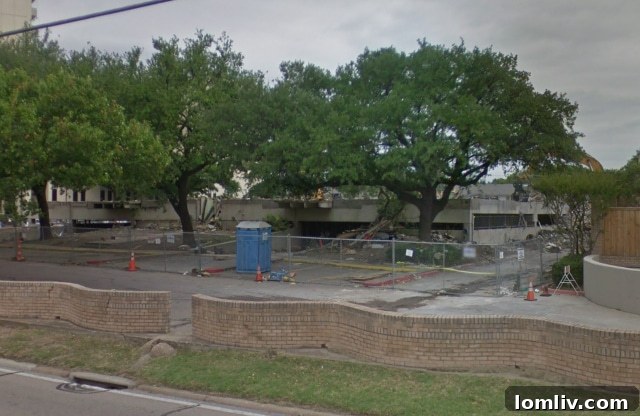
The protracted, multi-year journey to redefine and amend Dallas’s PD-15 zoning ordinance, a process many residents and developers believed was nearing a definitive conclusion, continues to unfold with unexpected twists and turns. What was anticipated to culminate in clear resolutions at City Hall has instead led to further complications, leaving key properties in a state of flux and community stakeholders grasping for certainty. Notably, the residents of Preston Place, whose lives were dramatically uprooted by a devastating fire, are still awaiting the financial restitution they hoped would come from a developer buyout, particularly from Provident Realty Advisors. This ongoing uncertainty means no celebratory checks will be arriving this holiday season for those still impacted by the tragic fire that reduced Preston Place to its parking lot garage – an event that undeniably ignited this entire arduous PD-15 rezoning process.
The magnitude of the Preston Place disaster and the subsequent rezoning efforts even drew former Dallas Mayor Laura Miller from her luxurious Preston Hollow estate to launch a city council campaign, challenging incumbent Jennifer Staubach Gates. Such was the civic importance and community outcry surrounding the future of this pivotal area. Yet, as the calendar flips to a new year, Preston Place remains caught in an unresolved limbo. In stark contrast, its neighbor, Royal Orleans, appears to have successfully secured a development deal. This dichotomy underscores the complex, often frustrating, nature of urban redevelopment projects, suggesting that this intricate story is far from its final chapter, despite widespread hopes for its swift resolution.
The Termination of Provident’s Contract: Preston Place Remains Undecided
Just weeks ago, news broke that Provident Realty Advisors’ contract to redevelop the fire-ravaged Preston Place property had been terminated. This development sent ripples through the local real estate community, sparking a flurry of speculation regarding the precise reasons behind such a significant breakdown. Several credible rumors have emerged, each offering a distinct perspective on the unraveling of what was once a highly anticipated agreement:
- Developer’s Bid for Lower Price: One prevalent rumor suggests that Provident sought to renegotiate its contractual obligations, aiming for a lower acquisition price for the Preston Place parcel. According to this account, the Preston Place Homeowners Association (HOA), perhaps emboldened by market shifts or a firm stance on their property’s value, definitively rejected this proposal, leading to the termination of the developer’s engagement.
- Reappraisal and Increased Valuation: A second, equally plausible narrative posits that Preston Place commissioned a fresh appraisal of its property. This re-evaluation reportedly indicated a significant increase in the parcel’s market value, reflecting a buoyant real estate landscape. Consequently, the HOA may have opted to sever ties with Provident, believing they could secure a more lucrative deal from a new developer willing to meet the updated valuation.
- Demand for Extension: The third theory suggests a procedural conflict, with Provident reportedly requesting a six-month extension to their contract, possibly to address unforeseen challenges, refine their development plans, or navigate complex financing. Preston Place, perhaps weary of the prolonged process or eager to move forward, reportedly refused this extension, leading to the contract’s termination.
While the precise sequence of events and motivations remain speculative, it is highly probable that the reality is a nuanced combination of these various factors. Market dynamics, negotiation strategies, and differing expectations often converge in complex real estate dealings. Regardless of the exact cause, Provident is, for the moment, out of the picture concerning Preston Place. However, the fluid nature of such ventures means that should Preston Place re-enter the market, a future re-engagement with Provident remains a possibility. In the interim, after an initial attempt with a local commercial broker, the Preston Place HOA is now actively seeking a national representative to spearhead the marketing of their valuable parcel, with plans to launch this effort in January. As of the latest update, HOA president Arnold Spencer confirmed that a final selection for this crucial representative had not yet been made, underscoring the careful, deliberate approach being taken by the residents.
A Tale of Two Developers: Provident’s Approach Versus A.G. Spanos
Throughout the intricate PD-15 rezoning and redevelopment process, a discernible pattern emerged regarding developer engagement and commitment. My long-standing observation was that there was a significant likelihood – indeed, a better than 50-50 chance – that Provident Realty Advisors might eventually withdraw from the Preston Place project. This skepticism stemmed from a clear distinction in their approach compared to other active developers in the area, particularly A.G. Spanos, who was concurrently involved with the neighboring Diplomat property.
Spanos consistently invested considerable time, energy, and resources into their Diplomat project. Representatives were a regular fixture at nearly every community meeting, engaging directly with residents, city officials, and local stakeholders. Their proposals, while ambitious, demonstrated a consistent vision and a willingness to adapt through detailed, iterative planning. This level of dedication fosters trust and provides a sense of stability to a community navigating a complex redevelopment.
In stark contrast, Provident’s engagement with the Preston Place project often felt less intensive. Appearances at critical meetings were infrequent, and when they did present, their proposals were notably inconsistent. Each new iteration would often diverge wildly from the last, frequently suggesting larger-scale developments than their previous submissions. This lack of a cohesive, evolving plan can be a significant red flag in the sensitive arena of urban planning and community-led redevelopment initiatives. It can suggest a less-than-firm grasp of the project’s nuances or an overly aggressive negotiation strategy.
My previous experience with Provident at the Oak Lawn Committee further reinforced these observations, where their proposals for other projects also exhibited precipitous and often unpredictable changes from one meeting to the next. This pattern of inconsistent presentations and shifting demands is often characteristic of certain “sharp developers” who may test the boundaries of what is acceptable, rather than meticulously building consensus. The analogy I frequently employed captured this dynamic perfectly: A.G. Spanos operated like a pragmatic child asking for a dollar when they genuinely needed 90 cents – a slight cushion, but within reasonable expectations. Provident, on the other hand, often seemed to be asking for a dollar when only 50 cents was realistically required, indicating a significantly larger gap between their initial demands and what was perceived as fair or feasible by the community. This fundamental difference in approach undoubtedly played a role in the eventual termination of their contract with Preston Place.
The Price Dilemma: Hardship Versus the Highest Bid
Compounding the complexities of the Preston Place redevelopment is the community’s decision to reassess their property, which subsequently yielded a higher valuation, leading them to raise their asking price. This move, while understandable from a purely economic perspective, introduces a fascinating dilemma. In market situations where a property fails to sell at a particular price point, the conventional wisdom often suggests a price adjustment downwards to stimulate interest. Yet, Preston Place chose the opposite route, opting to increase their demands, believing in the enhanced market value of their land.
Indeed, I have engaged with at least one developer who expressed interest in the Preston Place parcel. However, their informal offer was reportedly less than the rumored contract value that Provident had previously negotiated. This scenario highlights the delicate balance between perceived market value and a developer’s willingness to invest at a certain price point, especially for a site with inherent complexities like Preston Place.
Adding another layer to this situation is the persistent narrative put forth by Preston Place throughout this three-year ordeal: the profound hardship endured by its residents. Stories of individuals shouldering two mortgages, the emotional toll of displacement, residents couch-surfing, and even the unfortunate deaths of some residents who never saw resolution, painted a poignant picture of distress. The overarching message conveyed to the city and the public was a collective desire to “do right by the neighborhood” and allow residents to “move on” from their ordeal. When the Dallas City Council finally approved the crucial zoning change, many Preston Place residents expressed relief and a sense of closure, believing they could finally embark on a new chapter.
However, the recent decision to terminate the Provident contract and raise the asking price suggests that “moving on” is inextricably linked to achieving the highest possible financial return. While it’s easy to point fingers and accuse the HOA or its residents of greed, it’s crucial to acknowledge the fundamental human impulse to maximize one’s assets. Most individuals, when faced with a similar opportunity, would likely pursue the most favorable financial outcome. I vividly recall a personal experience where my first house was under contract for less than my desired price, only for a higher offer to materialize. I naturally exhausted every avenue to dissolve the initial deal to secure the better offer. This instinct is deeply ingrained.
Nevertheless, this pursuit of the absolute highest price creates a distinct dissonance with the previous public appeals rooted in hardship. The narrative shifts from one of urgent resolution for suffering residents to one of strategic asset maximization. This “public pity party,” while understandable in its initial context, now presents a complex and potentially challenging image for Preston Place as it seeks a new developer.
Royal Orleans & Provident: A New Partnership Takes Shape
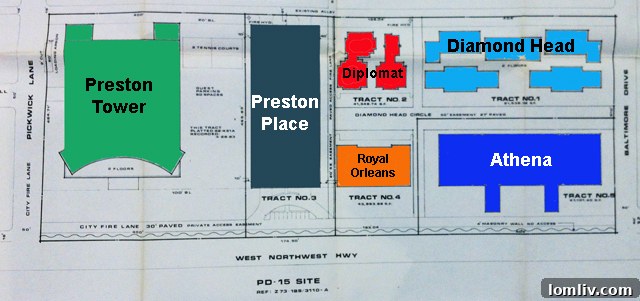
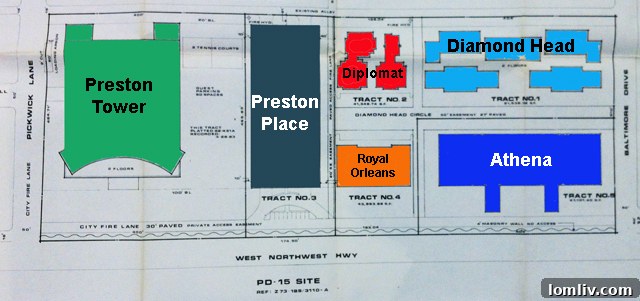
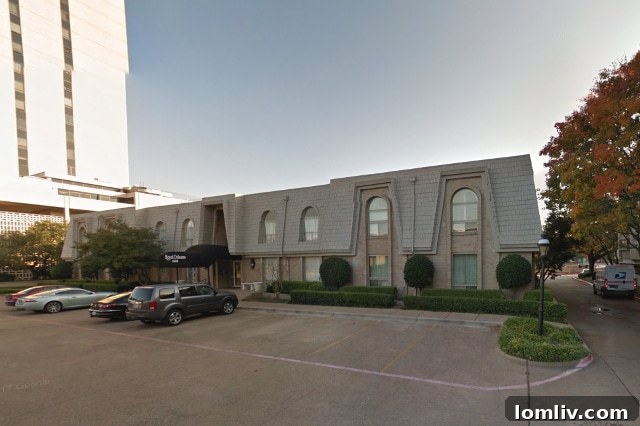
Amidst the ongoing uncertainty surrounding Preston Place, another significant parcel within the PD-15 authorized hearing area, Royal Orleans, has emerged with a definitive path forward. This property, occupying a modest acre on Northwest Highway, strategically positioned adjacent to the western side of the Athena development, has been a key player in the broader redevelopment discussions. During the initial PD-15 process, Provident Realty Advisors had established an informal understanding with Royal Orleans, and their proposals for Preston Place frequently incorporated development plans that spanned both Royal Orleans and Preston Place plots.
Now, while Provident’s involvement with Preston Place has ended, reliable sources, including Royal Orleans representative Ken Newberry, have confirmed a significant development: Provident has officially inked a deal to proceed with a project specifically on the Royal Orleans lot. This shift marks a pivotal moment, as Provident redirects its focus to a neighboring property after its unsuccessful bid for Preston Place.
The rumor mill is abuzz with details about this new venture, suggesting an ambitious design for a 16-17 story “pencil building” on the comparatively small Royal Orleans lot. Despite numerous attempts to contact Provident representatives for official confirmation and project specifics, these inquiries have regrettably gone unanswered, leaving much of the project’s details to speculation. However, if these rumors hold true, such a development raises several critical questions and potential challenges within the tightly defined framework of the rewritten PD-15 ordinance.
Navigating Zoning and Development Hurdles
The revised PD-15 ordinance was meticulously crafted to be quite stringent, seemingly permitting only a single high-rise structure along the Northwest Highway corridor within this specific zoning district. A separate, independent high-rise project on the Royal Orleans parcel would inevitably open the door to discussions about the potential for a second high-rise development on the southern side of Preston Place, thereby challenging the very intent of the carefully negotiated zoning limits. The feasibility of such a project will heavily depend on how city permitting and zoning authorities interpret and apply the ordinance, potentially leading to further debates and perhaps even legal challenges.
Beyond the overarching density and height restrictions, another significant issue, which I have previously highlighted, pertains to parking. The fundamental equation of urban development dictates that a taller building necessitates more residential or commercial units. More units, in turn, demand a substantially greater number of parking spaces. In dense urban environments, meeting these parking requirements often means constructing extensive underground parking facilities. The deeper a developer must dig to accommodate the required parking, the exponentially higher the construction costs become, impacting the project’s overall financial viability and potentially increasing the final cost for residents or tenants.
Furthermore, a lingering concern revolves around the city’s current 70-foot setback requirement. This contemporary regulation appears to directly contradict a prior contractual agreement from the 1960s, which stipulated a more generous 100-foot setback, a condition explicitly agreed upon by the properties in the area at that time. This discrepancy presents what appears to be a rather open-and-shut case for legal challenge or a need for a specific variance. The implications of disregarding this historical agreement could set a precedent with far-reaching consequences for future developments in the vicinity.
Without firm, officially released plans for the Royal Orleans project, any detailed analysis remains speculative. The lack of concrete information means we are, to a degree, “flying blind,” eagerly awaiting more definitive announcements from Provident Realty Advisors or the Royal Orleans HOA to fully assess the project’s compliance, challenges, and ultimate impact on the PD-15 area.
The Enduring PD-15 Saga: What Lies Ahead?
In conclusion, it is abundantly clear that the years-long, often contentious, process for amending PD-15 has not concluded as neatly or decisively at City Hall as many had hoped. The narrative of the Preston Place redevelopment remains unresolved, with residents still awaiting a final settlement, now three Christmases removed from the devastating fire that initiated this entire saga. This prolonged state of uncertainty for Preston Place stands in stark contrast to the confirmed deal for Royal Orleans, highlighting the disparate paths and outcomes for properties within the same complex zoning district.
The unfolding developments raise pertinent questions not only for Preston Place but also for other significant projects in the area, such as the Diplomat, which has seen considerable progress, and the as-yet-silent Diamond Head Condos. Each of these properties, situated within the broader PD-15 context, faces its own unique set of challenges and opportunities. The decisions made regarding Royal Orleans, particularly if they push the boundaries of the recently enacted zoning ordinance, could set precedents that influence future development proposals for all neighboring parcels.
It seems increasingly likely that the complex PD-15 saga, with its intricate blend of community interests, developer ambitions, and city planning challenges, will continue to spill over well into the next decade. The journey to fully realize the vision for this critical Dallas corridor is proving to be a marathon, not a sprint, demonstrating the inherent difficulties in transforming established urban landscapes. Perhaps by 2029, or even later, a complete and harmonious resolution will finally be achieved, bringing true closure to all involved parties and establishing a clear path for sustainable urban growth.

About the Author: Specializing in high-rises, HOAs, and renovation projects, my passion extends to appreciating both modern and historical architecture, always balancing these elements against the dynamic YIMBY (Yes In My Backyard) movement. My commitment to insightful real estate journalism has been recognized by the National Association of Real Estate Editors, honoring my writing with three Bronze awards in 2016, 2017, and 2018, alongside two Silver awards in 2016 and 2017. If you have a compelling story to share or a proposal to make, please don’t hesitate to reach out via email at [email protected]. While I might be elusive on Facebook and Twitter, you’re always welcome to look.