Navigating the Labyrinth: Unpacking Dallas Property Tax Appraisals for Multi-Family Homes
The Dallas Central Appraisal District (DCAD) plays a pivotal role in determining property taxes for thousands of homeowners across the city. Yet, for many, myself included, there appears to be a stark divergence in opinion between DCAD’s valuation methodologies and the tangible realities of property conditions and market dynamics. This discrepancy is particularly pronounced in the assessment of multi-family residences and high-rise condominium units, often leading to confusion, frustration, and a significant expenditure of time for property owners seeking fair and accurate appraisals.
Over the past year, I’ve closely observed a concerning trend in how DCAD assigns value to specific multi-family and high-rise condo properties. A recurring issue revolves around properties like The Warrington, where units with identical floor plans and ostensibly similar conditions are consistently assigned the same value. While this might seem logical on the surface, a deeper dive reveals a system fraught with potential inaccuracies that disadvantage many property owners. Is this approach truly reflective of diverse property realities?
Understanding DCAD’s “Desirability” Framework in Dallas Real Estate Appraisals
DCAD categorizes homes using a system they term “desirability,” which, in practice, often correlates more closely with a property’s overall condition and perceived market appeal rather than its physical state of repair. This framework is crucial because it acts as a foundational element in the assessed valuation equation for Dallas property taxes. Initially, it was explained that single-family homes could utilize all eight “desirability” buckets, ranging from “undesirable” to “excellent.” However, for condo units, the system appears to be significantly condensed. For instance, my Athena floor plan only falls into one of four categories: “Average,” “Good,” “Very Good,” and “Excellent.” This simplification, while perhaps intended to streamline the appraisal process, can overlook critical nuances inherent in multi-family living.
Consider “desirability” as a direct multiplier in the complex formula that determines your property’s assessed value. If an “average” rating serves as the baseline, assigned a multiplier of one, then properties deemed less desirable would receive a base value multiplied by a factor less than one, thereby reducing their assessment. Conversely, properties categorized above “average” would see their base value amplified by a multiplier greater than one. This conceptual simplicity, however, often clashes with the nuanced realities of property values, especially when considering the diverse range of renovations and upkeep within a single building.
For example, an “average” property with a base valuation of $100,000 would retain that assessment, remaining at $100,000 after being multiplied by one. However, an identical home, merely rated as “good,” might experience a 20 percent increase in its multiplier, leading to a $120,000 valuation. While my initial observations hinted at DCAD employing percentages for these adjustments, a more detailed analysis suggests they might be utilizing flat dollar amounts when units transition between these “desirability” categories. This distinction is subtle but significant in its impact on final valuations, as a flat increase might not accurately reflect the proportional value gained from improvements or increased desirability.
In a tangible scenario within the Athena, the valuation difference between end units of the same size, rated as “average” and “good,” stands at a substantial $66,470. Intriguingly, the subsequent jumps from “good” to “very good,” and from “very good” to “excellent,” both consistently add $56,970 to the assessment. This pattern strongly indicates the application of a fixed monetary increase rather than a flexible percentage gain, suggesting a rigid, standardized calculation governs how properties are valued as they ascend through these “desirability” tiers. While seemingly straightforward, this standardized approach might inadvertently overlook unique property attributes or recent improvements, leading to an unfair property tax burden.
The Erosion of Accuracy: How Time Undermines DCAD Assessments
While assigning an “excellent” rating to all units in a newly constructed building might be justifiable at the outset, the passage of time inevitably introduces significant discrepancies into these initial property tax assessments. The longer a property stands, the more pronounced this divergence becomes, pulling the official valuation further and further away from its actual market condition and value. This temporal aspect is a critical flaw in DCAD’s current methodology for accurate property appraisals.
DCAD possesses the analytical tools and capabilities to implement sophisticated algorithms that could dynamically depreciate properties over time, while simultaneously recalibrating these depreciation rates against prevailing overall market dynamics. Furthermore, they could leverage publicly available building permit data to accurately upgrade a property’s rating – for example, moving it from “poor” to “excellent” – following a significant, permitted renovation. Yet, despite these capabilities, DCAD struggles to accurately measure and reflect individual unit conditions over decades, leading to assessments that often fail to capture the true state of a property and contributing to a flood of property tax protests each year.
One of the primary challenges lies in the data sources DCAD utilizes (or overlooks). While they may track building permits, they conspicuously fail to incorporate crucial actual sales data. It’s telling that during property tax challenges, DCAD appraisers often reference consumer-grade platforms like Zillow rather than professional-grade Multiple Listing Service (MLS) data, which offers a far more comprehensive and accurate picture of real estate transactions in Dallas. Moreover, DCAD remains largely unaware of alterations or improvements undertaken without a building permit, or work that does not legally require one. They also cannot account for the individual living habits of property owners – whether residents are meticulously fastidious, maintaining their units impeccably, or, conversely, neglectful, allowing properties to deteriorate over time. These unquantifiable factors significantly impact a property’s true condition and value, yet remain invisible to DCAD’s system.
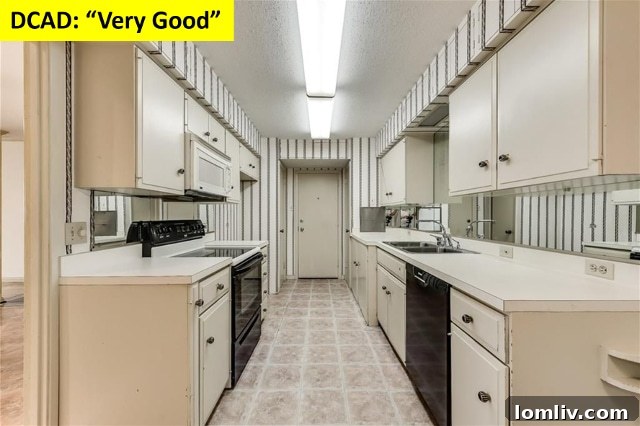
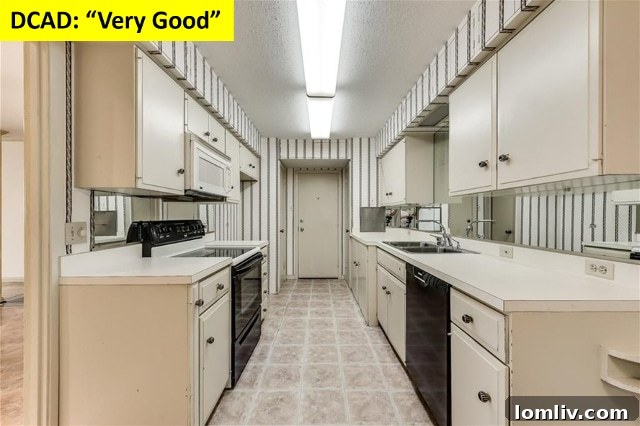
Consider a current scenario: a unit ripe for a complete gut renovation, exhibiting significant wear and tear, is surprisingly rated as “very good.” In stark contrast, another unit that recently underwent an extensive, high-quality gut renovation is only categorized as “good,” when its condition unequivocally warrants an “excellent” rating. Adding to this inaccuracy, this recently renovated unit’s square footage is reported incorrectly, off by a substantial 600 square feet. Such glaring discrepancies highlight the systemic issues within DCAD’s appraisal framework, demonstrating a critical disconnect between their assessments and the reality on the ground, thereby fueling the need for property tax appeals.
The Crucial Impact of Accurate Square Footage in Condo Valuation
Beyond the subjective “desirability” ratings, another significant area of inaccuracy in current DCAD appraisals pertains to square footage. One might logically assume that all units within a specific floorplan are identical in size. While this might have been true upon a building’s initial construction, the reality is that property dimensions can evolve significantly over time. This dynamic aspect presents a unique challenge for accurate assessment, particularly in older multi-family structures and high-rise condos.
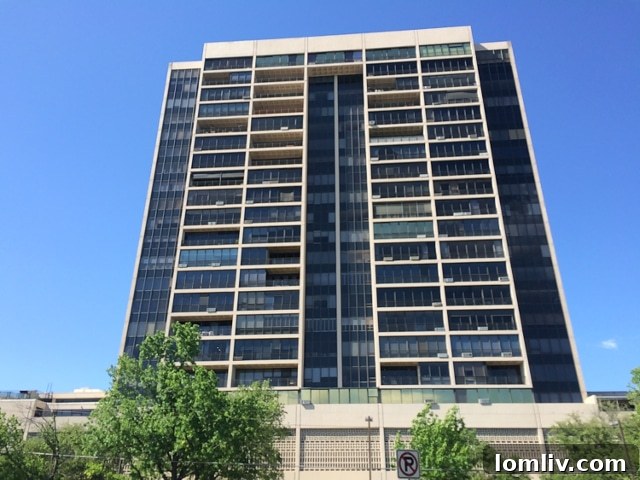
A prime example of this phenomenon can be observed in several Dallas high-rises, including the Athena, Park Towers, and Claridge, which have historically permitted residents to enclose all or portions of their balconies. This modification effectively transforms outdoor space into additional interior living area, directly impacting a unit’s functional square footage and, consequently, its value. Astonishingly, DCAD’s ability to accurately track these changes is remarkably deficient, especially given the widespread availability and ease of use of tools like Google Street View. With minimal effort, an appraiser could visually ascertain which balconies have been enclosed without ever leaving their office, providing a simple yet powerful means of verifying square footage alterations for more precise condo valuations.
This exact issue formed the basis of my own property tax challenge this year. Out of 26 units sharing my floorplan that were uniformly rated as “good,” only four had retained their original, open balconies. Yet, all 26 units were valued identically. My argument was clear: my home was being unequally valued, as it was approximately 300 square feet smaller than the vast majority of comparable units that had enclosed their balconies, thus possessing a larger effective living area. The lack of differentiation in valuation despite significant physical differences constitutes a fundamental inequity in the appraisal process and a common grievance among Dallas property owners.
During my appeal, I was informed that DCAD, observing a majority of enclosed balconies, made a blanket assumption that all units now possessed this larger, expanded space. While such balcony enclosures were previously explicitly noted under “Additional Improvements” in past assessments, this distinction has apparently been abandoned. The larger square footage is now merely “assumed” across the board, even when this assumption is not generally reflected in the square footage totals reported by DCAD itself. This creates a paradoxical situation where the appraisal value accounts for a larger space, but the official records may not, leading to confusion and an unfair tax burden for Dallas homeowners.
Similar grievances have emerged from residents of nearby low-rise buildings, where patio spaces that remained open were taxed at the same rate as those of neighbors who had enclosed theirs, further illustrating this systemic oversight in property tax assessments. My walk-in appraiser acknowledged the challenge, stating that DCAD typically waits for buildings to file formal amendments when square footage changes. The inherent problem, however, is that very few, if any, buildings proactively submit such amendments. I proposed a more proactive solution: for DCAD to directly request this critical information from building management or, in the specific case of balcony enclosures, to simply utilize readily available digital tools like Google Street View for visual verification. Such steps could establish a more accurate baseline for assessments and significantly reduce the burden on individual homeowners to continually correct these inaccuracies.
Another layer of complexity arises when portions of units are sold or exchanged between neighbors, a practice not uncommon in high-rise living. While some of these “swaps” are meticulously documented in condo declarations filed with DCAD, many others are not. Buildings like The Stoneleigh have numerous units where owners have acquired parts or all of adjoining units, significantly altering their original layouts and measurements. While newer buildings might have diligently reported these combined units to DCAD, older structures have been far less forthcoming or consistent in their reporting, creating a persistent lag between official records and actual property configurations that impacts accurate property valuation.
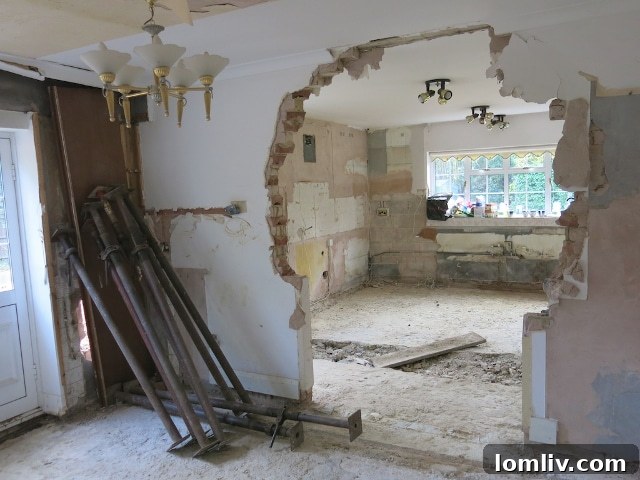
For example, I am aware of a specific combined unit that is now accurately reflected in DCAD’s records. However, this alteration is conspicuously absent from the building’s own official condo documents. This isn’t an attempt by the condo association to conceal anything; rather, the documents simply don’t reflect the combination because the structural modification involved merely blowing a hole in an interior wall to join two units, without affecting any common elements of the building. Such seemingly minor structural changes, when unrecorded, can have significant implications for accurate square footage assessments and, consequently, property valuations, leading to homeowner property tax protests.
The Disconnect: Assessed Value vs. Market Listing Price in Dallas Real Estate
A glaring avenue of inaccuracy and inefficiency within DCAD’s appraisal system becomes strikingly apparent when properties are listed for sale on the open market. The “very good” rated unit, identified earlier as a candidate for a full gut renovation and now actively listed for sale, currently carries an asking price that is $35,000 *less* than its assessed value. This is not an isolated incident. I am also aware of another “gut-able” listing, on the market for an extended period at $1.6 million, yet inexplicably valued by DCAD at a staggering $2.124 million. Such significant disparities between what a property is valued for tax purposes and what the market dictates it is actually worth underscore a fundamental flaw in the appraisal process for Dallas properties.
While it is true that market dynamics can sometimes lead to properties selling for more than their assessed value, the inverse scenario, where properties are listed significantly below DCAD’s valuation, should immediately trigger a review. The pertinent question, then, is why DCAD fails to systematically monitor and integrate active market listings into its valuation models. Surely, a proactive approach of daily checking new and changed listings would be considerably less time-consuming and resource-intensive than dealing with the annual deluge of property owners flocking to their offices to protest demonstrably inaccurate assessments. This reactive stance places an undue burden on taxpayers to correct DCAD’s oversight, costing both the district and homeowners valuable time and resources.
It’s commendable when institutions like DCAD strive to simplify and streamline a previously inconsistent or “willy-nilly” system. However, the implementation of excessively rigid “desirability” buckets, while seemingly bringing order, may only be marginally less inaccurate than previous methods. In fact, as buildings continue to age and individual units undergo varying degrees of renovation, neglect, or modification, these rigid categories become increasingly outdated and irrelevant. The current system, as it stands, consistently fails to present accurate data for valuation purposes, resulting in a substantial waste of time for countless property owners who are compelled to protest what often appear to be obvious discrepancies in their Dallas property appraisals.
Furthermore, this new, rigid system has, in some instances, caused property valuations to surge dramatically as units undergo a “true-up” to fit into these new, inflexible categories. A little more diligence and comprehensive homework on DCAD’s part – specifically, engaging in thorough research and gathering diverse data points *before* rolling out such a simplified, yet potentially flawed, method for assessing multi-family properties – would undoubtedly have saved considerable time, angst, and financial burden for everyone involved in the Dallas real estate ecosystem. An accurate and fair property tax system benefits the entire community, not just individual homeowners.

Remember: My passion and expertise lie in the intricate world of Dallas high-rises, the complexities of Homeowners Associations (HOAs), and the transformative impact of renovation projects. However, my interests extend beyond this, encompassing a deep appreciation for both modern and historical architecture, always viewed through the lens of balanced urban development and the YIMBY (Yes In My Backyard) movement, which advocates for more housing density and accessible housing options. My commitment to insightful real estate commentary has been consistently recognized by the National Association of Real Estate Editors, who honored my writing with three Bronze awards in 2016 (for an article on housing styles), 2017 (on property taxes and local government efficiency), and 2018 (covering a major condo fire and its implications), alongside two Silver awards in 2016 (for an international property piece focusing on Marrakech) and 2017 (exploring second homeownership in Bermuda). Have a compelling story about Dallas real estate, a complex HOA issue, an innovative renovation, or perhaps even a unique marriage proposal you’d like to share? Feel free to reach out to me via email at [email protected]. While I encourage you to look for me on Facebook and Twitter for more real estate insights and updates, you might find my online presence rather elusive – but the search is always welcome!