Dallas ISD Confronts Student Homelessness Amidst Winter’s Chill
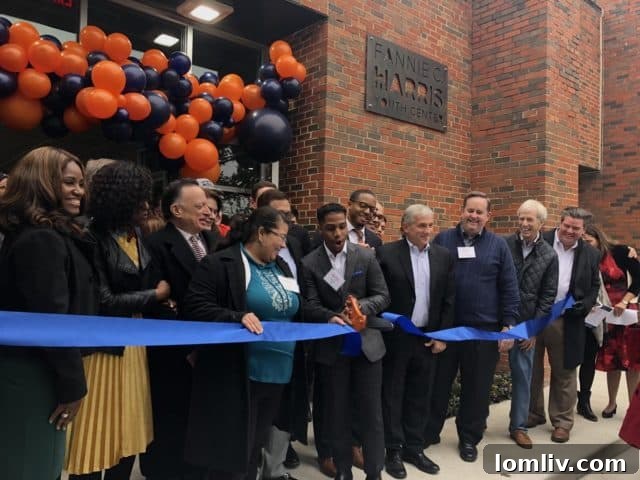
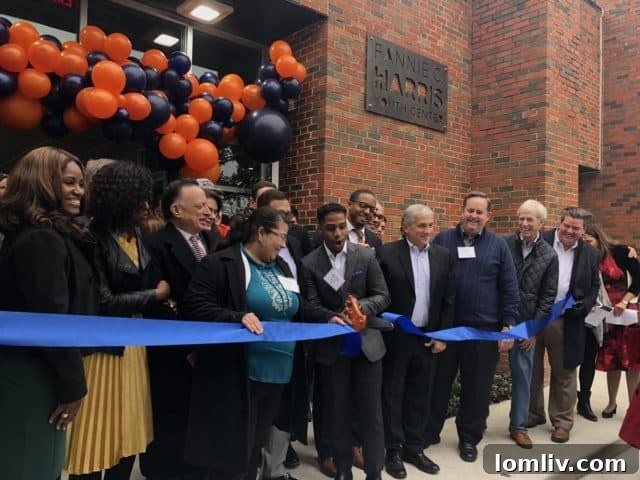
The chill of winter brings more than just a drop in temperature; for thousands of vulnerable students in Dallas, it intensifies the daily struggle for shelter, warmth, and basic necessities. This reality was acutely felt by Ashley Marshall, manager of the Dallas ISD’s homeless education program, as she attended the ribbon-cutting ceremony for the first phase of the Fannie C. Harris Youth Center’s new drop-in facility. Despite the celebratory atmosphere marking a significant stride in supporting Dallas’s unsheltered youth, the biting cold outside served as a stark reminder of the urgent needs facing her department and the community it serves.
“I went to the ribbon cutting for our new drop-in center today, and it was so cold,” Marshall recounted recently. “I realized that we are in for a bad winter and our phone is going to start to ring off the hook for various items.” Her observation underscores a critical seasonal challenge: as mercury drops, the demand for support among the city’s homeless student population inevitably skyrockets, placing immense pressure on already stretched resources.
The Hidden Crisis: Unmasking Student Homelessness in Dallas
Each year, Dallas Independent School District officially identifies approximately 4,000 students as homeless. However, this figure is widely considered a conservative estimate. Experts and advocates, including Marshall, believe the actual number is significantly higher due to a variety of factors that prevent students and families from self-identifying. The stigma associated with homelessness, coupled with fears of intervention from authorities such as the police, Child Protective Services (CPS), or even Immigration and Customs Enforcement (ICE), often keeps families from seeking the help they desperately need.
“It’s around 4,000 each year, but I would say that is a conservative estimate,” Marshall explains. “A lot of people won’t self-identify because they are afraid we are going to call the police, or CPS, or even ICE.” This fear creates an invisible population of students living in precarious circumstances, cut off from vital support networks and educational resources.
Defining Homelessness: Beyond the Streets
The perception of homelessness often conjures images of individuals living on the streets, but the reality, particularly for students, is far more complex and nuanced. Many families do not consider themselves homeless if they are staying with relatives, often referred to as “doubled-up,” or if they can afford even the most basic and temporary hotel rooms. Yet, under the federal McKinney-Vento Homeless Assistance Act, these living situations unequivocally qualify as homelessness.
The McKinney-Vento Act is a cornerstone federal law designed to ensure that homeless children and youth have access to the same free, appropriate public education as other children. It broadly defines homeless children as “individuals who lack a fixed, regular, and adequate nighttime residence.” This critical definition includes children and youth living in motels, hotels, trailer parks, or campgrounds due to a lack of adequate alternative accommodations; those sharing housing with other families due to economic hardship, loss of housing, or similar reasons; and those living in emergency or transitional shelters. “And if you went to some of the motels these folks live at, it is pretty grim,” Marshall highlights, emphasizing the often-unseen struggles within these living conditions.
The broad scope of the McKinney-Vento Act is essential because it allows Dallas ISD to extend support to a wider array of students whose unstable housing directly impacts their ability to learn and thrive. Without this comprehensive definition, countless students would fall through the cracks, deprived of the educational stability and resources necessary to break the cycle of poverty and homelessness.
Addressing the Root Causes: Economic Disparity in Dallas
The escalating number of homeless youth in Dallas is not an isolated phenomenon but a symptom of broader economic and social shifts within the city. Rapid urban development, characterized by the demolition of affordable housing units and the proliferation of high-end condominiums, significantly exacerbates the housing crisis for low-income families. “We have so many homeless kids in our city — folks tend to be amazed by the numbers, but when you think about all the low-income apartments coming down and $400,000 condos going up, it makes perfect sense,” Marshall points out. This gentrification pushes economically vulnerable families out of their homes and neighborhoods, often into unstable living arrangements or out of the city altogether, further disrupting children’s education and well-being.
The Fannie C. Harris Youth Center: A Beacon of Hope
The opening of the drop-in center at the Fannie C. Harris Youth Center represents a significant leap forward in Dallas ISD’s efforts to support its homeless students. This “first-of-its-kind service” in Dallas is a collaborative initiative under the After8toEducate program, forged through partnerships with dedicated organizations like Promise House, CitySquare, and Social Venture Partners Dallas. The center aims to provide a safe, welcoming, and resource-rich environment for vulnerable students and unsheltered youth after school hours, holidays, and weekends.
This critical facility offers more than just a roof over their heads; it provides essential services that address the holistic needs of these students. These services often include access to nutritious meals, clean showers and laundry facilities, academic support and tutoring, mental health counseling, and connections to other social services. By offering a stable environment where students can address their immediate needs, catch up on schoolwork, and receive emotional support, the Fannie C. Harris Youth Center plays a vital role in fostering educational stability and promoting overall well-being.
Immediate Needs: How the Community Can Help
Despite the long-term promise of the new center, immediate challenges persist, particularly as winter descends upon Dallas. The district’s homeless education services department is currently grappling with a temporary logistical hurdle: the North Texas Food Bank, a crucial partner, recently relocated to a new facility in Plano. While this move is beneficial in the long run, it has temporarily disrupted deliveries, impacting the availability of essential food supplies for students.
To bridge this gap and meet the growing demand, Ashley Marshall has been working tirelessly to replenish stores of shelf-stable snacks and meals through an Amazon Wish List. She is hopeful that the Dallas community will step in to help fill the department’s pantry during this interim period.
Beyond food, students urgently need practical items that provide dignity, comfort, and protection against the elements. These include new socks, underwear, toiletries, and hygiene products. Perhaps most critically, there is an immense demand for new warm coats and school uniforms. Marshall emphasizes the importance of these items being *new*.
“We have lots of well-meaning people call us to donate ‘gently-used’ clothing, but my gently used is not someone else’s gently used, so we now ask for new,” Marshall explained. “Our homeless kids deserve a new uniform or coat; they are in such dire circumstances a new coat would mean so much to them.” Providing new items not only meets a practical need but also offers a sense of dignity and normalcy that is often denied to children experiencing homelessness. It tells them they are valued and worthy of fresh starts.
Furthermore, there is a specific and often overlooked need for larger sizes, particularly for high school students. “We need bigger sizes. It is easy for us to get little kid sizes — people are happy to buy cute little coats and toys for little kids, but we tend to forget our high schoolers,” she points out. Older students, especially those who may have been asked to leave home, often face the most acute and solitary challenges, struggling to survive “couch to couch.” Providing them with age-appropriate, new clothing ensures they can attend school comfortably and confidently, reducing the chances of them being singled out or missing educational opportunities due to inadequate attire.
A Call to Action for the Dallas Community
Ashley Marshall’s plea is straightforward: help fill the pantry and provide warm coats. Every donation, no matter how small, makes a tangible difference in the life of a student. “Even one or two extra coats will be more than we have today, so we are grateful for anything that comes our way,” she affirms. Supporting these students is an investment in their future and in the strength of the entire Dallas community.
If you are interested in assisting the Dallas ISD’s homeless education program, pantry items can be conveniently purchased from their dedicated Amazon Wish List. For direct inquiries, larger donations, or to learn more about how you can contribute, you can reach Ashley Marshall by phone at 972-749-5789 or via email at [email protected]. Your generosity can provide warmth, nourishment, and hope to students striving to overcome the profound challenges of homelessness.
Bethany Erickson is the education and public policy writer for Daltxrealestate.com. She is also the Director of Audience Engagement for Candy’s Media. She is a member of the Online News Association, the Education Writers Association, the International Academy of Digital Arts and Sciences, the National Association of Real Estate Editors, and the Society of Professional Journalists, and is the 2018 NAREE Gold winner for best series. Contact her at [email protected].