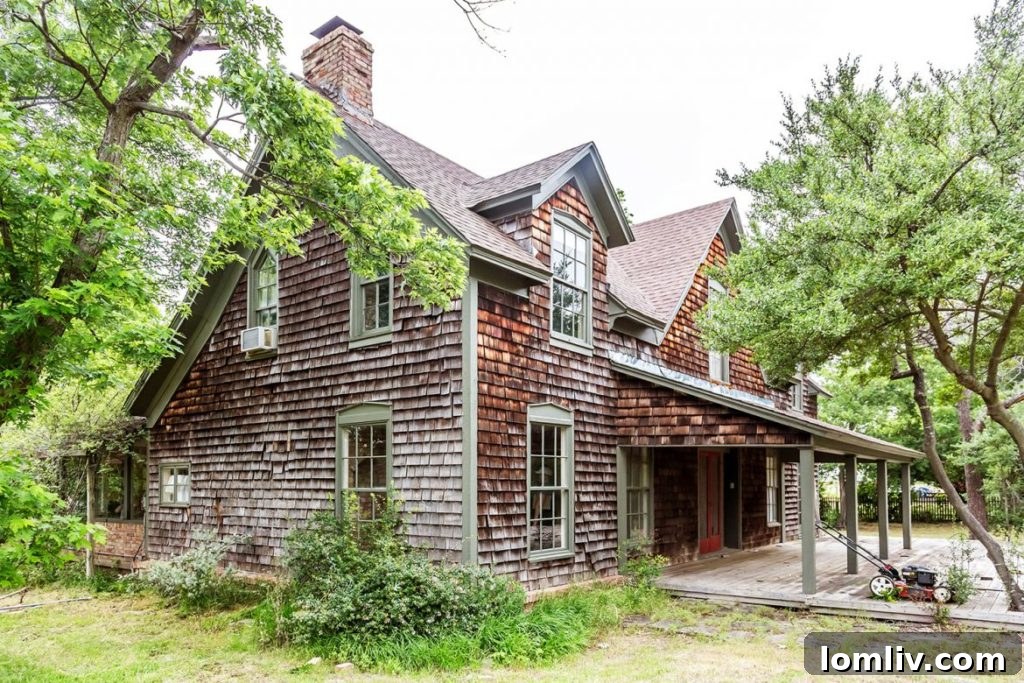
The Battle for History: Saving Plano’s Oldest Remaining Structure, The Collinwood House
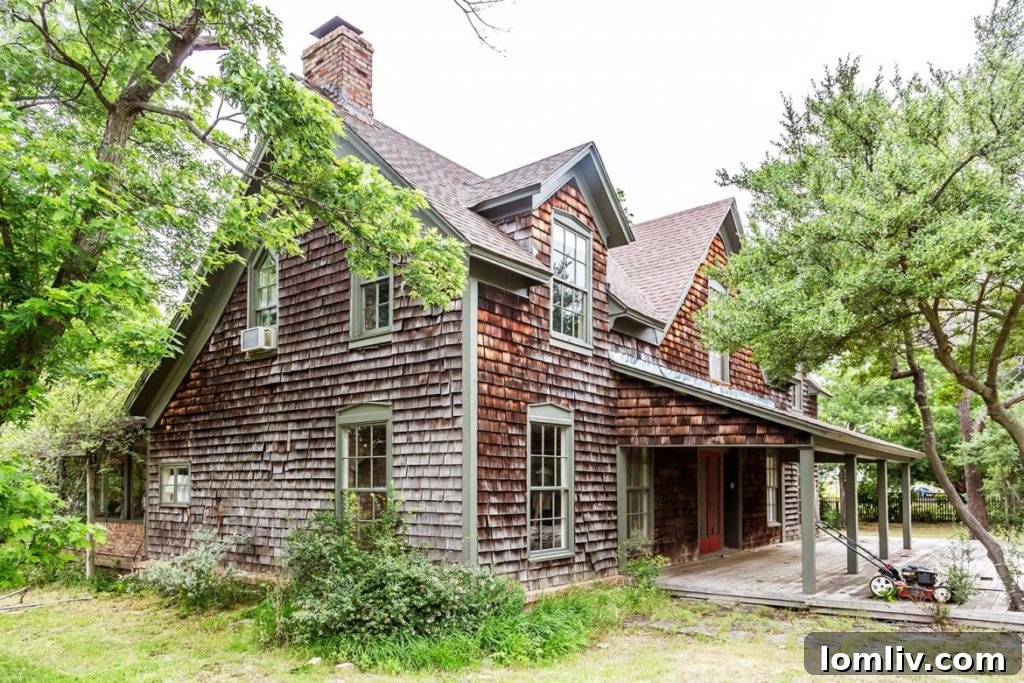
In the heart of Plano, Texas, a silent battle is being waged – a battle between progress and preservation, between modern amenities and an irreplaceable piece of local heritage. At stake is the Collinwood House, the oldest structure still standing within the city limits, a venerable sentinel from the 1860s. This historic home, which has witnessed over a century and a half of Plano’s growth and transformation, now faces imminent demolition. Its fate hangs in the balance, threatened by plans to construct a recreational pavilion as part of a new 124-acre park.
The proposed park, an ambitious project by Plano officials, is set to offer residents a range of modern conveniences, including extensive hike-and-bike trails, a dedicated dog park, and ample parking spaces. While these additions promise enhanced recreational opportunities for the community, the plan to tear down the Collinwood House to make way for a simple pavilion has sparked considerable alarm among historians, preservationists, and concerned citizens. This decision raises crucial questions about the value placed on tangible history in a rapidly developing urban landscape. The only remaining hope to save this historically significant residence, located at 5400 Windhaven Drive, lies in the direct intervention of the Plano City Council.
A Glimpse into the Past: The Collinwood House’s Enduring Legacy
The significance of the Collinwood House extends far beyond its age. It stands as a unique monument to Plano’s origins, offering a rare window into the early frontier history of North Texas. David Preziosi, executive director of Preservation Dallas, passionately articulates its importance: “The Collinwood House is an extremely significant house due to the fact that it is the oldest house remaining in Plano dating back to the 1860s, still sits on its original site, and is an outstanding example of the rare Gothic Revival style of residential architecture.” He further notes that Plano has a commendable track record in other areas of historic preservation and expresses a strong hope that this commitment will extend to safeguarding the irreplaceable Collinwood House. “They have a great treasure with the Collinwood House and they need to work to save such an important piece of Texas’ history from being lost,” Preziosi emphasizes, highlighting the profound cultural and historical value at stake.
Candace Fountoulakis, a dedicated board member for the Plano Conservancy for Historic Preservation, has been at the forefront of the tireless efforts to preserve this invaluable property. Despite multiple calls from the Plano City Council for Requests for Proposals (RFPs) aimed at finding a viable solution for the house, none have been accepted, underscoring the urgent need for a breakthrough. Fountoulakis eloquently captures the essence of the house’s allure: “The more we learn about it, the more we find out it’s a unique, rare, and special look into that era of Plano’s history and we don’t have anything like that left.” She describes visiting the house as more than just an observation; it’s an immersive, educational journey. “It’s a huge learning experience, a picture of early frontier history and when you stand in there and look at it, it’s a visceral experience,” she adds, emphasizing the profound emotional and educational connection it offers to Plano’s formative years.
Architectural Marvel: A Rare Gothic Revival Gem
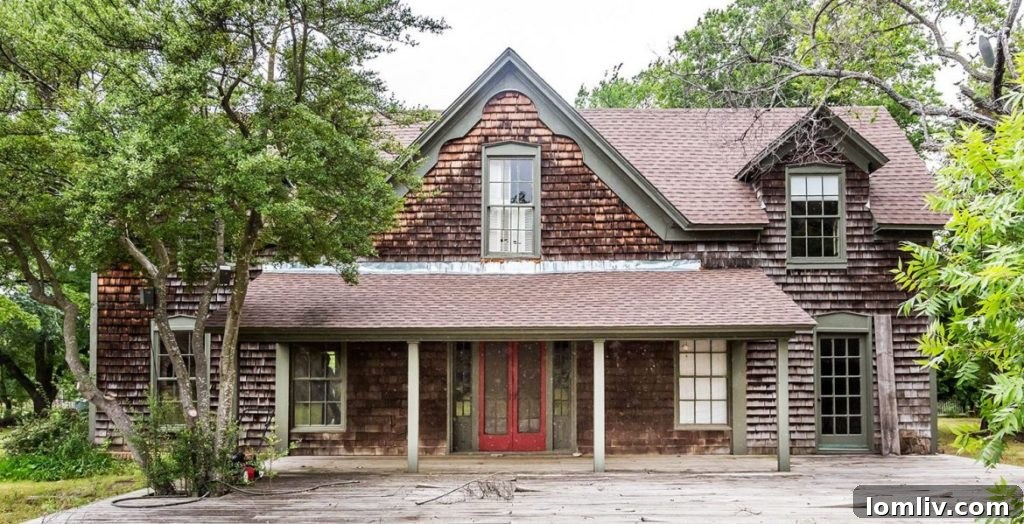
The architectural significance of the Collinwood House is indisputable and provides compelling reasons for its preservation. This imposing 3,200-square-foot, one-and-a-half-story cross-gable carpenter Gothic house stands as a remarkable example of its style, especially for North Texas. Its construction speaks volumes about the ingenuity and resourcefulness of early settlers; the home was built using hand-hewn timbers, likely felled directly from the surrounding area, showcasing the craftsmanship of the era. The original clapboard siding, a characteristic feature of its time, remains largely intact beneath a layer of wood shingle siding added in the mid-1900s, telling a layered story of the home’s evolution.
Preziosi reiterates the imperative to preserve such a treasure: “Due its historic significance, and the fact that it remains in good condition with most of its original features intact, it should be given every opportunity to be restored for the public to enjoy and learn about the history of Plano.” He underscores the rarity of such a find: “It is very rare to have a surviving piece of tangible history dating back to the 1860s in north Texas and it would be a tragedy to lose this house. The building needs to remain in its original location, restored, and protected for the future.”
As detailed by Plano Magazine, the distinctiveness of the Collinwood House is particularly noteworthy:
Gothic Revival farmhouses of this age are comparatively uncommon in our region since a greater majority of mid-1800s Gothic Revival houses are found in cities and towns back east and not in rural Texas. Many elaborate examples were constructed after Andrew Jackson Downing popularized them in his books and articles written in the 1840s and early 1850s. Needless to say, the Collinwood house and its surrounding yard areas are worthy of National Register of Historic Places recognition.
This style, popularized by architectural theorist Andrew Jackson Downing in the mid-19th century, brought a sense of romanticism and picturesque aesthetics to residential design, often characterized by steep gables, pointed arches, and decorative trim. Finding such a well-preserved example in a rural Texas setting makes the Collinwood House an invaluable educational and historical asset.
Further architectural details add to its unique character: a magnificent Greek Revival entryway, featuring a transom and sidelights adorned with a remarkable 32 panes of glass, creates a grand welcome. The second floor boasts two classic arched Gothic Revival windows, quintessential elements of the style. Perhaps most intriguing is the presence of a rare half cellar, an unusual feature in the Blackland Prairie region of Texas, hinting at specialized storage needs or construction techniques of the period.
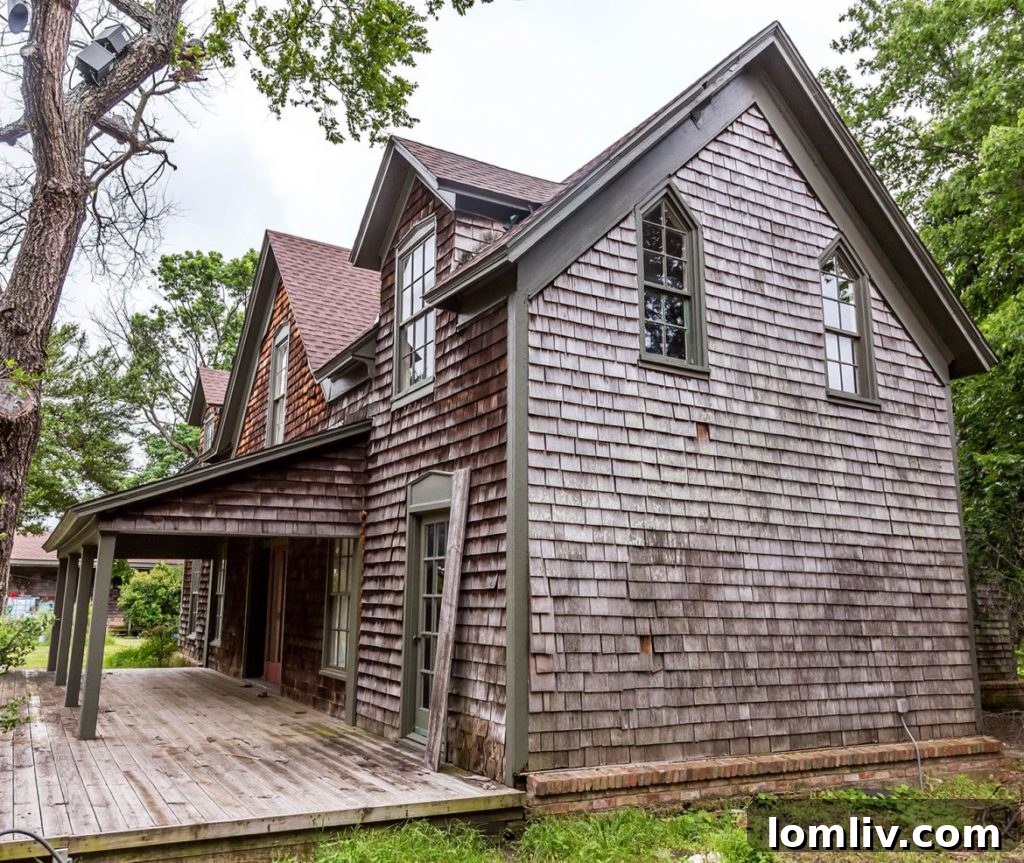
Unearthing History: The Collinwood House as a Living Document
The Plano Heritage Commission, recognizing the profound historical depth embedded within the Collinwood House, submitted crucial findings to the City Council in March of this year. Their report illuminates aspects of the house that might not be immediately apparent to the casual observer, emphasizing its “below the surface” historical material. Their findings stated, in part:
The historic character of the Collinwood House is not immediately obvious to most observers…The house has a very significant amount of historical material that remains below the surface. It is a critical and contributing historical asset that can be used as a vehicle to help convey the story of the greater Plano community from its earliest days of Anglo settlement to the present…The house is further distinguished by the presence of a half cellar, which is unusual in our Blackland Prairie region of Texas. The cellar represents an unusual opportunity to analyze a sealed deposit, which is rarely encountered on an old farm house site in this part of the state. The cellar, the well (which has also not been analyzed), and the house lot have the potential to yield data important to the pre-1884 occupants of the house, whose identities are known from diaries and other primary records.
This assessment highlights that the house is more than just an old building; it is a meticulously preserved archaeological site. The half cellar, in particular, offers a unique opportunity for scientific analysis of “sealed deposits” – layers of soil and artifacts undisturbed for generations. Such deposits can provide invaluable insights into the daily lives, domestic practices, and material culture of the Collinwood House’s earliest inhabitants. Coupled with an unanalyzed well and the house lot, these elements form a historical time capsule. The potential to unearth data about the pre-1884 occupants, whose identities are already partially known through diaries and other primary historical records, presents an extraordinary chance to connect tangible artifacts with documented human stories, bringing Plano’s foundational history to life.
A Call to Action: Saving an Irreplaceable Piece of Texas
The ultimate fate of the Collinwood House rests squarely with the Plano City Council, who are scheduled to cast their pivotal vote on August 8th. The deadline for submitting proposals to “rehab” the house, providing a potential path for its restoration and reuse, was August 5th. This tight timeline underscores the urgency and the precarious position of this irreplaceable landmark.
The Collinwood House is not merely a structure; it is a profound representation of early frontier history, directly linked to the historic Shawnee Trail, a vital cattle drive route. The property, part of the extensive Peters Colony land grant, bears visible imprints of multiple cultures and eras of Texas history, making it a living textbook for future generations. Losing this house would mean severing a tangible link to Plano’s deep past, erasing a unique educational resource, and diminishing the cultural richness of the community.
Preserving the Collinwood House is not just about saving an old building; it is about honoring the pioneers who shaped Plano, understanding the architectural evolution of the region, and providing future generations with a direct connection to their heritage. It is a testament to the idea that growth and preservation can, and should, coexist.
For those who believe in the importance of safeguarding history, the opportunity to make a difference remains. You can sign the petition to save the Collinwood House here, and implore the Plano City Council to intervene and ensure this invaluable piece of Texas history is preserved for posterity.