Experience History and Charm at the Munger Place Wine Walk in East Dallas
Step back in time and immerse yourself in the rich history and architectural beauty of one of East Dallas’ most cherished neighborhoods. The Munger Place Wine Walk offers a unique opportunity to celebrate 113 years of this distinguished historic district, allowing guests to sip and stroll through five magnificent, early 1900s homes. This annual event combines the pleasure of fine wines and delectable hors d’oeuvres from local businesses with an intimate tour of beautifully preserved residences, each telling its own compelling story. It’s more than just a wine walk; it’s a journey through the heart of Dallas’s heritage, showcasing a vibrant community dedicated to preserving its unique past.
The highly anticipated Munger Place Wine Walk is scheduled for Saturday, April 14th, from 4:30 PM to 8:30 PM, commencing at the inviting address of 5124 Victor St. This beloved community event not only provides an enjoyable evening but also serves a vital philanthropic purpose. Proceeds generated from ticket sales directly benefit the Munger Historic District Association, dedicated to the ongoing preservation of the neighborhood’s architectural integrity and historical significance. Additionally, contributions support the Lipscomb Elementary PTA, fostering educational excellence for local children, and the Boys and Girls Club of Dallas, empowering youth through invaluable programs and resources. Participants can choose between two ticket options: the “wine taster” ticket, priced at $25 in advance or $30 at the door, offering a delightful introduction to the event; or for those seeking a more exclusive experience, the “wine enthusiast” ticket is available for $60 in advance only, often including additional perks or access. Secure your spot for this memorable occasion at Talulah & Hess, located at 5810 Live Oak St., or conveniently purchase your tickets online by visiting www.mungerplace.com.
Beyond the delightful sips and bites, the true essence of the Munger Place Wine Walk lies in its unparalleled access to some of Dallas’s most significant historic properties. Each home on the tour has been meticulously preserved and thoughtfully updated, offering a fascinating glimpse into early 20th-century life while showcasing the seamless integration of modern amenities. Prepare to be inspired by the intricate details, the grand architectural styles, and the passion that homeowners invest in maintaining these living legacies. From Prairie-style Foursquares to neo-classical gems, these residences embody the charm and enduring spirit of Munger Place. Let’s delve into the distinctive characteristics and captivating histories of the featured houses that await your exploration.
4909 Victor St.: A Front Porch Lifestyle Blended with Fresh Updates
Four years ago, the current resident of 4909 Victor St. embarked on a comprehensive house-hunting journey across dozens of Dallas addresses. Yet, it was upon stepping through the entry foyer of this particular Munger Place gem that she knew her search had ended. The immediate allure came from a visually engaging split stairway, a timeless leaded-glass bay window, an authentic period light fixture, and original pocket doors, all conspiring to create an undeniable sense of home. Having relocated from the bustling metro Washington, DC area, she recounted, “I could not find a house that spoke to me — everything was similar in appearance, and then I came to look at this house over a lunch break.” Her swift decision underscores the home’s profound appeal: “I was not 5 feet inside the door and told the realtor that I wanted to make an offer. I am still happy with my decision as I am close to downtown and in a walkable neighborhood,” she affirmed, highlighting the perfect blend of historic charm and urban convenience that Munger Place offers.
A delightful sense of whimsy permeates the dining room, where the home’s original beamed ceiling serves as a striking backdrop to a distinctive metal-chained chandelier, vibrant teal walls, and charmingly high-backed dining chairs. Beyond this character-filled space, the den, an thoughtful addition not present in the original floorplan, offers serene views of the outdoor deck and lush garden, creating a seamless connection with nature. In the rear of the property, what was once a single-story garage has been ingeniously transformed with guest quarters stacked on top – an alteration likely introduced in the 1940s, reflecting evolving living needs over the decades. Built in 1911 for Susan and Graham Stearns, a prominent road-building expert who later owned an explosives company downtown, the house holds layers of Dallas history. Upon Susan’s passing in 1955, some 17 years after her husband, the home was advertised “to settle estate – $11,500,” a testament to the changing real estate landscape. The most significant renovation occurred in the 1980s, meticulously documented in a cherished photo album, with the next exciting undertaking being a modern remodel of the kitchen.
The current owner has dedicated considerable effort to preserving and enhancing this historic residence. Recent improvements include a meticulous repainting of both the interior and exterior, a complete rebuilding of the brick skirt beneath the house, and repaving portions of the driveway, ensuring both curb appeal and structural integrity. Embracing energy efficiency, most light fixtures have been replaced with contemporary LED alternatives. A particularly challenging yet successful project involved repairing the garage foundation, which necessitated drilling into the floor slab in certain areas and repouring after installing new foundation piers to support the wall, due to access limitations. Furthermore, the main house foundation has been carefully shimmed and leveled, ensuring the long-term stability and value of this beautiful Munger Place treasure. This commitment to maintenance underscores the dedication required to steward such a significant piece of East Dallas history, ensuring its allure for generations to come.
5007 Tremont St.: A Classic Prairie-Style Foursquare Reborn
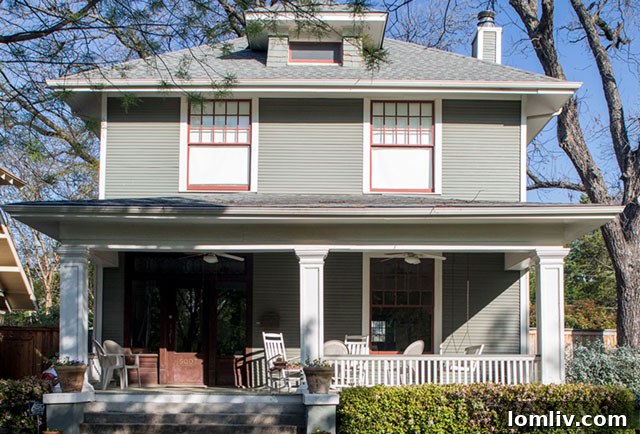
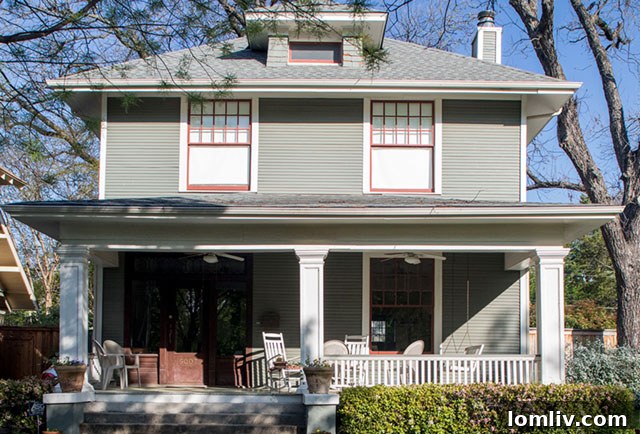
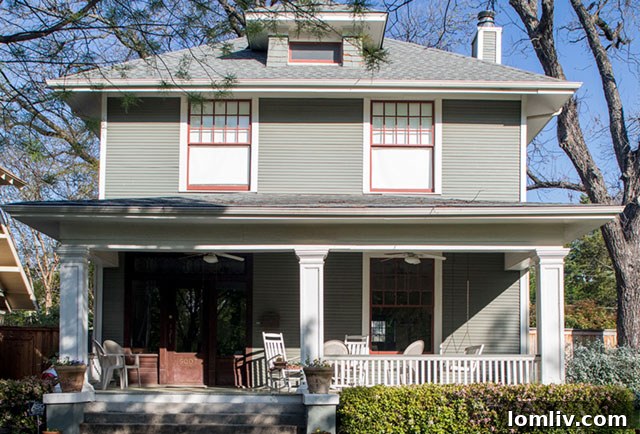
Erected in 1907, the distinguished Prairie-style Foursquare at 5007 Tremont St. stands as a testament to the early development of Munger Place. It proudly holds the distinction of being one of the first two houses on this particular street and ranks among the oldest within the entire Munger Place Historic District. This architectural style, characterized by its emphasis on horizontal lines, broad overhanging eaves, central chimneys, and craftsmanship, reflects a uniquely American design movement of the early 20th century. An antique photograph displayed in the front room offers a captivating glimpse into the past, suggesting that its first occupants, Rose and Joseph Durham, enjoyed the convenience and luxury of the trolley system that once traversed nearby North Collett Avenue. Joseph Durham’s involvement with the managing agents responsible for selling and marketing the original lots in Munger Place further intertwines the family’s history with the very genesis of the neighborhood. Remarkably, by 1962, the Durham family had resided in four different houses within this same historic block, illustrating a deep connection to and evolution within the community. Later, Ernest Haeber, a respected pharmacist and proprietor of Haeber’s Pharmacy on Elm Street, and his wife Olivia called this house home from 1926 until 1957, contributing another layer to its storied past.
Following decades, the home experienced a period of neglect. By 1981, Munger Place Realty marketed the house for a mere $40,000, explicitly stating “as is,” reflecting its distressed condition. However, visionary investors recognized the inherent potential and historical value. Following an intensive two-year renovation, the same firm proudly offered it for $170,000, a truly remarkable return on investment that served as a powerful testament to the burgeoning future and revitalization of Munger Place. This transformation underscores the enduring appeal and intrinsic value of historic preservation within the district. Many of the home’s original features have been lovingly preserved, including the gleaming hardwood floors that echo countless footsteps through time and a selection of period light fixtures that cast a warm, historic glow. The floorplan has undergone only subtle, thoughtful changes over the years to adapt to modern living without compromising its historical integrity. A charming bay window gracefully opens up the breakfast room, which also serves as a cozy family-gathering spot, added off the kitchen. The original hall from the entryway to the kitchen was artfully closed off to create a convenient downstairs bathroom, enhancing functionality. Upstairs, the traditional sleeping porch, a common feature of homes built before air-conditioning, was creatively converted into a spacious master bathroom and an inviting sitting room, offering contemporary comfort while honoring its historical roots.
The classic, timeless feel of this residence has even earned it a few star turns in local TV commercials, showcasing its photogenic charm and authentic historical ambiance. Befitting the era before widespread air-conditioning, the home thoughtfully entices residents and visitors alike outdoors with a welcoming front porch swing, a pleasant side yard perfect for quiet contemplation, and a backyard patio meticulously laid with turn-of-the-century bricks, inviting moments of relaxation and social gathering. This Foursquare exemplifies how careful preservation and respectful modernization can create a home that is both historically significant and perfectly suited for contemporary life, offering a tangible link to East Dallas’s rich architectural legacy and a harmonious blend of past and present.
5015 Reiger Ave.: Lovely Front Gardens and Era-Appropriate Updates
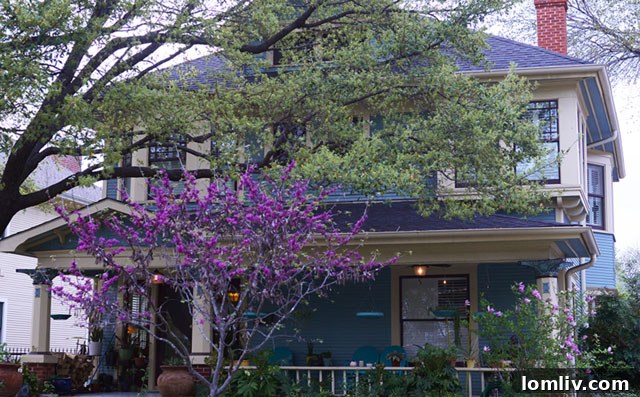
Upon approaching the captivating 1909 home at 5015 Reiger Ave., visitors are first enchanted by its meticulously maintained front garden, a vibrant tapestry of greenery and blooms that signals the care and attention lavished upon this residence. Following this delightful introduction, the eye is drawn to the exquisite, delightful capitals adorning the front-porch columns—architectural details that stand as testaments to the craftsmanship of a bygone era. Like many original aspects of the house, these features required special care and consideration during a recent, comprehensive renovation that touched every corner of the home. This extensive undertaking was necessitated by a truly unfortunate event: a massive, sustained electrical-power surge that caused significant damage to several houses on this historic block. The family was compelled to move out for nearly a year as walls, ceilings, and floors were carefully peeled open, revealing the bones of the house, to allow for a complete re-wiring and restoration process. This misfortune, however, inadvertently led to some remarkable improvements, particularly in the kitchen. One wall was deliberately left exposed, revealing beautiful shiplap, which now serves as a charming design element. Period-appropriate soapstone countertops were installed, perfectly complemented by new, vintage-style appliances, creating a kitchen that is both highly functional and aesthetically true to the home’s early 20th-century roots.
Further demonstrating thoughtful adaptation, a large bathroom adjacent to the kitchen was judiciously down-sized, and an elegant extension was built to serve multiple practical purposes: a sophisticated butler’s pantry and a highly functional laundry room, equipped with two washers and two dryers—a modern necessity for a busy family with several teenagers. Another rear addition underwent a meticulous renovation to transform it into a luxurious master suite, boasting a graceful vaulted ceiling, a stylish, spa-like bathroom, a generously sized walk-in closet, and picturesque views into the deep, verdant backyard, creating a private oasis. A gracious, expansive deck spans the entire width of the house, providing an ideal outdoor living space, artfully decorated with a diverse collection of succulents, adding a touch of contemporary flair. Beyond the deck and a refreshing pool, an aged wisteria plant blankets a wide chicken run, contributing to a charming, slightly rustic ambiance that beautifully blends with the urban setting. Inside, the unstained, quarter-sawn oak floors downstairs, with their distinctive grain and rich patina, are all original to the house, as are the elegant pocket doors and a myriad of other tasteful details that speak to the home’s enduring quality and historical character. This home on Reiger Ave. truly embodies the resilience and beauty of historic preservation, showcasing how challenges can be transformed into opportunities for sensitive, era-appropriate enhancements that respect the past while embracing modern living.
5101 Victor St.: An Oft-Remodeled Foursquare with a Storied Past
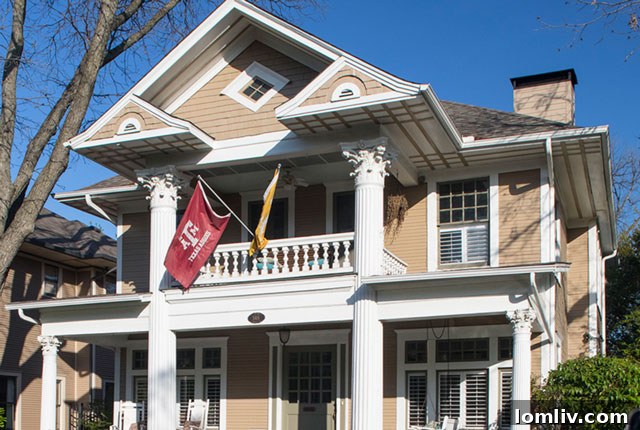
Behind the impressive, ornate neo-classical façade of the 1909 (or possibly 1910) home at 5101 Victor St. lies an Foursquare residence with a rich, continuously evolving history, having undergone numerous remodels and transformations throughout its existence. The architectural style, characterized by its classical elements like columns and decorative motifs, provides a grand first impression, hinting at the elegance within. The original owners, the Griffin family, appear to have sold the home within a year of its construction to the family of Seaborn Y. Matthews. Matthews, known for his Matthews Bros. Clothing store on Main Street, championed the straightforward and effective slogan, “Good Clothes That Fit,” reflecting a no-nonsense approach to business that characterized the era. This early turnover set a precedent for the home’s dynamic ownership history; it changed hands several times within its first decade alone, being owned in succession by a diverse array of professionals including a dentist, a physician, a furniture executive who resided there from 1920 to 1950, and later, a carpenter/contractor from 1952 to 1975. Each owner, in their own way, contributed to the ongoing narrative and physical evolution of this distinctive Munger Place property.
By the time Patsy and Hank Stephenson valiantly rescued the home from a period of significant decline in 1980, it bore the marks of its varied past. Striped awnings, once a fashionable addition over every window, had been installed and subsequently removed, an upstairs kitchen had been oddly installed, and, most alarmingly, the critical load-bearing wall dividing the two front rooms on the ground floor had been demolished, resulting in a pronounced and concerning sag in the downstairs ceiling. The Stephenson’s embarked on an extensive and much-needed renovation, meticulously re-establishing that crucial load-bearing wall to restore structural integrity. They ingeniously combined three smaller upstairs bedrooms into a single, luxurious master suite, optimizing space and modern functionality. The attic space was thoughtfully opened up as a walk-up area with strategically placed skylights, inviting natural light and creating versatile extra living space. An additional den was also incorporated, further enhancing the home’s layout. The current owners have continued this tradition of thoughtful adaptation and improvement, transforming that den into an elegant billiards room—a perfect space for recreation and entertainment. Furthermore, in the mere weeks leading up to this highly anticipated home tour, they finalized their impressive kitchen renovation, installing sophisticated leathered-granite countertops that blend seamlessly with the home’s historic character, and cleverly creating an adjacent mudroom/wine room, adding both practical utility and a touch of modern luxury. This home stands as a compelling example of how a historic property can be continuously reimagined and refined while honoring its architectural roots, making it a true showpiece of Munger Place’s enduring appeal and the dedication of its residents to both preservation and progress.
5112 Victor St.: Woods, Windows, and Wings – A Historic Boarding House Transformed
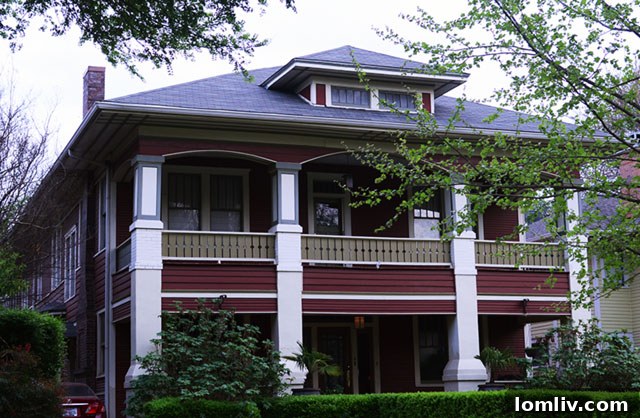
In contrast to many of the grand, single-family residences that define the Munger Place Historic District, the property at 5112 Victor St. possesses a uniquely intriguing origin: it was originally constructed in the early 1920s as a boarding house, replacing an earlier structure that tragically burned to the ground in 1915. This distinction marks it as a vital piece of social history, reflecting the neighborhood’s dynamic development and its role in accommodating the growing population of Dallas. Said to be a favorite among engineers working at the bustling Ford Motors plant downtown, this substantial house offered its boarders an array of what were considered modern conveniences for the era. According to a compelling 1923 advertisement featured in the Dallas Morning News, these amenities included the luxury of running water in every room, inviting sleeping porches designed for comfort during warm Texas nights, effortless access to the convenient streetcar lines, and the promise of “good meals served in large, cool dining room.” Such features highlighted the forward-thinking design and the practical comfort provided to its temporary residents, painting a vivid picture of communal living in early 20th-century East Dallas.
The home’s journey continued, and by 1982, the late Raymond Poche and his family embarked on the formidable task of rescuing this vacant, fire-damaged, and neglected property. Their undertaking was not merely a renovation but a profound act of historical restoration, transforming a derelict structure into a beloved family home. In the process of reconfiguring the numerous bedrooms, they unearthed unexpected remnants of its past, including piles of old sinks and empty gin bottles, silent witnesses to its boarding house days. While they introduced a second stairway to improve functionality and flow, the Poches meticulously preserved the home’s unusual and distinctive wood trim and original doors, many still retaining their authentic hardware, thus safeguarding critical elements of its unique character. A particularly interesting detail is the paneling adorning the downstairs hallway, which was sourced from a nearby office building that was undergoing demolition, ingeniously repurposing materials and giving them a new life within this historic dwelling. Echoes of its past also resonate through the remaining original cast iron bathroom fixtures, which impart an undeniable sense of period authenticity. Furthermore, the current owners have continued this legacy of discovery and restoration, uncovering the original fireplaces, which now stand as focal points of warmth and history. The parlor also retains its original charm with delicate piano windows, elegant pocket doors that slide effortlessly into walls, and built-in bookcases, inviting quiet contemplation and reflecting the refined tastes of a bygone era. This house on Victor St. stands as a powerful testament to resilience, meticulous preservation, and the continuous evolution of a historic East Dallas landmark, beautifully blending the narratives of communal living with a vibrant family future, and making it an essential stop on the Munger Place Wine Walk for anyone interested in the rich tapestry of Dallas’s past.