Navigating the Shifting Tides: Luxury Apartment Glut and the Urgent Need for Affordable Housing
The urban landscape across many major U.S. cities is currently grappling with a paradoxical challenge: a burgeoning supply of high-end, luxury apartments juxtaposed with a severe shortage of affordable housing for the majority of its workforce. This dynamic creates a complex environment for city planners, real estate developers, and residents alike, fostering both opportunity and significant societal hurdles. As we delve into the situations unfolding in vibrant cities like Denver and Dallas, we uncover a fascinating intersection of market forces, investment strategies, and innovative, albeit controversial, urban policy responses.
Denver’s Elevated Real Estate Market: A Case of Luxury Oversupply
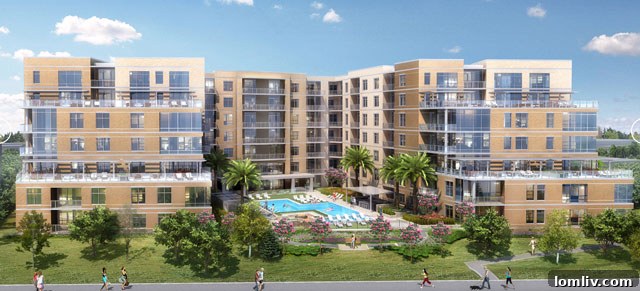
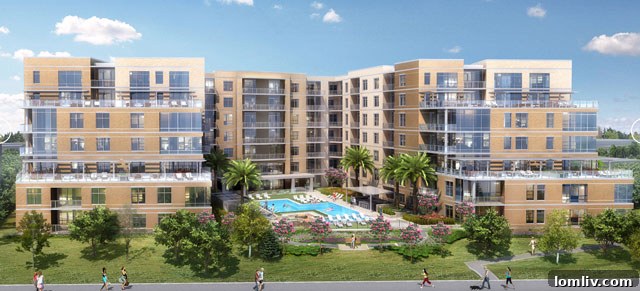
Denver, often celebrated for its “Mile-High” charm and stunning natural beauty, has been experiencing a significant boom in its downtown area, marked by a rapid transformation of once modest neighborhoods into glamorous urban centers. During a recent visit, the sheer scale and pricing of new construction were immediately apparent, signaling a market characterized by aggressive development and high expectations. However, recent reports paint a more nuanced picture, highlighting a potential oversupply in a specific segment of the rental market.
Since 2015, Denver has witnessed the addition of approximately 12,000 new apartments, with another 22,000 units actively under construction. A striking statistic emerges from this growth: over 90% of these newly built units are classified as luxury. This designation implies the incorporation of premium finishes and an extensive array of amenities designed to attract a higher-rent demographic. Imagine granite and quartz countertops, state-of-the-art appliances, elegant vessel tubs, expansive closets, and private balconies – features that undoubtedly elevate the living experience but also command top-tier rental prices.
This surge in luxury development has led to a significant increase in vacant units. According to MPF Research, metropolitan Denver currently has 16,000 vacant apartments, a substantial rise of 5,500 units in just three years. While rents for a typical one-bedroom apartment in Denver hover between $1,200 and $1,600, luxury units invariably occupy the upper end of this spectrum. This creates a challenging scenario where a significant portion of the city’s housing stock caters to a niche market, potentially leaving a large segment of the population struggling to find suitable housing options.
There are currently 16,000 vacant units in metropolitan Denver, up 5,500 from three years ago, according to MPF Research. Rents for a typical one-bedroom in Denver range from around $1,200 to $1,600. Rents for luxury apartments are at the top end of that range.
Because the buildings are higher-end, landlords won’t have to undergo the rigorous frequent inspections that make some wary of other government-subsidized housing programs, said Nancy Burke, vice president of government affairs at the Colorado Apartment Association.
One compelling reason often cited for developers’ preference for high-end construction is the allure of reduced governmental oversight. Less stringent inspection requirements for luxury properties can translate into lower operational complexities and costs for landlords, making such projects more attractive from an investment perspective. This insight underscores a critical dynamic in the housing market: developer incentives can sometimes inadvertently steer development away from the broader public need for diverse and affordable housing options.
Dallas’s Rapid Ascent in Apartment Development: A Parallel Narrative
Shifting our focus to Dallas, a similar narrative of aggressive apartment development unfolds. The Dallas metroplex has been a national leader in residential construction, particularly within the apartment sector. High-profile mixed-use developments, such as The Katy in Uptown, exemplify the city’s commitment to creating modern, amenity-rich living spaces that attract discerning residents. These new luxury complexes are leasing up rapidly, reflecting a strong demand for quality and convenience among a certain demographic.
Beyond the glamorous urban cores, areas like Coit Road in District 11, near the new Costco, have transformed into veritable “apartment cities.” Structures like Sylvan 30, across from Trinity Groves, further illustrate the sheer volume of new rental units entering the market. The rationale behind this aggressive construction is often supported by statistics showing that new residents to Dallas typically rent for at least a year before considering homeownership, indicating a consistent demand for rental properties.
However, the crucial question remains: Is Dallas building too much, particularly in the luxury segment? Data from Sydney Bennett reveals that the Dallas metro added more new rental stock than any other U.S. metropolitan area in 2017, with 22,851 deliveries, up from 15,459 in 2016. Nearly twenty-three thousand new units entered the market, with the majority, much like Denver, being higher-end units commanding substantial rent. This raises a pertinent question about affordability for the city’s essential workforce – teachers, police officers, administrative assistants, and other vital professionals – whose salaries may not align with these escalating rental costs.
While Dallas generally remains more affordable than many surrounding cities, rents in sought-after neighborhoods like Uptown and Highland Park frequently exceed the Dallas median. Furthermore, suburban areas like Plano and Flower Mound exhibit surprisingly high rental costs. Plano, for instance, has a two-bedroom median of $1,410, while Flower Mound, potentially due to its proximity to DFW Airport, boasts a two-bedroom median of $2,180. These figures highlight how even within a broadly affordable metropolitan area, pockets of extreme expensiveness challenge the notion of widespread accessibility.
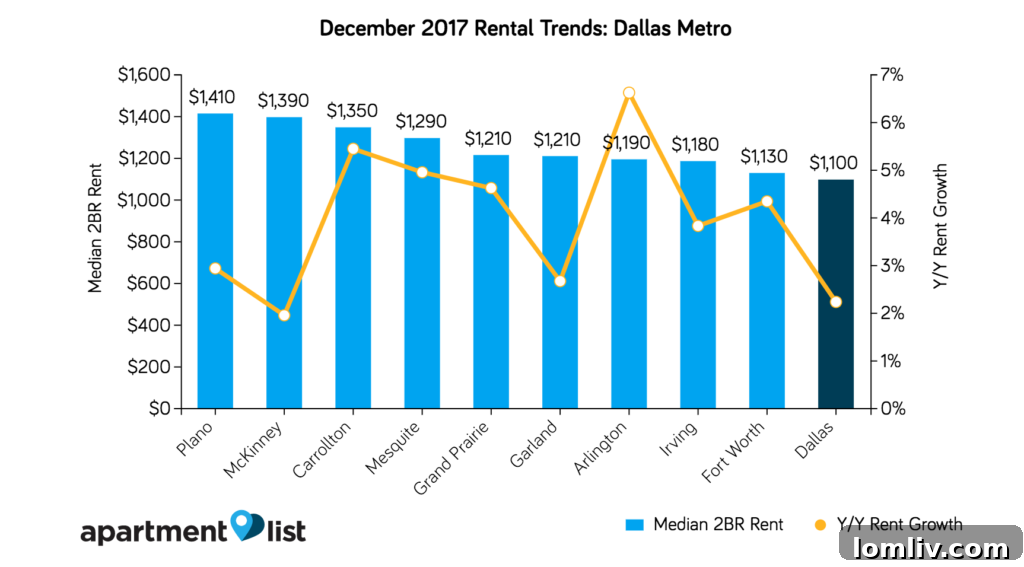
The silver lining for Dallas renters is that overall rents remain below the national average and are growing at a slower pace, with only a 2.2% increase in 2017. Nevertheless, the trend suggests that finding affordable housing is increasingly pushing first-time homebuyers and, potentially, renters towards the outer fringes of the metropolitan area.
National Apartment Market Trends: A Deceleration with Regional Hotspots
Beyond Denver and Dallas, the national apartment market exhibits signs of leveling off. Recent reports indicate that nationwide apartment starts dropped by approximately 8 percent in 2017, with further declines projected for 2018 and 2019. Robert Dietz, chief economist with the National Association of Homebuilders, confirms this trend, stating that “The (national) cycle for apartments is leveling off. Rental vacancy rates are rising and rent increases are slowing.” This macroeconomic shift suggests a natural market correction after years of rapid expansion.
Comparing apartment unit additions, the third quarter of 2017 saw 30,000 new units, a noticeable decrease from the 38,000 units added in the third quarter of 2016. While experts predict a general slowdown of 10 to 20% in apartment construction nationally, certain markets remain outliers. Dallas, surprisingly, tops a list of cities where apartment starts might still be “a little too aggressive” given the strong demand observed over previous years. Other monitored locations include Seattle, Denver, Charlotte, Nashville, and Boston. This continued aggressive building in specific high-growth urban centers, despite national deceleration, raises concerns about potential market saturation and its implications.
The Broader Housing Crisis: The Unmet Demand for Affordable Homeownership
Adding another layer of complexity to the urban housing dilemma is a broad national shift: an increasing desire for homeownership. More renters today aspire to buy a house than at any point since the last recession. However, this burgeoning demand is met with a severe lack of affordable homes on the market. Michael Neal, senior economist for the Homebuilders’ Association, notes, “We have an elevated potential of demand but at the same time we have a low inventory.”
The statistics are stark: “We are estimating there are approx. 21 renter households for every available home” priced under $300,000, which is generally considered the affordable threshold in many markets. This imbalance between immense demand and scarce supply inevitably fuels intense bidding wars, pushing homeownership further out of reach for many prospective buyers, particularly those with moderate incomes. This inability to transition from renting to owning then puts continued pressure on the rental market, even as luxury units sit vacant.
Denver’s Bold Plan: Subsidizing Luxury for the Workforce
Faced with a glut of vacant, sparkling new, high-end rental apartments boasting lavish amenities like gyms, roof decks, and even pet spas, Denver has devised a proactive, yet contentious, plan. The city intends to utilize these luxury units to house essential workers such as teachers and medical technicians, individuals who are critical to the city’s functioning but are priced out by its soaring market rents.
Under a program set to be unveiled, the city, in collaboration with local employers and charitable foundations, will bridge the financial gap. They will pay the difference between what a lower-income resident can realistically afford and the market rent of an otherwise vacant luxury apartment. Denver Mayor Michael Hancock articulated the immediate benefit, stating, “Instead of having these units sit vacant, if we can create opportunities to help some of our employees, our residents get into those units, that’s an immediate response.”
Examining the Implications of Housing Subsidies
While Denver’s plan addresses the immediate problem of vacant units and offers a lifeline to essential workers, it opens a “whole new can of worms” with multifaceted implications. For cities like Dallas, which has faced its own fiscal challenges, the question of funding is paramount. How much will such a program cost, and what employers will be willing to contribute? The financial burden could be substantial, particularly if the program scales to meet significant demand.
Furthermore, social dynamics within these luxury communities could be affected. Will market-rate tenants, paying full price for their units, feel resentment or friction living alongside subsidized renters? This raises questions about equity, perceived fairness, and potential impacts on community cohesion. More broadly, such a program could be seen as artificially propping up the upper end of the housing market, shielding properties and their investors from the natural market forces that typically lead to rent adjustments when supply outstrips demand. As Chris Herbert, managing director of Harvard University’s Joint Center for Housing Studies, queries, “What you would hope is that excess supply leads to lower rents. If the city is pumping subsidies in, aren’t they going to be propping up the upper end of the market?”
Conclusion: Charting a Course for Balanced Urban Housing
The experiences of Denver and Dallas underscore a critical juncture in urban development. The emphasis on luxury apartment construction, driven by investor appeal and potentially lighter regulatory oversight, has created vibrant new communities but also exacerbated the affordable housing crisis. While the national apartment market shows signs of slowing, key growth cities continue to build aggressively, potentially leading to further imbalances.
The widening gap between luxury apartment availability and affordable homeownership opportunities, coupled with the unmet demand from an increasingly aspirational renter class, paints a complex picture. Denver’s innovative, albeit controversial, approach to bridging this gap through subsidies serves as a potential blueprint for other cities but also highlights the inherent challenges and criticisms associated with market intervention. Moving forward, sustainable urban planning will require a delicate balance of encouraging diverse housing options, fostering responsible development, and implementing policies that genuinely address the housing needs of all residents, ensuring that urban growth benefits the entire community, not just a privileged few.