By Carol Bell-Walton
Special Contributor
White Rock Lake stands as a jewel in the heart of Dallas, offering solace, recreation, and vital green space to thousands of residents and visitors. For a quarter-century, its integrity and future have been passionately guarded by a dedicated group of community members: the White Rock Lake Task Force. Thanks to their unwavering commitment and the tireless efforts of East Dallas-area advocates, this essential citizen-led organization is now proudly celebrating its 25th anniversary, marking a significant milestone in local park preservation and community involvement.
The White Rock Lake Task Force is more than just a committee; it is a robust coalition, embodying the collective voice of the community. It draws its strength from a diverse assembly of representatives from 17 neighborhood associations, numerous nonprofit organizations dedicated to serving the park, various recreational users’ groups, and passionate environmental groups. This broad representation ensures that every facet of the lake’s ecosystem and community interaction is considered. The Task Force operates in close coordination with the professional staff of the Dallas Parks and Recreation Department and benefits from the crucial support and representation of Dallas City Council District 9 Park Board Representative Maria Hasbany, fostering a vital bridge between citizens and city governance.
The Genesis of Guardianship: Michael Jung’s Vision
The genesis of the White Rock Lake Task Force can be traced back to the profound civic spirit and relentless advocacy of Michael Jung, a longtime neighborhood champion. His urgent call for the creation of a citizen task force emerged in 1984, sparked by a tragic incident during a Fourth of July fireworks show at White Rock Lake Park. The park roads, choked with traffic, became impassable for emergency vehicles attempting to reach a heart attack victim, leading to a fatal delay. This devastating event underscored a critical need for organized citizen oversight to ensure public safety and effective park management.
Jung’s vision, however, was not immediately realized. In 1988, he made another earnest attempt to establish a permanent citizens’ oversight committee for the park. Over the ensuing years, various ad-hoc committees were formed to tackle specific challenges, such as the creation of the comprehensive Master Plan, the detailed Design Plan, and a crucial Dredging Feasibility Study for the lake. While these committees made significant contributions, they often suffered from overlapping memberships and a lack of continuous, unified oversight. The persistent challenge was to create a durable structure that could provide ongoing advocacy and historical memory for the park’s long-term health.
The persistent efforts finally bore fruit in 1997. After 13 years of dedicated work and advocacy by Michael Jung, the White Rock Lake Task Force, as we know it today, became a reality. This pivotal moment was made possible through the crucial support and leadership of then-District 9 Dallas City Councilmember Mary Poss and her appointed Park Board representative, Gary Griffith. Their commitment to empowering citizen involvement transformed a long-held dream into a tangible and powerful force for the lake.
An Enduring Mandate: A Voice For White Rock Lake’s Future
The White Rock Lake Task Force operates under a clear and compelling mandate, meticulously outlined in its bylaws. These guiding principles articulate the organization’s core mission: “The purposes of the Task Force are to preserve, protect, and enhance White Rock Lake Park; to ensure compliance with adopted planning documents governing the Park; to provide a vehicle for public participation in proposals, plans, and decisions relating to the Park from their earliest serious consideration to their completion; and to serve as a channel for communication between its member organizations and the City regarding issues affecting the Park.”
This mission statement underscores the multi-faceted role of the Task Force. “Preserving” refers to safeguarding the natural ecological balance, historical landmarks, and scenic beauty of the lake. “Protecting” involves vigilance against environmental threats, overdevelopment, and commercial encroachment. “Enhancing” means working to improve amenities, accessibility, and the overall user experience for all visitors. Ensuring “compliance with adopted planning documents” is vital for maintaining the long-term vision established for the park, preventing deviations that could compromise its integrity. Critically, the Task Force serves as a fundamental “vehicle for public participation,” empowering ordinary citizens to have a direct say in the future of their beloved park. Finally, it acts as an essential “channel for communication,” bridging the gap between diverse community interests and city decision-makers.
The Task Force’s efficacy is maximized when it receives notice of potential projects or issues from their earliest stages of consideration. This proactive engagement allows the group to provide timely input, identify potential problems, and suggest solutions before plans are too far advanced. However, the Task Force has also demonstrated its responsiveness and tenacity when information, inadvertently or intentionally, has not been shared with the public. Park advocates across Dallas know that when serious concerns arise, the Task Force stands ready to vet their issues thoroughly, bringing transparency and accountability to park-related decisions.
Safeguarding Public Lands: Victories for Preservation
A testament to its enduring impact, the White Rock Lake Task Force has twice prevailed in significant battles to keep White Rock Lake Park lands unequivocally public. These victories highlight the critical role citizen oversight plays in protecting shared community assets from privatization or inappropriate development.
In 2012, the Task Force played a pivotal role in preventing an expansion by the Dallas Arboretum and Botanical Garden into the park’s valuable green space. While the Arboretum is a cherished institution, the Task Force argued passionately that parkland should remain parkland. Their advocacy led to a successful resolution: the Arboretum’s much-needed parking garage was ultimately built on Garland Road, a more appropriate location, rather than encroaching upon Winfrey Point, a beloved scenic overlook within White Rock Lake Park. This outcome preserved public access and the park’s natural contours.
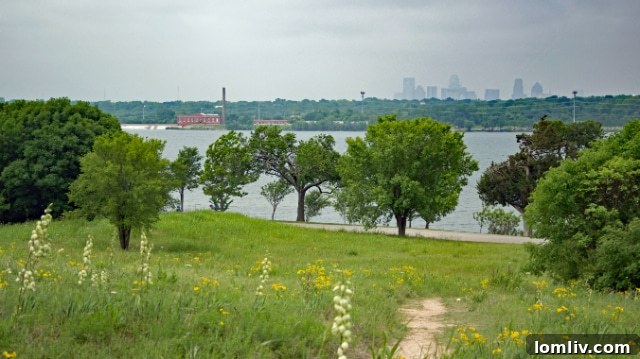
Just two years later, in 2014, another significant challenge arose concerning Boy Scout Hill. This ecologically valuable area, recognized as a native Blackland prairie remnant, was proposed for privatization as a restaurant. The Task Force, alongside other dedicated lake advocates, recognized the profound loss this commercialization would represent. A restaurant, driven by profit motives, would irrevocably alter the natural character of the hill, restrict public access, and destroy a precious example of Dallas’s original ecosystem. Through coordinated action and compelling arguments, the Task Force successfully preserved Boy Scout Hill as a public natural space, ensuring its continued ecological integrity and availability for everyone to enjoy.
These two landmark successes powerfully illustrate the invaluable benefit of having citizens organized and empowered for the explicit benefit of their park. Keeping public lands truly public, accessible, and protected for future generations is an ongoing challenge, one that requires constant vigilance and a unified voice. The Task Force provides precisely that voice, standing as a bulwark against pressures that might otherwise erode the park’s public character.
White Rock Lake: Managed By Citizens, For Citizens
Is the White Rock Lake Task Force perfect? No organization is. However, it unequivocally embodies the best opportunities for citizen activism and oversight in municipal governance. Its ongoing work, while not without its challenges, reflects a persistent commitment to improvement and responsiveness to community concerns. For instance, an ideal scenario would involve maintaining the park for pests and weeds using entirely organic methods. Yet, Plateau, an herbicide marketed by chemical company BASF, continues to be sprayed in certain areas. The Task Force has heard these concerns from residents and remains committed to advocating for progress toward fully organic maintenance practices, demonstrating their transparency and dedication to environmental best practices. With ten meetings held per year, the agendas are often packed, reflecting the multitude of issues that require attention and collaborative problem-solving.
The Indispensable Value of Institutional Memory
One of the most profound and often understated benefits of a long-standing citizens’ oversight group like the White Rock Lake Task Force is its invaluable institutional and historical knowledge of the park’s myriad projects, plans, and nuances. City staff may change, project engineers may retire, and corporate memory can fade, but the Task Force members, often serving for many years, retain a collective memory of the park’s history that is simply indispensable.
A compelling example of this came to light last year during the completion project for the White Rock Loop Trail, a significant undertaking funded by the 2017 bond package. By the time this project commenced, all the city personnel who had originally worked on the bond package and its specific provisions had retired, and the engineer overseeing the current trail project was not involved in the 2017 planning process. This created a knowledge gap that could have led to significant problems.
The project included a critical element: repaving a portion of E. Lawther, an area affectionately (or perhaps infamously) known among cyclists and hikers as “Hamburger Hill” due to its challenging incline and often rough surface. The previous engineer, who had overseen the bond package details, had not left sufficiently clear notes indicating that the E. Lawther section needed to be repaved *before* the adjacent trail segment was torn out for replacement. Both parts of the project – the road repaving and the trail replacement – were funded, but the order of operations was left ambiguous, potentially to be determined solely by the contractor.
The Task Force, drawing on its deep historical knowledge and the long-term involvement of many of its members throughout the initial bond planning process, immediately recognized the impending problem. Leaving the order of work entirely to the contractor carried a significant risk: E. Lawther and the trail segment could have been closed simultaneously. Such a dual closure on the east side of the lake would have created immense disruption, inconvenience, and safety concerns for countless recreational users, effectively cutting off a major artery for an extended period. The impact on walkers, runners, cyclists, and families seeking leisure would have been severe and prolonged.
Leveraging their collective memory and understanding of the original project intent, the Task Force was able to proactively suggest the intended, sequential order of the projects to the city’s parks department. Their timely intervention ensured that the E. Lawther repaving would precede the trail replacement, preventing simultaneous closures and minimizing inconvenience for the public. This proactive problem-solving, born from years of dedicated oversight, successfully averted a major logistical headache and ensured that the park remained accessible. These “unintended scenarios” – the ones that are quietly prevented through vigilant citizen oversight – are often the most profound, even if they aren’t visible to the casual observer.
The White Rock Lake Task Force remains steadfast in its intent to keep the public well-informed on all issues affecting the park. To stay updated with the most current news and developments, we encourage you to Like and Follow the “White Rock Lake Task Force” page on Facebook. Alternatively, you can request to be added to the organization’s mailing list by emailing [email protected].
All Task Force meetings are open to the public, and active participation from the community is not only welcomed but encouraged. The Task Force thrives on your involvement and input, recognizing that the strength of the organization lies in the diverse perspectives and shared dedication of Dallas citizens. While many valuable public lands across the country face pressures for privatization and commercial exploitation, the sustained implementation of Michael Jung’s pioneering model of citizen involvement has ensured that White Rock Lake, Dallas’s irreplaceable crown jewel, remains accessible, protected, and open to all. Your voice helps keep it that way.