Welcome to our acclaimed series, Interview with an Architect, where we engage with prominent voices shaping the North Texas architecture scene. This series delves into their impactful work, explores critical development challenges facing our communities, and uncovers valuable insights into exemplary design principles and practices. For those new to our series, you can revisit our inaugural interview here, offering a glimpse into the caliber of professionals we feature.

In this installment, we are honored to feature Larry Paschall, AIA, a distinguished Vice President and founding member of HPD Architecture. Located in the vibrant heart of Dallas, HPD Architecture is a highly respected architecture and interior design firm specializing in residential architecture. Since its establishment in December 2007, HPD has dedicated its expertise to crafting exceptional new constructions, executing meticulous renovations, and designing thoughtful additions primarily for private residences throughout the dynamic Dallas-Fort Worth metropolitan area. Paschall’s extensive experience and innovative approach have positioned HPD Architecture as a leader in creating bespoke living spaces that perfectly blend aesthetic appeal with functional excellence.
Beyond his pivotal role at HPD Architecture, Larry Paschall is widely recognized as an unofficial ambassador for the entire Dallas architecture community. He is the visionary co-founder of The Architecture Happy Hour, a groundbreaking monthly networking event that consistently draws hundreds of professionals. This diverse gathering includes architects, interior designers, real estate experts, construction specialists, and a broad spectrum of design enthusiasts and other community members. This unique forum fosters invaluable connections and collaborations across various industries, reinforcing Dallas’s position as a hub for design innovation.
The success of The Architecture Happy Hour event was preceded by the launch of the highly popular The Architecture Happy Hour podcast. Larry Paschall, alongside his esteemed HPD colleague Laura Davis, AIA, initiated this influential podcast in November 2009. Boasting 48 engaging and educational episodes, the podcast covers a wide array of topics crucial to the architectural and design world. Discussions range from practical considerations like “Can I Be My Own General Contractor?” to broader urban planning debates concerning iconic structures such as the Margaret Hunt Hill Bridge and Dallas’s strategic need for globally recognized “brand-name” architecture. Through this podcast, Paschall and Davis have created an accessible platform for both industry insiders and the general public to explore the multifaceted world of architecture.
Larry Paschall’s academic journey culminated in a Bachelor of Environmental Design degree from the prestigious Texas A&M University. He makes his home in the picturesque White Rock Lake area of Dallas, sharing his life with his husband and their two beloved basset hounds. Demonstrating a profound commitment to community service, Paschall dedicates his spare time to several significant leadership roles. He currently serves as Chairman of the Board of Directors for the North Texas GLBT Chamber of Commerce, advocating for inclusive economic growth and opportunities. Additionally, he contributes as a vital board member for their affiliated charitable organization, the Leadership Education & Advocacy Program (LEAP), which is dedicated to empowering and educating future leaders within the GLBT community. His diverse contributions underscore his commitment not only to architecture but also to broader societal betterment.
Interviewer: The Architecture Happy Hour recently celebrated its fifth anniversary, marking a significant milestone for this highly acclaimed event that you co-organize. What motivated you to initiate this unique gathering?
Larry Paschall: The inception of The Architecture Happy Hour stemmed from a critical need. Back in 2010, HPD Architecture was a relatively new firm, not widely known within the community. We recognized the imperative to build a robust network of contacts that we could engage with, both for business development and for fostering collaboration within the broader industry. We needed an organic way to connect.
Simultaneously, we saw an opportunity to make a statement: “Come to this event because it’s a strategically smart move for your career and business.” We had observed a common tendency among architects to primarily network with other architects. While that has its place, we understood the immense value in broadening our horizons. The Architecture Happy Hour was specifically designed to be a prime opportunity to meet diverse professionals—individuals who could prove to be excellent referral sources and invaluable contacts down the line. For instance, I now have direct access to three knowledgeable Realtors who can provide real-time insights into market trends. This kind of information is absolutely vital to our work as architects, informing our design decisions and client advice. By being so deeply “plugged into” the community through these connections, we are far better equipped to serve our clients comprehensively and effectively.
The growing attendance and engagement clearly demonstrate that people are recognizing the profound value of building these diverse professional connections. We’ve seen individuals travel significant distances to participate; for example, a talented metalworker from Waco makes it a point to attend, and an interior designer from Oklahoma City strategically schedules her visits to the Dallas Design District to coincide with our happy hour. It’s also become more than just a professional gathering for some; for a stylist who regularly attends, it’s evolved into an important social event, highlighting its broad appeal and welcoming atmosphere. The success and longevity of the event truly speak to its organic growth and the genuine connections it facilitates.
Our next gathering is scheduled for April 15 at Fashion Glass & Mirror, conveniently located in the Trinity Lofts Building within the bustling Design District. We kindly request that all prospective attendees register and RSVP on our dedicated Meetup site. This ensures we have an accurate headcount, allowing us to adequately prepare refreshments, including a selection of beer, wine, and delicious nibbles, for everyone to enjoy. We look forward to seeing you there for another evening of networking and community building.
Interviewer: In your multifaceted roles—as co-founder of The Architecture Happy Hour, a popular podcaster, and Chairman of the Board for the North Texas GLBT Chamber of Commerce—you undeniably serve as a key ambassador for the architecture community. What is the most surprising thing people often discover about the architectural profession when you speak with them?
Larry Paschall: It’s fascinating how ingrained cultural perceptions are when it comes to architects. On one end of the spectrum, you have the idealized image of Mike Brady from “The Brady Bunch,” a kind of everyman architect. On the other, you have the celebrated “starchitects” like Frank Gehry, known for their iconic, large-scale projects. The problem is, for many, the understanding of the profession typically jumps from these extremes to a complete void—they either know about the global superstars or literally no one else.
A frequent surprise for people is learning that we, as architects, are adept at designing homes, not just monumental public structures. They often assume our work is exclusively confined to towering commercial buildings, grand opera houses, or symphony halls. This misconception largely stems from visibility; the private residential work we undertake isn’t typically on public display in the same way a new civic building is. They don’t see the nuanced process of designing a custom family home or renovating an existing residence to perfectly fit a client’s evolving needs and lifestyle. It’s a core part of what many architects do, yet it remains largely unseen by the general public.
Another profound misunderstanding centers on the structure of our profession. Many people are genuinely surprised to learn that a staggering 80 percent of the members of the American Institute of Architects (AIA) operate as small businesses. The prevailing stereotype suggests that architecture is an exclusive realm reserved for the elite or “prima donnas,” focused solely on monumental, high-budget projects. This couldn’t be further from the truth. The vast majority of architects are small, independent practitioners or operate within small firms, deeply embedded in their local communities, working on projects of all scales—including, crucially, residential design. We are not just for the grand and opulent; we are here to bring thoughtful design solutions to a wide range of clients and projects.
Interviewer: That insight naturally leads to my next question: Architect-designed houses are frequently perceived as being exclusively within the domain of the wealthy. Is this a misguided notion?
Larry Paschall: Absolutely, that is a deeply mistaken perception, and it’s one we constantly strive to correct. When people flip through design magazines, they are inevitably bombarded with images of multi-million dollar residential properties, often located in exclusive areas like Seattle or picturesque European locales. These aspirational images, while beautiful, inadvertently perpetuate the myth that engaging an architect is a luxury reserved only for the ultra-rich. Consequently, many homeowners, even those planning significant projects, don’t even consider calling an architect first.
However, the reality is that architects are here precisely to serve a broad spectrum of homeowners. We bring specialized expertise in maximizing space, enhancing functionality, optimizing natural light, improving energy efficiency, and navigating complex building codes and construction processes. We are problem-solvers. In fact, we often find that contractors, who are on the front lines of construction, are the ones who recognize our value most clearly. When a contractor encounters a client with ambitious house design ideas but no clear plan, they frequently advise, “You really need to speak with an architect first.” This is because architects can streamline the entire process, help define the vision, preempt costly mistakes, and ultimately deliver a superior, more cohesive result that often saves money in the long run. Good design is an investment, not an extravagant expense, and it’s accessible to more people than typically believe.
Interviewer: Texas is often characterized by its “bigger is better” mentality, especially within the real estate market. What are your thoughts on this pervasive cultural infatuation with larger homes?
Larry Paschall: The “bigger is better” mentality in Texas real estate is driven by a complex mix of cultural and economic factors. There’s a palpable sense of needing to “keep up” with the Joneses; as neighbors’ houses expand, there’s an unspoken pressure for everyone else’s to grow proportionally. This creates an almost competitive cycle of increasing home sizes. From an economic standpoint, land in many parts of Texas has historically been relatively inexpensive compared to other major metropolitan areas. For developers, this translates into a clear incentive: the more square footage they can build on a plot of land, the greater their potential profit margin. This fuels the construction of ever-larger homes.
Consider the historical shift: a 1,200-square-foot house was considered a perfectly adequate and even desirable home in the 1950s. Today, the benchmark has dramatically risen, with 2,500 square feet often seen as a standard, and many are encouraged to believe they should “upgrade” to something even larger within just a few years. This relentless pursuit of more space can lead to unforeseen consequences. We frequently encounter individuals in their 50s and 60s who find themselves living in sprawling 10,000-square-foot homes, utilizing less than half of the space. They become effectively “stuck” in these oversized residences, burdened by higher maintenance costs, increased utility bills, and often a sense of isolation within their own homes, when a much smaller, more efficient, and thoughtfully designed space might have been the perfect fit from the very beginning.
It’s crucial for people to pause and ask themselves some fundamental questions before succumbing to this trend: “What is the actual purpose of all this space? Are we truly entertaining guests every single night, necessitating vast living areas? Do we genuinely need this much unused square footage, or could a more compact, well-designed home better serve our lifestyle and priorities?” A critical evaluation of needs versus perceived desires can lead to more intentional and ultimately more satisfying living environments.
Interviewer: You and your husband reside in a charming 1961 house that boasts a modest 1,600 square feet. Given the prevalent “bigger is better” trend, why did you consciously opt for a smaller footprint for your own home?
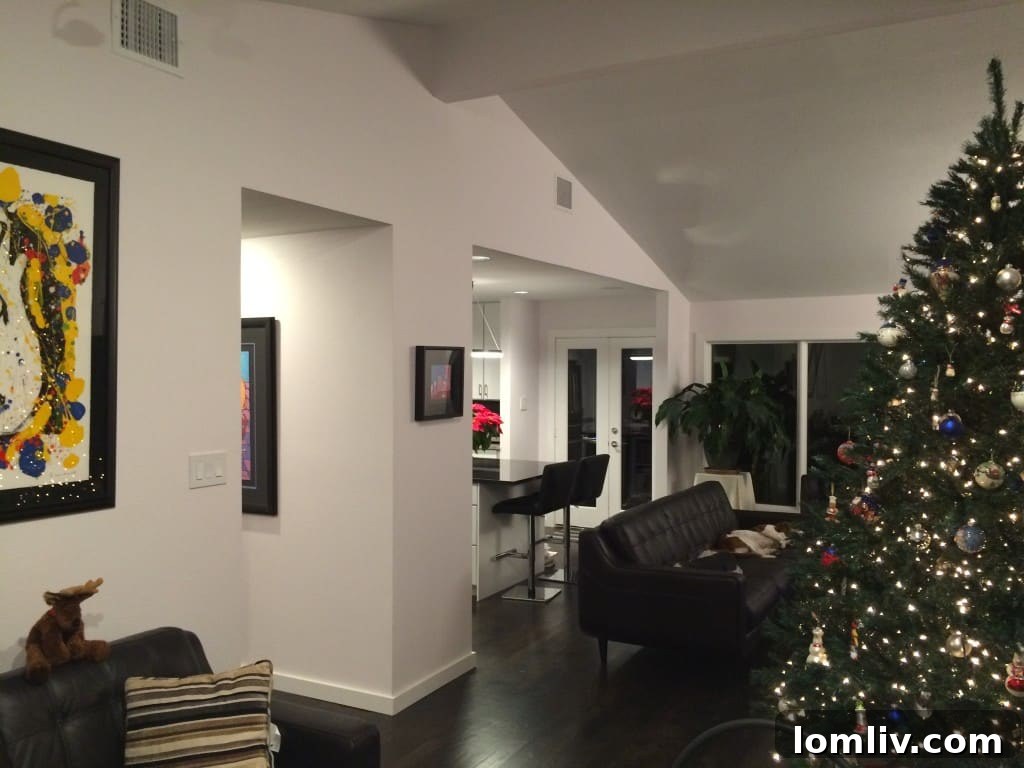
Larry Paschall: Our decision to embrace a smaller footprint for our home was a very deliberate and personal one, perfectly aligned with our lifestyle. There are just two of us, along with our two beloved basset hounds. We don’t have children, and we aren’t the type of couple who hosts elaborate dinner parties every weekend. For holidays, our gatherings are typically intimate family affairs, not large-scale extravaganzas. So, the need for extensive square footage simply wasn’t there.
Initially, we did explore the possibility of expanding our home, perhaps jumping up to around 3,000 square feet with a significant renovation. However, through careful consideration and a thorough assessment of our actual needs, we had a crucial realization: if we committed to staying within our existing 1,600-square-foot footprint, we could still achieve all the essential functionalities and design elements that were important to us in that larger, hypothetical 3,000-square-foot plan. The key, we discovered, was exceptionally smart space arrangement and thoughtful design.
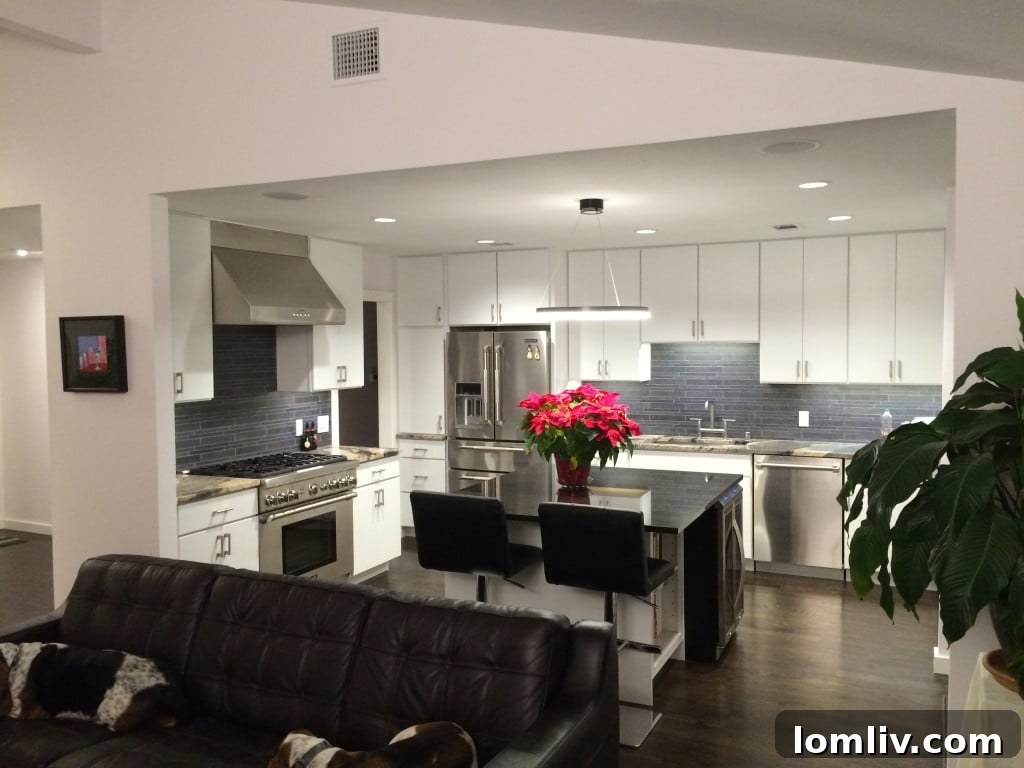
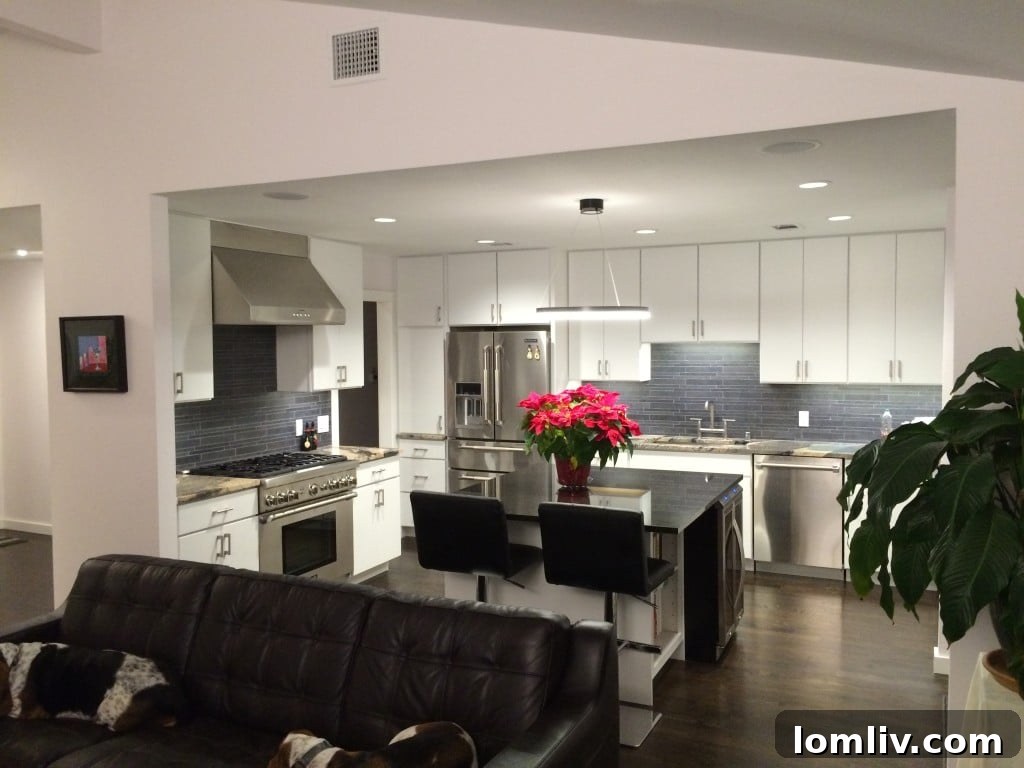
Our renovation was entirely focused on enhancing the quality and functionality of our existing space. We proudly doubled the size of our kitchen, transforming it into a much more expansive and workable area. This was a critical improvement, allowing both my husband and me to comfortably move and cook together without accidentally bumping into each other—a surprisingly common and frustrating issue in smaller kitchens! We also significantly increased the size of our master bathroom, which had been uncomfortably tiny. We had a front room that, over the years, had become largely unused and somewhat redundant. Through clever repurposing, this space was transformed into our new, elegant dining room. In an even more innovative move, a portion of the old dining area was ingeniously converted to create a luxurious, spacious master shower. The raw space was always there; it simply required an architect’s eye to reimagine its potential and devise a plan to utilize it in a way that truly served our contemporary needs and desires. It wasn’t about adding square footage; it was about maximizing the efficiency and enjoyment of every square foot we already had.
Interviewer: Dallas boasts a remarkably diverse architectural landscape. What would you identify as your favorite building in Dallas, be it residential or commercial, and what are the specific reasons behind your choice?
Larry Paschall: That’s a truly challenging question, and honestly, I don’t have a single definitive favorite building in Dallas. The architectural tapestry of this city is so rich and varied that it’s genuinely difficult for me to point to just one and declare, “That’s the absolute must-see building.” The beauty of Dallas’s architecture lies in its diversity; most buildings can be appreciated for unique aspects of their style, for their historical significance, or for some distinct, innovative characteristic they possess. It’s more about a mosaic of appreciated elements than a singular masterpiece.
To illustrate this point, consider the Perot Museum of Nature and Science. From a certain aesthetic perspective, I would candidly say it’s one of my least favorite buildings; I find its overall form somewhat bulky and visually unappealing, almost “big and fat and ugly” in its external presentation. However, even with that strong personal opinion, I cannot deny that it features incredibly unique and compelling architectural aspects. The intricately cast concrete panels that form its exterior, for example, are a testament to innovative construction techniques and offer a fascinating textural quality that commands respect. Similarly, the Winspear Opera House presents another fascinating dichotomy. Internally, I consider its lobby to be one of the least inspiring and functional spaces—perhaps even “one of the worst lobbies in the world” in terms of its user experience. Yet, when you view the building from the exterior, particularly its grand, giant red paneled top, the effect is absolutely astounding. It possesses a striking visual drama and presence that is undeniably iconic. So, my appreciation for Dallas architecture is less about finding perfection in one structure and more about acknowledging the individual strengths, fascinating details, and complex stories embedded within each building, even those with their own notable flaws.
We invite you to leave a comment below with any questions you might have for Larry Paschall. Your engagement enriches our discussion and helps us explore the fascinating world of architecture even further. Be sure to check back soon for the next installment of our insightful Interview with an Architect series!