Panther Island Project: Fort Worth’s $1 Billion Kayaking Dilemma
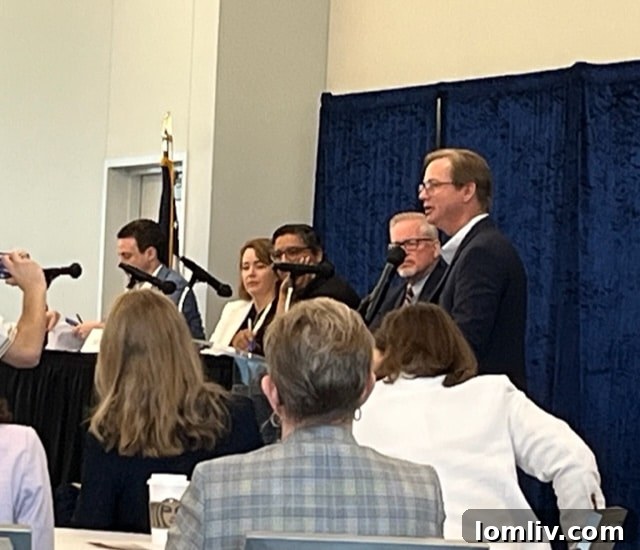
Fort Worth Report hosted an expert panel on Panther Island at Texas Wesleyan University this week, shedding light on a transformative urban development project.
Fort Worth, Texas, stands on the cusp of a dramatic urban transformation, envisioning its very own world-class riverwalk akin to renowned waterfront destinations. This ambitious vision, centered around the long-anticipated Panther Island project, promises to redefine the city’s relationship with the Trinity River, potentially encouraging residents to embrace recreational activities like boating, canoeing, or kayaking right in the heart of downtown.
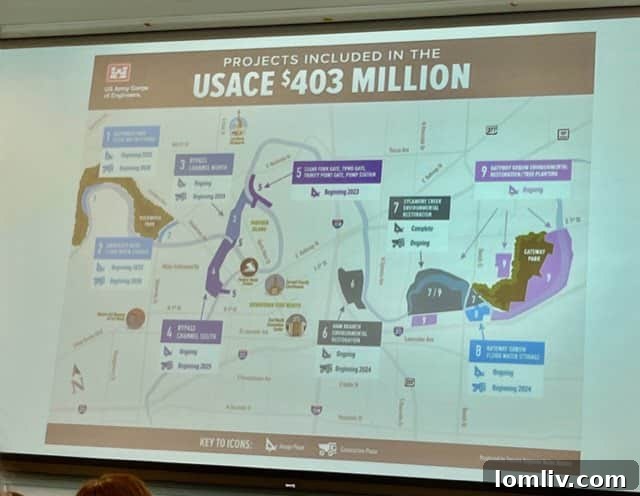
Recently, community leaders convened for a vital discussion at Texas Wesleyan University, organized by the non-profit news organization Fort Worth Report. The candid conversation delved into the complexities of harmonizing a critical $403 million U.S. Army Corps of Engineers’ flood control initiative with a comprehensive housing and economic development strategy for downtown. The overarching goal: to achieve this urban renaissance free from political entanglements and ensure a cohesive, future-focused approach.
The Panther Island project, a grand endeavor more than two decades in the making, is undeniably complex. Yet, its potential to fundamentally alter the landscape and economic vibrancy of North Texas is immense. For many, its mention in a crowded room often evokes its historical association as former U.S. Rep. Kay Granger’s flagship project, underscoring its deep roots within the region’s political and development discourse.
“I think it would have been an incredibly lost opportunity here in Fort Worth to know we have to replace our levees and not think wildly about what other opportunities could coexist with that.”
Susan Alanis, chief operating officer of Tarrant County College
Indeed, the genesis of Panther Island lies in the federally-mandated flood control measures necessary to protect Fort Worth from the Trinity River’s destructive potential. Former Fort Worth Mayor and U.S. Rep. Kay Granger has been a steadfast champion of developing the area surrounding these critical infrastructure projects. Her son, J.D. Granger, notably oversaw the Panther Island development for over a decade as executive director of the Trinity River Vision Authority, operating under the Tarrant Regional Water District, a position from which he resigned approximately a year ago. This historical context highlights the project’s long and often scrutinized journey through various phases of planning, funding, and leadership.
The recent panel discussion, expertly moderated by Bennett Partners CEO Michael Bennett, provided a vital platform for stakeholders to dissect the project’s current status and future trajectory. This collaborative approach is essential for navigating the intricate path ahead and ensuring Panther Island realizes its full, transformative potential for the city and its residents.
The journey to Panther Island has been a lengthy and often challenging one, marked by significant investment, meticulous planning, and unwavering community advocacy. Fort Worth Report CEO Chris Cobler, whose team has extensively covered the project for years, graciously extended an invitation to daltxrealestate.com for the sold-out panel discussion. This ongoing media coverage underscores the public’s keen interest and the project’s profound implications for the region.
At the insightful breakfast meeting, an esteemed panel of experts convened to unravel the complexities surrounding the estimated $1 billion project. Their discussion focused on the critical elements necessary to transform this ambitious vision into a tangible success. The panel featured influential figures in urban development and community leadership:
Andy Taft, president of Downtown Fort Worth Inc., a key advocate for urban growth and development.
Dennis Chiessa, an architect and professor at The University of Texas at Arlington, offering critical perspectives on design and community impact.
Susan Alanis, chief operating officer of Tarrant County College, representing a major institutional stakeholder.
Aaron Abelson, a consultant with HR&A Advisors, providing expertise in economic and real estate development strategy.
At its core, Panther Island is fundamentally a flood control project initiated by the U.S. Army Corps of Engineers, which has channeled millions of dollars into replacing aging levees and safeguarding Fort Worth from potential disaster. The creation of a 1.5-mile bypass channel is central to this effort, designed to divert Trinity River floodwaters, effectively creating the “island” that gives the project its name and opens up new land for development.
U.S. Army Corps of Engineers flood mitigation projects are foundational to the Panther Island development, ensuring Fort Worth’s long-term safety.
Andy Taft underscored the foundational importance of this aspect, stating, “Success will mean that Fort Worth has protected itself from devastating flooding. The lion’s share of the $1 billion is a flood control project, and we are in jeopardy without it.” This sentiment highlights that while the vision for economic development is grand, the underlying imperative is public safety and infrastructure resilience.
Beyond flood protection, however, the panelists unanimously agreed that success for Panther Island also entails the creation of a vibrant, international destination around the newly accessible river. This dual objective transforms a necessary infrastructure upgrade into a catalytic urban development opportunity. Taft eloquently articulated this vision, imagining a future where, “The people who live above the water will be able to use the water. They might not have a boat today, but they might have a boat tomorrow in downtown Fort Worth — or they might have a canoe or a kayak or an inner tube. If you look at great cities in America, their rivers play a prominent role. It’s an amazing asset we need to leverage.” This shift in perspective from merely mitigating risk to actively embracing and celebrating the river is a cornerstone of Panther Island’s ambitious promise.
Unlocking Housing and Economic Development Potential
The Panther Island project is strategically positioned to become a significant driver for both housing and economic development within Fort Worth. Tarrant County College (TCC) has emerged as a key institutional player, having acquired approximately 34 acres spanning both sides of the Trinity River within the project area. While future plans may encompass broader expansion, TCC is currently prioritizing its campus development on the south side of the river, signaling a long-term commitment to the area’s growth and educational infrastructure.
Susan Alanis, COO of Tarrant County College, articulated the strategic alignment of this investment with TCC’s core mission: “It really does pose an interesting possibility for us. We’re workforce development, that’s what we do, so having a robust Fort Worth is an interest of ours. The opportunity to be able to leverage the publicly owned land to be a catalyst project potentially for all of this work that’s happening with the plan is really exciting. We don’t have a need to dispose of the property immediately, so it puts us in a good position to be a good public partner.” This highlights TCC’s role not just as an educational institution, but as a long-term strategic partner in the area’s holistic development, using its land holdings to foster growth and workforce readiness.
To guide the commercial and residential growth, HR&A Advisors, a leading consulting firm, was enlisted to craft a comprehensive real estate development plan for Panther Island. Aaron Abelson, a consultant with the firm, emphasized a data-driven approach focused on maximizing existing investments. His team is actively exploring innovative strategies to leverage the significant public and private capital already committed to the area, transforming it into a robust foundation for sustainable economic expansion.
“There are tools that can be used, that have been used, to help define what Panther Island can be. There’s planning. There’s zoning. There’s the opportunity associated with the ownership held by public entities. A lot of it really does tie back to being grounded in a vision that has consensus, that has buy-in, that people understand, and that has principles and foundations that help decision-makers know the direction this project needs to go, what to say yes to, but also what to say no to.”
Consultant Aaron Abelson, HR&A Advisors
Abelson’s remarks underscore the critical need for a well-defined, consensus-driven vision that integrates planning, zoning, and strategic utilization of publicly owned land. Such a framework provides clear guidance for decision-makers, ensuring that development aligns with the community’s long-term goals and principles. This structured approach is vital for avoiding piecemeal development and fostering a coherent, attractive urban district.
However, the conversation also brought to light crucial considerations regarding equity and historical context. Professor Dennis Chiessa of the University of Texas at Arlington offered a poignant reminder of the project’s historical footprint, particularly on the north side, which boasts deep roots in Fort Worth’s Mexican-American and African-American communities. Chiessa argued for a more inclusive lens in planning:
“Part of the problem with the plan is it was about attracting development dollars and managing growth. We’re in a different time. We’ve become a lot more aware of social injustice. We have to look at this through a different lens, maybe a lens of equity. What do we need to do that benefits most of the people, especially in the adjacent communities?”
Professor Dennis Chiessa, University of Texas at Arlington
Chiessa’s powerful statement stresses the evolving understanding of urban development, urging a shift from solely growth-focused models to those prioritizing social justice and equity. He raised critical questions about the impact on adjacent communities, particularly concerning housing pressure. If Panther Island attracts thousands of new workers and residents, the demand for housing will inevitably skyrocket, potentially displacing long-standing residents in nearby, historically significant neighborhoods. Chiessa highlighted that many individuals seeking to live near Panther Island’s amenities, but desiring alternatives to apartments, would likely look towards the north side, emphasizing the need for proactive, equitable housing strategies.
Furthermore, Chiessa observed the irony of an “island” project designed to connect major city attractions—downtown, the Stockyards, and the Cultural District. He pointed out, “It’s exclusive by definition, to separate a chunk of land from the rest of the city.” This perspective challenges developers to ensure Panther Island fosters true integration and accessibility, rather than becoming an isolated enclave. Future planning must address these potential disconnects and prioritize robust infrastructure and community benefits that extend beyond the island’s immediate boundaries.
Defining Success: A Transformed Fort Worth
Ultimately, the success of Panther Island will be measured not only by its flood control efficacy or economic output but by its ability to fundamentally redefine Fort Worth’s identity and global standing. Andy Taft believes that if executed correctly, the project will elevate Fort Worth’s reputation on an international stage. “We’re adding a lot of inventory of developable land that used to be commercial and industrial, and now it’s going to be waterfront,” he explained. “I think it will be extraordinarily attractive.” This transformation of underutilized land into prime waterfront real estate presents an unprecedented opportunity for high-value development and urban revitalization.
The vision for Panther Island encompasses a vibrant, mixed-use district, featuring a significant residential component. Taft reflected on the evolution of this idea:
“The original Panther Island plan … Most of the structures are envisioned to be multi-family. Twenty years ago, that was a wild idea.”
“People were laughing [at 10,000] residential units. Central City Fort Worth has finally reached a tipping point where the market finds that not only acceptable but highly desirable. This idea of Panther Island being a successful residential area is no longer a wild stretch. It can happen. The question now is, should that be the dominant land use?”
Andy Taft, president, Downtown Fort Worth Inc.
This observation highlights a crucial market shift: what once seemed like an audacious residential target for downtown Fort Worth is now seen as both feasible and highly sought after. The increasing demand for urban living creates a fertile ground for Panther Island to become a thriving residential hub. However, Taft’s concluding question—whether residential should be the *dominant* land use—underscores the ongoing debate about achieving the optimal balance between housing, commercial, recreational, and public spaces to create a truly dynamic and sustainable urban environment.
Despite numerous challenges, controversies, and the significant financial commitment spanning two decades, the community’s enduring support for Panther Island and the Central City Flood Project remains a testament to its compelling vision. Taft attributes this resilience to the unwavering belief in a “big idea” shared by the community’s leaders. “That leadership has been championing the project all along because of the value of the big idea … You’re not going to buy into a landfill being put on this 800 acres. What the entire community needs to continue to have is a vision of the future that we’re all going to be extraordinarily proud to show off.”
This collective pride and commitment are vital, especially when economic pressures and political agendas often threaten to derail long-term projects. Taft’s final words serve as a powerful reminder and a call to action: “Great things happen when vision prevails. The money will follow a great vision, and people have to make it happen.” For Fort Worth, Panther Island represents more than just infrastructure; it’s a testament to urban ambition, community resolve, and a belief in a brighter, more connected future for North Texas.