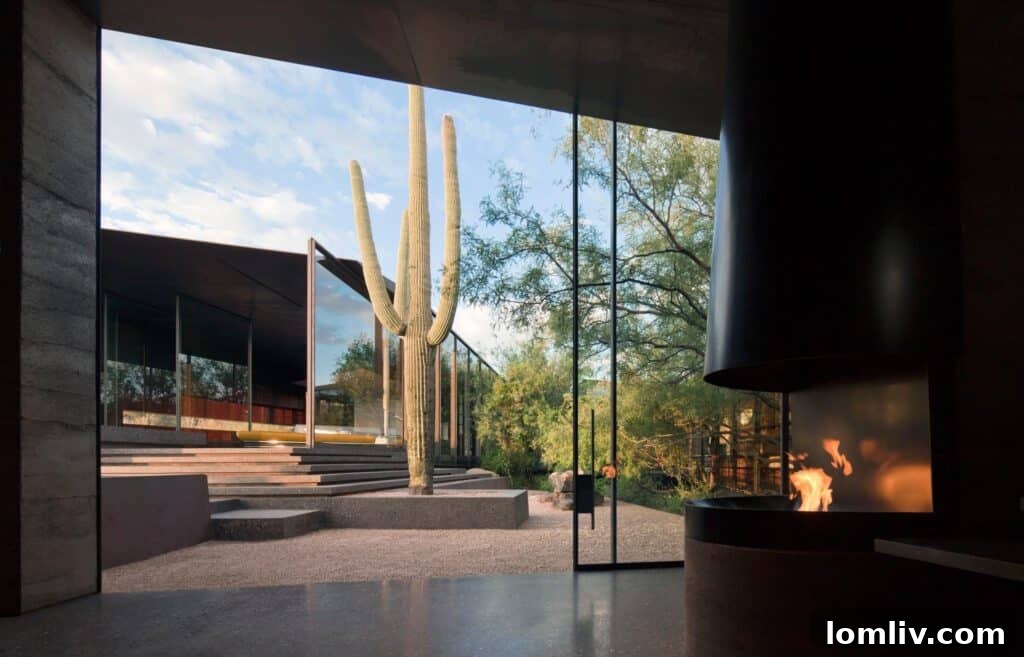
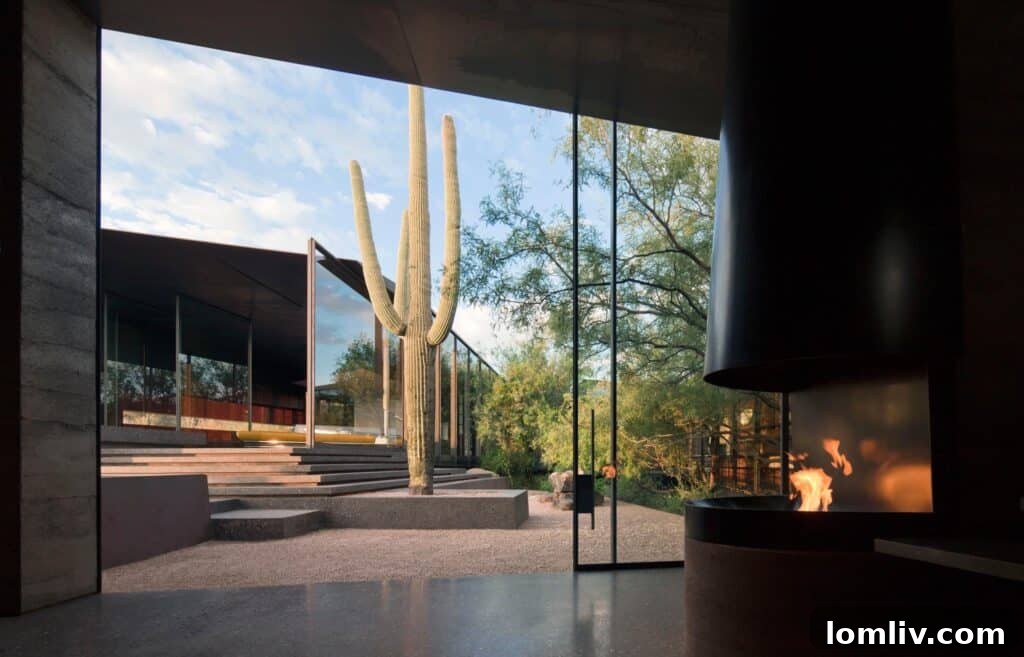
The Dallas Architecture Forum is honored to host acclaimed Arizona architect Wendell Burnette for a compelling lecture on Tuesday, June 7, at 7 p.m., held in the prestigious Horchow Auditorium of the Dallas Museum of Art. This highly anticipated event offers a unique opportunity to delve into Burnette’s celebrated body of work, featuring both his current and recent architectural marvels. His insightful presentation promises to explore the profound principles that guide his design philosophy, emphasizing how his projects resonate deeply with their unique environments and user experiences.
This significant engagement is presented as part of the Dallas Architecture Forum’s esteemed Frank Welch Memorial Lecture series, a tribute to the legendary architect often referred to as the “Dean of Texas Architecture.” The series aims to continue Welch’s legacy by inviting visionary architects whose work reflects a deep respect for context, material, and a harmonious integration with the landscape. Attendees are invited to arrive early for a reception and check-in starting at 6:15 p.m., providing an excellent chance to network and connect with fellow architecture enthusiasts. Admission to this enlightening event is complimentary for Dallas Architecture Forum members, while general admission tickets will be readily available for purchase at the door. This accessible format ensures that a broad audience can engage with one of today’s most influential architectural voices.
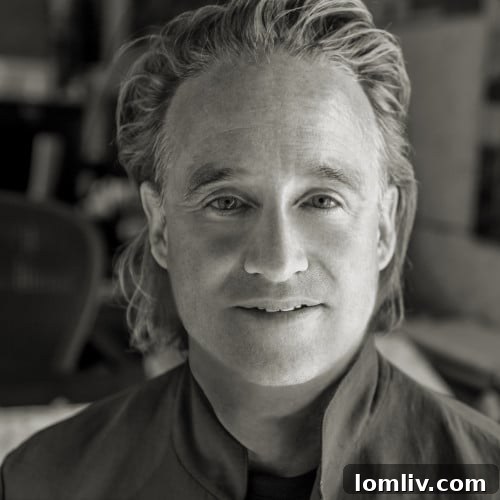
Wendell Burnette’s architectural endeavors strikingly mirror many of the core values espoused by the late Frank Welch, a titan in Texas’s architectural history. Both architects share a profound commitment to the intrinsic qualities of space and light, the critical importance of context and place, and an unwavering dedication to employing organic materials that are meticulously crafted. Furthermore, their work is united by a deep-seated respect for the natural environment and the distinctive landscapes that cradle human habitation. This shared philosophical ground highlights why Burnette is an ideal speaker for a series honoring Welch, as both practitioners demonstrate how thoughtful design can foster a more meaningful connection between people and their surroundings.
Reflecting on his upcoming talk, Burnette humorously noted, “They’re kind of doing a reprise of a talk I gave at the Dallas Architecture Forum, maybe 20 years ago.” He elaborated on the enduring principles that define his practice: “We’ve done many projects in the desert, but our focus transcends geography. We’re always focused on work that is resonant with place, that is resonant in the sense of striking the right note and being in harmony with people and places that we have the opportunity to design for. Setting, or context, of the project is very important. We’re very interested in material and craft.” This statement underscores his iterative process and the timeless nature of his architectural explorations, which always prioritize a deep understanding of the site and its cultural and natural nuances.
Wendell Burnette is the visionary founding principal of Wendell Burnette Architects, an internationally recognized firm celebrated for its innovative and contextually sensitive designs. His diverse portfolio spans a wide array of project types, from bespoke custom residences that are tailored to the unique aspirations of their inhabitants, to significant public commissions that serve the wider community. Notable public projects include the environmentally integrated Palo Verde Library/Maryvale Community Center, the dynamic and engaging Children’s Museum of Phoenix, and the vibrant Scottsdale Teen Center, each designed to enrich public life. Beyond civic structures, his expertise extends to luxury resorts and spas worldwide, exemplified by the much-acclaimed Amangiri Resort, a masterpiece of landscape integration nestled within the dramatic Utah desert. These projects collectively demonstrate Burnette’s unparalleled ability to create architecture that is simultaneously site-specific, functional, and deeply inspiring.
The Body of Work: Beyond Desert Stereotypes
Burnette often finds himself laughing at the common characterization of his work as exclusively “desert-themed”—a perception that conjures images of open-air adobe structures and overly simplistic styles. He is quick to remind his audience that Phoenix, his base of operations, is in fact a thriving metropolis, much like Dallas-Fort Worth, boasting a complex urban fabric. While acknowledging the unique qualities of his designs, he challenges the reductive label, clarifying that his approach is not about a specific regional aesthetic but rather a universal methodology applied with sensitivity to any given context.
“Phoenix is the 11th or 13th largest metropolis, so it’s very built out,” he explained, illustrating the urban density he navigates. He then offered an example from outside his usual desert association: “I’m doing a house in Salt Lake City, another metropolis. It’s in a neighborhood, and the clients want to do a large embedded courtyard that frames views to the Wasatch Mountains. This project, while not in a desert, still embodies our core principle of integrating the structure seamlessly with its natural surroundings and optimizing the inhabitant’s connection to the landscape.” Burnette emphasizes the breadth of his firm’s capabilities, stating, “We do really large and small projects.” He recounted a challenging yet rewarding experience: “We did a very small, two-phase remodel for a historic house, 70 years old. It was kind of a hack job, and we brought it back to life. It has some of us in it, but it’s like you don’t know that it’s really not an original.” This anecdote highlights his firm’s mastery in not only creating new iconic structures but also in sensitively revitalizing existing ones, infusing them with a renewed sense of purpose and timeless beauty while honoring their past.
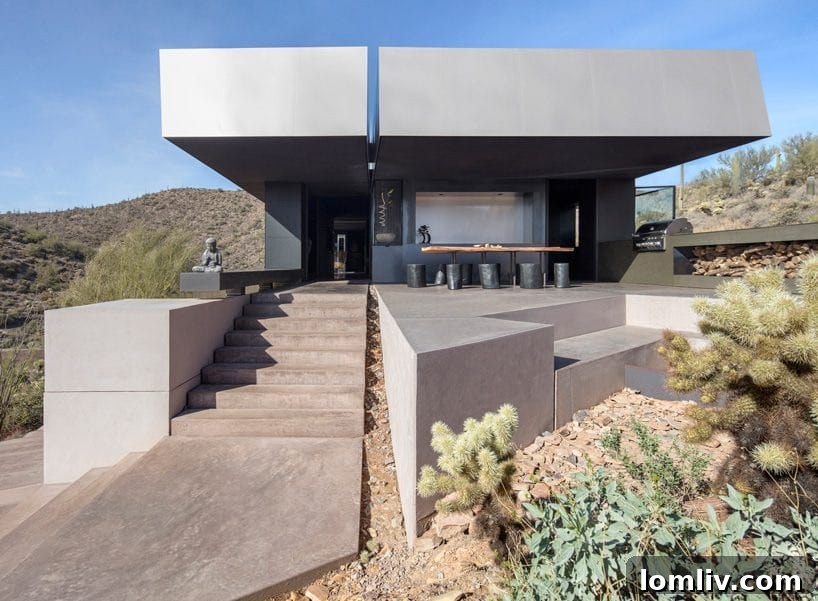
The acclaimed architect consistently underlines the profound influence of his surroundings on his creative output. He points out that living in a beautiful landscape inherently shapes his perspective, and he consciously strives to translate that intrinsic beauty and understanding into every design. His work is a testament to the idea that architecture should not merely occupy a space but should actively engage with and enhance it.
“Every place has its unique qualities,” Burnette articulated. “What we’re doing is tapping into those unique qualities. It’s about a deep context. I approach a place like an artist or a historian. I look at the poetic qualities of a place, the history of the city. I’m looking at the material culture of the city. I get into the local geology and natural history.” This meticulous research forms the bedrock of his process, ensuring that each design is truly indigenous to its site. He firmly believes that “The work comes out of a deep reading of the place. I’m not interested in doing what I’ve done before. How that’s possible is approaching every site and every place with fresh eyes. It’s more about a process than a result. It’s about the specificity of a particular project. It’s not about transferring what I’ve done before to another situation. I’m not repeating results. I have a process that I repeat. Architecture should grow out of that diversity.” This philosophy underscores his commitment to innovation, sustainability, and creating spaces that are both authentic and uniquely suited to their purpose and environment.
Personal Narrative: The Architect’s Unique Vision
Burnette attributes the distinctiveness of his architectural style to his own deeply personal narrative and his singular way of engaging with the world. He posits that architecture, at its most profound, is an extension of the architect’s individual lens—a culmination of their experiences, observations, and interpretations of reality. “It’s how you look at the world and how you experience the world,” he affirmed, highlighting the subjective yet universal appeal of his designs. He further explained, “I get into the specificity of a project, but that’s combined with my personal way of looking at things.” This blending of rigorous contextual analysis with a unique personal vision allows his firm to craft spaces that are not only highly functional but also imbued with a powerful emotional resonance and a timeless aesthetic.
Wendell Burnette’s journey into architecture began remarkably early, with a clear sense of purpose emerging at the age of 13. Following the completion of his high school diploma, he pursued his passion at The School of Architecture, an institution famously founded by the architectural giant Frank Lloyd Wright, nestled in Paradise Valley, Arizona. This foundational education steeped in organic architecture profoundly shaped his belief in fostering a profound connection between people and nature through built environments. He consistently designs buildings that serve as conduits, drawing inhabitants back into an intimate relationship with the natural world.
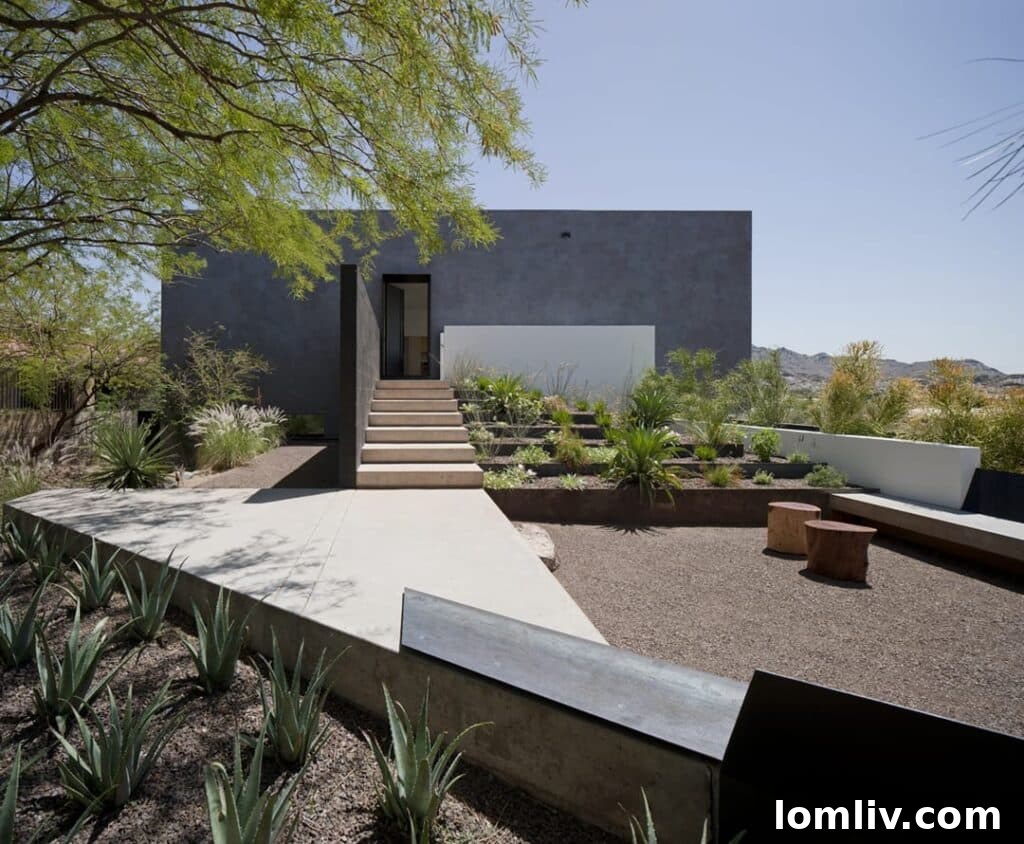
“Today, more than ever, that connection to birdsong and breezes and changing seasons – connecting a place specifically to landscape and climate and how it’s comfortable to live there – is important,” Burnette emphasized. In an increasingly urbanized and digitally connected world, his designs offer a vital antidote, allowing occupants to experience the subtle rhythms of their environment. He views architecture not merely as construction but as a profound means of enriching human lives. “Architecture is about people, enriching people’s lives. It’s like a good meal or good food. There’s something nourishing about architecture,” he passionately stated, underscoring the deep human impact of well-conceived spaces. He is resolute in his stance against creating ubiquitous or generic structures: “I’m not into doing work that is ubiquitous. I’m trying to tap into something that already exists but one didn’t realize what’s there. I’m very passionate about my work being simultaneously functional and aspirational.” This commitment to unearthing the latent potential of a site and transforming it into something both practical and elevating defines the essence of Wendell Burnette Architects’ contribution to contemporary design.
Burnette expressed his genuine affection for Dallas and conveyed his eager anticipation of his upcoming visit to the city. “I’ve been going to Dallas-Fort Worth for a long time, back when Dallas was playing catch-up to Fort Worth. Dallas finally woke up,” he reminisced, acknowledging the city’s significant architectural and cultural evolution. He drew an interesting parallel, noting, “There’s a very similar competition between Cologne and Dusseldorf, Germany,” highlighting the dynamic urban development that has shaped the Dallas-Fort Worth metroplex. With a keen eye for urban potential and a desire to contribute his unique contextual approach, Burnette concluded, “I would love to do a project [in Dallas],” signaling his openness and enthusiasm for leaving a lasting architectural mark on the vibrant North Texas landscape.