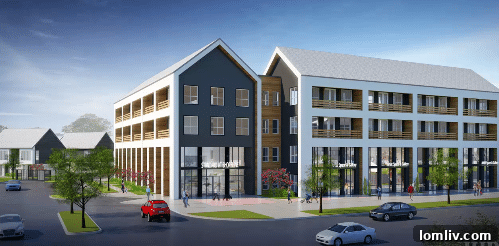
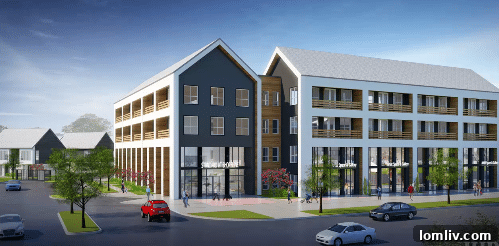
The Dallas City Council recently gave its unanimous approval to Ojala Holdings’ Standard Shoreline project, marking a significant milestone for a once-contentious rezoning request along Garland Road. This pivotal decision paves the way for the construction of a contemporary 300-unit, four-story apartment complex thoughtfully situated adjacent to the vibrant Lochwood neighborhood. The development is poised to address critical housing needs in Dallas, particularly within the growing East Dallas corridor.

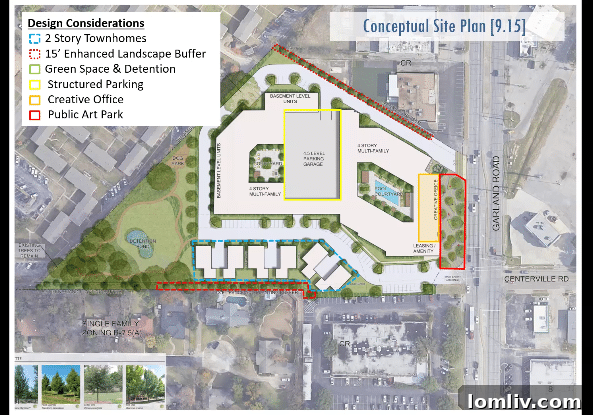
Initiated by Ojala Holdings, the rezoning request approved at the Wednesday Dallas City Council meeting centered around the strategic acquisition of a seven-acre parcel of land. This prime location, situated at the intersection of Garland and Centerville roads, was previously owned by Shoreline City Church and identified as an ideal site for the Standard Shoreline development. Over many months, the project underwent extensive refinement through dozens of community engagement sessions and public meetings. This collaborative process led to a significantly evolved proposal, which now thoughtfully incorporates a diverse range of housing options, including appealing townhomes, a dedicated public art park designed to foster community engagement, and comprehensive buffering solutions meticulously planned to safeguard the privacy and quality of life for residents in surrounding neighborhoods.
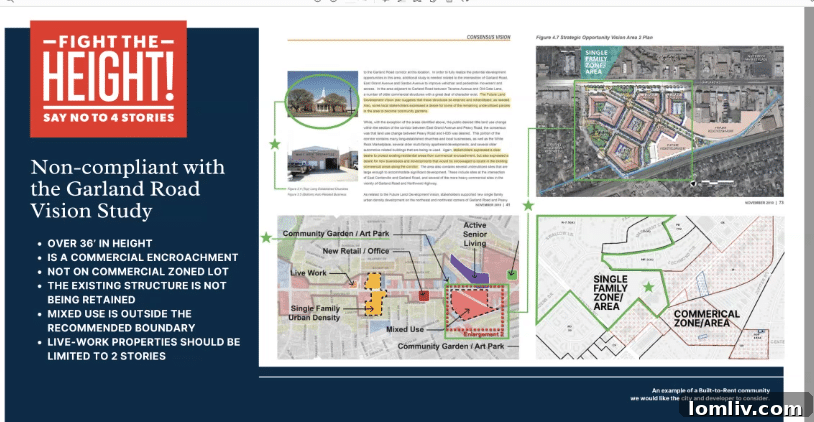
District 9 council representative Paula Blackmon, whose constituency encompasses a substantial portion of the White Rock Lake area, openly acknowledged and carefully considered the various concerns voiced by some local residents. These concerns primarily revolved around the proposed 60-foot height of the apartment complex, the potential for increased traffic congestion on already busy roadways, and the intricate challenges associated with stormwater drainage. Despite these valid considerations, Councilwoman Blackmon ultimately emphasized that the city’s overarching and pressing need for accessible and affordable housing units ultimately held greater sway in the council’s decision-making process.
In a compelling statement, Blackmon articulated her reasoning: “After thoroughly reviewing all the information—hearing assurances that the traffic impact will be mitigated and not filter unduly into existing neighborhoods, and that improvements on Garland Road are planned; confirming that all stormwater will be efficiently contained and managed entirely on the property; and recognizing that every possible measure has been undertaken to protect the privacy of those residing on Yorkmont Circle and in nearby areas—I am confident that there is no justifiable reason to deny this zoning case.” She further highlighted a critical safeguard for the community, adding, “Furthermore, a robust good-neighbor agreement is firmly in place, specifically designed to uphold and protect the quality of life for all residents.” This comprehensive approach underscored the council’s commitment to addressing both development needs and community well-being.
Reinforcing the broad support for the project, the rezoning proposal had previously received unanimous approval in September from the esteemed City Plan Commission, a body composed of dedicated members appointed by the Dallas City Council. This earlier unanimous endorsement signaled a consistent alignment across city planning and legislative bodies regarding the necessity and viability of the Standard Shoreline development.
The Standard Shoreline Debate: Voices For and Against Development
The journey of the Standard Shoreline project through the Dallas City Council was marked by fervent debate, highlighting the complex dynamics between urban development and neighborhood preservation. During the public hearing, several residents articulated their opposition to the proposed development. Among these was Thomas Buck, the influential communications chair for the Lochwood Neighborhood Association, who has consistently been a vocal advocate for his community. Buck, a prominent figure in the local dialogue, spoke passionately against the project. Notably, he was not permitted to delve into the intricate details of the project’s financing structure, which incorporates the infrequently utilized Public Facility Corporation (PFC) model.
The Public Facility Corporation model, a unique financing mechanism, involves the city leasing tax-exempt land to a developer for an extended period, typically 75 years. In exchange for these significant tax benefits, the developer commits to allocating a substantial portion of the units—at least 50 percent—to tenants earning less than 80 percent of the area’s median income (AMI). For the Standard Shoreline project, the proposal specifically stipulated that 51 percent of its 300 units would precisely meet these crucial affordable criteria, a key factor in its approval. However, this aspect of the plan also drew scrutiny.
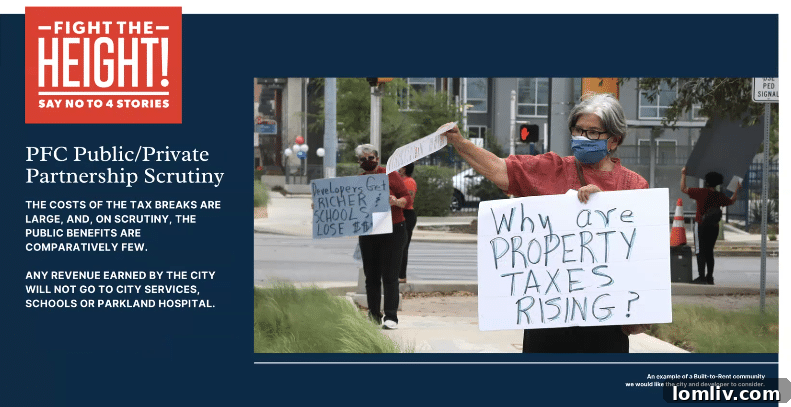
A contentious point was raised by District 9 resident Davina Rhine, who meticulously reviewed a case report pertaining to the development. Rhine’s examination revealed a notable discrepancy, as the report seemed to indicate that only 5 percent of the units would be designated for tenants earning less than 80 percent of the AMI—a figure significantly lower than the 51 percent claimed by the developers. During the public hearing, city officials, adhering to established policy regarding speakers, did not offer an immediate response to her statement, leaving the disparity unresolved for the public record.
Following the council meeting, Thomas Buck expressed his disappointment, though not surprise, regarding the approval of the rezoning. He voiced a broader critique of the city’s approach to development, stating, “What’s truly disappointing is that the city appears to be making crucial decisions based primarily on the developer’s perceived limitations and what they claim they ‘cannot do,’ rather than rigorously assessing what they genuinely ‘can do’ for the community.” Buck further challenged the developers’ claims regarding the economic viability of alternative designs, specifically questioning their assertion that it is not financially feasible to construct a two- or three-story complex, despite the estimated $60 million cost for a four-story building. He argued, “They are not required to provide verifiable evidence for this claim. We, the public, are simply told to accept it as an undisputed fact, which is not only unrealistic but, arguably, irresponsible in responsible urban planning.”
Conversely, a substantial group of eight residents offered compelling arguments in favor of the Standard Shoreline project, underscoring its potential benefits. Among these proponents was Mark Melton, a respected affordable housing advocate from the Dallas Eviction Advocacy Center, whose work focuses on addressing the critical housing crisis in the region. Also speaking in support was District 9 resident Mike Nurre, who provided a strategic perspective on the development’s merits. Nurre passionately urged the council to uphold the prior recommendation of the planning commissioners, highlighting the unique attributes of the site. “My request today is simply that you reaffirm the thoughtful recommendation put forth by each of your planning commissioners,” Nurre stated. He emphasized the exceptional nature of the seven-acre plot, describing it as a “unicorn” site given its prime location, already flanked by existing multi-family residences and commercial establishments. “There is possibly only one other site of this significant size situated between Buckner Boulevard and Northwest Highway,” he pointed out, stressing the rarity and strategic importance of the land. “We absolutely must seize this opportunity.” Nurre also addressed the practicality of the situation: “The Shoreline Church is relocating; they are unequivocally going to sell this property, either to this developer or to another. If not Ojala Holdings, then who will step forward? It remains an undeniable truth that our city is in desperate need of affordable housing solutions.” His arguments underscored both the logistical imperative and the societal benefit of the Standard Shoreline development.
Dallas’s Affordable Housing Imperative: A Community-Wide Challenge
The approval of the Standard Shoreline project serves as a powerful testament to the collaborative efforts of city staff, diligent developers, and engaged residents, as highlighted by District 1 Councilman Chad West. He noted the relatively low attendance of less than 20 people at Wednesday’s public hearing, which, paradoxically, he saw as an indication of the extensive groundwork laid and the consensus reached prior to the final vote. This suggests that many concerns had been addressed or mitigated through earlier, less public forums.
Councilman West powerfully articulated the dire need for accessible housing options across the city, especially for its workforce. “The city of Dallas is currently in dire need of robust workforce housing solutions,” he asserted. He reflected on past planning shortcomings, observing, “In decades past, we regrettably did not plan for it with sufficient foresight or effectiveness.” The repercussions of this oversight are evident today, as he explained: “We now have countless single-family neighborhoods dispersed throughout the entire city, while our essential workforce is increasingly scattered, being pushed farther and farther away from the urban core.” This geographical dispersion leads to longer commutes, increased traffic, and diminished quality of life for many residents, highlighting a systemic urban planning challenge.
Addressing a common concern among homeowners, West acknowledged, “In my own neighborhood, I frequently hear residents express worries about even a modest increase in density, primarily due to fears regarding their property values and potential impacts on traffic.” However, he encouraged a historical perspective, urging, “If property values are indeed a significant concern for folks, I invite them to reflect upon the comprehensive planning that went into the Highland Park community, particularly during its foundational stages.” He drew a compelling parallel, explaining that when the Highland Park community was meticulously planned in the 1920s, visionary city leaders demonstrated remarkable foresight. They proactively considered and integrated diverse housing types and amenities, anticipating the future need for what is now termed “missing-middle housing”—housing that bridges the gap between single-family homes and high-rise apartments.
“As Dallas, we are compelled to catch up and implement similar forward-thinking strategies now,” Councilman West declared, emphasizing the urgency of the moment. He underscored the merits of the Standard Shoreline project, noting, “This particular development boasts excellent setbacks, robust height protections, and is solidified by a comprehensive good-neighbor agreement.” Confident in its potential, he concluded, “I firmly believe this project will be a welcome and valuable addition to the community.”
Further supporting the notion that diverse housing options contribute positively to urban environments, District 11 Councilwoman Jaynie Schultz offered her perspective. She argued compellingly that diversity in both housing types and land uses can actually serve to enhance, rather than detract from, overall property values. Councilwoman Schultz extended a warm welcome to the Ojala developers, expressing her eagerness for them to pursue future projects within her district. She specifically lauded their responsiveness to community input, stating, “It is abundantly clear that you not only listened attentively but also responded constructively to the neighborhood’s concerns and feedback.” She emphasized that this willingness to engage and adapt represents a crucial component of effective collaboration between developers and the municipality, signifying a true partnership. Concluding on an optimistic note, Schultz expressed her belief that the Standard Shoreline project would ultimately yield positive outcomes for all stakeholders: “I am convinced that, in the long run, this will prove to be a project that everyone involved can genuinely be joyful about, benefiting the entire community.” This sentiment reflects a broader vision for Dallas, where thoughtful development meets pressing housing demands while fostering community harmony and economic vitality.