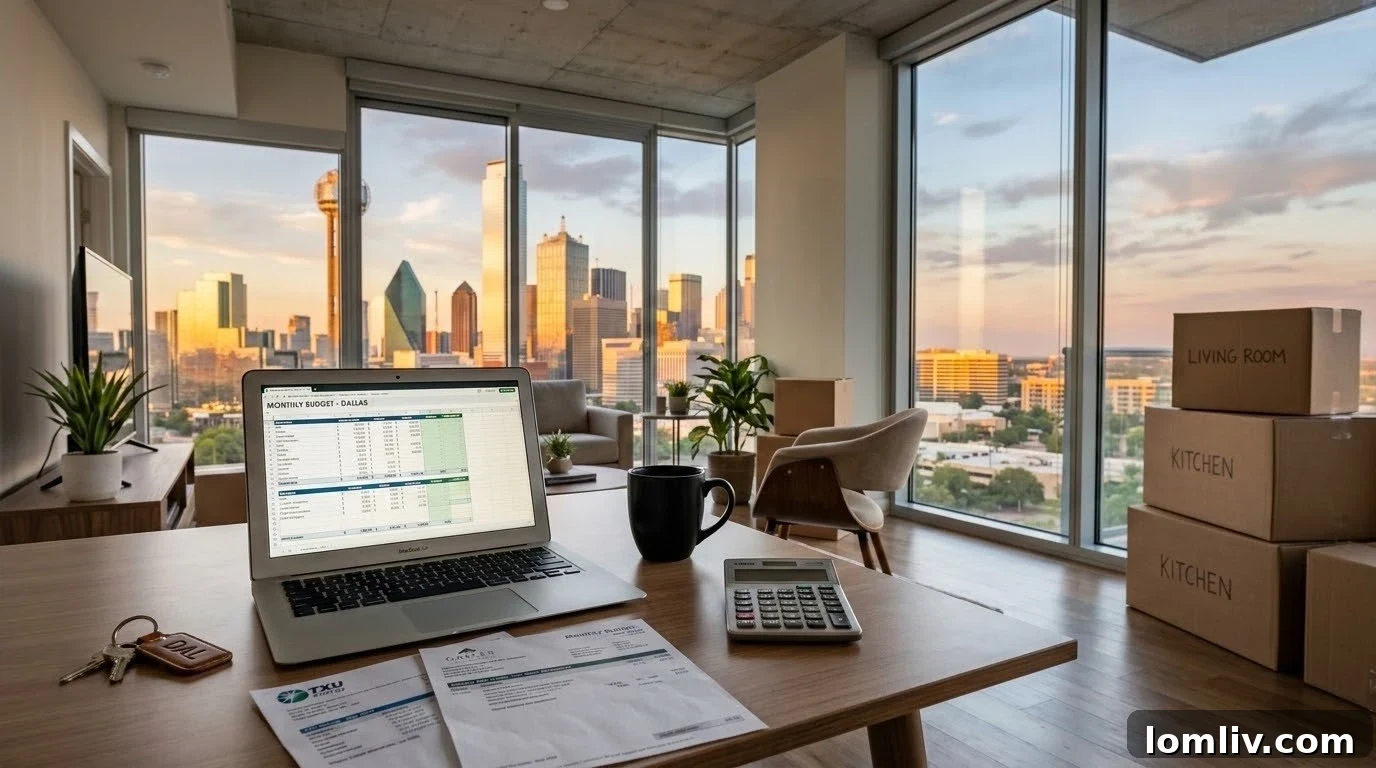
Every week it seems another U-Haul is rolling into the Dallas–Fort Worth area. That makes sense: no state income tax, a steady job market, and a food scene that often gets overlooked outside Texas. Dallas has a strong draw.
But the Dallas of 2025 looks different than it did five or six years ago. The city was discovered by tech companies, remote workers leaving California, and corporations relocating headquarters. As demand rose, so did prices.
Instead of vague reassurances, let’s look at realistic numbers.
What Does “Comfortable” Even Mean?
Before diving into specifics, define the goal. Many financial planners use the 50/30/20 guideline as a benchmark for a balanced budget:
- 50% of take-home pay for needs — rent or mortgage, groceries, utilities, transportation
- 30% for wants — dining out, weekend trips, entertainment
- 20% for savings or paying down debt
It’s not perfect, but it gives you a target beyond simply avoiding overdrafts.
Housing: The Number That Shapes Everything Else
Housing is where most Dallas budgets succeed or fail.
Renting a one-bedroom in a decent neighborhood currently ranges roughly $1,500–$1,800 per month. If you want Uptown or Bishop Arts, plan closer to $2,100, and that may not include parking. Buying a home is different: median prices in Dallas hover near $400,000–$430,000. With current interest rates, property taxes, and insurance, a mid-range mortgage can land around $2,800–$3,400 per month.
That mortgage number surprises many newcomers. Texas’s lack of state income tax is attractive, but property taxes are among the highest in the nation. If you’re buying, know what you’re signing up for.
The Electricity Bill Nobody Warned You About
Dallas summers are intense. When temperatures top 100°F for extended stretches, air conditioning runs constantly. It’s common for electricity bills to rise to $250–$300 in peak months for a standard apartment.
Plan around $400 per month for utilities overall — electricity, water, internet, and trash. Some months will be lower; July and August usually won’t be.
Getting Around: Dallas Is a Car City, Full Stop
DART exists and serves some commuters, but Dallas was built for cars. Most residents drive. Between gas, insurance (which tends to run higher in Texas), and toll roads like the DNT and PGBT, expect roughly $600–$900 per month per vehicle.
If you’re coming from a city where a car wasn’t necessary, add the cost of purchasing a vehicle on top of monthly expenses.
So What Salary Are We Actually Talking About?
Single adult: To rent a one-bedroom, maintain a car, socialize, and save each month, a realistic income range is $85,000–$95,000 per year. You can live on $60,000, but it often requires a roommate, a longer commute from a cheaper suburb, or foregoing most discretionary spending.
Family of four: To own a home in sought-after school districts like Plano, Frisco, or Coppell and cover childcare, healthcare, and food for four, household income typically needs to be around $165,000–$185,000. That figure rises quickly once you add childcare and other family expenses in North Texas.
Is Dallas Still Worth It?
For many people, yes. The job market is broad, the culture has evolved significantly, and the absence of state income tax becomes more beneficial the longer you stay and the more you earn.
The crucial difference today is going in with clear expectations rather than relying on the “Dallas is so cheap compared to California” headline that held more sway in 2018. Run the numbers for your neighborhood, family size, and commute. Dallas can still be a great value, but it’s not an automatic bargain anymore.
Planning the Move Itself
Sorting finances is only half the relocation challenge. Logistics are equally important.
DFW’s sprawl surprises many newcomers. The distance between areas like Frisco and Oak Cliff is more than miles; traffic patterns, highways, and timing can change a move from simple to stressful. Scheduling a move during peak traffic or on a Friday afternoon is a common mistake.
DIY moves to save money often run into practical problems: maneuvering a large truck through Knox-Henderson or finding parking near an Uptown high-rise can be difficult. Hiring an experienced moving company familiar with Dallas rules, building access, and neighborhood quirks can prevent damage and headaches.
It’s one of those expenses that’s easy to cut and easy to regret cutting.