Successful renovation projects rely on accurate existing-condition data. Architects and contractors entering an existing building often face the same early obstacle: the drawings on file frequently differ from the conditions actually found on site.
Buildings evolve over time. Patch repairs, undocumented mechanical or electrical upgrades, and successive tenant improvements can leave legacy drawings incomplete or misleading. Designing or building from outdated documents alone creates coordination problems, change orders, schedule pressure, and budget overruns.
That is why professional scan-to-BIM services have become an integral part of modern renovation workflows. Combining laser scanning with BIM modeling enables project teams to replace assumptions with verified existing-condition geometry.
ScanM2 operates in this space, providing 3D scanning, point cloud processing, and Revit modeling so contractors, architects, and engineers can make decisions based on accurate site data.
Why Existing Buildings Need Accurate Digital Documentation
New construction starts with a clean slate. Renovations do not. Teams must work within existing constraints: structural columns may be offset from the old plans, ceiling plenums can contain unmapped ductwork, conduit, and piping, and floors or walls may have undocumented repairs.
When site realities clash with paperwork, the consequences can be costly:
- Trade coordination conflicts
- Major installation delays
- Waste from inaccurate prefabrication
- Expensive on-site rework
- Blown project budgets
Architects and contractors need reliable digital reality capture to document existing conditions before demolition, design changes, or major construction begins.
What Is Scan to BIM?
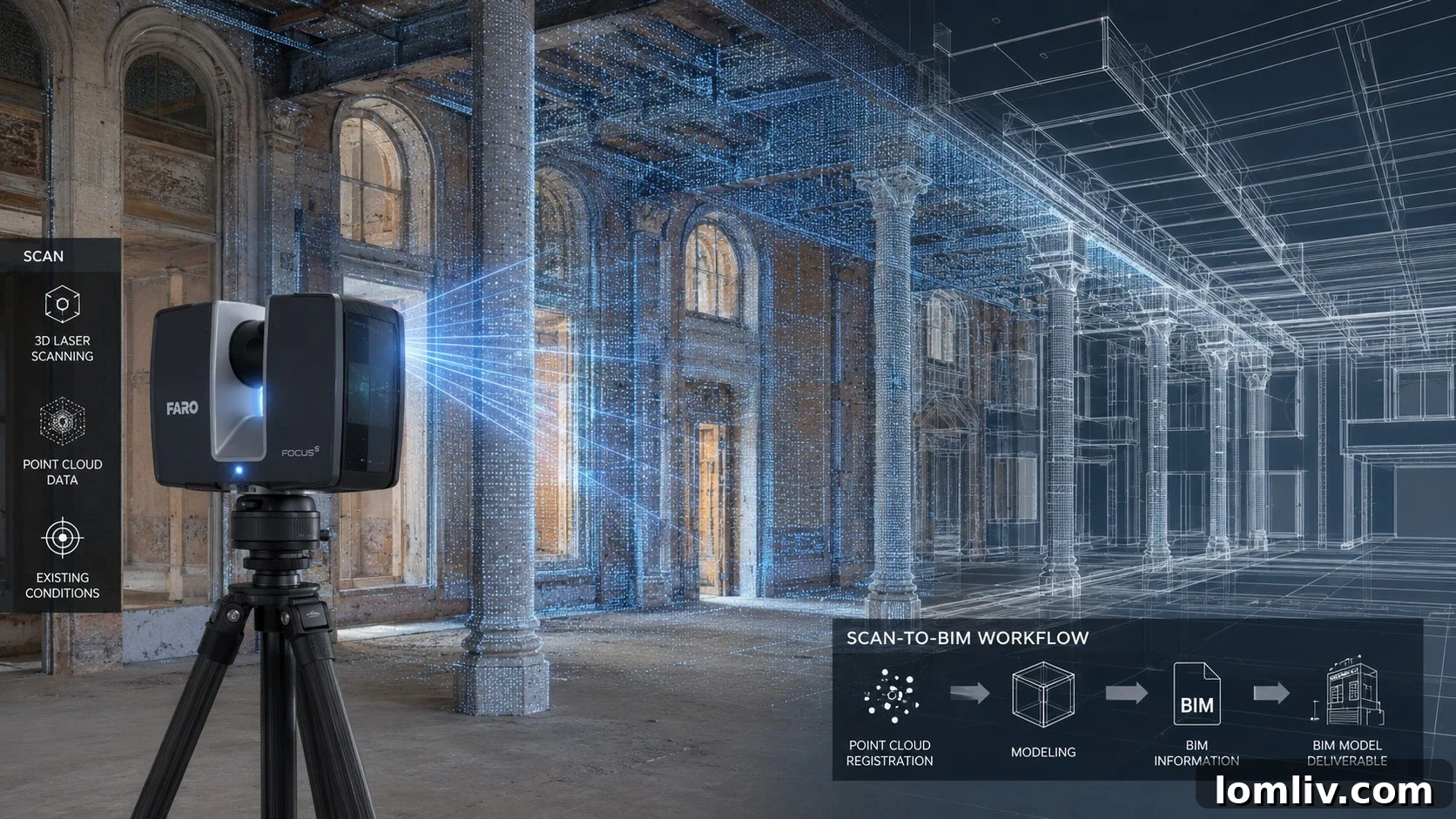
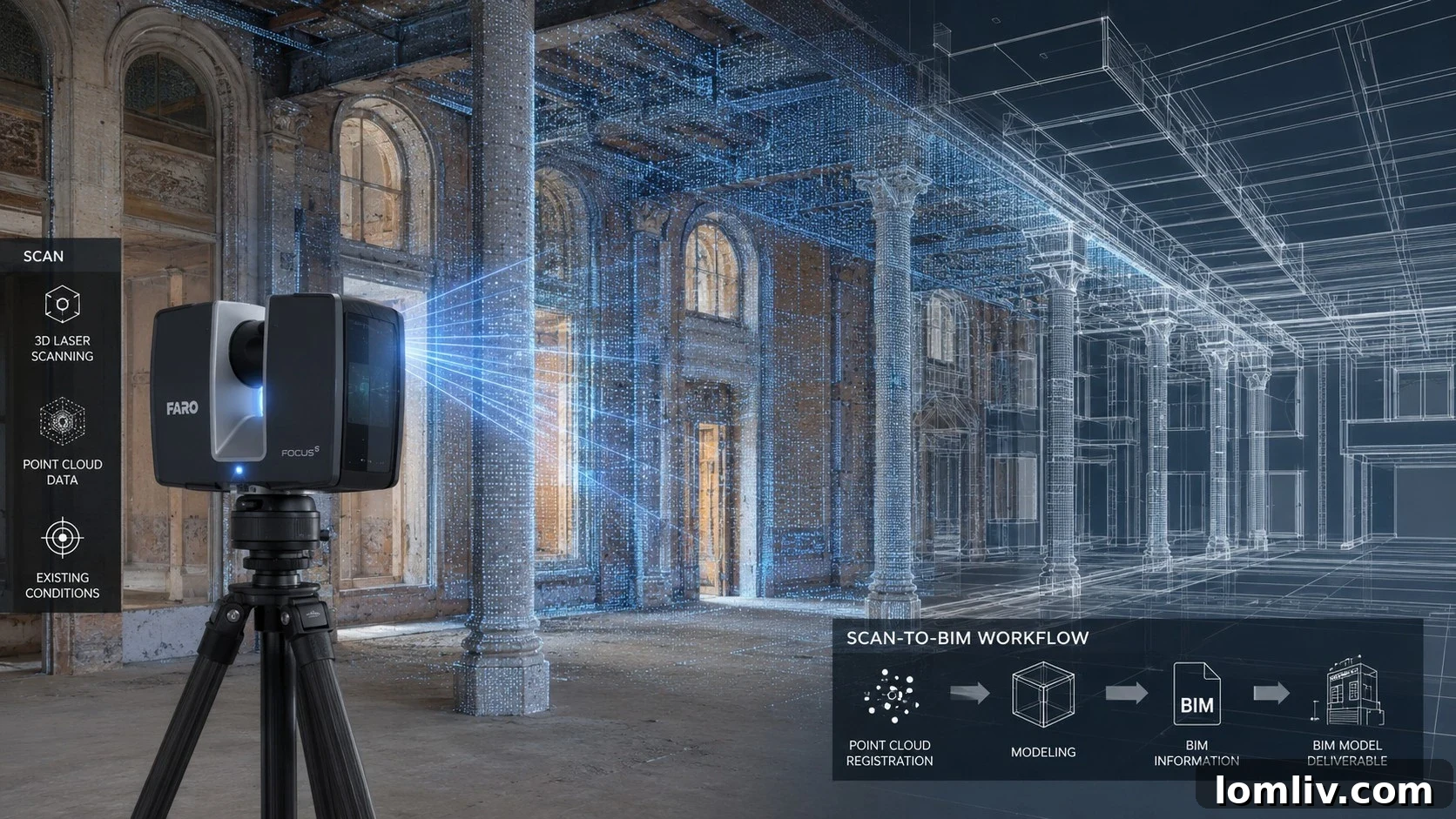
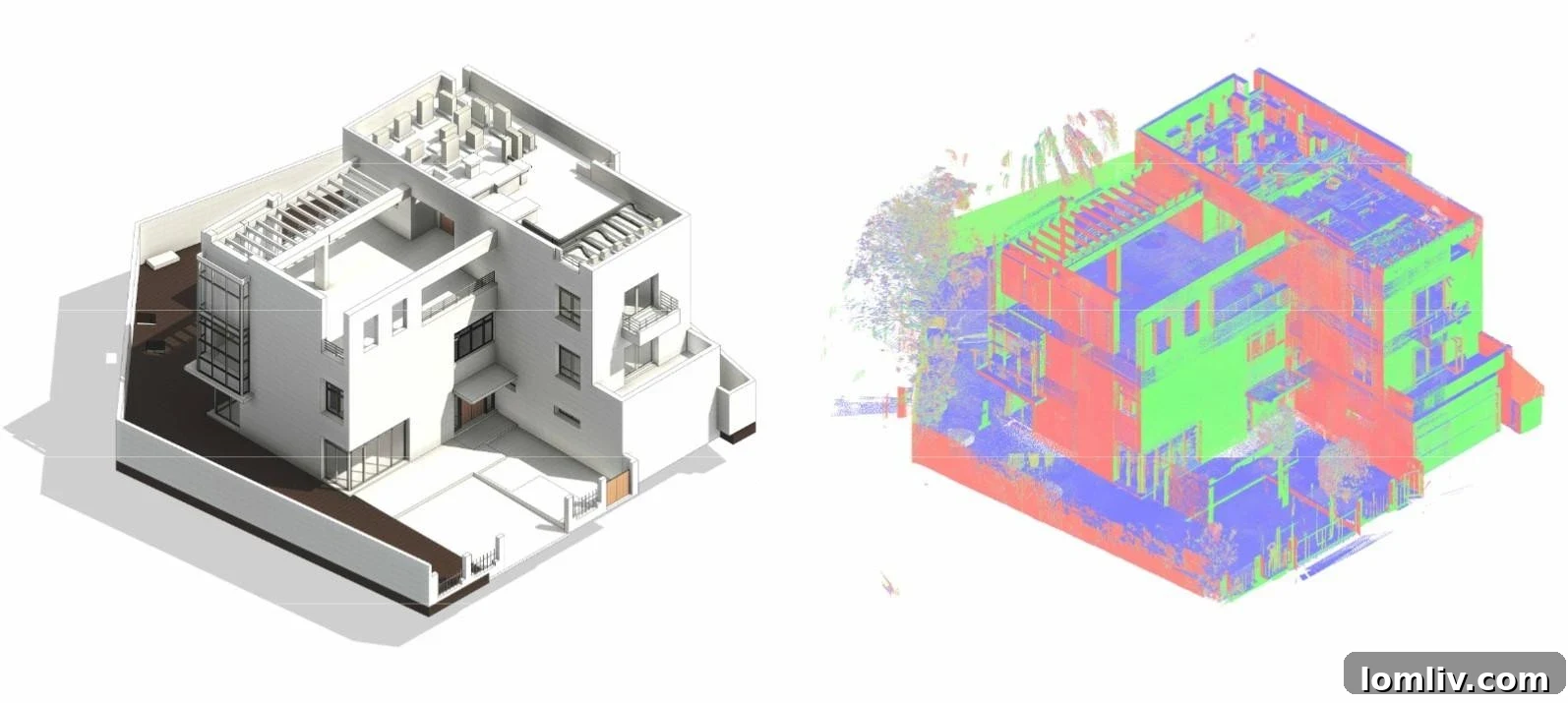
Scan to BIM is a workflow that converts laser-scanned building data into structured BIM models. The process begins with high-resolution 3D laser scanning that captures millions of spatial points to form a detailed point cloud of the existing structure.
Modeling specialists use that point cloud to construct a coordinated 3D BIM model containing the architectural, structural, and MEP information required for the project.
The typical workflow includes five main steps:
- Mapping the site with laser scanners
- Registering and cleaning the point cloud
- Verifying key building geometry and visible conditions
- Building the Revit or BIM model
- Producing final as-built documents
Once complete, the model is used to plan the renovation, coordinate trades, identify clashes early, and manage facility data after handover.
How ScanM2 Handles the Process
ScanM2 manages the reality capture and modeling workflow for renovation, retrofit, and as-built documentation projects.
Their core services include:
- On-site 3D laser scanning
- Processing and refining the raw point cloud
- Developing architectural and engineering BIM models
- Producing clear as-built drawings
- Delivering coordinated, Revit-ready files
Rather than delivering a massive point cloud and leaving teams to interpret it, ScanM2 focuses on usable deliverables—models and files that integrate with architects’ and engineers’ workflows. That focus matters for renovation projects where small measurement errors can become costly field conflicts.
The Point Cloud Advantage for Renovations
Laser scanning captures existing conditions with high precision, which is essential when working with older buildings, uneven floors, complex angles, or undocumented repairs.
When an accurate point cloud is translated into a working BIM model, teams can:
- Detect clashes before construction begins
- Confirm the location and geometry of structural elements for professional review
- Route MEP systems around existing obstacles
- Order prefabricated materials with greater confidence
- Reduce expensive field adjustments
Resolving issues in the model instead of on the job site lowers risk, improves coordination, and helps keep schedules predictable.
Where the Technology Makes the Biggest Impact
Scan to BIM is particularly valuable across major U.S. renovation and real estate sectors:
- Commercial Real Estate: Office renovations, tenant improvements, and retail conversions require accurate as-built records before design advances.
- Education: Schools and university campuses use laser documentation for phased renovations, summer construction windows, and infrastructure upgrades.
- Industrial: Factories and manufacturing plants need precise existing-condition data for equipment layouts, overhead piping, and production-area changes.
- Multifamily and Residential: High-end remodels, apartment conversions, and adaptive reuse projects rely on accurate geometry for custom millwork, façades, and architectural details.
- Historic Preservation: Reality capture documents heritage buildings in detail, providing a solid basis for restoration planning and design coordination.
Why Accurate BIM Data Matters
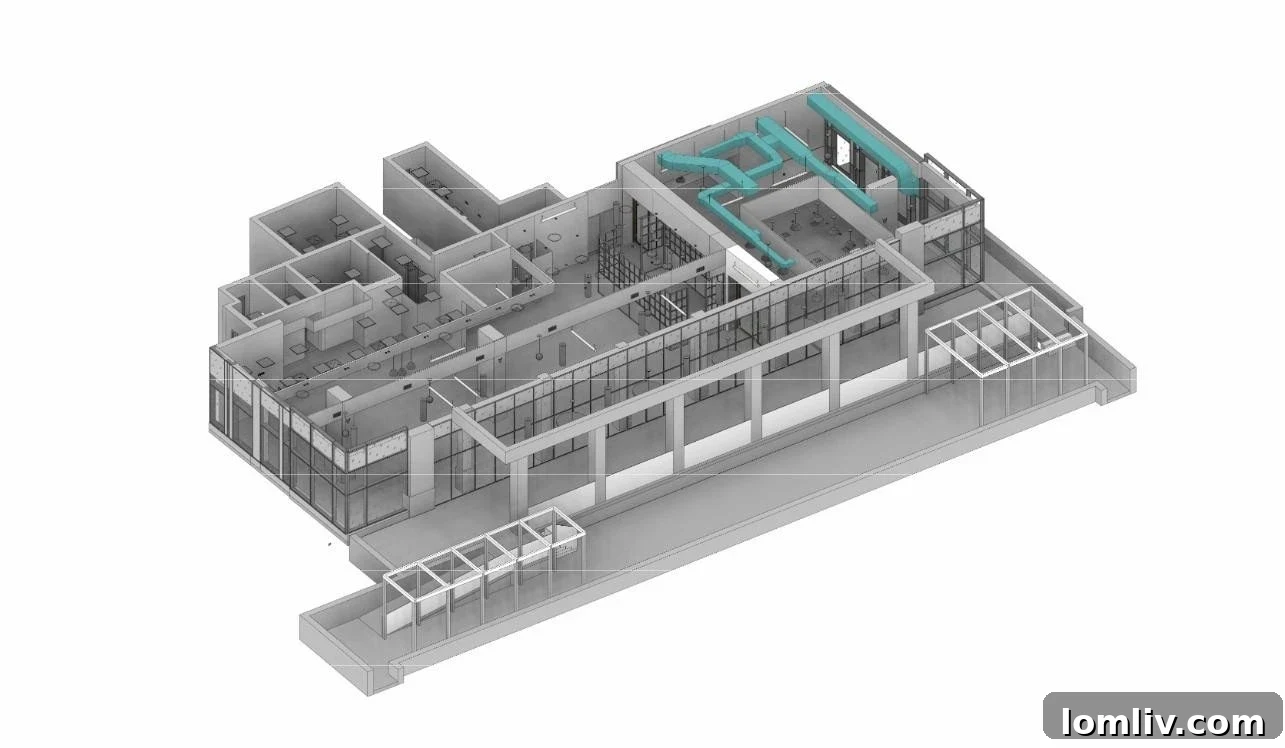
Modern construction is planned on screens before work begins in the field. Clash detection, scheduling, coordination, and off-site fabrication all depend on reliable base information. If the model is built from unreliable legacy drawings, initial errors will propagate through the project.
Getting documentation right from the outset changes the workflow: it improves trade coordination, supports more accurate budgeting, and helps teams sequence work with fewer surprises. For projects with tight tolerances or incomplete records, laser scanning is often one of the most practical ways to start with dependable data.
The Bottom Line on Existing-Condition Modeling
As renovation, retrofit, and adaptive reuse work remain central in the U.S. building market, demand for accurate digital records will keep growing. The industry is shifting toward data-driven construction, where major decisions are based on verified site conditions rather than assumptions.
ScanM2 helps bridge that gap by providing reality capture and BIM deliverables from initial survey through final model handoff. In real estate and construction, starting with accurate data is often the difference between a smooth workflow and an expensive surprise.