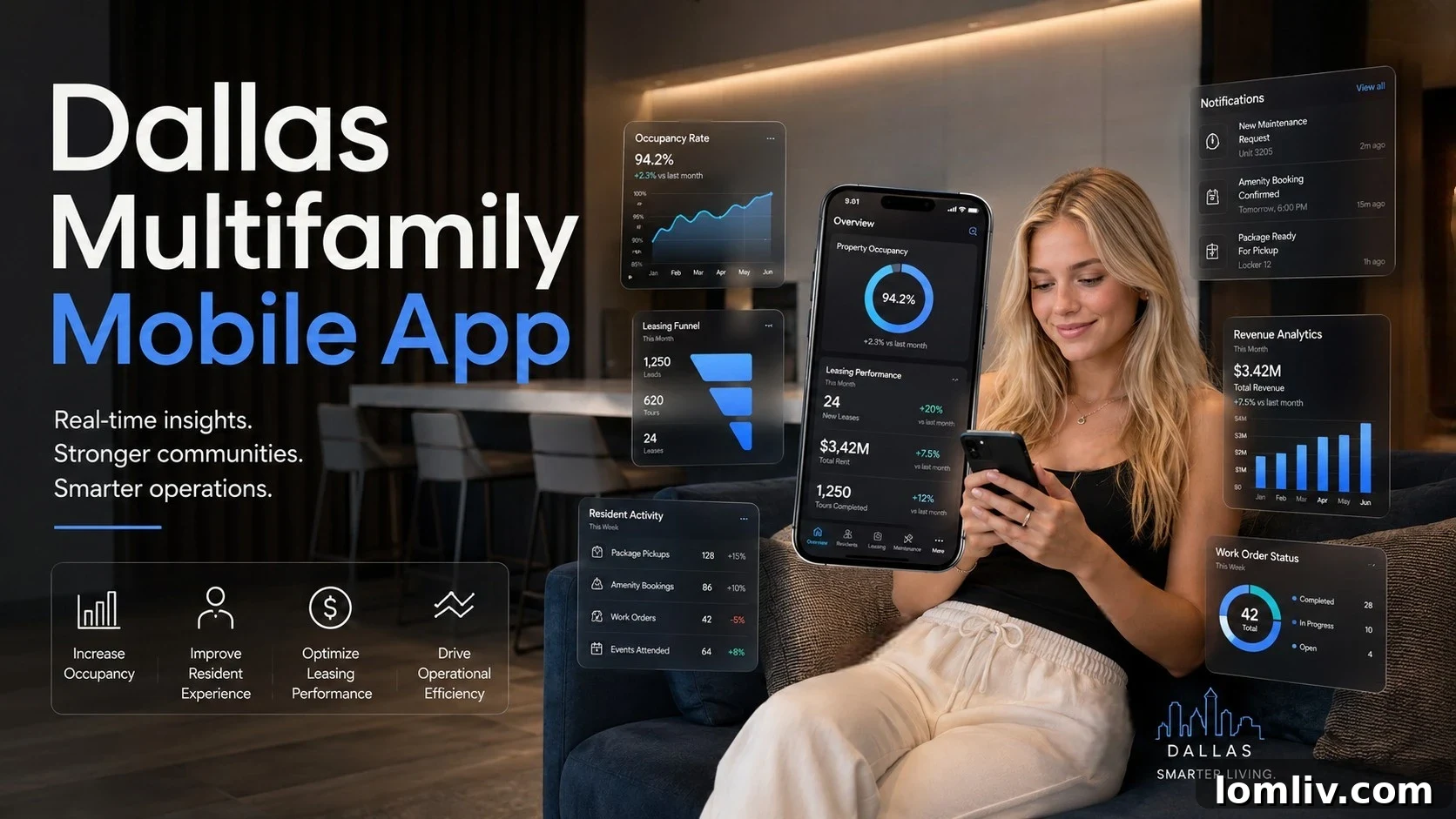
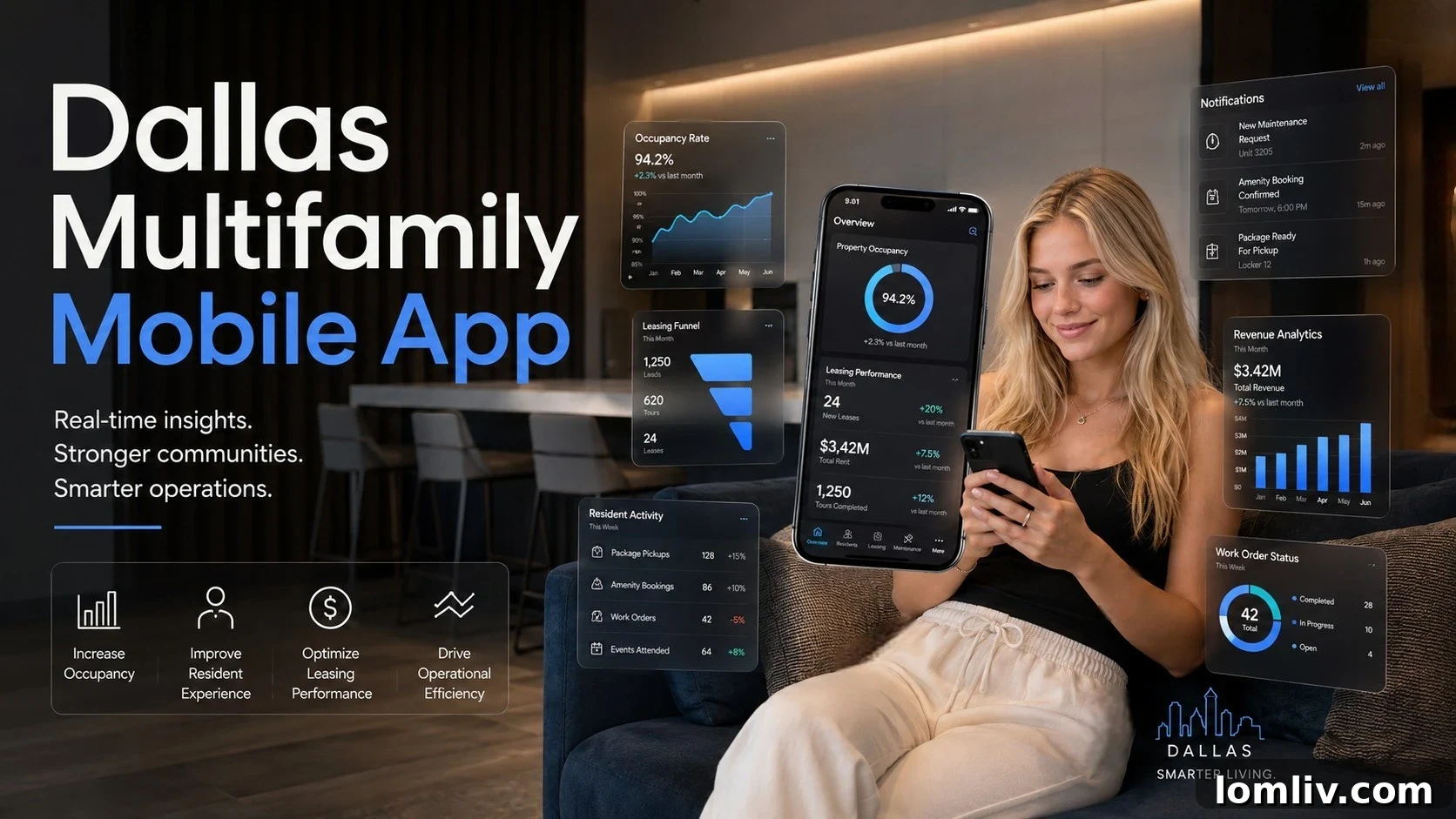
Dallas–Fort Worth continues to experience strong multifamily growth, particularly along rapidly expanding suburban corridors and employment centers such as Frisco, Plano, McKinney, Celina, and Irving. As new communities open, they enter a more competitive rental market where residents expect more than outdated property management portals can deliver.
There is a noticeable change in how multifamily communities operate today. Traditional web portals still support basic administrative tasks, but they often fall short of the daily, mobile-first experiences renters now expect. Residents manage banking, shopping, travel, food delivery, and customer service from their phones. A resident website that feels like it belongs to 2015 no longer matches modern lifestyles.
As a result, many property managers are moving away from static portal systems and partnering with mobile app developers to create responsive, app-based resident experiences. Some communities enhance capabilities through their existing property management platforms; others invest in custom apps built to suit their building layout, amenity rules, communication needs, and operational workflows.
Why Traditional Tenant Portals Are Falling Behind
Tenant portals were designed for fundamental administrative functions—paying rent, signing leases, and submitting maintenance requests. While those features remain useful, many portals were not intended for daily engagement.
Usability is a major limitation. Many portals rely on web-based interfaces that don’t adapt well to mobile screens. Submitting a maintenance request while heading out the door can be frustrating when a user must pinch and scroll through a desktop-style page in a phone browser.
Fragmentation is another issue. Payments, maintenance, messages, documents, amenity reservations, and community updates often live in separate tabs, tools, or systems, creating a scattered experience. Residents tend to log in only when necessary, which limits the property’s ability to engage consistently.
Overall, older portals frequently lack the real-time, personalized interactions that residents now expect from digital services.
What’s Driving the Shift in Dallas Multifamily Properties
This shift is directly tied to current conditions in the Dallas–Fort Worth rental market.
DFW benefits from continued population and job growth and robust suburban expansion. The region has also absorbed a large wave of new apartment deliveries, increasing competition for residents. In a market with more options, retention and resident satisfaction matter more than ever.
Demographics are shifting too. Millennials and Gen Z renters expect to manage daily tasks from their phones and are less tolerant of delayed email responses, vague maintenance updates, or software that forces them to switch between multiple systems.
On the operator side, managers are under pressure to run properties efficiently and keep operating costs in check. That creates demand for unified digital tools that reduce manual work, streamline requests, and simplify communication.
Mobile Apps vs. Tenant Portals: A Functional Comparison
Below is a concise comparison between traditional tenant portals and mobile-first resident apps:
| Feature | Tenant Portals | Mobile Apps |
|---|---|---|
| User Experience | Web-based and often static | Mobile-first and easier to navigate |
| Maintenance Requests | Often manual or limited | Real-time updates with photos and status tracking |
| Communication | Usually email-based | Push notifications and in-app messaging |
| Engagement | Often low | Higher potential for daily use |
| Accessibility | Limited on mobile | Always available from a resident’s phone |
The core distinction is responsiveness. Mobile apps enable an ongoing, two-way relationship between property teams and residents, while basic portals often function as static repositories for documents and transactions.
How Mobile Apps Are Changing the Tenant Experience in Dallas
A thoughtfully designed resident app simplifies daily apartment living.
Maintenance illustrates this well. Residents can photograph a problem, submit a request with notes, and receive status updates without calling or emailing the office. Maintenance staff get clearer context before entering a unit, cutting down on delays and unnecessary visits.
Communication becomes immediate and targeted. Push notifications replace mass emails that can be missed—useful for parking changes, fire alarm testing, package alerts, amenity closures, weather advisories, and emergency notices.
Apps also serve as digital community boards for events, announcements, local perks, and amenity scheduling, helping residents feel more connected without requiring staff to repeat messages across multiple channels.
When residents can access account information, service history, building updates, and community resources from a single platform, the overall experience becomes more seamless and cohesive.
Operational Benefits for Property Managers
Improvements are not limited to resident-facing features. Mobile-first systems can reduce friction for property teams as well.
Centralized communication cuts down on repetitive emails and redundant responses. Structured maintenance forms give staff clear details—location, priority, photos, and status—so tasks flow through a cleaner, more efficient workflow.
Faster response times boost resident satisfaction, which in turn supports lease renewals. A prompt, well-documented resolution process increases residents’ confidence in onsite management.
Managers also gain better visibility through unified dashboards that display open requests, pending tasks, resident messages, and operational trends—eliminating the need to search through email threads, spreadsheets, and disconnected systems.
Why Custom Apps Are Gaining Ground Over Standard Portals
While off-the-shelf software fits many properties, it may not match specialized workflows or unique community requirements.
Standard portals are designed for broad, general use and can create awkward processes for communities with specific amenity rules, package handling procedures, maintenance routing, access control needs, or communication preferences.
Integration challenges are common when properties use different systems for rent collection, maintenance, resident communication, and access control. When those systems don’t integrate smoothly, both staff and residents feel the friction.
Custom or semi-custom real estate apps let operators design solutions around actual workflows rather than forcing staff and residents to adapt to a one-size-fits-all product.
Real Estate UX as a Competitive Factor in Dallas
User experience is becoming a meaningful differentiator in the Dallas rental market.
Many interactions between residents and management now occur through screens. How easily residents can pay rent, request repairs, reserve amenities, receive alerts, or review policies shapes their perception of the property.
Dallas communities compete not only on location, size, amenities, and price but also on convenience. Even modest improvements in digital experience can make a property feel more comfortable and easier to live in.
That advantage is important in a market where renters have many choices.
What the Next Phase of Multifamily Digital Operations Looks Like
The next phase for Dallas multifamily operations will emphasize connection, automation, and mobile-first design. Resident communications will increasingly be automated, triggered by events such as package scans, work order progress, amenity status changes, and scheduled inspections.
Behind the scenes, managers will continue consolidating rent payments, maintenance, messaging, documents, amenities, and engagement metrics into unified dashboards. The objective is not merely another app, but reduced fragmentation and simpler property operations.
Over time, clunky software stacks are likely to be replaced by streamlined resident platforms that resemble the consumer apps renters use every day.
Final Thoughts
Moving beyond traditional web portals is more than a passing tech trend; it reflects a broader evolution in how Dallas multifamily communities function.
As renter expectations rise, a strong mobile resident experience becomes part of a property’s essential infrastructure. Older portals are losing relevance because residents and managers both need faster communication, easier service requests, clearer visibility, and fewer disconnected systems.
Mobile apps are emerging as the central hub for how modern rental communities communicate, operate, and retain residents. In a competitive Dallas–Fort Worth market shaped by growth, increased supply, and shifting renter expectations, it is understandable that more multifamily operators are moving in this direction.