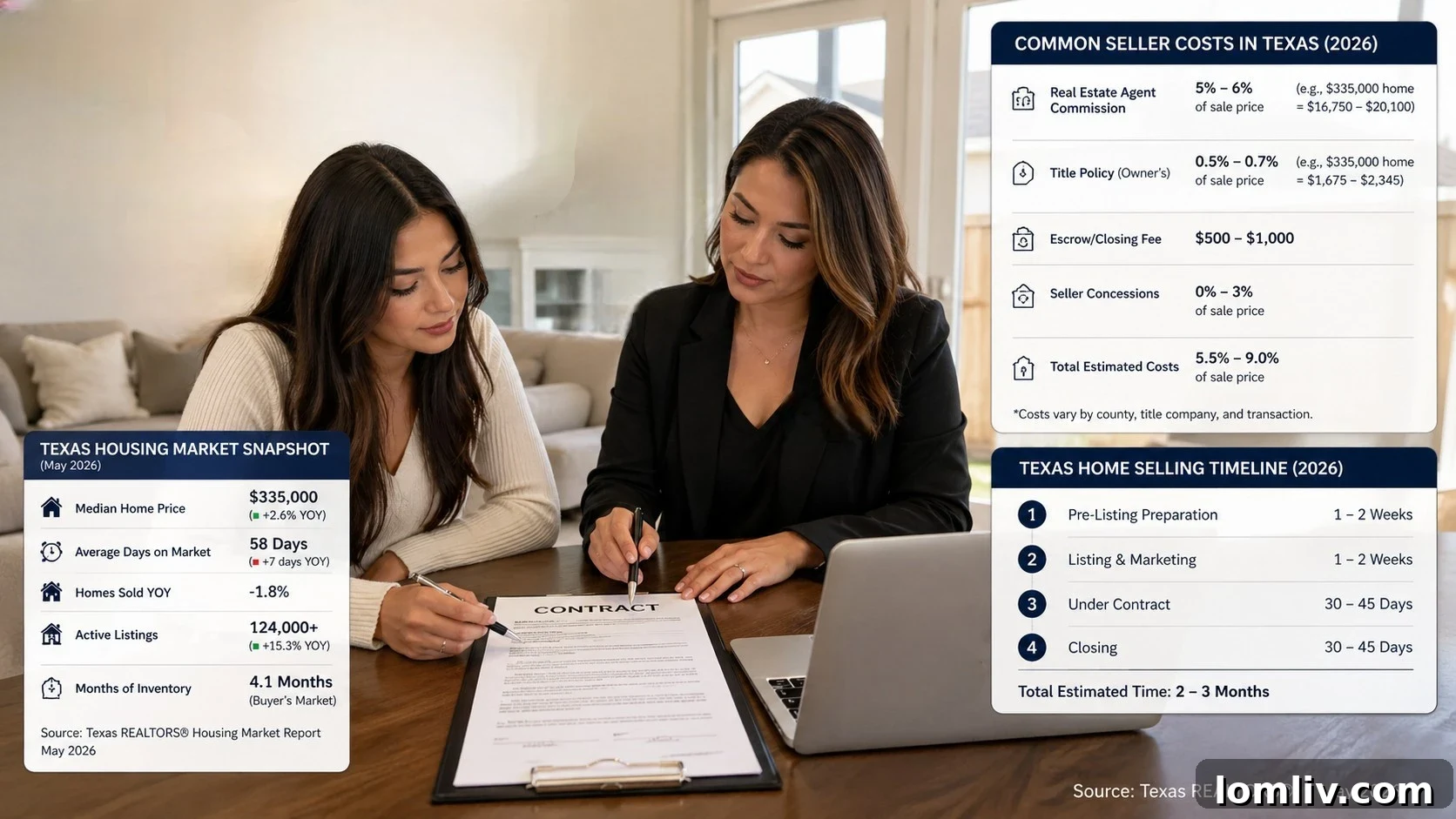
Navigating the journey of selling a home in Texas begins with a profound understanding of the intricate real estate contract. This foundational agreement meticulously outlines crucial elements such as the purchase price, critical deadlines, various contingencies, and all the essential closing details. A typical residential real estate transaction in the Lone Star State usually spans a period of 30 to 60 days from the moment the contract is officially signed. However, this timeline can exhibit significant variability, influenced by factors like buyer financing arrangements, the thoroughness of property inspections, the complexities of title work, and the specific terms mutually agreed upon by both the buyer and seller. Given that real estate laws and regulations are subject to frequent updates, staying well-informed about the current legal landscape is not merely advisable but essential to preempt potential delays and ensure a smooth, compliant transaction.
The Texas Real Estate Commission (TREC) plays a pivotal role in standardizing the home selling process by issuing several pre-approved contract forms. These forms are widely adopted by real estate agents across the state, ensuring consistency and clarity in transactions where an approved form is applicable. The widespread use of these standardized forms provides both buyers and sellers with a transparent and dependable framework for navigating the multifaceted process of selling a home in Texas, minimizing ambiguity and setting clear expectations from the outset.
This comprehensive guide is specifically tailored to illuminate the Texas residential purchase agreement from a seller’s vantage point. We will delve into the critical contract terms that directly impact you as a seller, explore potential risks, and outline proactive steps and strategies designed to safeguard your interests and protect your investment throughout the transaction, right up to the final closing.
Understanding the Texas Residential Purchase Agreement
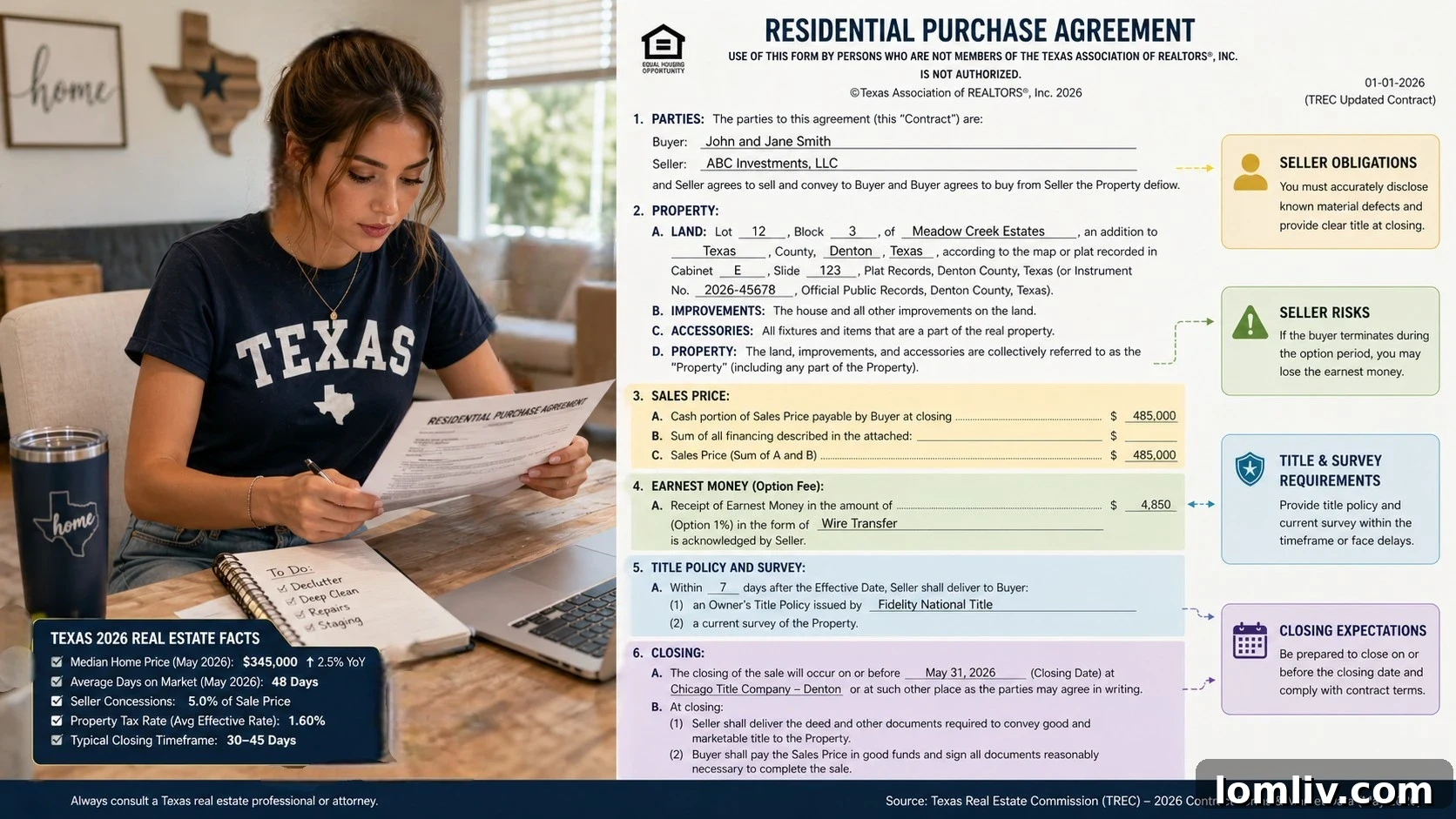
The Texas residential purchase agreement, often referred to simply as the “contract,” is a legally binding document that dictates the terms and conditions of a property sale. For sellers, understanding its nuances is paramount. It’s not just a formality; it’s a blueprint that governs every step of the transaction, from the initial offer to the exchange of keys. Familiarity with this document empowers you to make informed decisions, negotiate effectively, and mitigate potential pitfalls.
The Standard Contract Used in Many Texas Resale Home Sales
At the heart of many resale home transactions in Texas lies the **One-to-Four Family Residential Contract (Resale)**. This form, officially promulgated by TREC, is widely recognized as its most frequently utilized contract. It is meticulously designed for transactions involving single-family homes, duplexes, triplexes, and fourplexes, making it the bedrock for a vast majority of residential sales in the state. However, it’s crucial to note its specific applications: this particular form is not suitable for condominium transactions, the sale of newly constructed homes directly from a builder, or transactions involving farm and ranch properties, which often require specialized contract forms due to their unique characteristics and legal considerations.
TREC-licensed real estate professionals are generally mandated to use these standard forms whenever an approved form is applicable to a given transaction. This standardization serves a vital purpose: it ensures a consistent legal framework across thousands of home sales, fostering transparency and reducing the likelihood of disputes arising from ambiguous or non-standard terms. The consequences of using an incorrect or unapproved form can be severe, potentially rendering the entire agreement null and void, or at the very least, introducing significant delays and complications that can jeopardize the closing process. Adhering to the correct form helps maintain the integrity of the contract structure and provides a clear, predictable pathway for both buyers and sellers.
When the Contract Becomes Binding
A Texas real estate contract transitions from a mere proposal to a legally binding agreement at the point of “final acceptance.” This critical stage is reached when all parties involved—both buyer and seller—have unequivocally agreed to all terms and conditions, and this acceptance has been formally communicated to the other party. It’s important to distinguish between the **signing date** and the **effective date**. While signatures signify agreement, the effective date is the precise moment the contract legally commences and is typically different from the day it was signed by the first party.
In practice, achieving final acceptance entails several key components: the agreement must be meticulously documented in writing; both the buyer and seller must have affixed their signatures; any handwritten modifications or alterations made during negotiations must be initialed by all parties to signify their consent to those changes; the act of acceptance must be unambiguous and clearly communicated; and finally, the acceptance by the last party must be physically delivered to the other party or their designated agent. The **effective date** is not merely a formality; it is the critical timestamp that initiates the countdown for all subsequent, time-sensitive contractual deadlines. These deadlines include, but are not limited to, the period for delivering the option fee, depositing earnest money, providing required disclosures, completing title work, securing financing approvals, and ultimately, the scheduled closing date. Missing these deadlines can have significant legal and financial repercussions for either party, underscoring the importance of precise tracking from the effective date.
Basic Legal Requirements for a Valid Contract
For a real estate contract to be legally enforceable in Texas, it must satisfy several fundamental legal requirements. Foremost among these is the mandate that the contract be **in writing and signed by all parties**. This requirement directly addresses the Statute of Frauds, an ancient legal principle designed to prevent fraudulent claims by requiring certain types of contracts, especially those involving real property, to be documented. Without a written and signed agreement, a real estate transaction cannot be legally upheld in Texas courts.
Beyond the written form, a valid contract also necessitates several other essential elements to ensure its legal robustness:
- **Offer and Acceptance:** There must be a clear and definite offer made by one party (e.g., the buyer offering a price for the home) and an unambiguous acceptance of that offer by the other party (the seller agreeing to sell at that price).
- **Consideration:** This refers to the exchange of something of value between the parties. In a real estate transaction, the property itself is exchanged for money (the purchase price). Without this mutual exchange of value, the contract lacks legal foundation.
- **Lawful Purpose:** The contract’s objective must be legal and not violate any existing laws or public policy. For instance, a contract to sell stolen property would not have a lawful purpose.
- **Mutual Consent (or “Meeting of the Minds”):** Both parties must agree to the same terms and conditions, understanding and intending the same thing. This ensures that there is genuine agreement rather than a misunderstanding.
By comparison, everyday transactions, such as selling a vehicle in Texas, follow a much more straightforward legal process. Ownership is primarily transferred by signing the vehicle title, completing an application for registration, and filing a vehicle transfer notification with the Department of Motor Vehicles to avoid future liability. Furthermore, Texas law allows individuals to transfer, retain, or destroy the vehicle’s license plates, reflecting a significantly simpler framework compared to the layered and intricate contractual obligations inherent in real estate transactions. The high value, permanence, and complex legal implications associated with real property necessitate these more rigorous contractual standards.
Contract Terms That Directly Affect Home Sellers
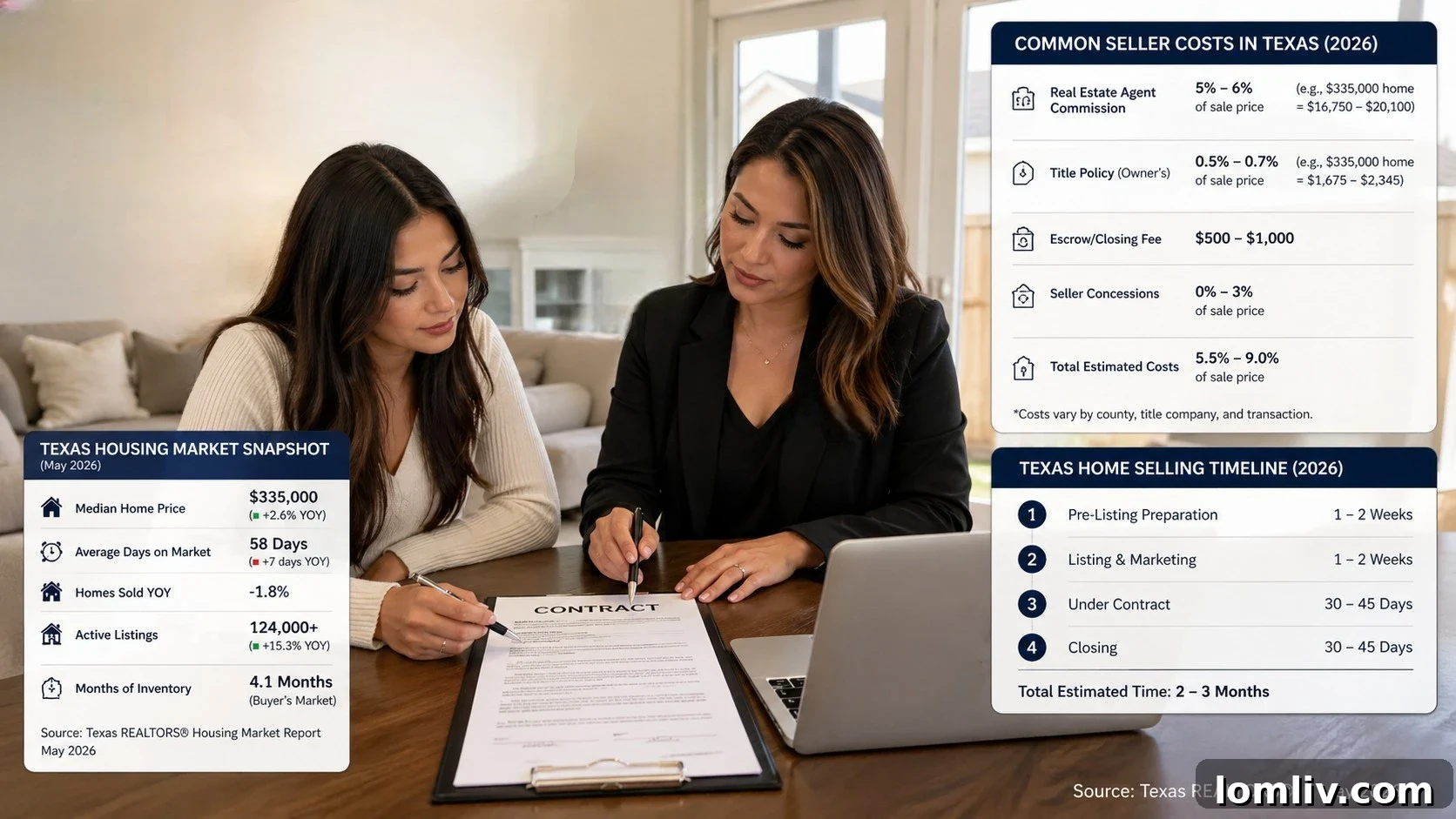
As a home seller, specific provisions within the Texas real estate contract carry substantial weight, creating both obligations and potential risks that you must comprehend. These terms can dictate the pace of the sale, impact your financial outcomes, and define your liabilities. Understanding them proactively allows you to better manage expectations and respond strategically to unfolding events.
Option Period and Earnest Money
Among the most critical provisions for sellers in a Texas real estate contract is the **option period**. This negotiated window grants the buyer an unfettered and unrestricted right to terminate the contract for any reason whatsoever, provided they deliver timely written notice of termination before the specified deadline expires. For sellers, this period represents a time of considerable uncertainty, as the buyer can walk away without penalty (beyond the option fee) even if there are no issues with the property or financing. It effectively places the property in a temporary limbo, making it challenging for sellers to confidently plan their next steps.
To secure this valuable termination right, buyers pay an option fee. In the current TREC resale contract, this fee is typically delivered by the buyer to the escrow agent (or directly to the seller, depending on specific terms) and is credited towards the sales price only if the transaction successfully closes. If the buyer exercises their right to terminate during the option period, the option fee is generally *not* refunded to them; it serves as compensation to the seller for taking the property off the market and incurring potential costs during that time.
The length of the option period is a point of negotiation and therefore lacks a single standard duration. Commonly, these periods range from 3 to 10 days, though in highly competitive seller’s markets, buyers might offer shorter option periods to make their offer more attractive. Conversely, in slower markets or for properties with unique characteristics, longer periods might be negotiated. The amount of the option fee also varies widely, depending on market conditions, the strength of the buyer’s offer, and the negotiation leverage of both parties.
Earnest money deposits represent another crucial financial component. Unlike the option fee, earnest money serves as a demonstration of the buyer’s serious intent to move forward with the purchase. These deposits are also negotiated, often ranging from 1% to 2% of the purchase price, though higher amounts can signal a stronger commitment. If the buyer properly terminates the contract during the option period, they are typically entitled to a full refund of their earnest money. However, if the buyer defaults on the contract *after* the option period has expired and without a valid contingency to terminate, the seller may have the right to retain the earnest money as liquidated damages, compensating them for the buyer’s breach of contract. Understanding these distinct roles of the option fee and earnest money is vital for sellers to assess the true commitment of a buyer.
How Financing Can Affect the Deal
Financing contingencies introduce another significant layer of risk and complexity for sellers. When a buyer intends to use third-party financing—a loan from a bank or mortgage lender—to cover all or part of the purchase price, the **Third Party Financing Addendum** becomes an integral part of the contract. This addendum protects the buyer by making the sale contingent upon their ability to secure a loan.
The financing process typically involves two main approvals:
- **Buyer Approval:** This focuses on the buyer’s financial health, including their assets, income, credit history, and the specific terms of the loan they are seeking. The buyer must meet the lender’s criteria to qualify for the mortgage.
- **Property Approval:** This aspect scrutinizes the property itself. It covers critical elements such as the appraisal, ensuring the home’s value supports the loan amount; insurability, confirming the property can be adequately insured; and any lender-required repairs that must be completed before the loan can close.
One of the most common challenges arises if the property appraises for less than the agreed-upon sales price. Lenders will only finance a property up to its appraised value, not necessarily the contract price. In such a scenario, the buyer may have several options: they might request that you, the seller, reduce the sales price to match the appraisal, bring additional cash to the closing table to cover the appraisal gap, or, critically, they may have the contractual right to terminate the deal entirely if a suitable agreement cannot be reached. For sellers, a low appraisal can be a significant setback, potentially forcing a price reduction or sending them back to square one.
It’s also important for sellers to recognize that even after the buyer clears the initial pre-approval or pre-qualification stage, deals can still encounter problems much later in the process. Underwriting can uncover new issues, a change in the buyer’s financial situation can occur, or last-minute lender requirements can emerge. Maintaining open communication with your agent and the buyer’s lender (through your agent) is crucial to staying abreast of the financing status and addressing any potential hurdles promptly.
Protecting Yourself Throughout the Home Selling Process
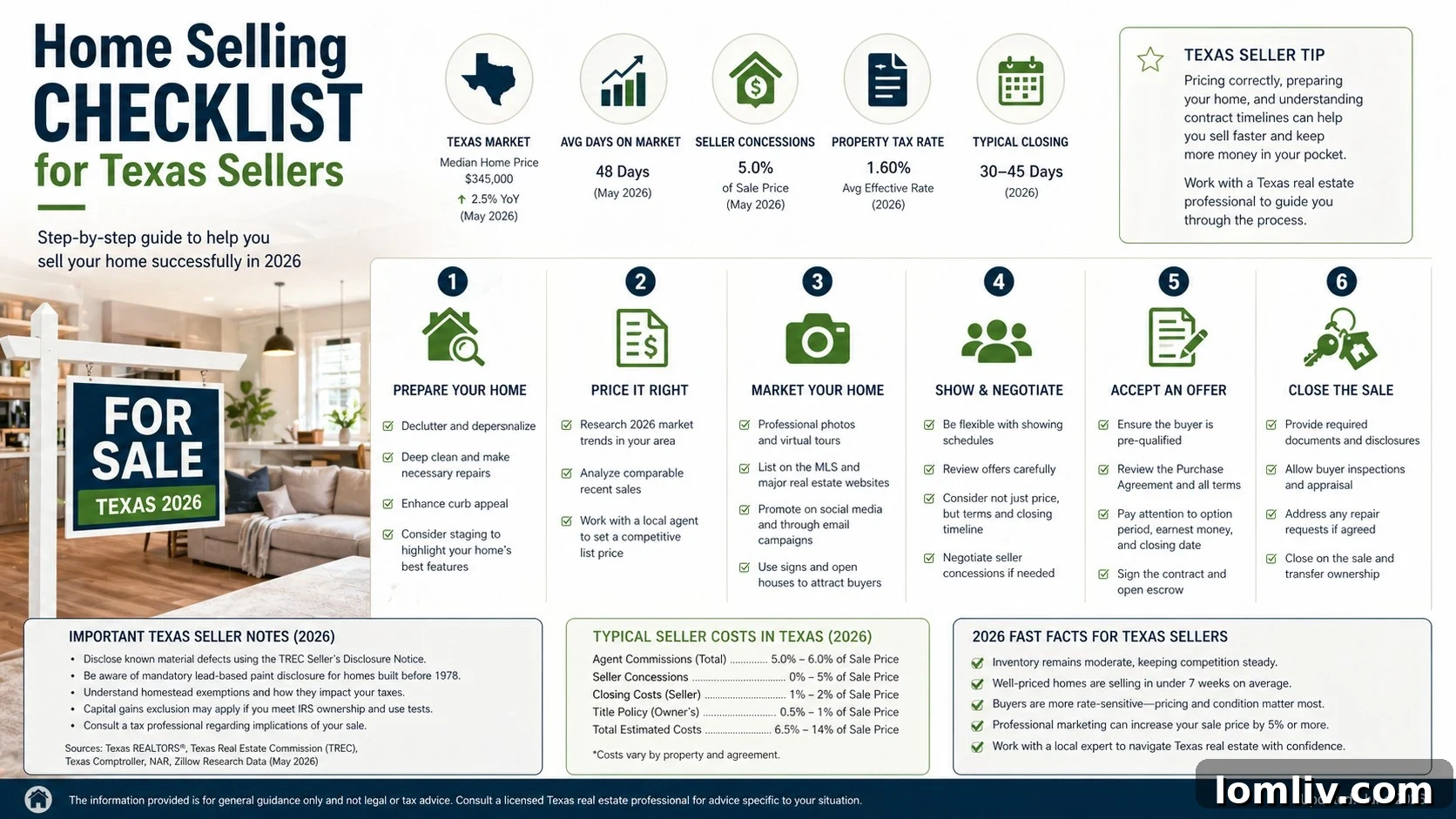
Selling a home is a complex legal and financial endeavor. Protecting your interests requires diligence, transparency, and a clear understanding of your obligations. By proactively addressing key areas like disclosures and potential defaults, you can significantly reduce your risk and ensure a more secure transaction.
Seller Disclosure Requirements
Texas law imposes a stringent requirement on most residential sellers: the provision of a written disclosure notice concerning the property’s condition. This **Seller’s Disclosure Notice** is not merely a courtesy; it is a legal document designed to protect buyers by informing them of known defects and material facts about the property. The standard TREC form is a multi-page checklist that comprehensively covers everything from the age of the roof and the condition of major systems (HVAC, plumbing, electrical) to previous instances of flood damage, foundation issues, or environmental hazards. The overarching purpose of this disclosure is to prevent future disputes and lawsuits by ensuring the buyer is aware of any known problems before committing to the purchase.
Under the TREC resale contract, the timing of this disclosure is critical. If the buyer has not received the disclosure notice at the time the contract is executed, and you, as the seller, fail to deliver it by the agreed-upon deadline stipulated in the contract, the buyer is granted the right to terminate the contract before closing and receive a full refund of their earnest money. Furthermore, even if you deliver the notice late, but still before closing, the buyer retains the right to terminate for any reason within seven days after receiving it, or before closing, whichever comes first. These provisions underscore the importance of completing and delivering the Seller’s Disclosure Notice accurately and on time to avoid giving the buyer an easy out from the contract.
What Sellers Are and Are Not Required to Disclose
Understanding the scope and limitations of your disclosure obligation is crucial. Your responsibility to disclose generally extends to **property conditions within your actual knowledge**. This means you are legally obligated to disclose defects or issues that you, the seller, are personally aware of. The law does *not* typically require you to conduct independent professional inspections or hire experts to actively uncover hidden issues that you do not already know about. The disclosure form must be completed based on your honest knowledge and belief at the time of completion.
However, there are specific categories of information that Texas law explicitly exempts from disclosure, often related to sensitive personal matters that do not pertain to the physical condition of the property. For instance, you have no legal duty to disclose information regarding deaths by natural causes, suicide, or accidents that occurred on the property but are unrelated to its physical condition. Similarly, you are not required to disclose information about previous occupants having AIDS or HIV. These exemptions are in place to protect the privacy of individuals and ensure that such personal tragedies or health statuses do not unfairly stigmatize a property. Always consult with your real estate agent and, if necessary, a real estate attorney to ensure you are complying fully with current disclosure laws.
What Happens If the Buyer Defaults
Despite careful preparation, a buyer might default on the contract without valid contractual grounds (i.e., not exercising an option period right or a contingency). In such scenarios, several remedies may be available to you as the seller to mitigate your losses. Under the standard TREC resale contract, if the buyer fails to comply with their contractual obligations, the seller typically has two primary courses of action:
- **Specific Performance:** This legal remedy involves asking a court to compel the buyer to fulfill their end of the bargain and complete the purchase of the property. While specific performance can force a sale, it is generally an expensive, time-consuming, and often emotionally draining legal process. Courts are usually reluctant to grant specific performance unless monetary damages are insufficient compensation.
- **Terminate the Contract and Receive Earnest Money as Liquidated Damages:** This is often the more practical and common remedy for sellers. If the buyer defaults, the seller can terminate the contract and retain the earnest money deposit as “liquidated damages.” Liquidated damages are a predetermined amount of money (the earnest money in this case) that the parties agree to in the contract as fair compensation for a breach, avoiding the need to calculate actual damages. This option provides a more straightforward resolution, albeit one that may not fully compensate for all the seller’s inconveniences or lost market opportunities.
The contract also typically allows the seller to “pursue other relief allowed by law,” which could encompass suing for actual damages if they exceed the earnest money, though proving and collecting such damages can be challenging. Your real estate agent and attorney can help you determine the most appropriate course of action based on the specifics of the default and your desired outcome.
Why the Option Fee Deadline Matters
The deadline for the option fee is of paramount importance in a Texas real estate transaction, particularly from the seller’s perspective. Buyers are legally required to deliver the option fee to the designated escrow agent (or seller, as per contract) within **three days of the effective date** of the contract. Texas rules are quite strict regarding this, often stipulating that this delivery must happen by 5 PM on the third day following the effective date. The timeliness of this payment is non-negotiable and has direct implications for the buyer’s rights and, by extension, the seller’s security.
If the buyer fails to pay this option fee on time and within the specified manner, they generally forfeit their unrestricted termination right under the option period. This means that if the option fee is late or not paid, the buyer can no longer simply walk away from the contract for “any reason” and expect to receive their earnest money back. This deadline matters immensely because the option period represents one of the buyer’s most powerful tools to exit the contract with minimal financial loss. Once that period is secured with a timely option fee, sellers face a period of uncertainty. However, if the buyer fails to meet this deadline, the seller’s position becomes considerably stronger, as the buyer loses a primary avenue for easy termination. Sellers should ensure their agent confirms the timely receipt of the option fee to solidify the contract’s enforceability and their peace of mind.
The Bottom Line
For home sellers in Texas, the real estate contract is far more than just a form to sign and passively file away. It serves as the definitive legal framework that sets the entire timeline for the sale, meticulously defines the buyer’s rights and obligations, and crucially determines what remedies and consequences will unfold if something goes awry before the final closing. A deep and proactive understanding of how critical deadlines, mandatory disclosures, intricate financing terms, and the buyer’s termination rights function within this contract can empower you to respond much more effectively and strategically to any challenge or opportunity that arises throughout the transaction.
The more familiar you become with the nuanced language and specific provisions of the Texas residential purchase agreement, the easier it will be for you to proactively identify potential risks, anticipate common hurdles, and ultimately avoid unnecessary surprises that could derail or complicate your sale. This knowledge transforms you from a passive participant into an informed decision-maker, giving you greater control over one of the most significant financial transactions of your life. Should any specific deadline, addendum, or disclosure issue appear unclear or cause concern, it is always prudent to consult immediately with your trusted real estate agent or a qualified Texas real estate attorney before you commit to signing any document or making a final decision. Their expert guidance can provide invaluable clarity and protection, ensuring your home selling journey is as smooth and successful as possible.