Unpacking Dallas Property Taxes: An Investigation into DCAD’s Assessment Discrepancies and Inequities
For many Dallas homeowners, the annual arrival of property tax bills has become synonymous with a unique blend of dread and disbelief. The experience often feels less like a routine civic duty and more like a significant financial shock. Over the past five years, I’ve personally witnessed my property taxes surge by nearly 52 percent, with a staggering 13 percent increase recorded this year alone. Despite the common assumption that annual increases are capped, I’ve hit that ceiling in four out of five years, highlighting a pervasive issue facing countless residents across the city.
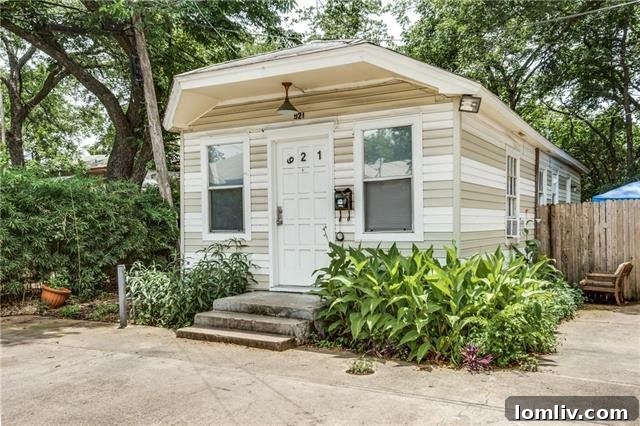
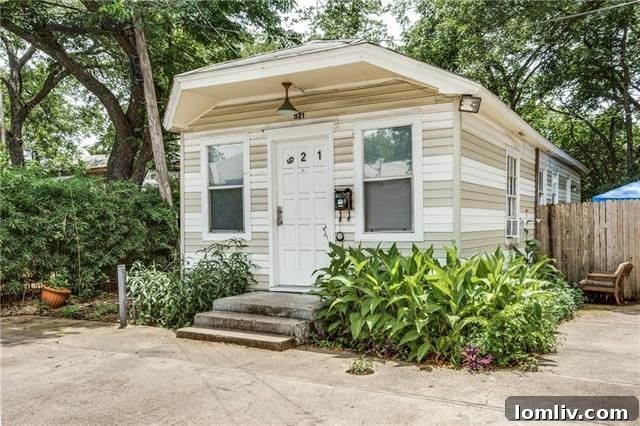
This rising tide of property tax obligations prompted a deeper dive into how properties are valued and assessed by the Dallas Central Appraisal District (DCAD). My curiosity was piqued one morning by a new listing: a modest 616-square-foot home on Fitzhugh Avenue, nestled between Swiss and Gaston Avenues, hitting the market at $179,000. Priced at approximately $290 per square foot, its swift movement to “under contract” status immediately warranted further investigation into its valuation history and market dynamics.
The Fitzhugh Flip: A Tale of Two Properties and Their Unveiling Assessments
The story of 921 N. Fitzhugh soon revealed itself to be more complex and illustrative than initially perceived. This particular property was part of a strategic “flip” operation, bundled with an adjacent investment property at 1001 N. Fitzhugh. The latter is a more substantial 1,324-square-foot residence featuring three bedrooms and two bathrooms, sharing a driveway with its smaller counterpart. Both properties, under the same ownership and designated as investment ventures, were jointly listed for $478,000, translating to an average of $246 per square foot. This dual listing offered a rare glimpse into the assessment practices of DCAD and the market’s response to renovated properties.
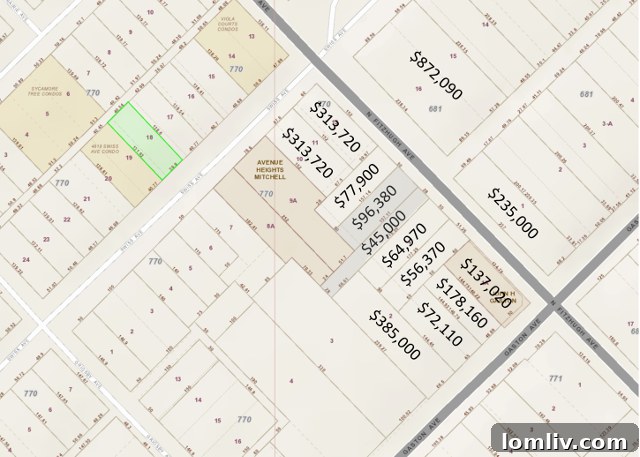
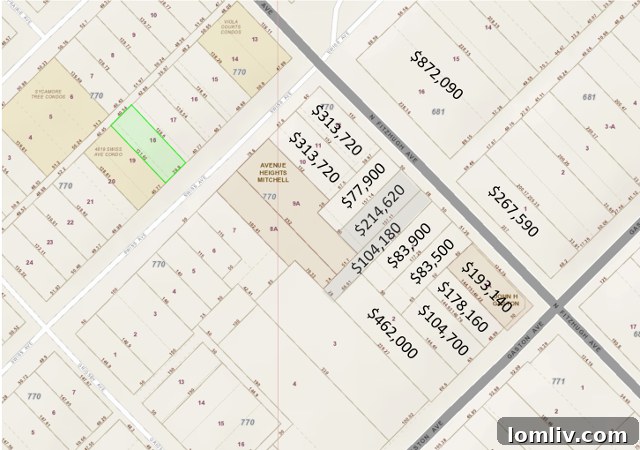
Given the annual property tax season and the noticeable disparity in my own tax increases, I decided to scrutinize the assessment history of these two Fitzhugh properties. The figures unearthed painted a compelling and, frankly, astonishing picture of DCAD’s valuation timeline. In the preceding year, 921 Fitzhugh was assessed at a mere $45,000, while 1001 Fitzhugh stood at $96,380. However, following their recent renovations and subsequent listing, their assessed values saw dramatic increases: 921 Fitzhugh jumped to $104,180, and 1001 Fitzhugh soared to $214,620. While a portion of this increase can be attributed to the significant investment made in renovations, a closer look at the market value suggests DCAD still lags considerably.
The Glaring Discrepancy: Market Price vs. Assessed Value
Comparing the combined recent list price of $478,000 for both properties (even assuming a 10 percent reduction for the final selling price) against their new, combined assessed value of $318,800 ($104,180 + $214,620), a substantial gap becomes evident. DCAD’s assessment still appears to be undervalued by over $159,000, representing a remarkable difference of approximately 50 percent below the market’s perceived value. This stark contrast raises critical questions about the methodologies employed by DCAD and the timeliness of their property valuations, especially in Dallas’s intensely competitive real estate market.
Years of Stagnation: DCAD’s Delayed Reassessments and Unequal Burdens
What truly compounds the frustration for many Dallas taxpayers is the revelation that neither 921 N. Fitzhugh nor 1001 N. Fitzhugh had seen a single penny of increase in their assessed values since 2013. This astonishing five-year period of stagnant valuation, occurring in one of the nation’s most dynamic and “smoking-hot” real estate markets, is frankly galling. While many homeowners, including myself, have endured consistent and significant annual increases, these particular properties appear to have slipped through DCAD’s net for half a decade. This begs the question: how many other properties in rapidly appreciating areas of Dallas are benefiting from similar, inexplicable assessment lags, and how many homeowners have enjoyed such an extended reprieve?
A Tale of Two Neighbors: Inconsistent Increases on Fitzhugh Avenue
To further illustrate the inconsistencies, let’s look at nearby properties. Consider 915 Fitzhugh, a neighboring home whose assessment remained at $64,970 from 2013 until 2018, when it finally rose to $83,900 – a 29 percent increase. Even this increase, if it weren’t also an investment property, would typically take DCAD three years to fully implement, given the 10 percent annual increase cap for owner-occupied homesteads in Texas. This contrast highlights a complex system where some properties see gradual, capped increases, while others experience prolonged stagnation followed by sudden, sharp adjustments, particularly after a market event like a renovation and sale.
Further north, 1007 Fitzhugh, another investment property, presents an even more puzzling scenario. It completely escaped any increase in 2018 and is currently valued at its 2015 assessment of $77,900. Intriguingly, this property’s value actually dropped from $78,560 in 2011 to $75,500 before modestly rising to $77,900 in 2015, where it has remained. The uneven trajectory of these neighboring properties’ assessments leaves one pondering: were the significant increases for 921 and 1001 Fitzhugh genuinely a result of their renovations, or simply a belated attempt by DCAD to catch up with market realities in an area whose “time just ran out” in DCAD’s seemingly arbitrary assessment cycle? It feels less like a systematic process and more like a game of “Russian roulette,” where some property owners are randomly selected for significant adjustments while others are continually overlooked.
The anomalies extend beyond Fitzhugh. Just around the corner, two investment properties at 4846 and 4842 Swiss Avenue haven’t seen a single dollar added to their assessed values since 2012. These properties are directly across the street from the prestigious Swiss Avenue historic district, an area typically associated with high property values and consistent appreciation. One cannot help but wonder if the tenants of these properties have similarly enjoyed an eight-year freeze on their rent increases. The glaring disparity suggests a systemic issue, one that likely isn’t isolated to this particular block but is pervasive across numerous Dallas neighborhoods.
The Systemic Roots of Inequity: Why Dallas Property Assessments Lag
The observed carelessness and inequity in DCAD’s assessments are not merely accidental; they are deeply rooted in fundamental structural aspects of the Texas property tax system. While it’s easy to point fingers, understanding these underlying factors is crucial for advocating for a more equitable system. One significant factor is that Texas remains one of the few states that does not require the mandatory reporting of real estate sales prices for either residential or commercial properties. This “non-disclosure” status creates a substantial hurdle for appraisal districts like DCAD, as they are deprived of comprehensive, real-time sales data—the most reliable indicator of market value. Without this vital information, DCAD must rely on less precise methods, often leading to assessments that significantly lag behind actual market transactions.
The 8% Revenue Cap: Incentivizing “Willful Blindness” at DCAD
Beyond the data limitations, a more controversial aspect of DCAD’s assessment strategy could be termed “willful blindness.” This phenomenon arises from a specific legal constraint: DCAD, like other appraisal districts in Texas, is generally restricted from raising the total amount of property tax revenue collected by more than eight percent per year (excluding new construction) without triggering a public hearing and a voter-approval tax rate election. This “rollback rate” or “voter-approval tax rate” acts as a powerful incentive. Faced with this limitation, DCAD cannot simply reassess every undervalued property every year, as doing so would likely push total revenues beyond the eight percent cap and necessitate a politically challenging public vote. Consequently, DCAD is incentivized to strategically pick and choose where to focus its assessment energies each year, leading to the highly inconsistent and seemingly arbitrary increases we observe.
How else can one explain the blatant disparities, where properties in prime locations, across the street from a historic area, remain untouched for five to eight years, while other homeowners endure annual increases nearing 52 percent over the same period? This selective approach means that the burden of increased tax revenue falls disproportionately on those properties that are chosen for reassessment, while others, often in equally appreciating areas, are granted an unofficial reprieve, creating a cycle of unfairness that undermines public trust in the appraisal system.
Empowering Taxpayers: How to Protest Your Dallas Property Taxes Effectively
Given these systemic challenges and the inequities they breed, it becomes imperative for Dallas homeowners to actively engage in the property tax protest process. While the system may feel stacked against individual taxpayers, there are concrete steps you can take to advocate for a fair assessment.
Doing Your Homework: Researching Comparable Properties
Before you even consider filing a protest, thorough preparation is key. Leverage the resources provided by DCAD (or similar county appraisal district websites) to research not just your own property’s assessment history, but also that of your immediate neighbors and comparable properties in your vicinity. Look for patterns: Do their assessed values align with yours? Do their rates of increase match your own, or have they remained stagnant for years? Was significant renovation work undertaken on their homes, similar to or different from yours? Document everything: past and present assessed values, square footage, year built, and any visible improvements. This data will form the backbone of your argument, allowing you to highlight discrepancies and demonstrate that your property may be unfairly assessed in comparison to others.
The Principle of Fairness: Why Your Protest Matters
The objective of your protest isn’t to “rat out” neighbors who may have benefited from DCAD’s oversight. Instead, it’s about advocating for equality and fairness within the system. You are challenging the notion that some properties can escape true market valuation for extended periods while others bear a disproportionate burden. While DCAD’s internal measurement tools and assessment models may be complex, their real-world application often falls short of public scrutiny. By presenting a well-researched case, you initiate a conversation about where your property fits into the larger neighborhood context and demand that assessments reflect true market value and equitable treatment for all.
Making Your Voice Heard: Engaging DCAD
Even if a full reduction in your property’s valuation seems like a long shot, the act of protesting itself serves a crucial purpose. Drawing a lesson from the call center industry, where human agents represent the most expensive asset, engaging with DCAD takes up their resources and time. As a taxpayer, you have every right to demand accountability. By showing up, asking pointed questions, challenging perceived unfairness, and demanding justification for assessments, you increase their workload and administrative costs. While you might not win a penny of reduction, your active participation contributes to a larger movement for transparency and accountability, potentially nudging the system towards more diligent and equitable assessments in the long run.
A Critical Reminder: The deadline for filing a property tax protest with DCAD is May 15th. Do not miss this crucial window to assert your rights as a homeowner.
Happy protesting!

About the Author: My professional focus spans high-rises, homeowners’ associations (HOAs), and innovative renovation projects. I hold a deep appreciation for both modern and historical architecture, actively balancing these interests with a commitment to the YIMBY (Yes In My Backyard) movement, advocating for sustainable urban development. My contributions to real estate journalism have been recognized by the National Association of Real Estate Editors, earning two Bronze awards (2016, 2017) and two Silver awards (2016, 2017) in both 2016 and 2017. If you have a compelling story to share, a unique real estate insight, or even a marriage proposal (you never know!), please don’t hesitate to reach out via email at [email protected]. While you’re welcome to search for me on Facebook and Twitter, I admittedly maintain a somewhat elusive digital presence.