Texas Midterm Elections: Frisco, Richardson, and Dallas ISDs Secure Property Tax Increases Amidst Significant Democratic Shifts
The recent Texas Midterm Elections delivered a dynamic and consequential set of results, reflecting evolving political currents across the Lone Star State. While statewide Democratic candidates faced an arduous battle, falling short of major victories, the election saw significant shifts and impactful decisions at local and district levels. Notably, several prominent Independent School Districts (ISDs) in North Texas successfully passed crucial property tax measures and bond packages, promising vital funding for education. Simultaneously, Democratic candidates made notable inroads in both the U.S. House and the Texas State Legislature, underscoring a rapidly changing electoral environment driven by record voter turnout and focused campaign strategies.
Key Election Highlights and Immediate Outcomes:
- Collin Allred Unseats Pete Sessions: A significant upset in the U.S. Representative District 32 race saw Democrat Collin Allred best long-time Republican incumbent Pete Sessions, signaling a major national trend and a shift in a traditionally conservative district.
- Dallas ISD Voters Approve All Four Propositions: Voters overwhelmingly passed all four vital propositions on the ballot for Dallas ISD, paving the way for substantial investments in educational programs, infrastructure, and staff compensation.
- Democratic Victories in Texas House: Democrats Julie Johnson defeated Matt Rinaldi in House District 115, and John Turner secured a win against Lisa Luby Ryan in District 114, contributing to broader Democratic gains in the state legislature.
- Dallas City Council Race Heads to Runoff: Carolyn King Arnold and Keyaira Saunders are poised for a decisive December 11th runoff to determine the new representative for a crucial Dallas City Council seat.
Despite a palpable surge in Democratic enthusiasm and unprecedented voter engagement, particularly fueled by U.S. Senate candidate Beto O’Rourke, statewide races in Texas ultimately remained under Republican control. However, the electoral margins were remarkably thin, a clear indicator of a changing political tide in a state long considered a Republican stronghold. Historically, in the 16 years preceding this election, Democratic candidates for statewide offices had only twice managed to secure 45 percent of the total vote. In this election cycle, an impressive nine Democratic candidates achieved this threshold, unequivocally demonstrating a growing competitiveness and shifting demographics within Texas.
“Today is not a bad day,” remarked Mike Collier, the Democratic candidate for Lieutenant Governor, on Tuesday night. “We showed Texas that if you campaign on issues that Texans care about, you can have a strong showing in this state.” Collier’s statement encapsulated the sentiment of many Democrats who, while not achieving ultimate victory at the top of the ticket, recognized significant progress and laid a robust foundation for future campaigns.
The Enduring “Beto Effect” and Record Voter Turnout:
While the much-discussed “Beto Effect” — referring to the widespread enthusiasm and fundraising prowess generated by U.S. Senate candidate Beto O’Rourke — did not translate into a statewide win for its namesake, its profound impact on down-ballot races was undeniable. O’Rourke’s vigorous “get out the vote” efforts are widely credited with energizing the Democratic base across Texas, leading to several crucial flips in congressional, state legislative, and local races. This ripple effect proved instrumental in tightening races and propelling lesser-known candidates to victory, thereby reshaping the political landscape in various districts and highlighting the power of grassroots mobilization.
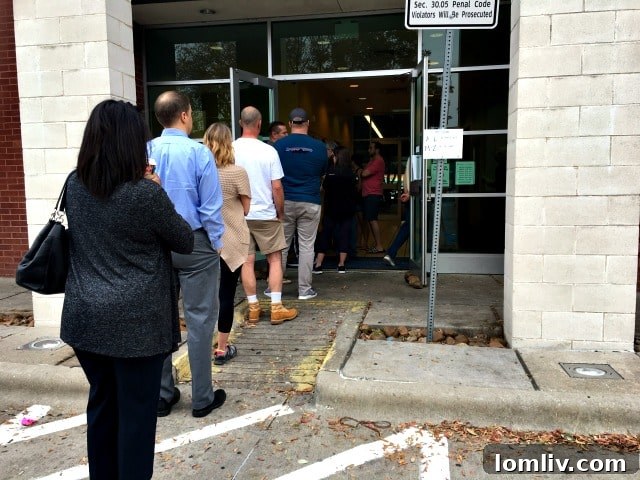
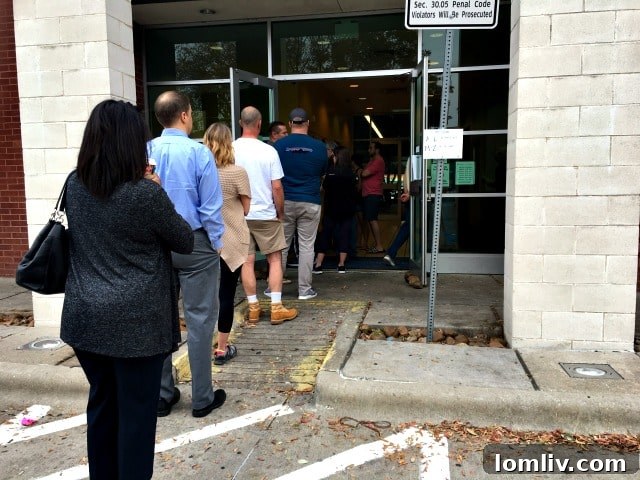
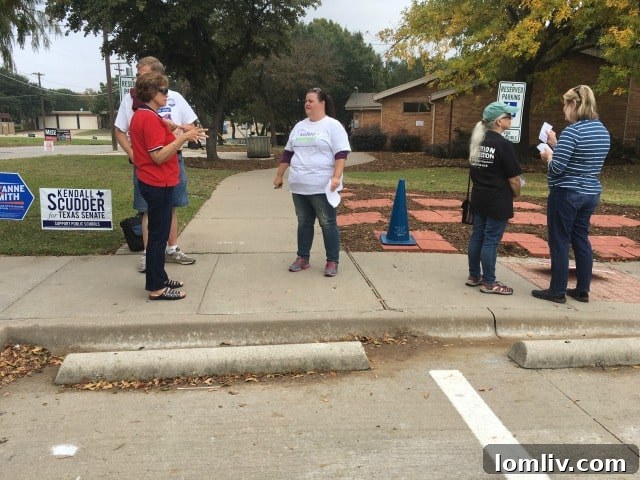
Voter turnout during the election was exceptionally robust, following record-breaking early voting numbers that indicated widespread public interest. Election Day polling locations reported varying levels of activity; some experienced quiet periods, described by one poll greeter as “ghost towns,” while others saw consistently busy scenes, particularly as schools dismissed and people finished their workdays. Volunteers across the state observed a steady increase in voter engagement throughout the day, underscoring the public’s heightened interest in the electoral process and the critical issues at stake.
North Texas School Districts Secure Crucial Funding for the Future:
Voters in several prominent North Texas Independent School Districts demonstrated their commitment to educational excellence by approving critical measures designed to address funding challenges and facilitate essential improvements. These forward-looking decisions will have a direct and lasting impact on students, teachers, and the broader community, ensuring vital resources for key educational initiatives and infrastructure.
Dallas and Richardson ISDs Pass Tax Ratification Elections (TREs):
Both Richardson ISD and Dallas ISD successfully passed 13-cent Tax Ratification Elections (TREs). A TRE is a vital financial tool that allows a school district to increase its maintenance and operations (M&O) tax rate, which funds day-to-day expenses such as teacher salaries, utilities, and classroom supplies. Often, this increase is achieved by shifting funds from the interest and sinking (I&S) fund, which is used for debt service, thereby allowing districts to boost operational budgets without necessarily raising the overall property tax rate. This mechanism is crucial for Texas school districts navigating a complex state school finance system, often referred to as the “Robin Hood” system, which mandates property-wealthy districts to share local tax revenue with property-poor districts. The approval of these TREs signifies a robust public commitment to investing in local education and supporting the core functions of the school system.
For the Dallas ISD TRE, the approved funds are strategically earmarked for several key priorities designed to enhance educational quality and equity. These include providing well-deserved raises for teachers and staff, a critical step in recruiting and retaining top talent; expanding pre-kindergarten programs to offer early learning opportunities for more children, setting a strong foundation for future academic success; launching racial equity initiatives to ensure equitable outcomes and opportunities for all students, regardless of background; and broadening school choice options to offer diverse educational pathways tailored to individual student needs. These initiatives are foundational to the district’s long-term vision for student achievement and community development.
Frisco ISD Voters Approve Strategic Tax Swap and Major Bond Measure:
Frisco ISD voters also showed strong support for their rapidly growing local schools by approving a 13-cent tax swap. Similar in principle to a TRE, this measure strategically reallocates 13 cents from the district’s debt service tax rate to its maintenance and operations tax rate. This financial maneuver provides Frisco ISD with much-needed greater flexibility in funding daily operations, allowing resources to be directed towards immediate educational needs rather than being solely tied to debt repayment. This shift enables the district to address critical operational costs and ongoing facility maintenance more effectively, all without increasing the overall property tax burden on residents.
In addition to the tax swap, Frisco voters also overwhelmingly approved a substantial $691 million bond measure. This significant investment is designated for vital infrastructure projects essential for accommodating the district’s explosive growth. It includes the construction of new campuses to house the rapidly expanding student population and the comprehensive renovation of older facilities to ensure they meet modern educational standards and provide optimal learning environments. This extensive bond package is crucial for maintaining high-quality learning environments in one of Texas’s fastest-growing communities, addressing the continuous demand for updated and expanded school infrastructure.
Dallas ISD Secures Additional Funding Through Three Key Propositions:
Beyond the successful TRE, Dallas ISD voters further demonstrated their profound commitment to education by approving three additional propositions. These measures provide critical financial flexibility and resources, enabling the district to address both immediate operational needs and long-term strategic goals:
- School Bus and Bus Barn Acquisition: This proposition grants the district authorization to purchase more school buses and establish a new bus barn. This investment is vital for enhancing transportation services for students, improving logistical efficiency, and ensuring safe and reliable transit across the district’s extensive service area.
- Addressing the State Recapture Tab: A particularly crucial proposition enables Dallas ISD to purchase attendance credits to address its “recapture tab.” This payment is required by the state under Texas’s aforementioned “Robin Hood” school finance system, which mandates that property-wealthy districts contribute a portion of their local property tax revenue to supplement property-poor districts. By approving this measure, voters ensure the district can meet its state-mandated obligations while safeguarding essential funds for local educational programs and initiatives.
- Refinancing Debt for Project Funding: The third proposition permits the district to refinance an additional $75 million that was initially borrowed during the 2015 Bridge Plan. This plan was instrumental in funding significant school projects, such as the comprehensive renovation of Lakewood Elementary, by setting aside money between the 2008 and 2015 bond elections. Refinancing these funds strategically allows them to be redirected to the maintenance and operations budget, providing additional capital for various ongoing projects and addressing urgent facility needs, thereby maximizing the efficiency of existing financial resources.
Dallas City Council District 4 Heads to Runoff:
The highly anticipated race for Dallas City Council District 4, a seat vacated by the convicted Dwaine Caraway, proved exceptionally competitive with thirteen candidates vying for the position. As no single candidate managed to secure more than 50 percent of the vote, the election will proceed to a runoff. Carolyn King Arnold, who previously lost the seat to Caraway just a year ago, emerged as the frontrunner with 25.74 percent of the vote. She will now face Keyaira Saunders, who garnered 17.19 percent, in a decisive runoff election scheduled for December 11th. This runoff will be critical in determining the new leadership for a vital district, following a period of political uncertainty and scandal.
Shifting Dynamics in the Texas State Legislature:
While statewide races presented significant challenges for Democrats, the narrative changed dramatically in the Texas State Legislature, where the party made substantial gains, signaling a potential shift in legislative power and influence.
Democratic Gains Bolster Presence in the Texas House:
Democrats successfully picked up an impressive 11 seats in the Texas House, a remarkable achievement that, while not enough to secure a majority, significantly strengthens their position as the minority party. This increased presence will undoubtedly make the upcoming vote for the Texas House Speaker a more interesting and potentially contentious process, as the larger Democratic caucus will wield greater influence in negotiations and legislative strategy. This shift indicates a growing Democratic presence in suburban and urban areas, reflecting evolving demographics and voter priorities.
Key victories included Democrat Julie Johnson unseating incumbent Matt Rinaldi in House District 115, a significant win in a traditionally contested area. Similarly, Democrat John Turner defeated Republican Lisa Luby Ryan in District 114, another crucial pickup. These and other victories underscore a growing trend of Democratic strength in suburban and urban districts, reflecting changing demographics and voter priorities. Several other House seats were closely contested, with final results keenly awaited, indicating the tight margins and competitive nature of these legislative battles across the state.
Texas State Senate Remains Republican Stronghold:
In the Texas State Senate, Democrats managed to gain two seats, with Konni Burton and Don Huffines losing their positions. However, despite these notable gains, the Republican party will still maintain a substantial 19-seat advantage, ensuring their continued dominance in the upper chamber of the Texas Legislature. This outcome reinforces the considerable challenges Democrats face in flipping the entire state legislature, even as they demonstrate progress in specific districts and show signs of an organized, growing base.
State Board of Education Races Influence Educational Policy:
Races for the State Board of Education also drew considerable attention due to the board’s significant influence over curriculum standards, textbook adoptions, and broader educational policies for public schools. In District 12, Pam Little maintained a slight lead over Suzanne Smith with more than half the precincts counted, indicating a tight race for this crucial position. Republican incumbent Pat Hardy successfully retained her seat for District 11, while Democrat Aicha Davis secured a decisive victory for her District 13 seat. The outcomes of these races will directly impact the direction and content of public education in Texas for years to come.
National Implications: Democrats Secure U.S. House Majority:
The Texas Midterm Elections played a pivotal role in the national political landscape, contributing significantly to the Democratic Party’s capture of the majority in the U.S. House of Representatives. Key victories in Texas were instrumental in this national shift, reflecting broader voter dissatisfaction with the existing national political climate.
Significant U.S. House Flips in Texas Redraw the Political Map:
Democrat Collin Allred’s decisive win over long-time GOP incumbent Pete Sessions in U.S. House District 32 was a standout moment, effectively turning a historically Republican stronghold blue. Similarly, Lizzie Pannill Fletcher’s victory over incumbent John Culberson in Houston further solidified Democratic gains, highlighting a growing trend of suburban districts shifting left. These two flips, among several others across the country, were crucial in establishing Democratic control of the U.S. House, marking a significant power shift in Washington D.C. after years of Republican dominance.
This new Democratic majority will have profound implications, including a shift in legislative priorities, increased oversight responsibilities, and a more robust check on the executive branch. A direct consequence of this shift is the likely appointment of U.S. Rep. Eddie Bernice Johnson, who also successfully won her seat in District 30, as the chair of the influential House Committee on Science, Space, and Technology. Her experienced leadership will bring significant attention to scientific research, technological innovation, and space exploration from a Texas perspective, impacting national policy.

Challenges in U.S. House District 24: Marchant Retains Seat Amidst Controversy:
Despite the broader wave of Democratic successes, Republican incumbent Kenny Marchant managed to retain his seat in U.S. House District 24, winning by approximately 5 points over challenger Jan McDowell. McDowell acknowledged the formidable challenge posed by Marchant’s extensive campaign funding. Addressing her supporters at a watch party, she candidly discussed the significant financial disparity in the race, which often dictates outcomes in high-stakes elections.
“I want to say thank you to everyone here — it seems like people came out of thin air to help us all the way through,” McDowell expressed with heartfelt gratitude. She highlighted the stark financial advantage of her opponent: “Kenny Marchant has about $2 million for this and I have about $100,000, which isn’t a lot for a congressional race. That shows you what a challenge this was.” At the time of her remarks, McDowell, though not fully conceding, acknowledged the immense uphill battle, stating, “it doesn’t look good,” reflecting the tough realities of campaigning against a well-entrenched incumbent.
The Impact and Debate Over Gerrymandering:
McDowell further criticized the electoral system, specifically pointing to the inherent advantages of party affiliation and manipulated district boundaries in Marchant’s consistent success. “Kenny Marchant has this R next to his name on the ballot and money and that seems to be what he’s running on,” she asserted, highlighting the power of party labels and financial resources. She also drew pointed attention to the practice of gerrymandering, explaining, “He doesn’t have a lot of campaign volunteers or poll greeters. He wins on gerrymandering. He drew his own district as a member of the state legislature.” Gerrymandering, the manipulative drawing of electoral district boundaries to favor one party or class, significantly influences election outcomes and can make races less competitive, often disenfranchising a substantial portion of the electorate by creating safe seats.
In her closing remarks, McDowell voiced her fervent hope that “the state legislature will take a real look at the district boundaries after the 2020 Census.” The upcoming decennial census will be absolutely critical for the mandatory redistricting efforts, offering a quadrennial opportunity to redraw electoral maps more equitably and potentially foster more competitive and truly representative elections across Texas. The profound challenges faced by candidates like McDowell underscore the ongoing national debate about fair representation and the urgent need for comprehensive electoral reform to ensure that every vote genuinely counts.
Looking Ahead: The Evolving Texas Political Landscape
The 2018 Texas Midterm Elections represented a pivotal moment, showcasing a state in profound political flux. While Republicans managed to maintain their strong grip on statewide offices, the significant gains made by Democrats at the district level, coupled with unprecedented voter engagement and a clear shift in demographics, paint a compelling picture of an evolving electorate. The successful passage of vital school funding measures and bond packages in key North Texas ISDs reflects a robust, community-wide commitment to education, ensuring crucial resources for future generations of students and teachers. As Texas continues its rapid growth and diversification, the comprehensive implications of these election results will undoubtedly continue to shape public policy, define educational priorities, and fuel the ongoing political discourse across the vibrant Lone Star State for years to come.