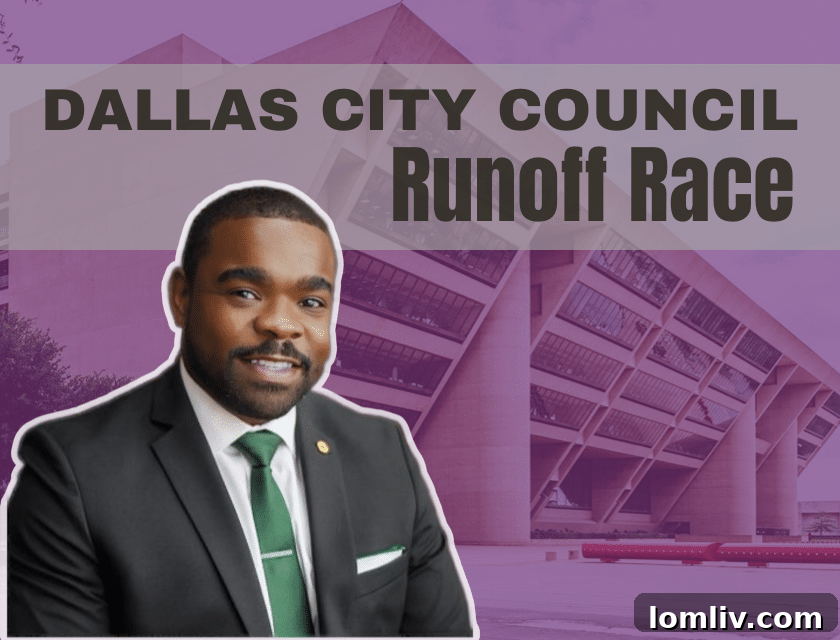
Zarin Gracey: Ushering in a New Era of Hope and Development for Dallas City Council District 3
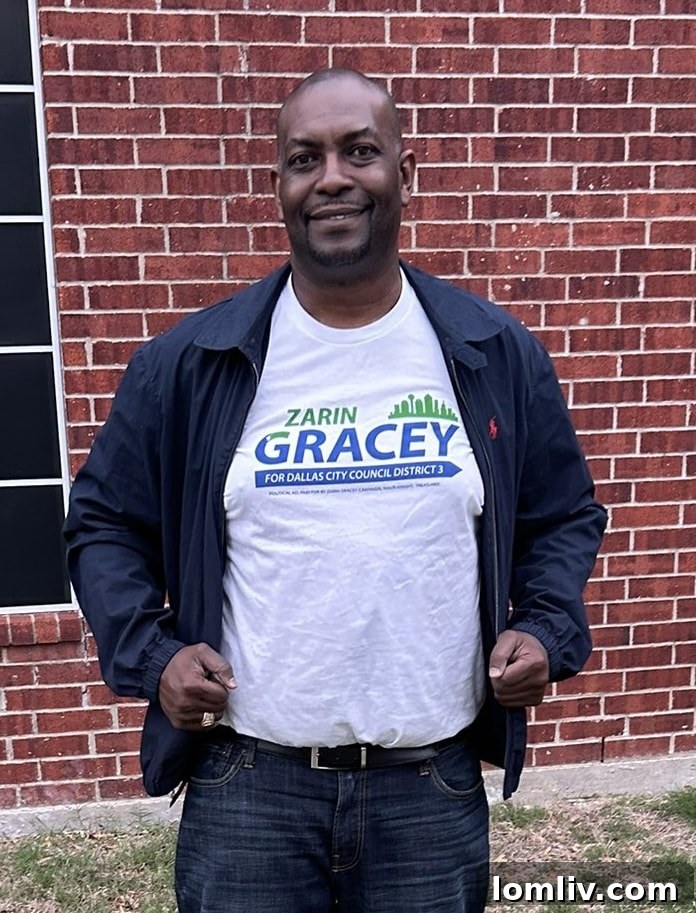
In the vibrant heart of Southwest Dallas, a community often overlooked and underserved for decades, a fresh wave of leadership has emerged. Zarin Gracey, the newly elected and dynamic representative for Dallas City Council District 3, believes that bridging these long-standing gaps requires more than just policy – it demands profound “faith.” His compelling vision, coupled with an impressive professional background, positions him as a pivotal figure ready to redefine the future of this critical district.
Gracey’s journey to the council seat is marked by a unique blend of municipal expertise and spiritual leadership. For fifteen years, he navigated the complex corridors of Dallas City Hall, accumulating invaluable experience across diverse departments. Wearing what he humorously describes as “about a dozen different hats,” Gracey developed a comprehensive understanding of urban planning, economic development, and community engagement from the inside out. Following his impactful tenure, he transitioned from municipal government two years ago to serve as executive pastor at Concord Missionary Baptist Church, a role that further honed his leadership skills, empathy, and commitment to service.
His return to public office was sealed with a decisive victory in a runoff election on Saturday night, where he secured an impressive 63 percent of the vote, defeating radio talk show host Joe Tave. This clear mandate from the constituents of District 3 underscores a community eager for change and confident in Gracey’s ability to deliver it.
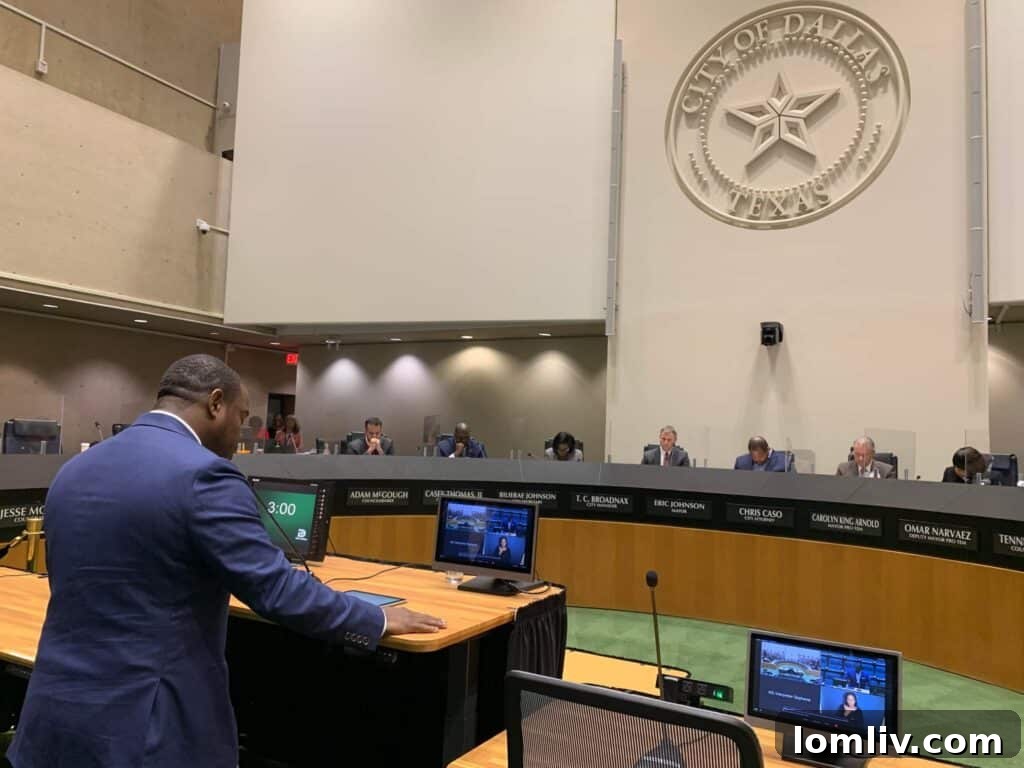
Speaking in an exclusive interview with daltxrealestate.com shortly after his election, Gracey articulated his motivation for returning to Marilla Street. Bolstered by the strong endorsement of outgoing D3 Councilman Casey Thomas, who was term-limited, Gracey’s decision felt like a natural, almost inescapable calling. “It sounds weird, but in my mind, it would almost be a sin not to,” he reflected, citing his extensive experience, robust education, and an undeniable passion for transformative change. He added, “As a director working inside City Hall, I felt like I kind of reached my peak in terms of influence. This gives me another opportunity, understanding the perspectives of city staff and the struggles they were running into, to help them accomplish those things and sift through the political junk, to kind of serve as an interpreter. It’s natural; it’s the right thing to do.” This perspective highlights his unique position as a bridge-builder, capable of translating community needs into actionable policy while navigating bureaucratic intricacies.
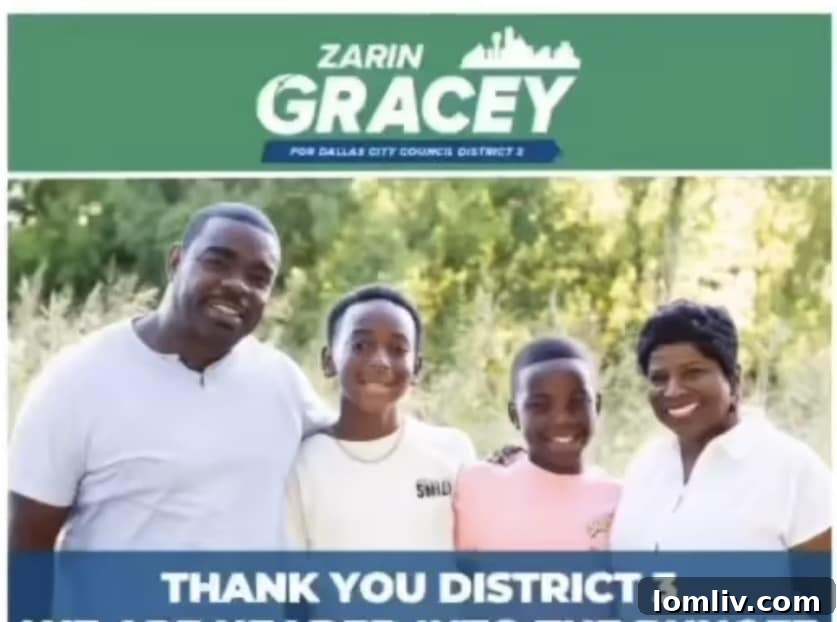
At 46, Zarin Gracey, alongside his wife Erin, has built a life deeply rooted in Dallas for the past 21 years. Their family includes two adopted sons, now 13 and 11, whom they welcomed into their home when the boys were toddlers. Gracey’s academic credentials are as diverse and impressive as his professional journey. He holds an executive certification in local government from the prestigious Harvard JFK School of Government, a master’s degree in organizational leadership from Luther Rice University and Seminary, and a bachelor’s degree in accounting from the University of Arkansas at Pine Bluff. This formidable educational background underpins his pragmatic and visionary approach to addressing the complex challenges facing Dallas’ District 3.
Addressing the Core: Zarin Gracey’s Stance on Dallas Housing Issues
One of Gracey’s most striking qualities is his genuine accessibility and candid communication style – a refreshing trait in today’s political landscape. He eschews formal titles, preferring to be known simply as “Zarin,” emphasizing his desire for authentic connection over hierarchical distance. This humility extends to his working relationships, as he openly shared, “The biggest thing on my prayer list right now is … to have the same working relationship with the staff that I had before. I don’t want them to think that I’m up to something. I’m truly hoping my authenticity and sincerity can continue without that awkward council-staff barrier.” This reflects his commitment to fostering an environment of trust and collaboration crucial for effective governance.
A Deep Well of Municipal Experience Informing Policy
Gracey’s prior roles at City Hall have equipped him with an intimate understanding of the levers of urban development. He was deeply involved in economic development initiatives, notably overseeing Dallas’ Business Inclusion Program, which encompassed the city’s vital Minority/Women Business Enterprise (M/WBE) certification efforts. This experience instilled in him a profound appreciation for equitable growth and creating pathways for diverse businesses to thrive.
Furthermore, Gracey served as the inaugural president of the Dallas Public Facility Corporation (PFC) Board, a position that provided him with direct insights into financing and developing public infrastructure and affordable housing projects. His tenure as a District 3 plan commissioner further deepened his understanding of zoning, land use, and the specific planning needs of his constituency. He also spearheaded the city’s availability and disparity study for the Office of Business Diversity and gained extensive financial acumen working in the controller’s office, managing the budget for the bond program, and overseeing crucial banking investment relationships. “I wanted to be the [Chief Financial Officer], so I basically tried to work in every department that the CFO was over,” Gracey explained, highlighting his systematic approach to mastering the intricate financial workings of the city.
Confronting the Affordable Housing Crisis Head-On
When it comes to affordable housing in Dallas, Gracey is refreshingly direct and pragmatic. He understands that the crisis is multi-faceted, affecting everyone from the homeless population to high-income earners struggling with escalating costs. “Here’s the wish,” he stated plainly. “We’ve got to get used to — and this is the city as a whole — accepting that, one, we need more housing options and two, not all of those housing options are going to be half-a-million-dollar homes. This is a housing crisis from the homeless population to the high-income population.”
Gracey’s insight targets a common challenge in urban development: resistance to diverse housing types. He notes the pervasive “Not In My Backyard” (NIMBY) sentiment, observing, “Right now it just seems like nobody wants anything but their old neighborhood. They don’t want apartments. They don’t even like the new deals because they’re not the same quality as the houses they got built in the ‘70s.” Gracey believes that District 3, with its significant landmass and existing tools, is uniquely positioned to meet the varied housing needs of its residents, provided there’s a collective shift in mindset. “We’ve just got to be a little more open-minded,” he urged, implying a need for community education and courageous leadership to embrace mixed-income, multi-family, and innovative housing solutions that genuinely address the supply deficit.
Navigating the Complexities of Short-Term Rentals
One of the immediate challenges Gracey expressed disappointment in missing was the upcoming vote on short-term rentals (STRs), a hotly debated issue that has spanned four years and was set to be decided shortly after his election. “I really wanted to be a part of that,” Gracey conveyed, highlighting his personal experience with the issue. “I’ve been on both sides of that. We stayed in an Airbnb and we had neighbors who were a little too extra, you know what I mean? We’ve got kids running around here. We’re not having a party. I’ve been on that side of it, but to read the stories of the nightmares some of the neighbors have had to deal with. It is something that we need to be very intentional about.”
This balanced perspective underscores the intricate balance between property rights, economic opportunity, and neighborhood quality of life. Gracey’s desire for an “intentional” approach suggests a framework that could involve clear zoning regulations, robust permitting systems, and effective enforcement mechanisms to mitigate negative impacts while allowing for responsible STR operations. He further emphasized the crucial role of platform accountability, suggesting it would be immensely helpful if major STR platforms like Airbnb would “take complaints seriously and enforce their own guidelines.” This implies a call for greater corporate responsibility and collaboration to find sustainable solutions for this contentious issue.
Paving the Way Forward: Zarin Gracey’s Vision for District 3
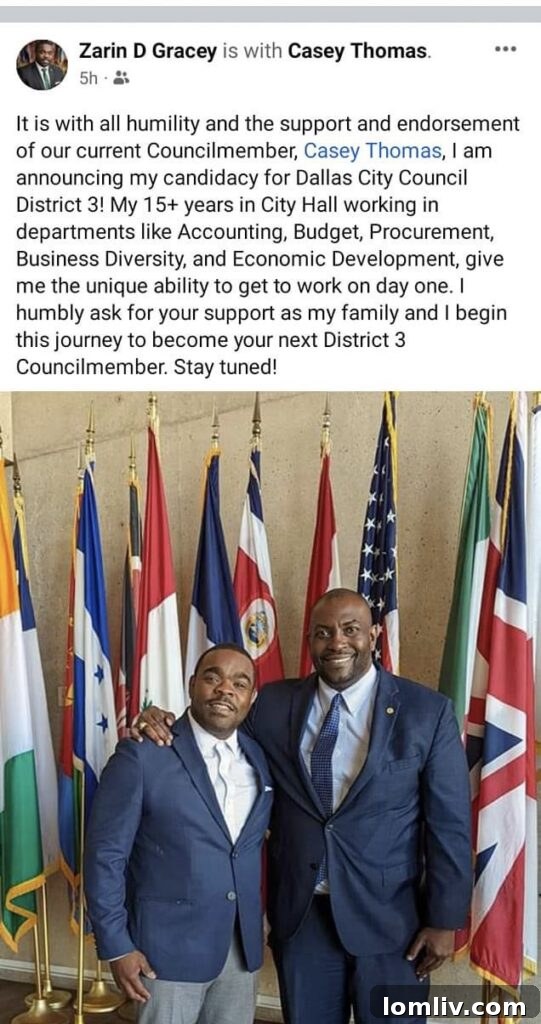
As he steps into his new role, Gracey is already formulating concrete plans to revitalize and unify District 3. His immediate agenda includes a crucial meeting with his predecessor, Casey Thomas, to facilitate a smooth transition back into City Hall. Gracey openly acknowledges Thomas’s mentorship throughout his campaign, noting, “Right now it’s been more campaign coaching than office running,” a testament to the valuable guidance he received.
Economic Development and Community Revitalization
Gracey’s enthusiasm is palpable when discussing his plans for stimulating economic growth and improving the physical landscape of District 3. He envisions strategic development, particularly focusing on mixed-use projects and rejuvenating long-neglected shopping centers. His approach involves actively engaging with property owners and managers to foster a unified business community. The goal is to collaborate on initiatives that provide these properties with “little facelifts,” which he believes will have a profound impact. “That can go a very long way in terms of how people see southern Dallas,” he asserted, emphasizing the psychological and economic benefits of visual improvements. He views this as “low-hanging fruit,” an achievable starting point that can build momentum for larger transformations.
Beyond commercial revitalization, Gracey also recognizes the immense potential in the district’s public spaces. “There are also a lot of opportunities with our parks. I think that’s what the community wants too,” he noted, signaling a commitment to enhancing green spaces and recreational facilities, which are vital for community well-being and quality of life.
“Our District, Our Future”: A Strategy for Inclusive Growth
Central to Gracey’s long-term vision is an ambitious, intergenerational strategy he aptly named “Our District, Our Future.” This plan is designed to foster unprecedented engagement among neighborhoods that traditionally might not interact. “You have a Singing Hills that would connect with a Kiestwood because Kiestwood was successful in solving this issue and Singing Hills has the same issue,” Gracey explained. This collaborative model aims to create a network where communities can share best practices, learn from each other’s successes, and collectively tackle common challenges.
The essence of “Our District, Our Future” lies in its inclusivity. “It’s meant to be inclusive so everyone who is represented in the district is represented in this plan,” Gracey affirmed. He expressed genuine excitement about rolling out this initiative, which he sees as building upon the strong community engagement efforts of Casey Thomas but taking them to an advanced level. “It builds shared accountability and moves us from a district to a community,” he concluded. This powerful statement encapsulates his overarching goal: to transform a collection of neighborhoods into a cohesive, empowered community, united by common goals and a shared commitment to progress under his inclusive and experienced leadership.