Dallas’s Exxxotica Controversy: Unpacking Censorship and Civic Overreach
In an era that values progressive urban development and diverse cultural engagement, Dallas recently found itself entangled in a surprising debate reminiscent of a bygone century. The planned return of the Exxxotica convention to the city stirred a fervent moral panic among certain city officials and influential figures, culminating in a controversial ban. This decision, spearheaded by Mayor Rawlins and supported by an alliance of traditionalists, not only ignites crucial discussions about free speech and public access but also casts a shadow over Dallas’s aspirations as a sophisticated international city.
The spectacle of elected leaders and prominent citizens clamoring to prohibit an adult entertainment convention feels strikingly anachronistic. One can almost hear the rustle of crinolines and the whispers of scandal from the 19th century, rather than the bustling discourse of a 21st-century metropolis. Yet, here we are in the modern age, witnessing a public squabble over what many perceive as a harmless, albeit risqué, commercial event. The irony is palpable: city officials, seemingly intent on upholding a selective moral code, have inadvertently created a situation that underscores a fundamental misunderstanding of contemporary governance and constitutional liberties.
The Self-Defeating Nature of the Ban: A Pyrrhic Victory for Dallas
The city council’s decision to ban Exxxotica from returning to Dallas is poised to become a textbook example of political overreach resulting in a series of unintended and entirely negative consequences for the city itself. Far from achieving its intended goal of preventing the convention, this prohibition is a guaranteed win for Exxxotica, a clear loss for Dallas taxpayers, and a significant blow to the city’s burgeoning reputation.
- The Convention Will Proceed: Regardless of venue, the Exxxotica convention has a robust history and dedicated following. Organizers are adept at securing alternative locations, ensuring the event will simply move elsewhere, potentially just outside Dallas city limits, thereby depriving the city of any economic benefits.
- Guaranteed Legal Defeat: Legal experts, including the city’s own attorney, have highlighted the tenuous legal grounds for this ban. Attempts to restrict access to public facilities based on the content of a legal event almost invariably fail constitutional challenges. Dallas is virtually certain to lose the inevitable lawsuit filed by convention organizers, incurring significant legal fees and potential damages, all paid by taxpayers.
- Explosive Free Publicity: The outrage and “pearl-clutching pique” from city officials have handed Exxxotica an immeasurable amount of free national and even international publicity. This media frenzy will undoubtedly boost attendance at their next event, regardless of its location, further mocking the city’s futile efforts. The controversy has transformed a niche convention into a national talking point, fueling interest and curiosity.
What has Dallas gained from this moral crusade? Beyond the chance for some officials to publicly don their metaphorical “crinolines and hoop skirts,” the city has garnered nationwide embarrassment. As Dallas strives to solidify its identity as a sophisticated international hub, boasting impressive real estate development and a dynamic cultural scene, this kind of time-wasting, moralistic grandstanding is profoundly counter-productive. In matters of civics, just like in any public spectacle, the last thing a city wants is spectators pointing and laughing. And believe me, Mr. Mayor, they are laughing, with fingers fully pointed.
One must question how this controversy resonates with the numerous corporations and talented individuals Dallas actively seeks to attract. Are these relocating businesses thinking, “Dorothy, I don’t think we’re in California anymore” in a positive light? It’s unlikely they are moving to the Dallas-Fort Worth Metroplex because of Dallas’s perceived loose morals, but it’s entirely plausible they are experiencing daily eye-rolls as newspapers chronicle this unseemly drivel taking center stage over more pressing urban issues.
Public Facilities vs. Private Morality: The Erosion of Principle
The appearance of prominent figures like former Senator Kay Bailey Hutchison at the council meeting, lending her support to the ban, further complicated the situation. Ms. Hutchison, whose name graces a significant public building in Dallas, seemed to operate under the misconception that the naming of a public facility grants one oversight or approval rights over its usage. This perspective fundamentally misunderstands the principles of public access and constitutional rights.
A building named in one’s honor becomes a public asset, subject to the laws governing all public spaces, not the personal whims of its namesake. If it were a library, Ms. Hutchison would not control its book selection. Similarly, the use of a public convention center cannot be dictated by personal opinions that override established law and the U.S. Constitution. To suggest otherwise implies a dangerous precedent where public resources can be arbitrarily denied based on the subjective morality of individuals, no matter how influential.
The core duty of government-owned properties is to ensure equal access to all legal entities, regardless of the views or content being promoted, provided they adhere to safety and public order regulations. This commitment to open society and free expression is a cornerstone of democratic governance. Instead, on this issue, the Dallas government has acted like a petulant child, employing censorship to cherry-pick the morality of the city and attempting to enforce a narrow, perhaps antiquated, worldview upon its diverse populace.
Moreover, government is not in the business of enacting laws or bans solely for the betterment or detriment of a single person or entity. Such actions stand on tenuous legal footing, easily challenged and often overturned. The fact that the city attorney reportedly did not support the mayor’s stance on this ban speaks volumes about its legal vulnerability. When (not if) the city loses Exxxotica’s lawsuit, the question of accountability will inevitably arise. Perhaps, as a consequence of knowingly pursuing legally unsound actions, the mayor and councilors who voted for the ban should bear personal financial liability. After all, isn’t that a more fitting consequence for actions that contradict legal counsel?
A Retreat to Victorian Sensibilities: Historical Echoes of Censorship
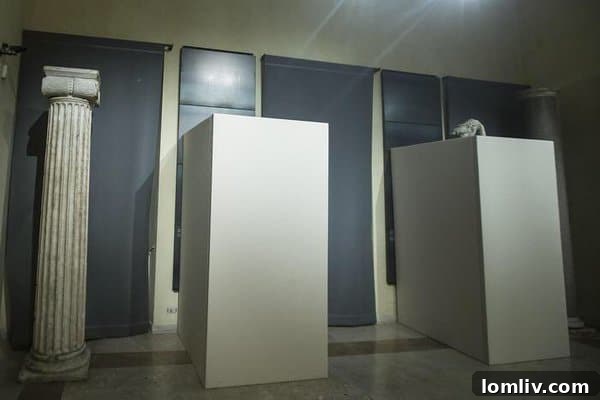
The Dallas City Council’s decision conjures an uncomfortable resemblance to historical instances of moral censorship, from the Victorian era to more recent, equally baffling, episodes. In January of the same year this controversy unfolded, Rome made international headlines for covering nude statues to spare the blushes of the Iranian president during his visit. This act of cultural self-censorship, designed to accommodate a visiting dignitary’s sensibilities, famously negated the phrase, “when in Rome…” It signaled a disturbing willingness to compromise artistic integrity and cultural heritage for political expediency.
Closer to home, in 2002, then-US Attorney General John Ashcroft spent $8,000 of taxpayer money to cover the breasts of the “Spirit of Justice” statue and the loins of the “Majesty of Law” statue in the Department of Justice building. These historical parallels highlight a recurring pattern: attempts to impose a particular moral code on public spaces often lead to ridicule and a perceived diminishment of intellectual freedom and cultural openness. Dallas, by following a similar path, risks joining this list of cities and institutions that prioritize a narrow sense of propriety over broader principles of freedom and artistic expression.
During the council session where the ban was debated, a predictable array of specious arguments was put forth, attempting to link an adult entertainment convention, featuring items like French ticklers and pornographic materials, to grave social ills such as sex trafficking and the degradation of women. These arguments, often emotionally charged and lacking empirical evidence, serve to muddy the waters of rational debate. It’s chauvinistically noteworthy that proponents of these claims rarely extend their concern to the male performers in the adult entertainment industry, suggesting a selective moral outrage primarily focused on women.
Furthermore, such claims deflect from the genuine challenges facing women in Texas. The state’s defunding of Planned Parenthood, for example, has demonstrably led to an uptick in children born to poor, now trapped, women without adequate access to medical care. The long-term support for these families disproportionately falls upon taxpayers. This real-world consequence, often ignored by the same moral guardians, dwarfs any perceived threat posed by a fur bra or a battery-operated novelty item. It underscores a troubling hypocrisy: decrying a convention while enabling systemic issues that truly degrade and disadvantage women.
Exxxotica’s True “Danger”: The Threat of Empty Pockets
Is there a genuine danger or increased violence that Exxxotica brings to a city? Evidence from previous conventions, including last year’s event in Dallas, suggests otherwise. There were no reports of slaves traded or recruited, no surge in violence against women, nor even a noticeable increase in parking tickets around the convention center. Vice police officers who attended the convention last year reportedly found the goings-on rather “bored,” a stark contrast to the sensationalized fears articulated by city officials.
The reality of Exxxotica is far more mundane. It’s a commercial event centered around celebrity porn star autographs, adult novelty items, and a vibrant marketplace for all things battery-operated – items that, frankly, are likely to empty wallets and perhaps end up in an attic or the trash within a month. In 2016, for many, it’s also about experiencing a physical marketplace for adult products, especially for those without reliable or private internet connections. The perceived “danger” is primarily economic: the danger of discretionary income being spent on adult novelties rather than being funneled into other sectors of the local economy, or perhaps, the danger of uncomfortable conversations for those who prefer to ignore the existence of the adult entertainment industry altogether.
The Double Standard: A Moral War on Plastic, Not Principles?
One might wonder if the real problem for these self-appointed moral arbiters is tied to environmental concerns about all the non-recyclable plastic phallic symbols on display. Such a suggestion, while facetious, highlights the absurdity of the selective outrage. It certainly can’t be about phallic symbols generally, because within the first six months of 2016, the Dallas-Fort Worth Metroplex was scheduled to host nineteen gun shows – nearly one every weekend. While none were slated for the Dallas convention center, innumerable Texas officials are perfectly “A-OK” with these events, which feature weapons designed for lethal force.
Mayor Rawlings was quoted as saying he wasn’t going to hide behind the Constitution concerning Exxxotica’s First Amendment rights. Yet, it’s precisely behind the Constitution and the Second Amendment that one would likely find the city council staunchly defending gun control measures. This blatant double standard exposes a fundamental hypocrisy: selectively invoking constitutional principles to protect preferred activities while readily discarding them when convenient. It undermines public trust and demonstrates a government that cherry-picks its adherence to foundational American freedoms.
The Cost of Hubris: Accountability and Dallas’s Reputation
When a hospital patient leaves against medical advice (AMA), they assume personal responsibility for the consequences. When the mayor and council act against legal advice (ALA) in matters of public policy, they, too, should be personally and financially liable for the resulting costs and damages to the city. Beyond financial restitution, they should be compelled to issue a public apology to the citizens of Dallas for violating the very laws and constitutional principles they were elected to uphold. Unfortunately, as is too often the case, it will be the people of Dallas who bear the burden of their elected officials’ political hubris, paying both in monetary terms and in the tarnishing of the city’s reputation as a progressive, welcoming, and constitutionally compliant metropolis.
Update: The Unintended Consequences Continue
The immediate aftermath of the ban further exposed its folly. Adultcon, Exxxotica’s primary competitor, reached out to the convention center just one day after the city council voted for the ban. This swift move illustrates a simple truth: where one opportunity is artificially closed, another will inevitably open. The city council, in its attempt to suppress one event, has inadvertently rolled out the red carpet for another, generating immense free publicity for the entire adult entertainment industry. It’s like moths to a flame, and our city council is certainly on fire!
Mayor Rawlings was also quoted today as saying, “You can’t have freedoms without boundaries.” To refresh the mayor’s memory, here are the dictionary definitions of “freedom”:
- The state of being free or at liberty rather than in confinement or under physical restraint: e.g. He won his freedom after a retrial.
- Exemption from external control, interference, regulation, etc.
- The power to determine action without restraint.
It appears the mayor may have confused “freedom” with “free range.” You know, where chickens can roam to their heart’s content… but only within a fenced-in field. Only when a chicken truly jumps that fence does it experience genuine freedom. Dallas deserves a government that understands and upholds true freedom, not one that attempts to define it away for political convenience or moral posturing.
Remember: Do you have an HOA story to tell? A little high-rise history? Realtors, want to feature a listing in need of renovation or one that’s complete with flying colors? How about hosting a Candy’s Dirt Staff Meeting? Shoot Jon an email. Marriage proposals accepted (they’re legal)! [email protected]