Beyond the Listings: A Deep Dive into the Homefacts App for Savvy Homebuyers
In today’s dynamic real estate landscape, prospective homebuyers are constantly seeking innovative tools to streamline their search and make informed decisions. While traditional apps like Realtor.com, Zillow, Trulia, and Redfin excel at showcasing homes for sale, a new generation of real estate technology is emerging, focusing on the broader context of a property: its neighborhood. We at CandysDirt are always keen to test the latest innovations, and when RealtyTrac announced their groundbreaking Homefacts app, we immediately put it through its paces. Having previously reviewed several excellent real estate applications, from those simplifying run-of-the-mill home shopping to those offering more visual insights like the Doorsteps App, and even tools to assess affordability before pre-approval, we recognized Homefacts as a distinct and powerful addition to the homebuyer’s toolkit.
Homefacts: Uncovering the Hidden Layers of Neighborhood Data
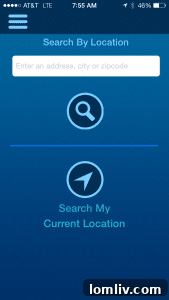
The Homefacts app truly distinguishes itself as a comprehensive real estate resource, offering a perspective that goes far beyond properties currently on the market. Unlike its contemporaries, Homefacts leverages GPS data or an address search to meticulously analyze areas based on critical factors that significantly influence a neighborhood’s overall desirability. This innovative approach empowers users to delve into crucial aspects such as:
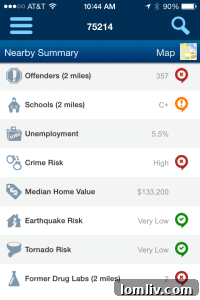
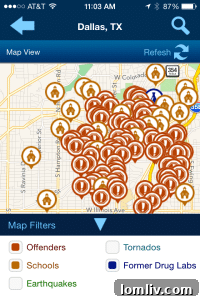
- Public Safety and Crime Risk: Understanding the security of a potential neighborhood is paramount for any homebuyer. Homefacts provides insights into local crime statistics, offering a factual basis for evaluating safety concerns that might not be immediately obvious.
- Environmental and Disaster Risks: From flood zones to earthquake probabilities, or even the proximity to former drug labs and other potential environmental hazards, Homefacts helps uncover risks that could impact property value, insurance costs, and peace of mind.
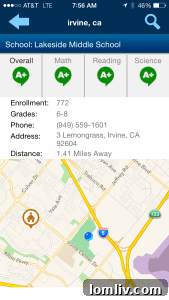
- School Performance Data: For families, the quality of local schools is often a decisive factor. The app aggregates detailed school performance metrics, allowing parents to assess educational opportunities within a given area.
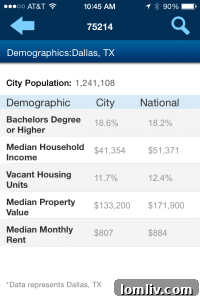
- Socio-Economic Indicators: Data on unemployment rates and median household incomes can paint a picture of an area’s economic stability and community dynamics.
- Sex Offender Registry Proximity: Providing sensitive yet critical information, the app highlights the relative proximity to convicted sex offenders, a factor many homebuyers consider vital for family safety.
- Median Home Values: While not listing active properties, the app provides crucial median home value data, offering a benchmark for understanding an area’s general market value and affordability.
“This new app will extend to mobile the revolutionary way that Homefacts helps prospective homeowners and investors perform due-diligence when buying a home,” stated Jamie Moyle, CEO of RealtyTrac, the owner of Homefacts. “The app enables homebuyers to view detailed property and neighborhood data from wherever they are, helping them make more informed real estate decisions.” This sentiment perfectly encapsulates the app’s mission: to equip buyers with a richer, more contextual understanding of their potential future home and its surroundings.
Bridging the Data Gap: Homefacts as an Essential Due Diligence Tool
While Homefacts provides essential basic property information gleaned from appraisal district measures – such as the number of bedrooms and bathrooms, square footage, lot size, and appraised value – it’s important to note its deliberate focus. This app is not designed to replace traditional Multiple Listing Service (MLS) data, which showcases active listings, agent contact information, and detailed property specifics for sale. Instead, Homefacts shines as an accessory, an indispensable due diligence tool for anyone exploring an unfamiliar area or considering a specific property within a neighborhood they’re not intimately acquainted with.
Its strength lies in delivering pre-purchase research capabilities, allowing buyers to conduct an initial, in-depth evaluation of a neighborhood’s intrinsic characteristics. By presenting data on factors often overlooked in standard property searches, Homefacts empowers users to identify potential red flags or hidden advantages that could significantly influence their home-buying decision. It helps answer questions like, “What’s the real story behind this seemingly perfect neighborhood?” or “Are there any underlying issues I should be aware of?” This data-driven approach fosters a more proactive and informed home-buying process, complementing the work of real estate agents by providing a foundational layer of neighborhood intelligence.
The Double-Edged Sword of Data: Context is King
However, as with many statistical analyses, the Homefacts app, despite its immense utility, doesn’t always provide the nuanced, invaluable insights that only a local Realtor or an active neighborhood association can offer. Data, by its nature, is quantitative; it measures what can be counted. But the true essence of a neighborhood — its culture, community spirit, future development plans, and intangible charm — often defies simple quantification. This can lead to situations where raw data might inadvertently misrepresent the reality on the ground.
Consider, for example, the highly sought-after 75214 neighborhood in East Dallas, encompassing areas like Lakewood. Residents and prospective buyers are drawn to this inner-loop gem for its exceptional walkability, vibrant retail scene, fantastic architectural variety, convenient proximity to mass transit, rich diversity, and of course, its close connection to the recreational haven of White Rock Lake. Yet, when viewed through the unfiltered lens of Homefacts’ data, this desirable area can, at times, appear almost like a minefield due to aggregated statistics that may not tell the whole story or lack crucial context.
Similarly, let’s reflect on Oak Cliff, a vibrant and increasingly popular area in Dallas. Less than a decade ago, Oak Cliff often suffered from an unfortunate reputation, largely fueled by misconceptions of it being run-down and crime-ridden. While historical data might reflect some of these past challenges, the reality today, particularly in its most popular Zip code, 75208, is one of remarkable resurgence and revitalization. Homefacts, purely operating on statistical aggregates, might still present data points that don’t fully capture this dramatic transformation. This is where the local expertise of a real estate agent becomes irreplaceable – they can provide the human narrative, historical context, and future projections that raw data simply cannot.
Navigating the Information Age: A Balanced Approach to Home Buying
The Homefacts app is a powerful testament to the ever-evolving landscape of real estate technology, offering an unprecedented level of granular neighborhood data at our fingertips. It’s undoubtedly a valuable resource for conducting initial due diligence, helping homebuyers identify potential concerns or areas for further investigation. The ability to quickly check crime rates, school performance, or environmental risks from a mobile device is a significant leap forward in empowering consumers.
However, the insights gleaned from Homefacts are most effective when viewed as one piece of a larger puzzle. Raw statistics, while objective, can sometimes paint an incomplete or even misleading picture without proper context. A neighborhood’s character is shaped by countless factors that defy numerical representation – the warmth of its community, the charm of its local businesses, the vibrancy of its cultural scene, or the palpable sense of ongoing revitalization. These qualitative elements are often what truly make a house a “home” and a neighborhood “the right fit.”
Therefore, while we appreciate the transparency and statistical depth offered by Homefacts, it reinforces a critical truth: the human element in real estate remains indispensable. Experienced Realtors bring an unparalleled understanding of local market trends, community nuances, future development plans, and the subtle dynamics that shape a neighborhood’s true appeal. They can interpret the data, contextualize potential concerns, and guide buyers through areas that might appear challenging on an app but are thriving in reality.
Conclusion: Empowering Buyers with Smart Data and Expert Guidance
In conclusion, the Homefacts app by RealtyTrac stands out as an exceptionally useful tool for homebuyers committed to thorough due diligence. It provides a unique, data-rich perspective on neighborhood characteristics that complements traditional property searches. By offering insights into public safety, environmental risks, school quality, and socio-economic indicators, it empowers buyers to make more informed decisions about where they choose to live.
However, users are encouraged to employ a balanced approach. While data provides a solid foundation, it should always be enriched by local expertise. Engaging with a knowledgeable real estate professional, visiting neighborhoods in person, and speaking with residents are crucial steps to gain a holistic understanding that no single app, however advanced, can fully replicate. The Homefacts app is not just a tool for seeing data; it’s a catalyst for asking smarter questions and embarking on a more comprehensive and ultimately more successful home-buying journey.