For many, the idea of urban exploration in Dallas immediately conjures images of the bustling Katy Trail. While undoubtedly a beloved green artery, what happens when this popular path feels too crowded, or when one simply yearns for a different perspective of the city they call home? The beauty of Dallas, like any great metropolis, lies in its layers, its hidden corners, and the rich tapestry of experiences waiting just beyond the well-trodden paths. This article invites you on a unique journey, a walking architectural tour through downtown Dallas, revealing the city’s character through its diverse structures, from historic landmarks to modern marvels.
Even for those who believe they know their city intimately – every street, every shortcut – there’s always more to uncover. I recall my routine walks to Empire Baking at Inwood Village, typically following Preston to Lovers Lane and then over to Inwood. But a simple change of route can transform the familiar into a fresh discovery. I’ve since traversed Lemmon Avenue to Inwood, navigating its charmingly sparse sidewalks, explored Douglas Avenue up to Lovers Lane, and ventured along Oak Lawn to Armstrong, continuing to Lovers. My next route? Lemmon to Westside Drive, through Greenway, and finally to Inwood Village. Each of these five distinct paths offers a unique panorama, a new set of sights, and the promise of a delicious loaf of bread at the end. The principle is simple: where one familiar path reaches its limit, countless other equally enriching and visually captivating excursions await within your very own neighborhoods.
This spirit of discovery extends to Dallas’s built environment. Instead of succumbing to the limitations of a single popular trail, let’s unlock the varied, equally fascinating, and often more serene experiences that permeate Dallas’s vibrant urban core. This architectural odyssey promises not just exercise, but an education in the city’s past, present, and the unspoken stories etched into its facades.
An Uncharted Architectural Odyssey: The Long Way Through Downtown Dallas
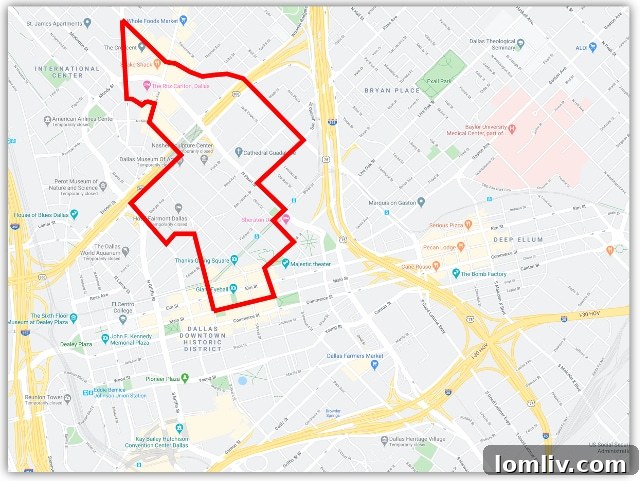
It’s hardly a secret that I possess a profound appreciation for architecture. While my expertise may be modest, my understanding is deeply rooted in an instinctive recognition of what resonates with me aesthetically. I’ve often voiced my critique regarding Dallas’s tendency to attract what I perceive as rather uninspired architecture, sometimes giving the city a considerable amount of grief for its blandness. However, a recent stroll through downtown Dallas ignited a renewed and deeper appreciation for the architectural treasures the city truly possesses. And now, as downtown experiences a temporary hush reminiscent of the 1980s, it presents the perfect, opportune moment to slow your pace, pause, and truly look up. From a social distancing perspective, you are very likely to find yourself with an entire city block to yourself, offering an unparalleled intimacy with the urban landscape.
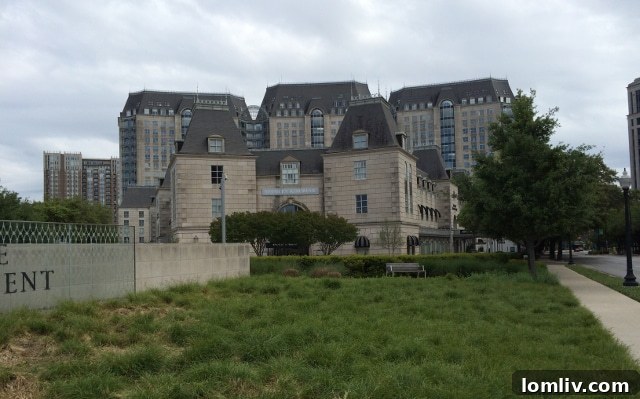
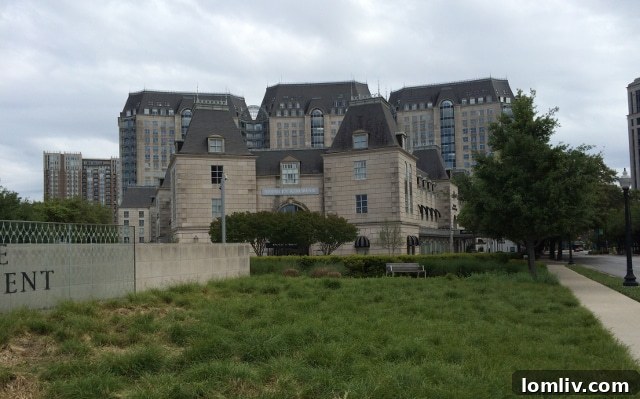
Before we embark on this detailed exploration, it’s worth noting that many of my chosen architectural highlights might not be immediately familiar to you. With a singular exception, these aren’t the buildings that typically grace Dallas skyline postcards or tourist brochures. Our focus is on the nuances, the lesser-known narratives, and the designs that truly define the city’s evolving architectural identity. For want of a more definitive starting point, let’s commence our journey at the iconic, though personally contentious, Crescent Court.
My opinion of the Crescent Court has remained consistent: I don’t particularly care for it. Its elaborate, almost whimsical wrought iron detailing strikes me as more akin to a ‘jumped-up’ New Orleans aesthetic than something authentically Dallas. The fact that the renowned Philip Johnson designed it is, to me, like fingernails scraping across a blackboard – a discordant note in an otherwise admired body of work. This serves as a vital reminder: architectural appreciation is deeply personal. You are not obligated to admire a building simply because it bears the signature of a famous architect, particularly when their other creations resonate with you far more profoundly.
Plaza of the Americas: A Glimpse into 1980s Elegance
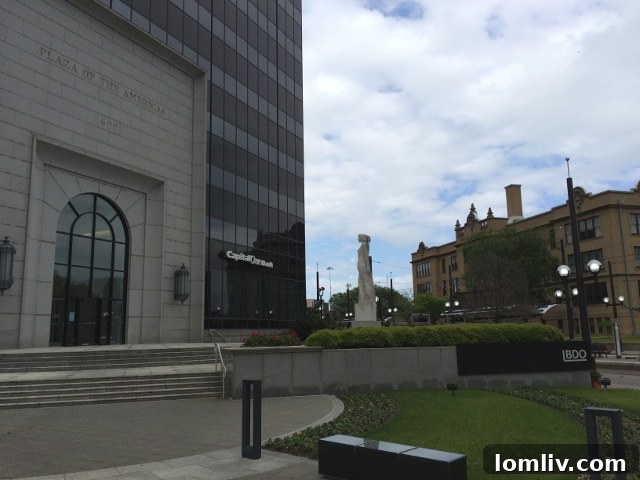
Despite my reservations, the Crescent Court provides an excellent springboard to the Maple-Routh Connection, a path that guides us beneath Woodall Rodgers Freeway and directly into the western periphery of the Dallas Arts District. Continue your walk, taking a right onto San Jacinto Street, and pause when you reach Pearl Street. To your left, the striking Plaza of the Americas emerges. This 1980s black glass high-rise presents a fascinating architectural dichotomy: its sleek, dark exterior is elegantly contrasted by an almost classical stone entry and an inviting arched doorway. As you explore further, you’ll discover a second, perfectly matching doorway situated at the intersection of Pearl and Bryan streets, reinforcing its symmetrical design.
Take a moment to truly absorb the vista. The Plaza of the Americas, a definitive product of the 1980s, stands directly across Bryan Street from the original Dallas High School, a venerable structure erected decades earlier. This striking proximity offers a compelling visual narrative of architectural evolution. Appreciate the immense leaps in engineering and construction over this period – from a building largely crafted by hand with handmade materials to a sophisticated steel and glass high-rise, where nearly every component was machine-produced. In a moment of thoughtful observation, direct your attention to the statues positioned in front of each doorway of the Plaza. They are oriented towards the building, seemingly gazing upon their own achievement, their own grand entrance, while symbolically turning their backs to the vibrant city that surrounds them. This particular design choice, while perhaps unintentional, conveys a sense of insularity rather than a welcoming gesture to the urban fabric.
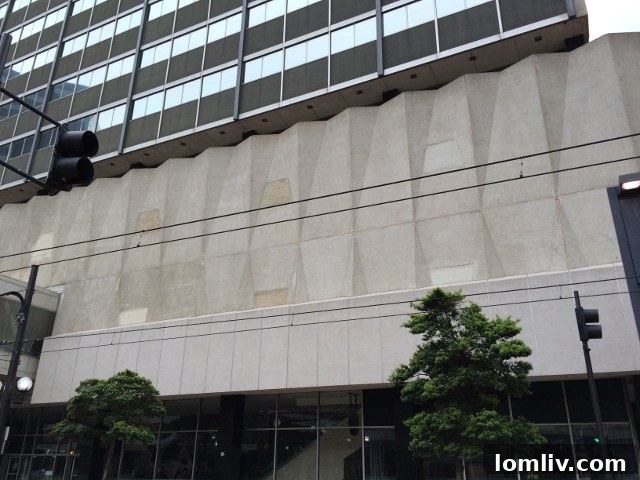
The 1959 Sheraton Dallas: A Mid-Century Legacy
Continuing your journey, turn west onto Bryan Street. As you proceed, you’ll pass by the distinctive 1959 Sheraton building. Take a moment to lift your gaze to its concrete podium. Here, you’ll observe a series of trapezoidal shapes that have since been filled in. Considering the architectural era in which this building was conceived and constructed, it’s highly probable that these shapes were once adorned with a vibrant explosion of colors – perhaps a bold burnt orange, a serene turquoise, or even a daring acid green. These lively inserts would have been characteristic of the mid-century modern aesthetic, adding playful energy to the facade. Today, however, these once colorful spaces have been rendered in monochrome concrete, creating a somber wall that, to a discerning eye, evokes a sense of lost vibrancy and perhaps even unfulfilled promises of design ambition.
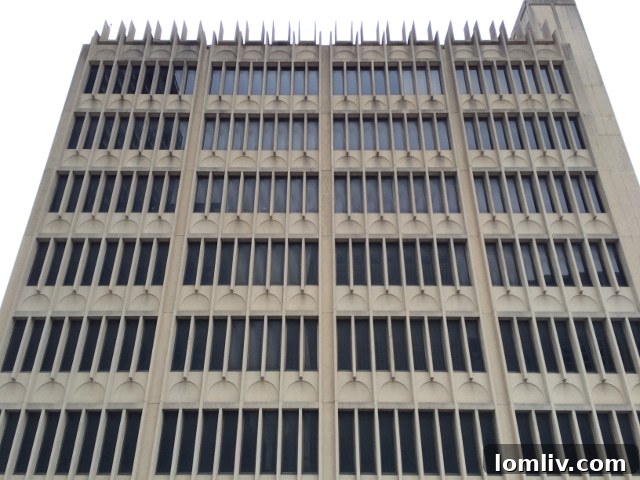
Olive and Live Oak: The Art of “Soft Brutalism”
Turn south onto Olive Street, moving past the Sheraton, and pause when you reach the intersection of Live Oak Street. Here, you will encounter a captivating example of what I term “soft brutalism.” This architectural style, often perceived as heavy and imposing, is redefined in this particular structure. What could have been an overwhelmingly weighty facade instead masterfully interacts with natural light, dynamic shadows, and thoughtful design elements. True Brutalism typically eschews decorative flourishes like arched Palladian windows; however, this architect ingeniously integrated them. Above each window, a recessed semicircle is carved into the concrete, accentuated by a prominent vertical fin at its apex. I specifically refer to these as ‘fins’ because of their remarkable ability to play with and manipulate shadows as the sun traverses the sky throughout the day. This creates an ever-changing visual texture on the building’s exterior. Furthermore, the continuation of these fins beyond the roofline serves as a subtle yet powerful architectural homage. It’s a contemporary nod to the traditional gargoyles (functional water spouts) and grotesques (purely sculptural images) that historically adorned the upper reaches of centuries-old buildings, connecting this modern structure to a rich lineage of architectural expression.
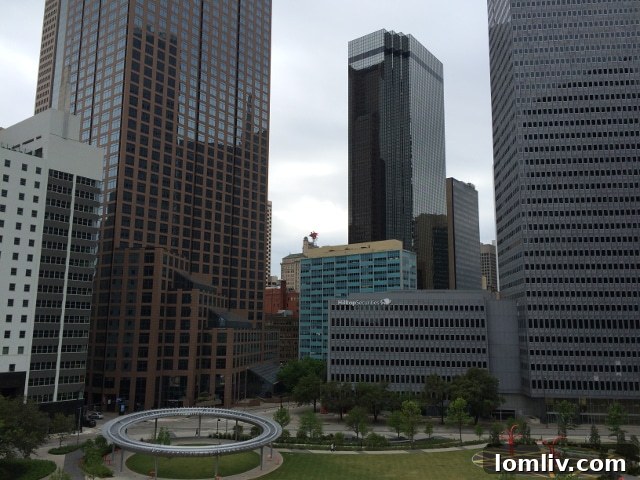
Pacific Plaza: A Tapestry of Time and Towers
For a truly unique vantage point, I confess to having somewhat naughtily ascended the Sheraton’s now-empty parking garage, granting myself an unparalleled panoramic view of an astonishing tapestry of buildings surrounding Pacific Plaza. To the left, a two-tone structure from the 1940s stands. Adjacent to it, we find the 1980s Comerica Bank building, followed by a distinctive 1960s “blues” mid-rise, and then the enduring 1954 Republic Tower. In the background, subtly peeking between these towering structures, you can catch a glimpse of the iconic 1923 Magnolia Building’s Pegasus sign – a true beacon of Dallas history. This fascinating architectural mashup of different eras creates an incredibly rich and dynamic urban moment around Pacific Plaza. Each of these buildings, in its own day, was considered a towering achievement, a testament to the city’s aspirations.
It is precisely at this juncture that I must emphasize a fundamental principle of architecture: every single window, every deliberate line, and every decorative ornament adorning these structures was meticulously conceived, planned, extensively discussed, and then painstakingly executed. I believe that far too often, we tend to perceive a building as a singular, undifferentiated whole, failing to truly appreciate the intricate details, the remarkable skill (and occasionally, the regrettable lack thereof) that went into its creation. Taking the time to observe these individual elements deepens our understanding and enhances our appreciation for the built environment.
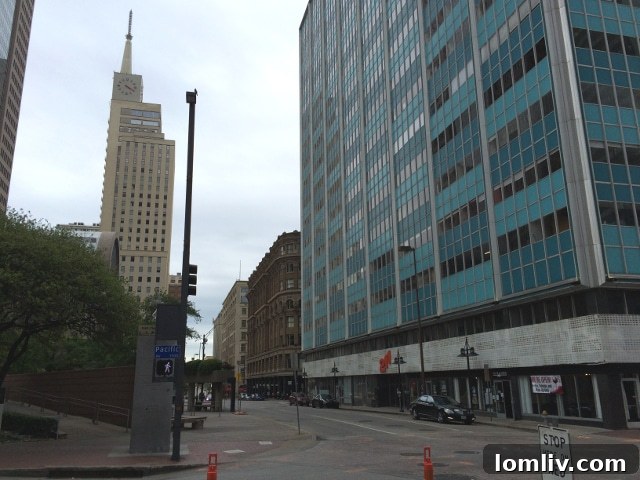
Walk through the revitalized Pacific Plaza to Pacific Avenue and turn left onto South Ervay Street. This position is particularly fascinating, presenting a compelling tableau of Dallas’s architectural evolution and urban dynamics. The 1960s “blues” building on the corner, with its fading charm, practically begs for a comprehensive renovation, hinting at untapped potential. On the very next block, you encounter the exquisitely ornate Wilson Building, a masterpiece of early 20th-century design. Adjacent to the Wilson stands the venerable Neiman Marcus building, dating back to 1914, a beacon of luxury retail for over a century. And directly beside Neiman’s, you’ll find a parking garage occupying the site where Frank Lloyd Wright’s ambitious Rogers Lacy Hotel was famously planned but never realized – a tantalizing “what if” moment in Dallas’s architectural history. To your left, the elegant Moderne-styled Mercantile National Bank Building, completed in 1943, replaced an 1889-era post office and has now been sensitively converted into modern apartments. This building held the distinction of being the tallest in Dallas until the Republic Tower emerged on the skyline, marking a significant chapter in the city’s vertical growth.
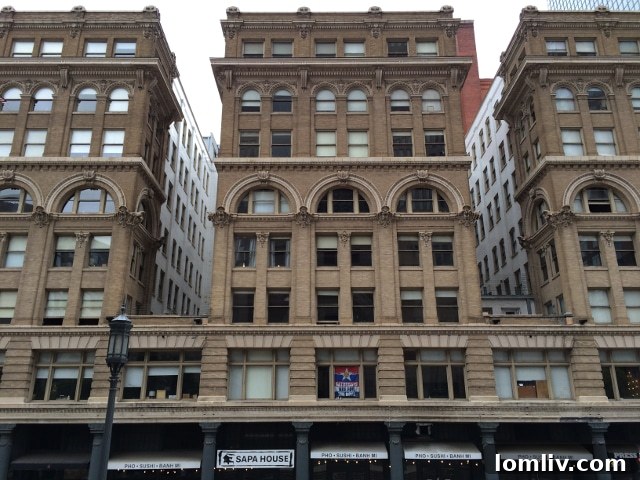
The Wilson Building: A Glimpse into Early Dallas Grandeur
The Wilson Building, soaring to an impressive eight stories upon its completion in 1903, proudly held the title of the tallest structure in Dallas at the time. This architectural gem has a curious footnote in its history, having once been owned by the actress Pia Zadora, who, rather amusingly, gained early notoriety in the 1964 film “Santa Claus Conquers the Martians” – often cited as one of the worst films ever made. For those with a penchant for cult classics, the Mystery Science Theater 3000 version is available on YouTube. More pertinent to our architectural exploration, the Wilson Building serves as an excellent illustration of a timeless challenge faced by architects and builders: working within budgetary constraints. Once you move beyond the meticulously ornate, highly decorative street-facing facade, which was designed to impress and define the building’s public image, you’ll observe plain brickwork on its less visible sides. This stark contrast is a candid architectural confession, akin to discovering simple, comfortable “Fruit of the Looms” worn discreetly beneath a bespoke tuxedo – a pragmatic compromise made for economic realities.
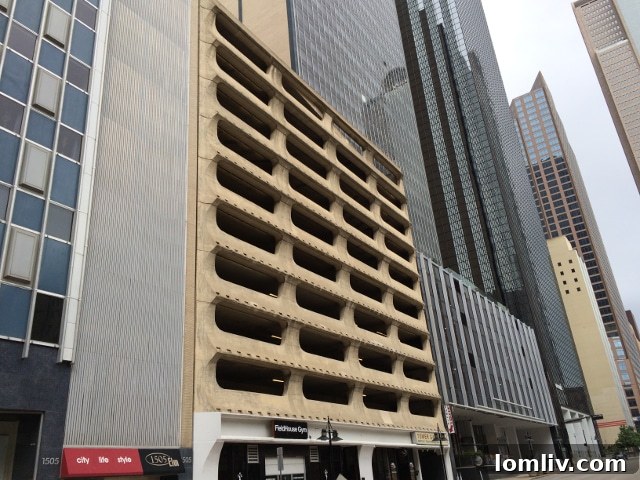
Akard and Pacific: Unconventional Beauty in Urban Utility
As you proceed west on Main Street, you will encounter a succession of historic buildings that have frequently been celebrated in various publications. Turning north onto Akard Street, your attention will be drawn to a particular parking garage, discreetly situated just off Akard, spanning the block between Elm and Pacific. This structure eloquently demonstrates that even something as typically utilitarian and often aesthetically unappealing as an above-ground parking garage can, with thoughtful design, possess an unexpected degree of interest. Lord knows, Dallas is replete with examples of poorly conceived and haphazardly designed above-ground parking facilities. This particular garage, however, with its distinctive elements, stands as a testament to the potential for elevating even the most prosaic urban necessities into something that merits a second look and even appreciation.
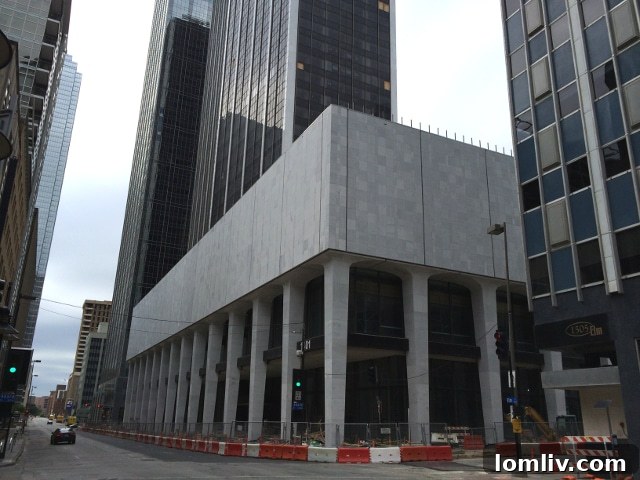
First National Bank Tower: A Resurgent International Style Icon
On the west side of Akard and Elm stands the formidable First National Bank Tower, a distinguished example of the International Style, completed in 1964 and designed by the notable architects George Dahl and Thomas Stanley. This iconic 52-story tower is currently undergoing an immense and ambitious restoration, a project that has not been without its significant challenges and complexities. Interestingly, the tower was originally conceived to be 96 feet taller, but its height was ultimately reduced due to restrictions imposed by Love Field air traffic regulations – a constraint that has since been rectified. Consequently, the First National Bank Tower now proudly stands as the 10th tallest building in Dallas, reclaiming its prominent place on the city’s skyline. From a design perspective, it’s an elongated hexagon, artfully placed off-center atop an impressive eight-story podium. While I generally hold reservations about the use of podiums in skyscraper design, this particular structure’s huge, white-marbled colonnade is undeniably striking and commands respect, especially now that its pristine surfaces have been meticulously cleaned and repaired, restoring its original grandeur.
Historically, the expansive top of the podium was conceived as a lush outdoor garden space, exclusively enjoyed by bank executives. With the ongoing restoration, this area is set to be transformed once more into a vibrant outdoor green space, accessible to a wider public. Behind the magnificent columns, plans are underway for a collection of restaurants and shops, poised to open their doors later this year, injecting new life and pedestrian activity into the base of the tower. The lower floors of the main tower will house a contemporary 200-room hotel, while above that, 318 luxurious apartments will extend all the way up to the 48th floor, establishing them as some of the highest residential homes in all of Dallas. Furthermore, the very top floors, which once famously accommodated the exclusive Petroleum Club and an observatory, are slated to return to similar elevated uses, promising breathtaking views and sophisticated experiences for future inhabitants and visitors alike.
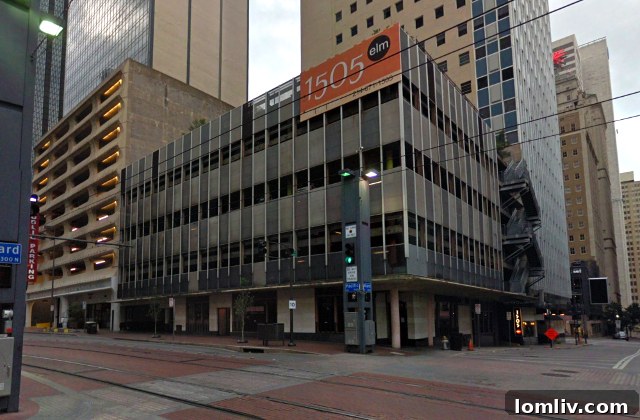
1505 Elm Garage: A Study in Urban Neglect
Directly across the street from the impressive and meticulously revitalized First National Bank Tower, we encounter a stark visual contrast: the parking garage serving the 1505 Elm condos. This structure, unkempt and marred by rust, stands as a telling counterpoint to the architectural ambition and careful preservation efforts seen just moments away. It vividly illustrates my earlier point about the compelling juxtaposition of intriguing and thoughtful garage designs that exist right next to – well, this. While the other three corners of this prominent intersection boast well-maintained and aesthetically pleasing buildings, the 1505 Elm garage represents a tangible example of urban neglect, highlighting the often-uneven landscape of architectural quality and maintenance within a bustling city center.
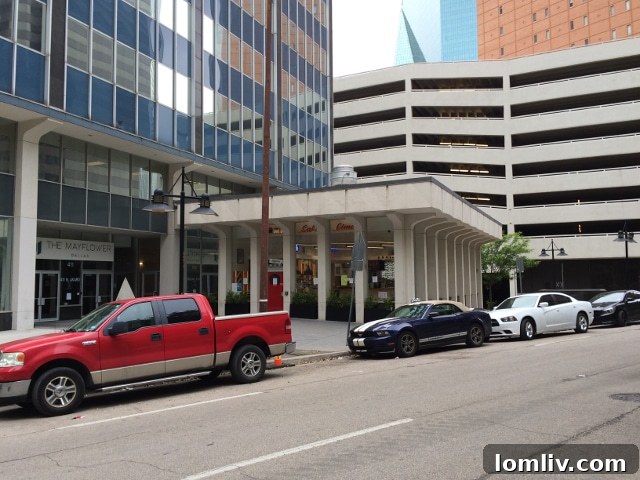
Salsa Limon at The Mayflower Building: A Quirky Architectural Feature
Continuing further up Akard Street, our gaze is drawn to a delightful and slightly whimsical architectural feature: a fun little “bump-out” on The Mayflower Building, which now houses the vibrant Salsa Limon restaurant. While I currently know nothing about the culinary offerings of this establishment, this particular facade element is so intriguing and inviting that it sparks an immediate desire within me to step inside and experience the space. It’s a testament to how even minor architectural quirks can imbue a building with personality and create a welcoming, curiosity-piquing presence on the street level.
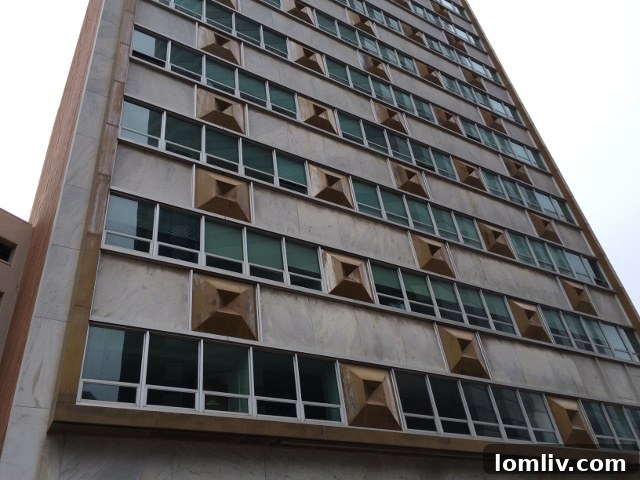
511 North Akard: A Mid-Century Gem with Modern Potential
The building at 511 North Akard, originally opened in 1958, is a vibrant example of mixed-use urban development, thoughtfully combining commercial spaces with residential apartments and condominiums. It stands as a veritable little gem, nestled discreetly across the street from the rather uninspiring (dare I say, ‘yawn-inducing’) 1980s Ross Tower. One can only begin to imagine the transformative impact an exterior facelift would have on this inherently swanky mid-century pad, truly unlocking its full aesthetic potential. And speaking of aesthetics, observe its facade closely – recall my earlier comments about the color inserts on the Sheraton building? Here, you can see similar architectural intentions from that era, showcasing how these small design details were once used to add character and visual interest to buildings. The architectural lineage of thoughtful integration of color and texture is evident.
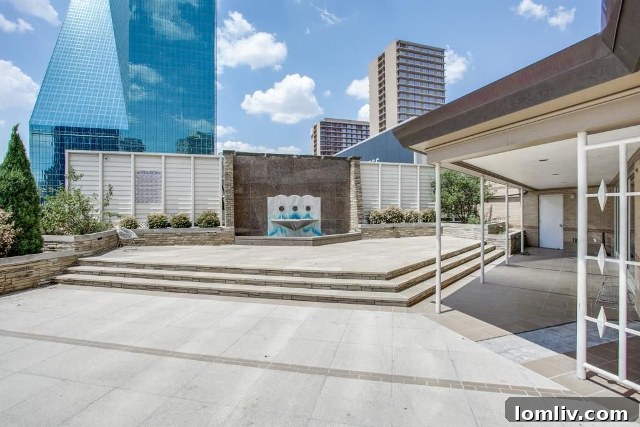
Just how remarkable is this building? Consider the expansive 1,754-square-foot penthouse terrace, an exquisite feature whose image has been “borrowed” from its captivating 2015 listing. While I would undoubtedly embark on some interior renovations to tailor it to my personal taste (a habit I always indulge in), for most discerning buyers, this exceptional space would be entirely move-in ready, offering unparalleled urban living with breathtaking views. It stands as a shining example of thoughtful adaptive reuse, where an older structure is reimagined and revitalized for contemporary needs, preserving its inherent charm while embracing modern functionality and luxury.
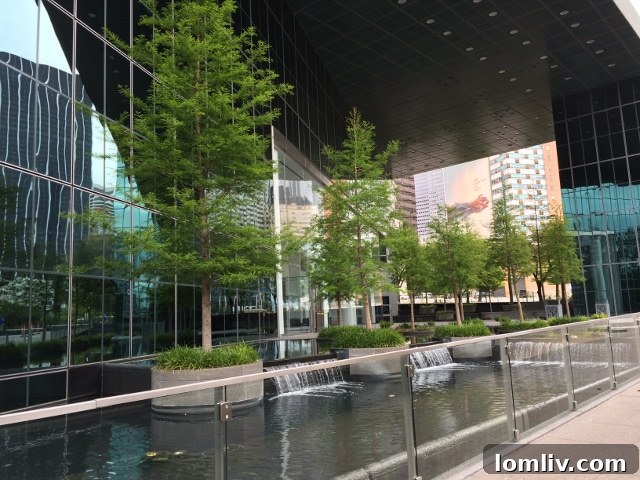
Fountain Place: An Urban Oasis of Natural and Machine-Made Harmony
Before making our way back towards the Crescent Court, there remains one essential architectural marvel to experience: Fountain Place. Designed by the esteemed architect I.M. Pei and completed in 1986, this particular building holds a special distinction as the one structure on this entire walking tour that is an integral, recognizable component of the iconic Dallas skyline. However, for the purpose of our deeper exploration, I encourage you to momentarily disregard its soaring height and instead direct your complete attention to its mesmerizing ground levels. Fountain Place is, unequivocally, a masterclass in the art of seamlessly blending the natural world with the precision of machine-made design. While it is, at its core, a magnificent, towering glass skyscraper, it simultaneously functions as an extraordinary urban woodland, intricately connected and animated by the constant presence of water features. It offers a tranquil sanctuary, a place where you can comfortably sit and enjoy lunch beneath a canopy of trees, all while being situated directly beneath a breathtaking 720-foot tall man-made prism of glass and steel.
I implore you to truly rest here. Sit. Allow yourself to experience this unique urban oasis in a way you may never again – utterly devoid of the usual throngs of people. There is an almost profound peace here, reminiscent of a secluded forest or a quiet outdoor sanctuary, yet you are merely a block away from a bustling highway. If you don’t dedicate at least 15 minutes to simply wandering, observing, and immersing yourself in the sheer beauty and innovative design of Fountain Place, you are, quite simply, not doing it justice. This space offers a rare moment of introspection and connection within the urban fabric.
From Fountain Place, continue your walk along the Woodall Rodgers frontage road until you reach Harwood Street. Turn left, passing directly through the vibrant expanse of Klyde Warren Park, and then proceed onto McKinney Avenue, which will gracefully guide you back to our starting point at the Crescent Court. Certainly, feel free to pause and admire other frequently celebrated structures along this return route, such as the striking McKinney and Olive building by Cesar Pelli or the luxurious Ritz-Carlton Hotel and Residences, designed by Robert A. M. Stern. These buildings are undoubtedly worthy of a glance. However, the true essence of this particular architectural walk lies in discovering new experiences and appreciating the less obvious narratives woven into the fabric of downtown Dallas, rather than simply revisiting the already familiar.
A Rewarding Walk for Street-Level Revelations
In summation, this journey proved to be a surprisingly rich and deeply rewarding walk, effectively uncovering decades of intriguing architecture that invited pause, contemplation, and genuine enjoyment. I am certain I will meander through these streets again, for there is a distinct, almost profound solemnity that permeates a landscape temporarily devoid of the vibrant human energy for which it was originally designed – an experience, perhaps, that we may never again encounter with such intensity. This quietude allowed for an unfiltered connection with the city’s bones, its enduring structures, and the silent stories they tell.
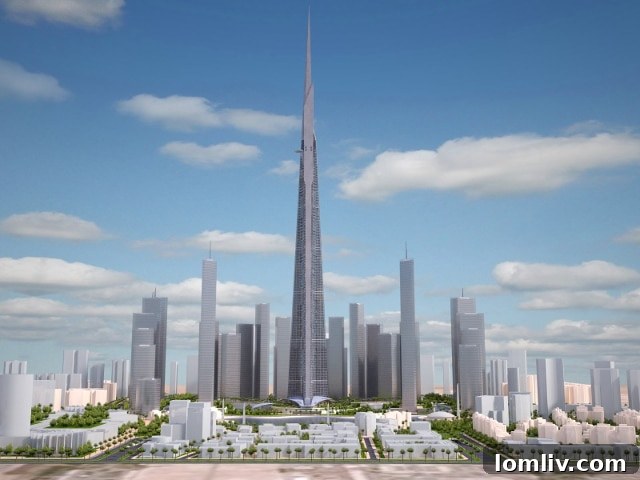
Dallas’s Vertical Aspirations: Where’s The Height?
Finally, a sobering reflection on Dallas’s place in the global architectural arena: in a world where a monumental 3,300-foot tower (the Jeddah Tower) is currently under construction, Dallas’s current tallest building, the iconic Bank of America Plaza, opened its doors a remarkable 35 YEARS AGO. This statistic speaks volumes about the city’s trajectory in vertical development.
To provide some historical context for this prolonged plateau, let’s look back at Dallas’s past pursuit of skyscraper supremacy. When the venerable Wilson Building first opened in 1903, it proudly held the crown as the city’s tallest for a significant five years. Two decades later, in 1923, the Magnolia Building claimed the title, maintaining its dominance for a full 20 years. The Mercantile Bank Building, completed in 1943, then reigned supreme for 11 years, until it was bested by the 1954 Republic Tower I. Just five short years later, the 1959 Sheraton surpassed it, only to be outranked itself by the Republic Center Tower II in 1964, another five years later. The First National Bank Building then snatched the crown a mere year later in 1965. Nine years after that, in 1974, it was Renaissance Tower’s turn to be the tallest, holding the title until the reigning champion, the Bank of America Plaza, finally took the honors in 1985.
In the span of the past 120 years, Dallas has never before rested on its skyscraper laurels for such an extended period. The urban development paradigm of the last 50 years globally has been largely characterized by the densification of cities, marked by the construction of progressively higher and higher buildings. While many major international cities have embraced this vertical growth, Dallas, it appears, has somewhat fallen behind, as its architectural “waistline” has notably spread outwards rather than upwards. Crucially, there is currently nothing in the pipeline that comes even close to fundamentally altering this trend or challenging the Bank of America Plaza’s long-held status.
But when it does eventually happen (and hopefully, before I shuffle off this mortal coil!), let us fervently hope that this renewed vertical ambition is concentrated squarely in the heart of downtown Dallas, reaffirming its central role as the city’s architectural and urban core.