The Dallas housing market continues to defy expectations, solidifying its position as one of the nation’s premier real estate powerhouses. A recent report from Standard & Poor’s/Case-Shiller highlights Dallas as one of the top five markets across the United States for significant home price appreciation, a trend that has many real estate professionals celebrating. This exceptional performance underscores the robust health and undeniable appeal of the Dallas-Fort Worth metropolitan area.
Dallas Soars: A Deep Dive into October’s Impressive Home Price Gains
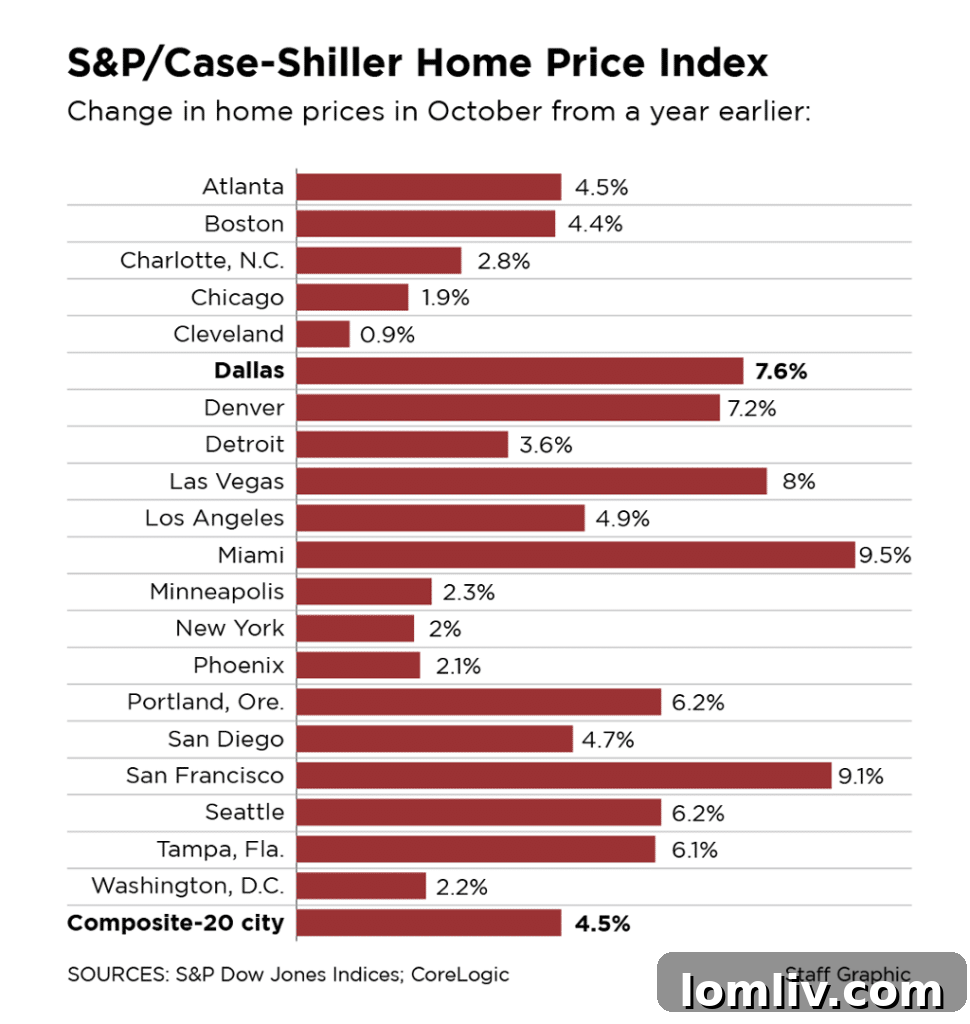
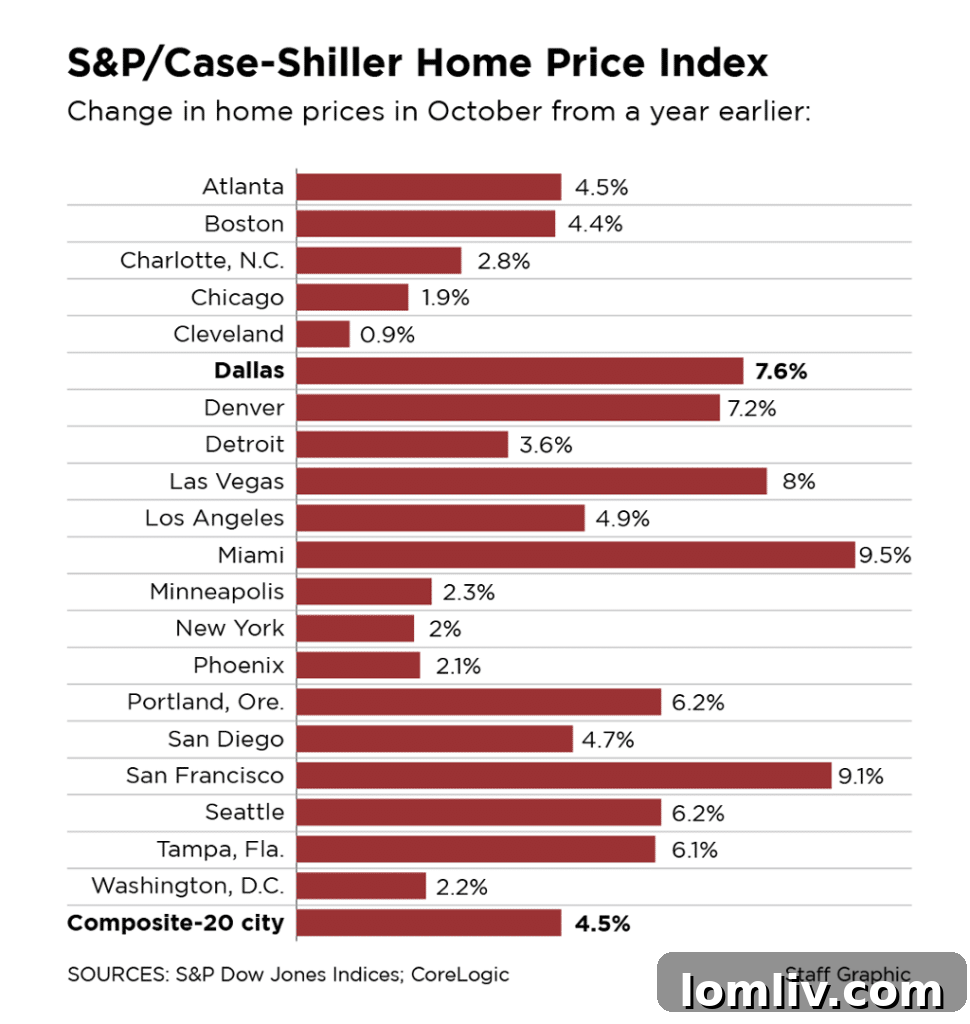
According to the latest data on October home sales, Dallas-area home prices witnessed a remarkable 7.6 percent increase compared to the same month in 2013. This impressive annual appreciation places Dallas in an elite league, alongside other high-growth markets such as Miami, San Francisco, and Las Vegas. These are the only major cities that reported higher price appreciation than Dallas during the period, a testament to the North Texas region’s unique economic vitality and attractiveness to homebuyers and investors alike.
The consistent strength of the market is further evidenced by the October appreciation rate, which closely mirrored the annual increase recorded in September, a robust 7.4 percent. This steady upward trajectory suggests sustained demand and a healthy market momentum as 2014 drew to a close.
David M. Blitzer, Chairman of the Index Committee at S&P Dow Jones Indices, commented on the broader national picture, noting signs of accelerating growth. “We are seeing hints that prices could end 2014 on a strong note and accelerate into 2015,” Blitzer stated in the report. He observed a shift from a previous trend where all 20 cities monitored by the index experienced weakening annual price increases. By October, this trend reversed, with eight cities showing an acceleration in the pace of price gains, even as twelve still saw weaker growth. Significantly, on a seasonally adjusted basis, all 20 cities recorded higher prices than the previous month, indicating widespread positive movement.
Beyond Recovery: Dallas Prices Surpass Pre-Recession Peaks
Perhaps one of the most astonishing facts to emerge from the Case-Shiller report is that Dallas-area home prices are now a full 13 percent higher than their pre-recession peak. This isn’t merely a recovery; it’s a significant leap beyond previous market highs, demonstrating an unprecedented level of resilience and growth. The Dallas market has not just rebounded; it has fundamentally reset to a new, higher valuation, a phenomenon that has “out-bubbled the bubble” in the most positive sense, reflecting deep and sustainable market fundamentals rather than speculative excess.
This remarkable recovery and subsequent surge provide homeowners with substantial equity gains and instill confidence among real estate investors. It underscores Dallas’s unique position, having navigated the downturn with more grace than many other major metros and emerging stronger than ever. This robust performance is often attributed to a diversified economic base, sustained job growth, and continuous population influx, factors that contribute to enduring housing demand.
Unpacking the Case-Shiller Index: What It Reveals About Dallas
It’s crucial to understand the scope of the Case-Shiller index to fully appreciate Dallas’s achievement. This widely respected index exclusively tracks the prices of single-family home resales. Crucially, it does not include condominiums, townhouses, or new construction properties. This specificity means that the impressive appreciation figures for Dallas are based solely on the resale market for traditional single-family homes, a segment often considered a fundamental indicator of market health.
The fact that Dallas is experiencing such significant gains within this specific, foundational segment of the market makes the news even more compelling. It indicates strong underlying demand and limited supply for established homes, which are often sought after by families and long-term residents. Had the index included new construction, which has also been booming in Dallas-Fort Worth, the overall appreciation figures could potentially be even higher, further cementing the region’s top-tier status.
Expert Outlook: Sustained Momentum Predicted for 2015 and Beyond
The positive sentiment surrounding the Dallas real estate market extends well into future forecasts. David Brown, a respected expert from Metrostudy Inc., echoed the optimistic outlook in an interview with Steve Brown of The Dallas Morning News. He anticipates continued robust growth for the region in the coming year.
“We are expecting another year of strong appreciation in 2015,” Brown stated confidently. “Even if job growth were to slow from the torrid pace of 2014, demand for housing is likely to remain very strong into 2015.”
Brown further elaborated on the critical supply-demand dynamics shaping the market: “The Dallas-Fort Worth market is heading into 2015 with even less inventory than was in the market a year ago. We expect the appreciation rate in 2015 to be fairly similar to 2014.”
This projection highlights the persistent challenge of low inventory, a key driver of price appreciation in competitive markets like Dallas. A shrinking pool of available homes, coupled with a steady influx of new residents and robust employment opportunities, creates an environment where demand consistently outstrips supply, inevitably pushing prices upward.
Navigating the Oil Conundrum: Dallas’s Economic Resilience
A natural question arises amidst such positive news: what about the impact of fluctuating oil prices? Indeed, many experts acknowledge that cities with economies heavily dependent on the oil and gas sector might experience some softening, potentially leading to job cuts, particularly among contract laborers. An anecdote from an interior designer working in Midland, Texas, illustrates this point vividly, describing projects where budgets are virtually limitless during boom times, reflecting the direct impact of oil wealth.
However, Dallas’s economic landscape presents a different picture. Unlike truly oil-dependent cities, Dallas boasts a highly diversified economy. Its major sectors include finance, technology, healthcare, transportation, and logistics, alongside a growing corporate presence that continues to attract major companies and headquarters. While some ancillary industries might feel the ripple effects of lower oil prices, the broad economic base of Dallas provides a substantial buffer, insulating the housing market from severe contractions. This diversification means that job growth remains strong across multiple sectors, ensuring a steady stream of homebuyers and renters, regardless of oil market volatility.
A Tale of Two Markets: Luxury vs. Mid-Range Performance
Even within a booming market, nuances exist. In Dallas, the performance varies significantly between different price points. Agents report that the high-end luxury market, particularly properties priced at $5 million and above, is experiencing a different trajectory. Many of these larger, ultra-luxury properties are not moving as quickly, with some not even generating showings. This suggests a more discerning or limited buyer pool at the absolute top tier, or perhaps a pause from international buyers who might be more sensitive to global economic shifts.
Conversely, the mid-range and entry-level segments are experiencing white-hot demand. Properties priced at $500,000 and below constitute the bulk of transaction volume, and this is precisely where inventory is most acutely limited. This scarcity fuels intense competition among buyers, often leading to multiple offers, bidding wars, and homes selling above asking price within days of listing. For luxury homebuilders, this segment offers significant opportunities, particularly for those who can deliver new construction on large, desirable lots – a market niche affectionately dubbed “hog heaven” by industry insiders.
The demand for big, leafy lots remains exceptionally strong, highlighting a preference among many Dallas buyers for spacious properties with outdoor amenities, even if the completed home is not in the ultra-luxury category. This bifurcation underscores the need for sellers and buyers to understand the specific dynamics of their target price range within the broader Dallas market.
Key Drivers Behind Dallas’s Enduring Housing Boom
Several fundamental factors underpin Dallas’s remarkable and sustained housing market performance:
- Robust Job Growth and Economic Diversity: Dallas consistently ranks among the top U.S. cities for job creation. Its diverse economy, spanning corporate headquarters, technology, finance, healthcare, and logistics, ensures a steady stream of new residents and strengthens the local employment base, directly translating to housing demand.
- Population Influx: The Dallas-Fort Worth metroplex attracts thousands of new residents annually, drawn by job opportunities, lower cost of living relative to coastal cities, and a high quality of life. This continuous population growth is a primary engine for housing demand.
- Relative Affordability: While prices are appreciating, Dallas homes remain relatively more affordable compared to similarly dynamic markets on the East and West Coasts. This makes Dallas an attractive destination for companies and individuals seeking value without compromising on economic opportunity.
- Limited Housing Inventory: A chronic shortage of available homes for sale, especially in the mid-range price points, has been a persistent issue. This supply-demand imbalance is a powerful catalyst for price increases.
- Favorable Interest Rate Environment: During the period discussed (2014-2015), interest rates remained historically low, making homeownership more accessible and spurring buyer activity.
Navigating a Thriving Market: Advice for Buyers and Sellers
For potential homebuyers in Dallas, the current market necessitates readiness and decisive action. Working with an experienced local real estate agent is crucial to navigate the competitive landscape, identify new listings quickly, and craft competitive offers. Flexibility on certain preferences and being pre-approved for a mortgage can give buyers a significant edge.
For sellers, the conditions are largely favorable, particularly for homes in the mid-range category. Proper pricing, professional staging, and aggressive marketing are still essential to maximize returns and ensure a smooth transaction, even in a seller’s market. Understanding the nuances of local submarkets can help sellers strategically position their property.
Conclusion: A Bright Future for Dallas Real Estate
The S&P/Case-Shiller report for October 2014, combined with expert forecasts, paints an overwhelmingly positive picture for the Dallas real estate market. With home prices surging, a diversified and robust economy, and a consistent influx of new residents, Dallas has not only recovered from the recession but has forged a new path of sustained growth and value appreciation. While concerns about specific market segments or external economic factors like oil prices are always present, the foundational strengths of the Dallas-Fort Worth area suggest that its real estate market is well-positioned for continued prosperity in the years to come.