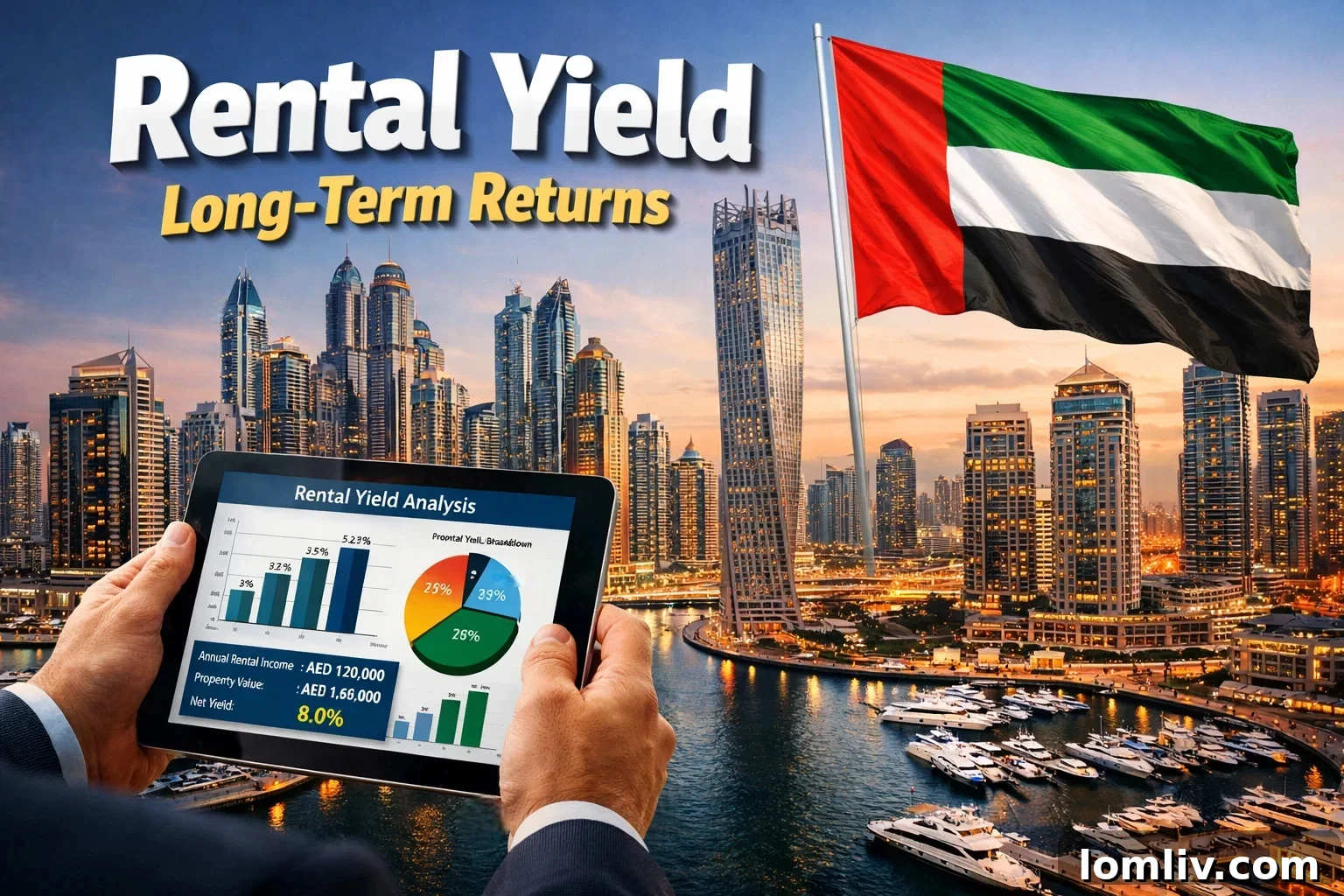
For discerning individuals investing in Dubai real estate, understanding rental yield is not merely an option but a cornerstone of a profitable income-generating strategy. This critical metric provides a clear window into the immediate financial performance of a property. It’s a common pitfall for many investors to conflate capital appreciation with rental returns, yet these two concepts, while both vital, represent distinct facets of real estate profitability. While capital appreciation speaks to the potential growth in a property’s market value over time, rental yield focuses squarely on the consistent, tangible income a property can generate. In Dubai’s vibrant and competitive property market, a robust understanding of rental yield empowers investors to make informed decisions that align with their cash flow objectives and long-term financial aspirations.
Decoding Rental Yield: An Essential Metric for Dubai Investors
At its core, rental yield serves as a straightforward measure of the income a rental property produces relative to its acquisition cost or market value. It quantifies the efficiency with which your investment generates annual rental revenue. For investors prioritising steady cash flow and immediate returns, particularly in a dynamic market like Dubai, calculating and understanding rental yield is absolutely paramount. This metric helps in assessing the attractiveness of a property, comparing different investment opportunities, and ultimately, predicting the potential for sustainable income. By providing a percentage figure, it simplifies the comparison of diverse properties, regardless of their absolute price points.
Gross Rental Yield Explained
- Gross Rental Yield offers a preliminary look at a property’s earning potential before any expenses are factored in. It is calculated by taking the total annual rent collected and dividing it by the property’s purchase price, then multiplying by 100 to express it as a percentage. This figure provides a quick, high-level overview of the return on investment based purely on rental income and initial outlay. While useful for initial comparisons, it doesn’t paint a complete picture of profitability, as it ignores crucial operational costs.
Understanding Net Rental Yield
- Net Rental Yield provides a far more accurate and realistic assessment of a property’s true profitability. This calculation takes the total annual rent and subtracts all yearly operating expenses before dividing by the property’s value and multiplying by 100. Expenses can include a wide array of costs such as service charges, maintenance fees, property management fees, insurance, and even potential vacancy periods. The net yield reveals the actual cash flow an investor can expect to pocket, making it an indispensable tool for serious investors focused on tangible returns. It helps to differentiate truly lucrative opportunities from those that might appear attractive on a gross basis but are less profitable after accounting for all costs.
Key Distinctions Between Gross and Net Yield
The difference between gross and net rental yield is fundamental to sound real estate investment. While gross yield provides a headline figure, net yield represents the actual profit an investor retains after all necessary expenditures. For instance, if you acquire a property in Dubai for AED 1,000,000 and it generates an annual rental income of AED 80,000, your gross yield would be 8%. However, if the cumulative annual expenses—including service charges, minor repairs, and an estimated vacancy provision—amount to AED 15,000, the net income drops to AED 65,000. In this scenario, the net yield would be a more conservative, yet more accurate, 6.5%. This example clearly illustrates why relying solely on gross yield can lead to an overestimation of actual returns, underscoring the importance of meticulous expense calculation for informed decision-making in the Dubai property market.
The Far-Reaching Impact of Rental Yield on Property Investments
Rental yield exerts a profound influence on several critical aspects of a real estate investment. It directly shapes how a property is valued, the consistency and stability of your cash flow, and ultimately, the overall profitability of the venture. A higher rental yield typically indicates a stronger immediate return on investment, which can be particularly appealing for investors seeking regular income streams to cover financing costs or to generate consistent passive revenue. Conversely, a property with a lower rental yield might still present an attractive opportunity if it demonstrates significant potential for capital appreciation over the long term, offering a different pathway to wealth creation. Understanding this interplay allows investors to tailor their strategies, balancing immediate income needs with future growth prospects.
- Cash Flow Stability and Financing: Properties with robust rental yields provide a more stable and predictable cash flow, making it significantly easier to manage mortgage payments and operational expenses. This financial stability reduces risk and enhances the attractiveness of the investment, especially when external economic factors fluctuate.
- Strategic Investment Decisions: Low-yield properties might be suitable for investors with a long-term horizon who prioritize capital growth and are prepared to defer immediate high returns. High-yield properties, on the other hand, are often preferred by income-focused investors who require consistent returns to meet financial obligations or reinvest.
Beyond Yields: Calculating Comprehensive Long-Term Returns in Dubai
While rental yield is an indispensable metric for assessing immediate income potential, it represents only one facet of a property’s total return. To truly gauge long-term profitability in Dubai’s dynamic real estate market, investors must adopt a holistic approach, considering a combination of rental income and potential price appreciation. This comprehensive evaluation often incorporates several key financial metrics:
- Return on Equity (ROE): This metric measures the cash flow generated relative to the actual equity an investor has invested in the property. ROE is crucial for understanding how efficiently your capital is working for you, especially as equity grows through mortgage principal repayment and property appreciation. It offers insight into the effectiveness of your invested capital.
- Return on Investment (ROI): A broader measure, ROI calculates the total financial gain from an investment, including both rental income and any capital gains, against the total amount initially invested. This provides a complete picture of the overall profitability of the investment over its entire holding period, reflecting the cumulative benefits of both income and appreciation.
- Capital Appreciation: This refers to the increase in a property’s market value over time. In a rapidly developing market like Dubai, capital appreciation can often significantly contribute to an investor’s total returns, sometimes even surpassing the gains from rental income alone. Factors such as infrastructure development, economic growth, and strategic location all play a role in driving property value increases.
Dubai’s Unparalleled Rental Yield Advantages for Global Investors
The allure of Dubai’s property market continues to draw global investors at an unprecedented pace, largely due to its compelling combination of factors that foster high rental yields. The city’s economic dynamism, world-class infrastructure, and strategic geographical location contribute to robust tenant demand, creating an environment where properties are rarely vacant. Furthermore, Dubai’s government has implemented investor-friendly regulations and policies, streamlining property acquisition and management processes, thereby enhancing investor confidence and market stability. These elements collectively grant Dubai a distinct competitive edge over many more mature and established global cities, making it a prime destination for real estate investment focused on income generation.
Across various segments of the Dubai property market, the average gross rental yield has consistently hovered around an impressive 6.76%. Apartments, in particular, located in high-demand areas, have often delivered even higher averages, approximately 7.07%. This consistent performance underscores the market’s resilience and its capacity to offer attractive returns to investors seeking strong cash flow opportunities.
Exceptional Tax Advantages in Dubai for Property Investors
One of Dubai’s most significant draws for real estate investors is its exceptionally favorable tax regime, which significantly enhances net rental yields and overall profitability. The absence of several taxes commonly found in other major global cities positions Dubai as a highly attractive jurisdiction for property investment.
Key financial benefits include:
- No Annual Property Tax: Unlike many countries where property owners face recurrent annual taxes based on property value, Dubai does not levy such charges, reducing the ongoing operational costs for investors.
- No Capital Gains Tax on Most Property Sales: Investors benefit from the absence of capital gains tax on the sale of most properties, meaning that profits from appreciation are largely retained, significantly boosting total ROI.
- No Personal Income Tax on Rental Income: A major advantage for income-focused investors is that rental income generated from Dubai properties is not subject to personal income tax, ensuring that a larger portion of the gross rent translates directly into net profit. This tax-efficient environment is a powerful incentive, allowing investors to maximize their earnings from rental properties.
Typical Dubai Rental Yields by Property Type: A Detailed Overview
Understanding the variations in rental yields across different property types is crucial for strategic investment in Dubai. Generally, smaller residential units tend to outperform larger ones in terms of yield percentage. This phenomenon is largely attributable to a strong demand for more affordable housing options from a diverse tenant base, including young professionals, expatriates, and transient residents, ensuring consistent occupancy rates and competitive rental prices relative to their purchase cost.
| Property Type | Typical Average Gross Yield |
| Apartments | 7.07% |
| Villas | 4.93% |
| Overall Average | 6.76% |
As illustrated, apartments generally offer a higher average gross yield of 7.07% compared to villas at 4.93%. This trend is primarily driven by the lower entry price point for apartments relative to the rent they command, making them highly efficient income generators. Smaller units, such as studios and one-bedroom apartments, often lead this segment, proving particularly attractive to tenants seeking convenience and affordability in prime locations. Villas, while offering larger living spaces and often higher absolute rents, typically have a significantly higher purchase price, which results in a lower percentage yield. However, villas often compensate with higher potential for capital appreciation and cater to a different demographic, offering larger families and those seeking more space a premium living experience.
Dubai’s Competitive Edge: A Global Rental Yield Comparison
Dubai consistently stands out when compared to other major global real estate markets, offering some of the most attractive rental yields worldwide. This competitive advantage is a significant draw for international investors seeking higher returns than those typically found in more saturated or expensive cities.
- United Kingdom: In prominent urban centers like London, rental yields generally range from 2.5% to 4.5%. While some niche neighborhoods may occasionally report higher figures, hitting up to 7.2%, these are often exceptions rather than the norm. The higher property acquisition costs and slower rental growth contribute to these comparatively lower yields.
- United States: Major markets such as New York City typically exhibit rental yields between 3% and 4.2%. Factors like high property taxes, stricter rental regulations, and significant operating expenses often compress net yields. Dubai’s gross yields frequently surpass these figures, and its favorable tax environment further enhances net returns, presenting a more appealing proposition.
- Hong Kong and Singapore: These highly developed Asian real estate markets are renowned for their stability and low vacancy risks. However, they typically offer rental yields in the range of 3.13% to 3.55%. The extremely high property values relative to rental income in these dense urban environments contribute to these lower percentages, making Dubai’s yields particularly attractive by comparison.
- Other Middle East Markets: Several markets within the broader Middle East region have also demonstrated healthy yields. For instance, residential yields in Saudi Arabia have been reported around 7.34%, while Qatar averages about 5.17%. While competitive, Dubai often benefits from its status as a global hub, offering greater liquidity and a more diverse investor base.
Dubai vs. Major Global Cities: A Comparative Rental Yield Table
This table summarizes how Dubai’s average rental yields compare to those of other key international cities, highlighting its strong position for income-focused investors.
| Market | Average Rental Yield |
| Dubai | 6.76% |
| Singapore | 3.13% |
| Hong Kong | 3.55% |
| London | 2.5% – 4.5% |
| New York City | 3% – 4.2% |
Strategic Approaches to Optimize Rental Yields in Dubai
Maximizing rental yields in Dubai requires a strategic and informed approach. Investors can employ several tactics to enhance their returns, focusing on property selection, location, timing, and efficient management.
- Select Efficient Property Layouts: Extensive market analysis consistently indicates that smaller, more compact residential units—such as studio apartments and one-bedroom flats—tend to deliver stronger rental performance. These properties typically offer higher yields per invested dirham, primarily because their purchase prices are relatively lower compared to the rents they can command. They cater effectively to a large demographic of transient tenants, young professionals, and expatriates seeking convenient and affordable living solutions, thereby ensuring higher occupancy rates and stable rental income streams in popular areas across Dubai.
Investing in properties with efficient layouts also means considering modern designs, high-quality finishes, and the potential for flexible furnishing options, which can attract a broader tenant base and justify premium rents. Proximity to essential amenities, public transport, and business districts further amplifies their appeal.
- Prioritize Sought-After Areas: The adage “location, location, location” remains supremely relevant in Dubai’s real estate market. Neighborhoods characterized by low vacancy rates and strong rental premiums are typically those situated near major business hubs, metro lines, prominent educational institutions, and popular lifestyle amenities. These areas consistently attract high tenant demand, allowing landlords to command higher rents and reduce income loss due to vacancies. In Dubai, investors can find a variety of versatile communities renowned for their robust rental income potential, including:
| Dubai Community | Average Rental Yield |
| Dubai Silicon Oasis | 8.09 % |
| Business Bay | 6.74 % |
| Dubai Sports City | 8.14 % |
| Jumeirah Lake Towers | 7.32 % |
| Jumeirah Village Circle | 7.59 % |
These communities offer a blend of residential comfort and strategic connectivity, making them magnets for tenants. Conducting thorough research into specific community demographics, upcoming infrastructure projects, and rental demand trends is paramount to making an informed choice.
- Timely Entry & Exit Strategies: Astute investors understand the importance of market timing. Entering the market during periods of softened property prices or when there’s an ease in price pressures allows for a lower acquisition cost, which directly translates to a higher rental yield percentage. Conversely, strategically selling a property after it has experienced significant capital appreciation can significantly enhance the overall Return on Investment (ROI), combining both rental income generated and the profit from the sale. This requires a keen understanding of market cycles and economic indicators, enabling investors to maximize their cumulative returns.
- Proactive Cost Management: Effective management of operational expenses is critical for boosting net rental yields. Diligent oversight of service charges, proactive and timely repairs, and strategic renovations can prevent costly deferred maintenance issues and enhance property appeal, justifying higher rental rates. Investors can further impact their net returns by exploring self-management options, where feasible, or by negotiating competitive property management fees. Regularly reviewing utility costs, insurance premiums, and other recurring expenses can also identify areas for potential savings, directly increasing the proportion of rental income that translates into net profit.
Identifying and Mitigating Risks for Dubai Real Estate Investors
While Dubai presents a highly attractive investment landscape, investors must remain cognizant of potential risks that could impact rental yields and overall profitability. A thorough understanding of these challenges allows for proactive risk management strategies.
- Currency Swings: For international investors, fluctuations in exchange rates between the AED and their home currency can significantly alter realized returns. A strong AED might reduce the value of rental income when converted back to a weaker foreign currency, eroding expected profits. Diversifying currency exposure or hedging strategies can help mitigate this risk.
- Oversupply: Rapid development in certain segments or areas can lead to an oversupply of properties, particularly in specific sub-markets. An excess of available units can depress rental prices and extend vacancy periods, thereby compressing rental yields. Monitoring development pipelines and focusing on niche markets or high-demand areas can counter this risk.
- Economic Shifts: Broader economic downturns, either locally or globally, can reduce employment rates and consumer confidence, subsequently diminishing tenant demand. A weaker economy can lead to increased vacancy risks and pressure on rental prices, directly impacting cash flow and rental yields. Diversifying a portfolio across different property types and locations can offer some protection.
- Regulation: Changes in local regulations and government policies can have a direct impact on the real estate market. This includes new tenant protection laws, potential rent caps, changes to service charge structures, or alterations in property ownership rules. Such regulatory shifts may affect pricing power, operational costs, and overall cash flow, necessitating close monitoring of the legal landscape.
Emerging Trends and the Outlook for Dubai’s Rental Yields Towards 2026
As Dubai continues its trajectory as a global economic powerhouse, the real estate market is expected to evolve, influencing rental yields. Analysts suggest that moving towards 2026, net yields might stabilize closer to the mid-4% range across various property types, with specific figures depending heavily on location, prevailing service charges, and average vacancy durations. This anticipated adjustment reflects a maturing market and increased competition, yet still positions Dubai favorably compared to many international benchmarks.
Simultaneously, significant shifts in global capital flows are increasingly directing investor attention towards high-yield markets, and the UAE, particularly Dubai, is a prime beneficiary of this trend. International investors are drawn by Dubai’s economic stability, robust infrastructure, tax advantages, and its proactive approach to urban development and diversification. This sustained global interest is expected to underpin demand, helping to maintain competitive rental yields and ensure the market’s long-term attractiveness for income-seeking investors.
Concluding Thoughts: Maximizing Income from Dubai Real Estate
Rental yield stands as an indispensable metric for any investor aiming to generate consistent income from Dubai real estate. It offers a transparent and direct measure of a property’s annual cash flow in relation to its purchase price, providing crucial insight into immediate financial performance. However, truly intelligent investment decisions transcend a singular focus on gross yield. The most successful strategies integrate a comprehensive analysis of all costs, assess potential vacancy risks, and critically evaluate the long-term potential for capital appreciation.
With strong and sustained investor interest projected through 2025 and beyond, Dubai solidifies its position as one of the few major global markets where rental yields not only remain competitive but often surpass those offered by more mature global cities. For investors who take the time to deeply understand the local market dynamics, meticulously manage their expenses, and focus on maximizing net returns, the Dubai real estate market continues to offer significant and compelling income generation potential, making it a premier destination for property investment worldwide.