Exploring Dallas: A 3D Map Revolutionizing Our Understanding of Tax Revenue and Urban Dynamics
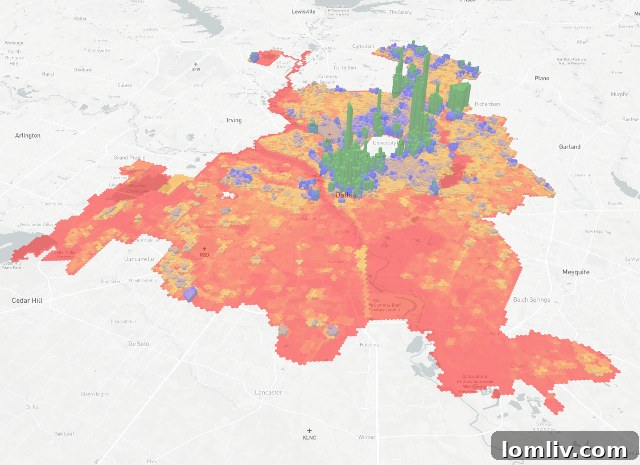
Dallas, a city of vibrant contrasts and dynamic growth, is constantly evolving. Understanding its intricate economic and social fabric is crucial for informed development and equitable progress. Recently, groundbreaking work by Robert Mundinger at TheMap, featuring the innovative 3D tax revenue map created by his colleague Owen Wilson-Chavez, has offered an unprecedented look into the city’s financial landscape. This interactive visualization transforms complex data into an easily digestible and profoundly insightful experience, allowing us to see Dallas through a new lens—a perspective revealing the stark disparities and immense potential within its boundaries.
This remarkable 3D map illuminates the varying property tax contributions across the Dallas Central Appraisal District (DCAD) taxing area, presenting a vivid, almost sculptural representation of urban economics. While exploring this digital landscape, one immediately notices the significant, albeit often understated, role of commercial real estate in fueling the city’s coffers. It’s a Dallas you’ve never seen before, highlighting not just where the money comes from, but also the underlying patterns of density, development, and socio-economic distribution.
The Geography of Green: Decoding Dallas’s Commercial Tax Hubs
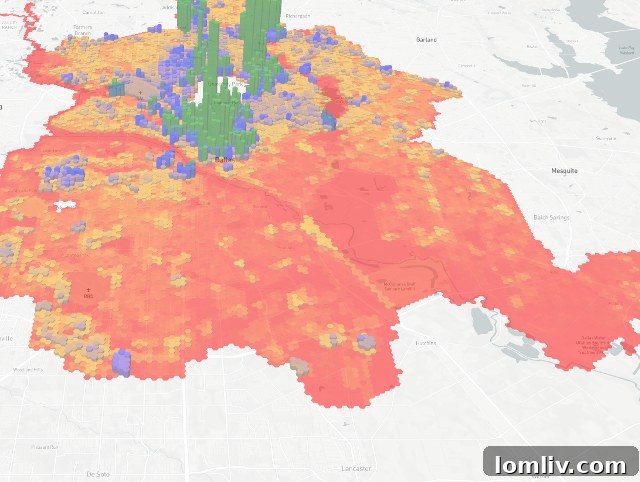
The first glance at the 3D tax map confirms an unsurprising, yet visually impactful, reality: Southern Dallas, regrettably, contributes a considerably smaller portion of property taxes to the city compared to its northern counterparts. However, the narrative is far more nuanced than a simple north-south divide. The vibrant green structures towering on the map are predominantly concentrated areas of high-value commercial real estate, veritable “emerald cities” of taxation gold. These dense commercial zones serve as critical engines for the city’s financial stability, contributing disproportionately to the tax base.
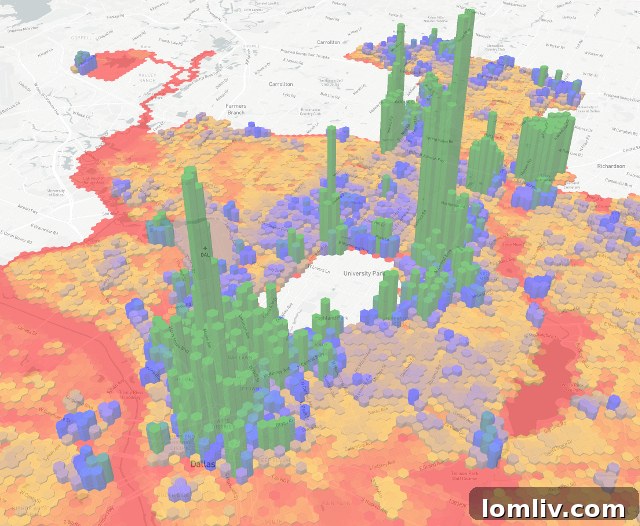
Consider the prominent green clusters: immediately below the affluent Park Cities’ “white spot” (indicating lower, primarily residential tax contributions) lies the dense urban core of Downtown and Uptown. Further to the right, the Central Expressway corridor stands out, with the North Park Shopping Center area reaching impressive heights. Beyond this, the map reveals other significant commercial hubs like the Galleria, Preston Center, and the bustling commercial spaces bordering LBJ Freeway and Central Expressway. These areas are characterized by their verticality and intensive land use, signifying a key lesson in urban planning: higher density, especially in commercial development, generates substantially more tax revenue relative to the cost of public services it requires. This efficiency makes dense commercial areas invaluable for sustainable urban growth.
The Imbalance: Commercial vs. Residential Tax Contributions
The “emerald cities” of taxation are overwhelmingly defined by high-density commercial high-rises. To put this into perspective, the Dallas Central Appraisal District reported in 2017 some compelling figures. Out of DCAD’s total of 830,163 parcels, commercial properties accounted for only 9 percent. Residential parcels, by contrast, made up a massive 651,499 of those, or approximately 78 percent. Yet, when we examine tax revenue, commercial parcels contributed 33 percent of the total DCAD tax revenue, while residential parcels accounted for 60 percent. The remaining percentage comes from other categories.
These numbers underscore why the tall, high-density commercial zones appear as towering green pillars on the map. They generate a significant one-third of total property tax revenues from less than a tenth of the land parcels. This efficiency is staggering: commercial properties produce high value per square foot, often requiring fewer municipal services per dollar of tax collected compared to sprawling residential areas. Conversely, the much lower bars and less-green hues within largely residential areas, despite contributing a larger percentage of overall taxes, occupy a disproportionately vast 78 percent of the land parcels. This spatial inefficiency highlights a fundamental challenge in urban planning and tax generation, especially in rapidly expanding metropolitan areas like Dallas. It underscores the critical need for balanced development that integrates density, commercial activity, and residential living to optimize both tax revenue and quality of life.
Southern Dallas: A Landscape of Challenges and Untapped Potential
When discussing the disparity in contributions, noting that Southern Dallas contributes significantly less than Northern Dallas, it’s crucial to acknowledge the stark absence of substantial commercial density and its associated job opportunities in the southern sector. This lack of vibrant commercial centers is not merely an economic statistic; it profoundly impacts residents’ access to employment. It clearly illustrates why transportation from Southern Dallas to better job markets in the north remains a persistent and pressing issue, influencing daily commutes and economic mobility for thousands.
This absence of commercial vigor is certainly a major factor behind the lower residential real estate values and subsequent low tax contributions found south of I-30. Moreover, another significant contributor to this economic landscape is the sheer abundance of vacant lots. Many of these parcels are owned by the city or long-term investors, patiently awaiting a catalyst for redevelopment and rebirth. This underutilized land represents both a challenge and an extraordinary opportunity for future growth and revitalization, a blank canvas awaiting the right vision to transform it into thriving communities.
The Genesis of Gentrification: Fair Park’s Future
Discussions frequently revolve around the potential for gentrification in and around Fair Park. However, it’s important to recognize that this process isn’t a new phenomenon; the revitalization of this area has been anticipated and “teed-up” for a considerable period. This prolonged anticipation has provided ample time for developers and investors to strategically acquire properties at lower costs, patiently holding onto them in expectation of future growth. The city now appears on the cusp of finally committing to significant action, a move that could trigger substantial transformation.
My previous observations on Southern Dallas housing highlighted that the area surrounding Fair Park, particularly to its south, possessed the highest concentration of empty lots. This isn’t an argument against safeguarding existing residents from being priced out or taxed out of their homes. Rather, it serves as a powerful indicator of the inevitable and profound changes poised to reshape the area. Strategic, inclusive development in this region could unlock immense potential, transforming underutilized land into thriving neighborhoods while striving to preserve the community’s existing fabric.
Density Brings Vibrancy: The Multi-Family Impact
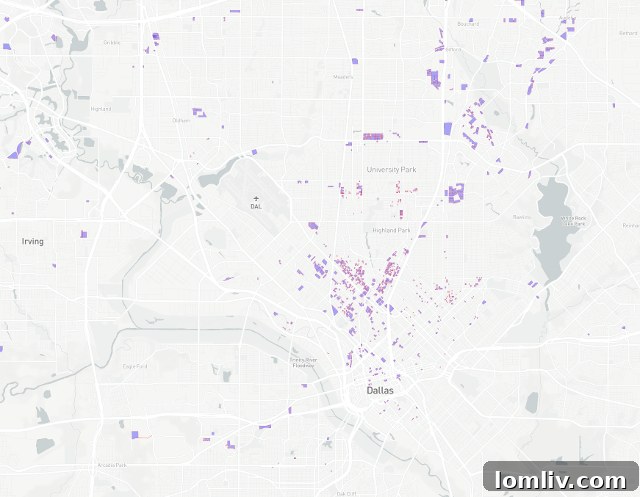
While not a 3D visualization, another insightful map from TheMap showcases the critical distribution of multi-family condo units across Dallas. As clearly depicted, the highest concentrations are notably found in established, dynamic urban centers such as Oak Lawn and Uptown. These are precisely the areas of Dallas that continue to attract new residents and businesses, flourishing with activity and growth.
This map strongly reinforces the undeniable link between density and vibrancy. If one were to overlay data for rental multi-family units, the correlation would become even more explicit: density directly equates to urban vitality. These concentrated residential developments not only create bustling communities but also significantly hike the value of surrounding properties and contribute robustly to the tax base. In stark contrast, Southern Dallas shows a near absence of such multi-family developments, with the notable exception of the Cedars. This imbalance is a crucial point of concern for equitable growth and urban planning, indicating a necessary shift towards fostering similar residential density in underserved areas to unlock their full potential.
Preston Hollow Blue: The Contribution of Multi-Family Residences
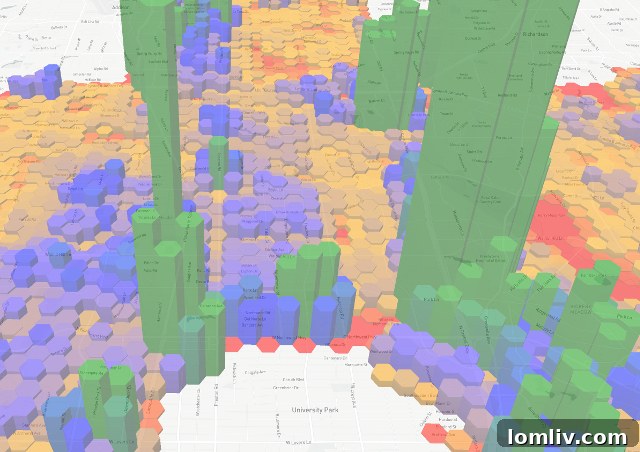
Moving beyond the vibrant greens of concentrated commercial activity, the map reveals distinct blue hues, indicating another significant tier in the tax contribution scale: areas where high- and mid-rise multi-family residences play a crucial role. This category of housing, often denser than traditional single-family homes, significantly boosts tax revenue per parcel.
For instance, just north of the exclusive Park Cities “bubble,” a prominent patch of lower green and blue columns marks the area nestled between the iconic Pink Wall and Hillcrest. This particular residential zone consistently outstrips the rest of Preston Hollow in terms of tax revenue generation per parcel, a direct consequence of its multi-family building density. On the left side of the accompanying image, the only area that approaches this level of contribution is found within the expansive, large-lotted mansions of Old Preston Hollow, situated west of the North Tollway and north of Northwest Highway. This comparison vividly illustrates how thoughtful urban planning and diverse housing types can dramatically impact a neighborhood’s economic output, offering valuable insights for future development strategies across Dallas.
The Southern Opportunity: Imagining a Transformed Dallas
The potential for Southern Dallas, particularly the area surrounding Fair Park, is nothing short of transformative. Imagine the ripple effect when Fair Park successfully attracts new businesses and residents to its vicinity. The revenues generated from property taxes in this area are poised to skyrocket. Even if the city implements robust measures to protect existing homeowners from displacement, a conservative estimate suggests tax revenues could double, triple, or even increase by tenfold. This might sound far-fetched, but it’s actually a very conservative projection given the current underdevelopment.
Consider the dramatic shift: vacant land, especially in an area already experiencing low property values, generates almost negligible taxable revenue. What happens, then, when a barren $10,000 lot is redeveloped to sprout three modern townhouses, each selling for $300,000? That single lot’s value would surge to $900,000, representing an astounding 90-fold increase in taxable value. And with the sheer volume of vacant land available in Southern Dallas, future development is unlikely to be limited to single-family homes. A look at Uptown’s evolution provides a powerful precedent: what were once psychics’ offices and used car lots have given way to high-density commercial and residential complexes, not sprawling single-family residences.
Southern Dallas doesn’t necessarily need a Ritz-Carlton to thrive. What it vitally needs is thoughtful, middle-class-oriented development that can serve as a massive boon for the city. Such development would revitalize the area with quality, affordable housing and, most importantly, create essential job opportunities, fostering economic stability and growth for its residents. This represents a monumental opportunity to create a more equitable and prosperous Dallas for all its citizens.
Unveiling Health Disparities: Smoking and Diabetes Across Dallas
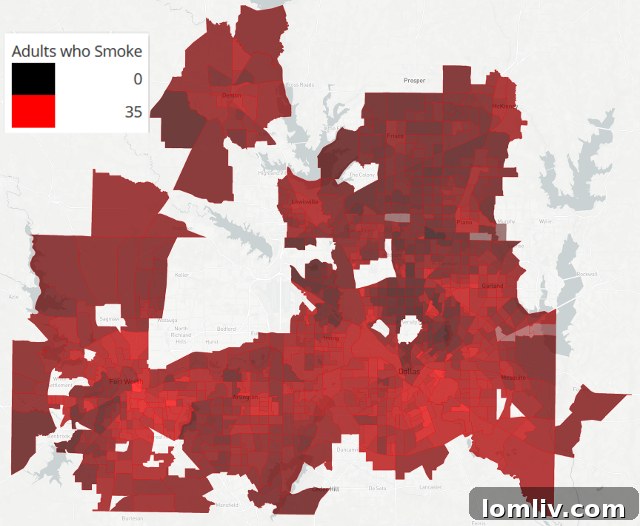
Beyond economic indicators, TheMap also offers critical insights into public health. Another compelling map visualizes the prevalence of smoking across the city. Broadly speaking, the data illustrates a clear pattern: the more affluent and northern your location within Dallas, the less likely residents are to smoke. Conversely, those in economically disadvantaged areas, often least able to afford expensive health habits, tend to have higher rates of smoking. This correlation underscores a critical socio-economic dimension to public health challenges.
Dovetailing with this, another map reveals the incidence of diabetes, which similarly skews towards the southern parts of the city. This trend is often linked to a combination of factors prevalent in lower-income communities, including diets that may be higher in sugar and processed foods due to limited access to fresh, healthy options, coupled with insufficient or inadequate medical care. These maps serve as powerful tools, not just for urban planning, but also for public health initiatives, highlighting areas where targeted interventions and resources are most urgently needed to address systemic health disparities and improve overall community well-being.
Navigating Development: The Importance of Planned Development Districts
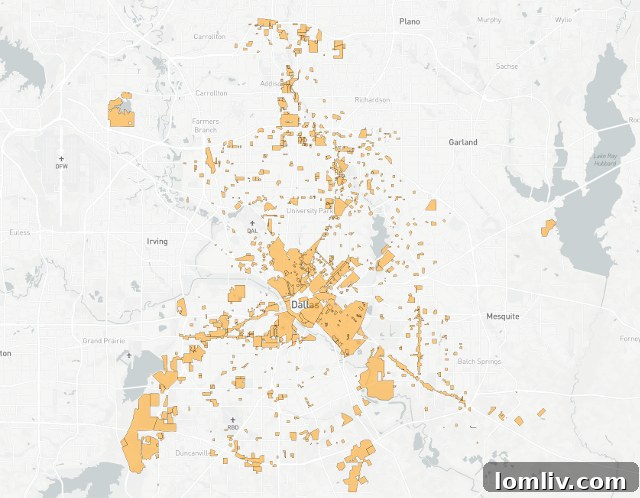
For anyone considering purchasing property or engaging in development within Dallas, understanding the intricate landscape of Planned Development (PD) Districts is paramount. These specialized zoning classifications are critical as they define what is permitted and what is restricted within specific areas. Today, Dallas boasts nearly 1,000 such districts, each with its unique set of regulations that can profoundly impact property use, building height, density, and overall urban design.
My work has frequently delved into the complexities of these districts, notably the extensive PD-193 overseen by the influential Oak Lawn Committee, and the ongoing developments within PD-15, a sub-section near the famed Pink Wall. These examples underscore the real-world implications of PDs on community character and development trajectories. Utilizing TheMap’s interactive tool, you can simply click on any area of interest to instantly identify its PD number and precise boundaries. With this information, the next crucial step is to consult the City Attorney’s office to access and thoroughly understand the specific ordinances and regulations governing that particular Planned Development District. This critical process ensures compliance and informs strategic investment and development decisions across the city.
Maps as Catalysts for a Smarter Dallas
In conclusion, maps are undeniably wonderful things, serving as powerful tools that can help visualize complex data in myriad ways. The insights derived from the 3D tax revenue map, multi-family distribution, health disparity maps, and Planned Development Districts provide a comprehensive understanding of Dallas’s current state and future potential. Some of the patterns revealed, such as the concentrated wealth and commercial activity in Northern Dallas, may not come as a surprise once given thought. However, others, like the stark health disparities or the dramatic impact of density on tax revenue efficiency, offer profound and often unexpected revelations.
It is imperative that the City of Dallas not only acknowledges these visualizations but actively integrates them into its strategic planning. Equipped with such predictive tools, city leaders can be guided towards the most effective and equitable solutions for sustainable urban development. If the city’s departments are not already harnessing the power of these advanced mapping and data visualization platforms, they absolutely should visit TheMap—and immediately bookmark it. Data-driven decision-making is not merely a modern luxury; it is a fundamental necessity for building a more prosperous, vibrant, and equitable Dallas for all its residents.

About the Author: My primary focus areas encompass high-rises, homeowners associations (HOAs), and property renovation. I also maintain a keen appreciation for both modern and historical architecture, always balancing these aesthetic values against the progressive principles of the YIMBY (Yes In My Backyard) movement, which advocates for more housing development. My commitment to insightful real estate journalism has been recognized by the National Association of Real Estate Editors, earning me three Bronze awards in 2016, 2017, and 2018 for pieces like “Housing Styles: Interiors Leapt to the Future, Exteriors Wallow in the Past” (2016), “Property Taxes: Garbage, Garbage” (2017), and “Friday Night Blaze Engulfs Pink Wall Preston Place Condos” (2018). Additionally, I received two Silver awards in 2016 and 2017 for my work on “Flock to the Casbah: A Home in Marrakech” (2016) and “Second Homeownership in Bermuda Serves the Rich While Protecting Local Interests” (2017). If you have a compelling story to share or a proposal to make, please reach out via email at [email protected]. You can also find my content on Facebook and Twitter, although a direct search might prove elusive – but you are always welcome to look!