
Welcome to our comprehensive dive into the latest trends shaping the Texas real estate market, with a special focus on Dallas. This week, we unpack critical insights ranging from evolving demographic shifts like adult children living at home to the booming new home construction landscape and the dynamic statewide housing sales figures from February. Understanding these multifaceted reports is crucial for anyone looking to grasp the current pulse and future trajectory of the region’s property market. We’ll explore where Dallas stands in national rankings, the driving forces behind its growth, and the nuanced indicators that define the overall health and challenges of the Texan housing sector.
The Evolving Landscape: Adult Children Living at Home in Texas Metros
The phenomenon of adult children residing with their parents, often dubbed the “boomerang generation,” continues to be a significant demographic trend across the United States. A recent study conducted by MagnifyMoney shed light on this societal shift, analyzing the prevalence of adults aged 25 to 40 living in their parental homes across 50 major U.S. metropolitan areas. While this trend often reflects broader economic pressures such as student debt, rising living costs, and a competitive job market, the findings for Texas cities offer a unique regional perspective.
Dallas, a major economic hub, found itself squarely in the middle of the pack, ranking 33rd out of the 50 metros surveyed. In Dallas, 15.8 percent of adult children aged 25-40 were reported to be living at home with their parents. This figure, while notable, indicates that Dallas isn’t experiencing the extreme end of this trend. In contrast, another major Texas city, San Antonio, recorded a significantly higher proportion, placing it at number 5 on the list. Houston also showed a higher incidence than Dallas, ranking 23rd, while Austin recorded the lowest rate among the Texas giants at 43rd.
MagnifyMoney’s methodology excluded individuals in this age group who identified as active students, ensuring the focus remained on adults primarily navigating the post-education phase of life. The study unearthed several other compelling statistics that provide a deeper understanding of this demographic. For instance, roughly one in four adult children living with their parents also have children of their own residing in the same household, adding another layer of complexity to family structures and financial dependencies.
Economically, the data highlighted challenges faced by this demographic. The average unemployment rate for adults aged 25-40 living at home across all 50 cities was 8.6 percent, more than double the national unemployment rate of 4 percent reported in January of the study period. Furthermore, a significant portion—nearly one in five—of these adults did not participate in the labor market at all. MagnifyMoney’s analysis concluded that “only 72% of these adults are currently working while living with parents,” underscoring potential underemployment or difficulties in securing stable positions.
An intriguing aspect of the findings was the gender disparity. In nearly every surveyed city, men were more likely to be living at home with their parents than women. Austin was a notable exception, where 51.1 percent of women in this demographic lived at home, slightly outnumbering men. For Dallas, San Antonio, and Houston, the percentages of men living at home were 53.8 percent, 54.5 percent, and 58.6 percent, respectively. These figures prompt further inquiry into potential gender-specific economic or social factors influencing living arrangements.
San Antonio, beyond its high overall ranking, also recorded one of the highest rates of parenthood among young adults living with parents. Almost a third of all young adults in San Antonio residing with their parents were also raising their own children in the same household. This confluence of factors paints a vivid picture of the economic realities impacting younger generations and their living choices across Texas.
The implications of these demographic trends are far-reaching, potentially influencing everything from consumer spending patterns to the demand for various types of housing. A higher prevalence of adult children at home might delay first-time homeownership, impacting the entry-level housing market, or conversely, could drive demand for larger, multi-generational homes. Understanding these shifts is vital for real estate developers, urban planners, and policymakers alike.
Source: MagnifyMoney
Texas Leads the Charge: Dominating New Home Construction in a National Slowdown

While many parts of the nation have experienced a documented slowdown in new home construction, Texas continues to defy the trend, emerging as a powerhouse in building new residences. A recent analysis by Realtor.com highlighted the cities that are still experiencing a robust building boom, and the results firmly place Texas at the forefront of national construction activity. This sustained growth is a testament to the state’s resilient economy, booming population, and business-friendly environment.
Dallas stands proudly at the very top of this list, indicating its unparalleled dominance in new home construction. Hot on its heels is Houston, securing the number two position, further solidifying Texas’s leadership. Austin, another dynamic metropolitan area in the state, also made a strong showing, coming in at number 7. This remarkable concentration of activity within Texas underscores the unique market conditions driving development here.
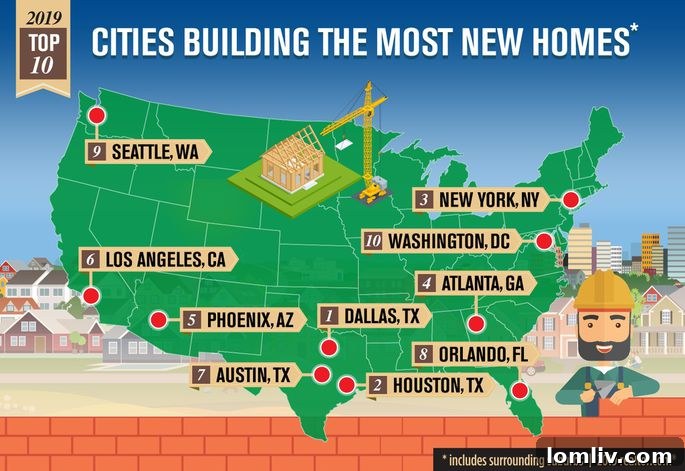
Delving deeper into Dallas’s exceptional performance, the city issued an impressive 63,421 permits, marking a healthy 2.8 percent increase from the previous year. With a median list price of $335,700, Dallas continues to attract significant investment and development. Realtor.com attributes this sustained boom to several key factors, most notably the significant corporate relocations to the area, such as Toyota’s move. These corporate giants bring with them a surge of new residents, creating an insatiable demand for housing across all segments.
One of the primary advantages Dallas, and indeed much of Texas, holds over coastal counterparts is the sheer availability of relatively inexpensive land suitable for development. This plentiful land allows builders to construct homes at more accessible price points, catering to a wider range of buyers. Furthermore, Texas is renowned for its builder-friendly laws and regulations, which streamline the construction process and reduce bureaucratic hurdles. This supportive environment encourages developers to invest confidently in the state.
The benefits of this construction surge are not confined to the urban core but extend significantly to the surrounding suburbs and smaller cities. Frisco, located approximately 40 minutes from downtown Dallas, serves as a prime example. This burgeoning suburb has witnessed an explosion of new housing, characterized by spacious 4,000-square-foot, two-story houses with generous yards. Frisco’s growth trajectory is so remarkable that it was recognized as the third fastest-growing suburb by Realtor.com in the preceding year, illustrating the strong demand for suburban living and larger family homes in the Dallas metroplex.
The continuous new home construction in Dallas and other Texas cities has profound economic implications. It fuels job creation in the construction sector, supports local businesses through the supply chain, and contributes to the overall economic vitality of the region. As more people and businesses relocate to Texas, the demand for housing is expected to remain robust, prompting continued investment in residential development. This dynamic environment positions Texas as a leading market for both builders and homebuyers seeking opportunities amidst a nationally challenging housing landscape.
Source: Realtor.com
February Housing Sales: A Resilient Texas Market on the Rise
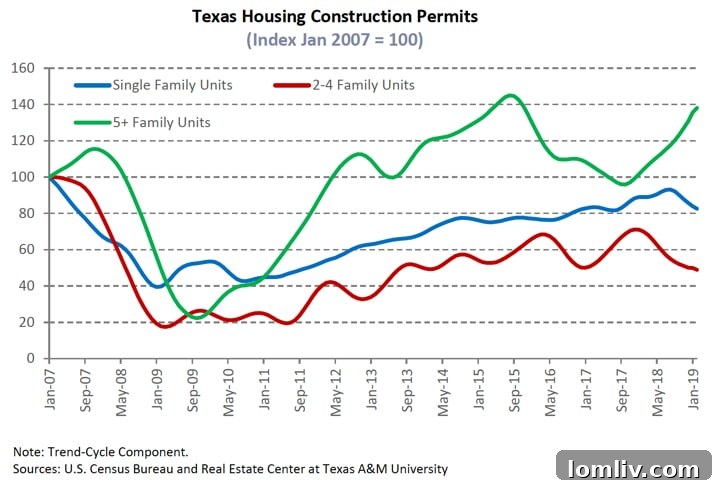
The Texas housing market demonstrated robust health and significant recovery in February, according to a comprehensive report from the Texas A&M Real Estate Center. Statewide housing sales experienced a notable 5.2 percent increase month-over-month, signaling a strong rebound and consistent buyer demand. This surge brought sales to their highest level since July, indicating renewed momentum after a period of fluctuation. The typical Texas home continued to move swiftly, averaging just two months on the market and selling for more than 95 percent of its original list price, characteristics indicative of a competitive seller’s market.
In terms of future supply, single-family housing construction permits maintained a balanced trajectory for the second consecutive month, following a dip in December. This stability in permits suggests a steady pipeline of new homes entering the market. Houston led the nation in permit issuance for February, with an impressive 2,846 permits, closely followed by the Dallas-Fort Worth metroplex at 2,698. Austin also contributed significantly with 1,400 permits, further highlighting the widespread development activity across Texas’s major urban centers.
A critical indicator of market health, Months of Inventory (MOI), remained below four months statewide. This figure is considerably lower than the six months generally considered to represent a balanced housing market, reinforcing the notion of strong demand outstripping supply. Particularly tight were the segments for homes priced less than $200,000 and those between $200,000 and $300,000, which recorded the lowest MOI figures of 2.9 months and 3.4 months, respectively. This strong competition at more affordable price points underscores the intense buyer interest for entry-level and mid-range housing.
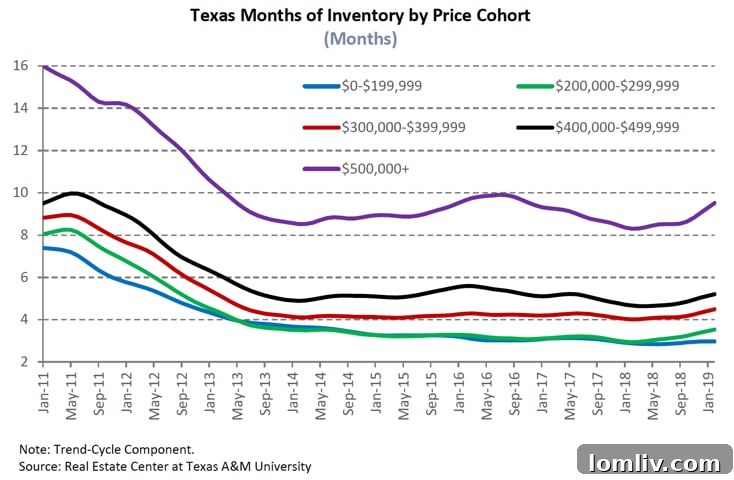
The pace of new Multiple Listing Service (MLS) listings entering the market eased somewhat in February after a significant surge throughout much of 2018. The report from the Texas A&M Real Estate Center suggested that “fewer new listings and a recent uptick in sales could limit further MOI expansions,” indicating that the market might remain tight due to constrained supply and sustained demand.
Examining individual Texas cities, Dallas recorded an MOI of 3.5 months, closely followed by San Antonio at 3.6 months. Houston’s MOI stood at 4.1 months, while Fort Worth boasted the lowest MOI among the major metros at a remarkably tight 2.7 months, highlighting intense buyer competition in that market. These variations reflect localized dynamics within the broader statewide trend.
The increase in total housing sales was widespread, with record numbers observed in specific price ranges. Homes priced between $200,000 and $300,000 saw unprecedented sales figures, and the segment for homes priced less than $200,000 experienced its second consecutive monthly increase. These two cohorts are particularly vital, as the center reported they “account for more than 70 percent of single-family sales reported through MLSs,” underscoring their importance to the overall market’s performance. The luxury market also performed robustly, with sales of homes priced over $500,000 posting a significant 11.9 percent monthly increase, demonstrating health across various price points.
City-specific sales growth was also impressive. Fort Worth led the charge with an outstanding 12.4 percent monthly sales growth. Dallas and Houston also posted strong increases, with growth rates of 6 percent and 6.5 percent, respectively, contributing significantly to the statewide gains.
Average Days on Market (DOM) statewide remained stable at 60 days. Austin, San Antonio, and Houston reported slightly faster sales, with DOMs of 56, 59, and 57 days, respectively. Interestingly, the report noted that “The Dallas DOM surpassed 51 days for the first time since 2013 while Fort Worth reached a three-year high at 44 days.” While still relatively low, these increases suggest a slight moderation from the extremely rapid sales pace seen in previous periods, perhaps indicating a more balanced, albeit still swift, market environment.
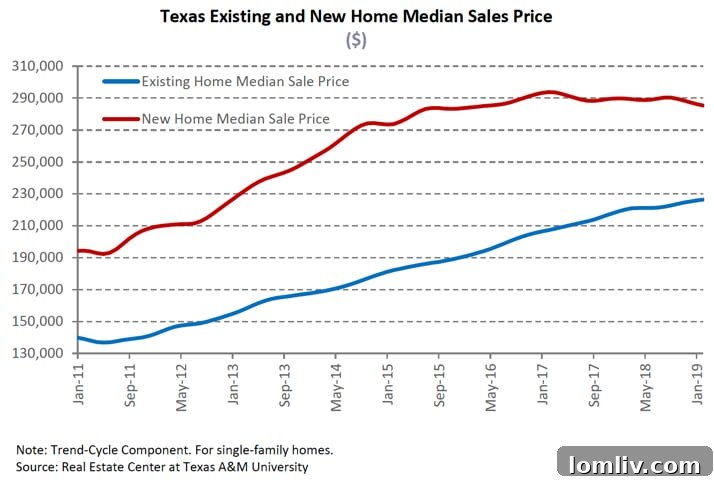
Texas median home prices balanced at $235,500 in February, representing a solid 2.6 percent increase over the previous year. Within the Dallas metroplex, median home prices showed nuanced movements; Dallas itself saw a slight dip for the third consecutive month to $282,100, while Fort Worth’s median price increased by over $3,000 to $235,400. These diverging trends highlight the granular differences within regional markets, influenced by varying inventory, demand, and economic factors.
In terms of repeat sales, year-over-year growth in Dallas moderated to 2.8 percent, with the list-to-sales price ratio settling at 0.96. Despite this moderation, these figures still indicate solid market fundamentals and continued appreciation. However, the center’s report concluded with a crucial observation: “Despite the overall moderation, home-price appreciation continued to outpace wages and weighed on housing affordability.” This ongoing challenge of affordability remains a key concern for the long-term sustainability and accessibility of the Texas housing market, warranting close attention from industry stakeholders and policymakers alike.
Source: Texas A&M Real Estate Center