The arrival of the COVID-19 pandemic cast a long shadow over our lives, transforming routines and challenging perceptions of normalcy. For many, April felt like an eternity, marked by the unfamiliar confines of our homes and an acute awareness of time’s altered pace. We sincerely hope that amidst the global health crisis, you were able to forge meaningful connections with your loved ones, navigate the unprecedented challenges with resilience, and maintain a sense of purpose, whether through work or household endeavors.
Beyond the personal adjustments, the financial implications of the pandemic have undoubtedly weighed heavily on many minds. A collective sense of anxiety about economic stability and investment portfolios has become a shared experience. In these moments of uncertainty, it’s wise to recall the timeless wisdom often attributed to the late Henry S. Miller, who reportedly told Allie Beth Allman: “Everything that goes down comes up.” This enduring perspective offers a beacon of hope, reminding us of the cyclical nature of markets and economies, and the eventual rebound that typically follows periods of decline. It’s this underlying principle that often motivates savvy investors to seek out opportunities, even in turbulent times, with many currently turning their attention towards the perceived stability and long-term potential of real estate.
Real estate has long been considered a tangible asset and a preferred investment choice, particularly during economic downturns. While other markets may experience rapid fluctuations, properties often offer a sense of security and a hedge against inflation. For many, the current environment presents a unique opportunity to reassess investment strategies, considering both residential and commercial real estate as potential avenues for capital preservation and growth. The appeal often lies in its intrinsic value and the fundamental need for shelter and space, which remains constant regardless of immediate economic shifts. This renewed interest underscores a broader confidence in the long-term prospects of property ownership, even as the global economy grapples with short-term volatility.
North Texas’s Economic Resilience: Pre-COVID-19 Job Growth and Future Adaptations
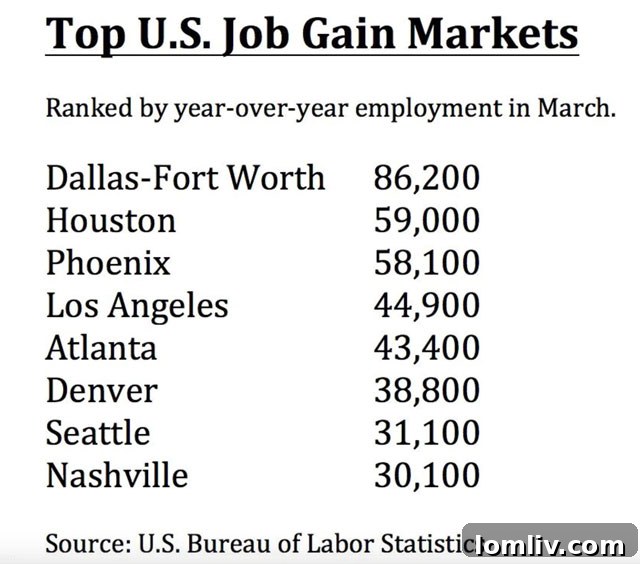
Before the profound disruptions of the COVID-19 pandemic and the parallel shock of the oil price collapse, the economic landscape of North Texas told a story of remarkable growth and prosperity. Annual job numbers released by the U.S. Bureau of Labor Statistics from that period now feel like relics from a different era, painting a vivid picture of robust employment gains that the Dallas-Fort Worth region, alongside other major Texas metros, enjoyed for an extended period. This era was characterized by a booming job market, attracting businesses and talent, solidifying DFW’s reputation as a dynamic economic hub.
Indeed, Dallas-Fort Worth and Houston were leading the nation in job gains, a testament to Texas’s vibrant economy and business-friendly environment. These metropolitan areas consistently outpaced many others across the United States in job creation, driven by diverse industries ranging from technology and finance to logistics and healthcare. Furthermore, cities like Austin and San Antonio also reported impressive annual employment gains. Austin saw an increase of 27,200 jobs, while San Antonio was up by 18,100 jobs in March compared to the previous year, highlighting a statewide trend of economic vigor and expansion. This sustained growth underscored the magnetic appeal of Texas, drawing in new residents and businesses with its competitive cost of living, favorable regulatory climate, and expanding opportunities.
Navigating the Uncharted Waters: Post-Pandemic Job Market and Urban Shifts
However, the unprecedented challenges that emerged in early 2020 swiftly reshaped this optimistic outlook. As we braced for the economic data from April and May, it became clear that the forthcoming job numbers would likely be the most dismal on record since the 2008 financial crisis, and potentially even rivaling the grim statistics of the Great Depression. The abrupt halt in economic activity, widespread business closures, and stay-at-home orders created an immediate and severe impact on employment across virtually all sectors. This sudden downturn represented a significant setback, abruptly interrupting years of steady progress and underscoring the fragility of even the most robust economies in the face of a global crisis.
Despite the immediate gloom, a glimmer of hope and adaptation is emerging on the horizon. We are hearing anecdotal evidence suggesting a potential paradigm shift in corporate relocation strategies. Businesses in the Northeast, the Rust Belt, and even California are reportedly reconsidering their operational footprints, casting their eyes towards metropolitan areas that offer distinct advantages in a post-pandemic world. A key factor in this re-evaluation is a reduced reliance on public transit and a preference for regions with a more established car culture. This inclination reflects a growing concern for employee safety and well-being, as well as a practical adjustment to new commuting patterns and social distancing requirements. Such a trend could represent a significant reorientation away from the dense urban centers that have long been the engines of economic growth and innovation.
This potential shift marks a fascinating contrast to the urbanization trends that Dallas and many other major cities had been actively pursuing, focusing on denser, more walkable, and public-transit-oriented developments. Pandemics and large-scale disasters historically serve as catalysts for profound societal and economic change, and COVID-19 appears to be no exception. There is a growing sentiment that the appeal of extremely dense urban environments might wane, prompting a gradual decentralization towards less urbanized states and more spacious metropolitan areas. The widespread adoption of remote work has further fueled this conversation, demonstrating the feasibility of productivity outside traditional office settings. Even influential figures, such as the head of Barclays in the UK, have openly questioned the long-term viability of large corporate offices, suggesting they might become a relic of the past.
This perspective is strongly echoed by urban theorists and demographers. As April dawned, Joel Kotkin articulated a powerful argument for reconsidering the conventional wisdom surrounding dense cities. His insights highlight a critical vulnerability exposed by the pandemic:
The impact of the coronavirus pandemic may be too early to measure, but it’s clear that the great preponderance of cases, and deaths, are concentrated—at least as of now—in dense urban centers, most particularly Wuhan, Milan, Seattle, Madrid, and New York City. This crisis is the right moment for the world to reconsider the conventional wisdom that denser cities are better cities.
Sadly, many of the attractions that make places like New York so unique and appealing also make them more dangerous. Crowds, mass transit, clubs, and huge cultural venues create a perfect terroir for the spread of pathogens. In contrast, the rate of infection has been far lower in less urbanized states like Iowa or Oklahoma, whichhealth professionals say benefit from less crowding and unwanted human contact.
Kotkin’s argument underscores a fundamental re-evaluation of urban design and lifestyle. The very features that once defined the vibrancy and allure of global metropolises—bustling crowds, extensive public transit networks, and concentrated cultural venues—are now perceived through a new lens of public health risk. This does not necessarily signal the end of cities, but rather a potential shift in their form and function. Metropolitan areas like Dallas-Fort Worth, which already boast a sprawling infrastructure, a strong car culture, and a less intensely concentrated population density compared to global megacities, may find themselves uniquely positioned to benefit from this emerging trend. The region’s extensive highway system and existing suburban development patterns align well with a preference for personal transportation and more dispersed living arrangements. This adaptability could position DFW as an attractive destination for businesses and individuals seeking a balance between economic opportunity and a perceived lower risk environment.
The long-term implications of these shifts are still unfolding, but the pandemic has undeniably accelerated conversations about the future of work, urban planning, and quality of life. As businesses and individuals continue to prioritize health, flexibility, and resilience, regions like North Texas, with their unique blend of economic dynamism and adaptable infrastructure, are poised to play a significant role in shaping the post-pandemic economic landscape. The ability to pivot, innovate, and provide environments that address the evolving needs and concerns of a global workforce will be paramount for sustained growth and prosperity.