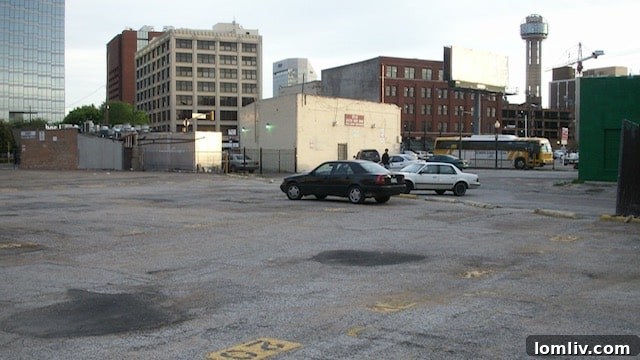
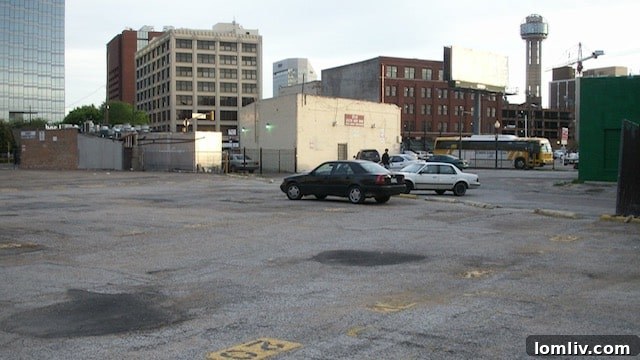
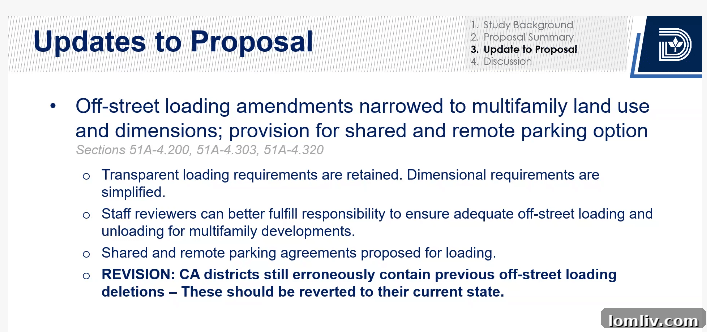
A significant shift is on the horizon for urban development in Dallas, poised to reshape the city’s landscape and economy. Developers may soon gain unprecedented autonomy in determining the number of parking spaces required for new residential complexes and commercial ventures. This groundbreaking change comes as the city’s Zoning Ordinance Advisory Committee (ZOAC) recently cast a pivotal vote to abolish minimum parking requirements, a move that could dismantle a regulatory framework largely unchanged since 1965. This decision marks a critical step towards modernizing Dallas’s urban planning approach, moving away from outdated mandates to a more market-driven and sustainable development model.
The journey to this moment has been extensive, highlighting the complexity and deep-seated nature of parking regulations. Senior Planner Michael Wade revealed that the proposal to eliminate minimum parking requirements for new developments has been deliberated by ZOAC an astonishing 27 times. This persistent engagement underscores the importance and potential impact of such a reform on Dallas’s future growth and livability.
Further details on this ongoing discussion can be found at: Dallas Zoning Committee Inches Closer to Eliminating Minimum Parking Requirements
On a recent Tuesday, the zoning committee solidified its position with a decisive 6-2 vote in favor of staff’s recommendations for comprehensive amendments to the city’s parking code. This outcome reflects a growing consensus among city planners and officials regarding the necessity of reform.
The ZOAC’s meticulous approach to this reform is noteworthy. Members engaged in a thorough review of the staff proposal, dissecting what might seem like minor details and incorporating subsequent “friendly amendments” during a rigorous three-hour meeting. A crucial clarification emphasized by committee members is that, if their recommendation is ultimately upheld, it will not lead to the removal of any existing parking spaces. The reform exclusively targets new developments, granting them flexibility rather than dismantling current infrastructure.
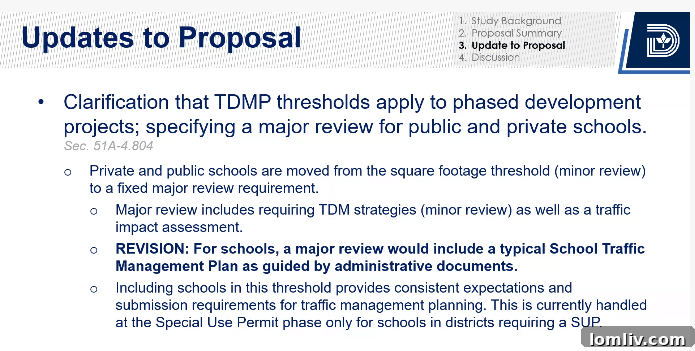
City officials have also clarified that existing Planned Developments (PDs), such as PD 193 in the vibrant Oak Lawn neighborhood, which already have their own specific parking and loading requirements, will remain unaffected by the proposed parking code alterations. This targeted application ensures that established development frameworks are preserved while new projects benefit from increased flexibility.
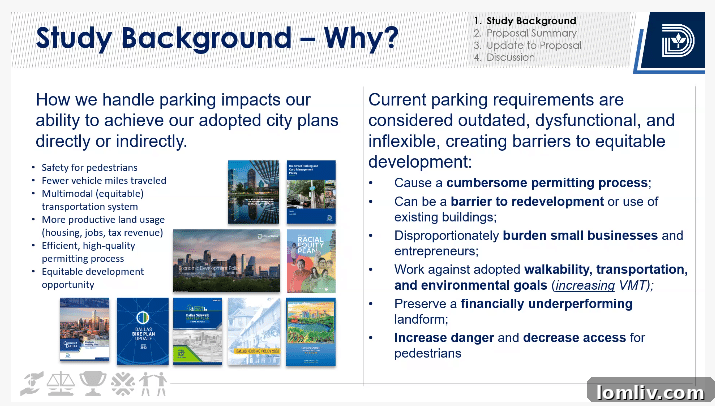
Enrique McGregor, a respected ZOAC member, pinpointed the primary hurdle in advancing parking reform: dispelling the pervasive misconception that eliminating minimums equates to eliminating parking altogether. “All it’s doing is allowing the market to determine what the right amount of parking is,” McGregor eloquently stated. He elaborated on the far-reaching economic consequences of the current code, which mandates an excess of empty parking spaces. This results in “valuable real estate sits idle and unproductive,” tying up “billions of dollars of investment” that could otherwise be channeled into productive opportunities. McGregor also highlighted how this inefficiency detrimentally impacts the city’s tax base, hindering its ability to provide essential services, and exacerbates the critical shortage of affordable housing by inflating development costs.
With ZOAC’s approval, the crucial matter of parking code reform now advances to the City Plan Commission for further deliberation and a subsequent recommendation to the Dallas City Council. This journey signifies a critical juncture for urban policy in Dallas, promising a more agile and responsive approach to development challenges.
The Long Road to Parking Reform in Dallas
The push for parking reform in Dallas is not a recent phenomenon. The issue was initially championed by District 1 Councilman Chad West in 2019. However, despite its merits, the idea languished for several years due to a lack of sufficient interest among city officials. It experienced a resurgence last year, gaining renewed momentum as a growing number of stakeholders recognized the pressing need for change. While a majority of ZOAC members have expressed strong support for eliminating minimum requirements, there is also a nuanced understanding that a “one-size-fits-all” approach to parking is inherently flawed. Assistant Planning Director Andreea Udrea articulated this core problem, stating, “[The current parking code] is a one-size-fits-all requirement because it’s a ratio that applies everywhere in the city and is blind to location and traffic.” This rigidity often leads to inefficient land use and hinders equitable development.
Dallas’s current parking requirements impose specific ratios for different types of establishments. For residential homes, the code mandates one parking space per bedroom. Restaurants are required to provide one space for every 100 square feet of floor area, while retail establishments must allocate one space for every 200 square feet. Such prescriptive rules, while intended to ensure adequate parking, often result in an oversupply, particularly in areas well-served by public transit or with different land use characteristics. For a deeper dive into Dallas’s parking requirements and ongoing reform efforts, explore our collection of articles on parking reform.
The Multifaceted Debate: Pros and Cons of Eliminating Parking Minimums
The discussion surrounding the elimination of parking minimums is a complex one, evoking strong opinions from various segments of the Dallas community. At Tuesday’s ZOAC meeting, several residents voiced their perspectives, highlighting the diverse impacts such a policy shift could entail.
Ed Zahra, a resident of District 14, expressed concerns rooted in Dallas’s historical development as a car-centric city. He argued that removing parking requirements could pose significant challenges for motorists and the surrounding neighborhoods. Zahra contended, “By design, current parking minimums limit how much density can be developed on a space, which directly affects the infrastructure.” He emphasized that these minimums “need to be an integral part of any new parking management policy instead of being kicked to the curb,” suggesting a more integrated approach is necessary to manage urban growth and transportation demands.
The debate around parking requirements is not new in Dallas, with past development proposals encountering roadblocks. Learn more about such instances: Redevelopment Plan for an Old East Dallas Cafe with Bonnie and Clyde Ties Hits a Roadblock with Parking Requirements
City Plan Commissioner Melissa Kingston, while generally supportive of eliminating parking minimums, urged caution and suggested that specific exceptions might be warranted for certain categories of development. Her concern revolved around the potential difficulty of reintroducing such regulations once they have been abolished. “According to our City Attorney’s Office — and I agree with this assessment — if we eliminate all our parking minimums and we decide that in certain categories we have made a mistake, we are going to have a very difficult time reinstating those,” Kingston warned. This highlights the importance of thoughtful and comprehensive planning to avoid unintended consequences.
On the other side of the argument, District 9 resident Swede Hanson presented a compelling case for reform, asserting that parking minimums compel developers to dedicate valuable land to parking, land that could otherwise be utilized for much-needed affordable housing. Hanson shared a relatable observation: “Having grown up in D10 I can point to multiple big box retail centers with expansive concrete parking lots that sit nearly empty 365 days of the year.” He stressed that the greatest impediment to developing attainable housing is the burden imposed by the current parking code. “Unfortunately, the discussion around the development of attainable housing begins and ends with parking, not with how many additional units we can build, not with the additional equitable amenities we can provide, not with the type and quality of unit furnishings, but with the number of concrete parking spaces we must provide.” His argument powerfully articulates how parking mandates divert resources and focus away from critical housing needs.
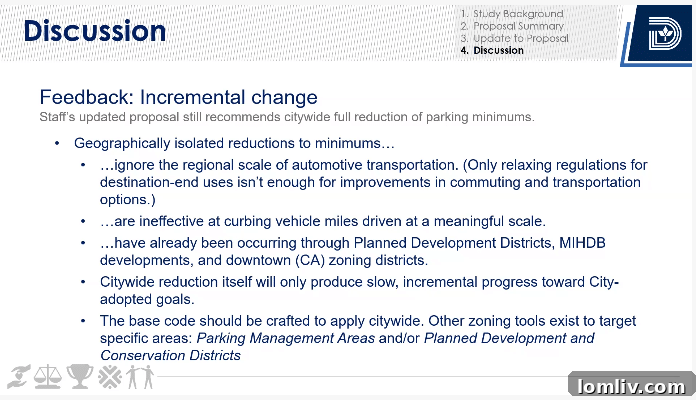
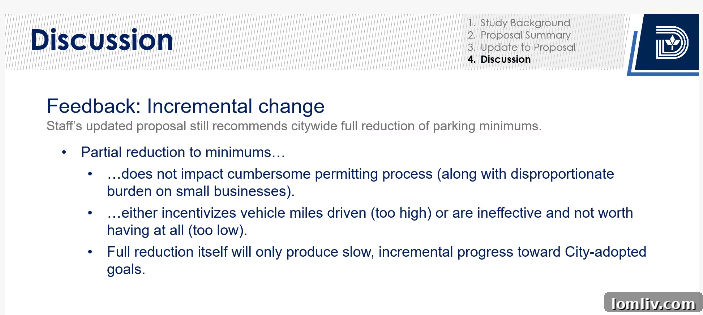
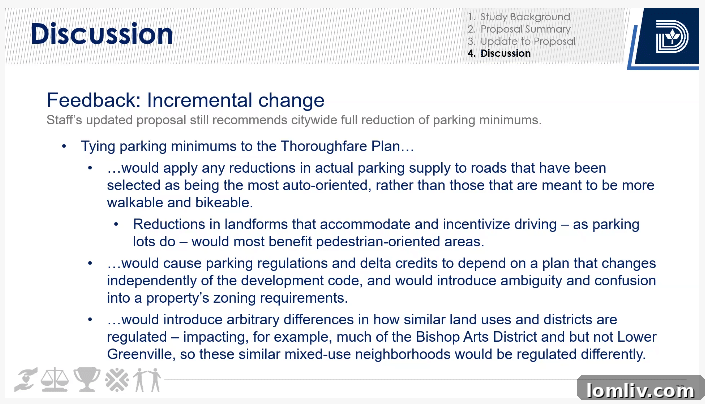
Shaping Dallas’s Future: Beyond Minimums
The potential ripple effects of eliminating minimum parking requirements extend far beyond simply reducing the number of mandated spaces. This reform could unlock significant economic benefits by decreasing development costs, which in turn could lead to more affordable housing options and a wider variety of development types. By allowing developers to determine parking needs based on market demand, location specifics, and anticipated transit use, projects can become more financially viable and responsive to actual community needs. This flexibility encourages innovative land use, fostering mixed-use developments, and promoting walkable, vibrant neighborhoods that are less dependent on individual car ownership. The reclaimed land, previously earmarked for excess parking, could instead be transformed into green spaces, public plazas, or additional housing units, enhancing the overall livability and appeal of Dallas’s urban core and surrounding districts. This represents a strategic move toward sustainable urban growth, aligning Dallas with a growing trend among progressive cities seeking to optimize their urban footprint.
However, the transition is not without its challenges. Critics rightly point to Dallas’s inherent car-centric infrastructure and the potential for increased on-street parking congestion in residential areas if not managed effectively. The success of this reform will heavily depend on the implementation of a robust and thoughtful parking management strategy. This could include initiatives such as establishing parking benefit districts, promoting shared parking facilities, unbundling parking costs from rent or property prices, and investing further in public transportation and alternative mobility options like cycling and ride-sharing services. Such complementary policies are crucial to mitigate potential negative impacts and ensure a smooth transition for residents and businesses alike. The City Plan Commission and subsequent city council deliberations will be critical forums for addressing these concerns and crafting a comprehensive framework that balances development flexibility with community well-being and efficient transportation.
A Vision for a More Dynamic Dallas
The ZOAC’s vote to eliminate minimum parking requirements represents more than just a regulatory adjustment; it signifies a philosophical shift in how Dallas envisions its future urban development. It’s a move away from prescriptive, often inefficient, mandates towards a more adaptable, market-responsive, and sustainable planning paradigm. By empowering developers to make informed decisions about parking, the city is poised to foster innovation, reduce housing costs, and enhance the overall quality of urban life. This reform has the potential to transform underutilized asphalt into vibrant community spaces, affordable homes, and productive businesses, ultimately contributing to a more dynamic, equitable, and resilient Dallas. The road ahead involves careful planning, public engagement, and a commitment to integrating new parking policies with broader urban development goals. As the proposal moves through the City Plan Commission and towards the City Council, Dallas stands at the cusp of a transformative era in its urban history, one that promises a more efficient and livable city for all its residents.