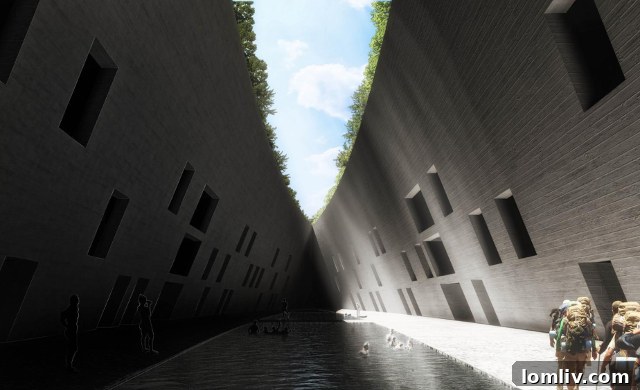
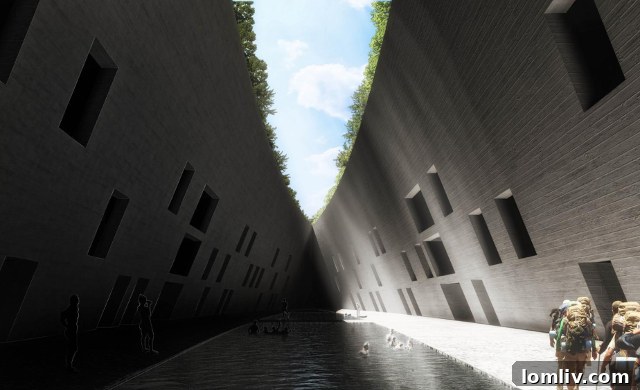
Each year, the American Institute of Architects (AIA) Dallas chapter shines a spotlight on innovative architectural concepts through its highly anticipated annual awards program. This unique event celebrates projects that, for various reasons, remain unbuilt or are the product of student imagination, offering a fascinating glimpse into the future of design and urban development. Slated for May 17th, these awards provide a vital platform for architects and aspiring designers to showcase their visionary ideas, pushing the boundaries of what’s possible in the built environment.
Beyond the professional recognition, one of the most exciting aspects of these awards is the opportunity for public engagement. Architecture enthusiasts and the general public alike are invited to cast their vote for a favorite design via a dedicated website. This year, the impressive roster of finalists boasts 43 groundbreaking designs, with submissions pouring in from across the globe. While the Dallas chapter naturally highlights local talent, with 23 entries originating from Texas, the international scope of the competition underscores its influence and reach. Navigating such a rich collection of architectural ingenuity can be a delightful challenge; much like the proverbial potato chip, it’s hard to settle on just one favorite when faced with so much compelling design.
The unbuilt awards serve a crucial purpose: they celebrate pure architectural thought, freed from the constraints of budget, site limitations, or client revisions that often shape real-world projects. This freedom allows for radical innovation, imaginative problem-solving, and the exploration of new aesthetic and functional paradigms. These conceptual designs often tackle complex societal issues, environmental challenges, or simply offer fresh perspectives on how we interact with our spaces. They are not merely theoretical exercises but powerful statements about where architecture could, or perhaps should, be heading.
Green vs. White: The Texas Architectural Landscape
As a passionate advocate for green architecture, particularly the integration of green roofs, I’ve been inspired by cities like Chicago, which recently surpassed five million square feet of green roofs. This achievement sets a high bar for urban sustainability. However, a review of the Texas-based entries in this competition reveals a contrasting trend: a prevalent use of white membrane roofs and a noticeable absence of creative greenery. While white roofs offer benefits by reflecting sunlight and reducing heat absorption, they often fall short of the comprehensive environmental advantages provided by living green systems. In stark contrast, many global projects submitted demonstrate a far more integrated approach, showcasing imaginative green roofs, lush terraces, vibrant landscaping, and even vertical green walls and trees growing majestically through structural openings. This disparity highlights a potential area for growth and innovation within Texas architecture.
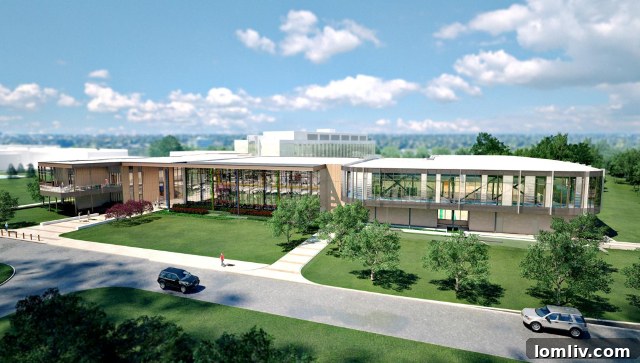
Consider the “Recreation + Wellness” facility designed for the University of Houston in Clear Lake, Texas, depicted above. While it remains unbuilt (a common theme in these awards), its design features a stark white roof. This observation struck me as particularly ironic for a space dedicated to physical activities, health, and exercise sciences. The proposed interiors promised modern amenities, yet the vast potential of the roof, a prime area for sustainable design and even outdoor exercise activities, appears to have been overlooked. A green roof here would not only enhance the building’s environmental performance – through improved insulation, stormwater management, and reduction of the urban heat island effect – but also create an active, visually appealing extension of the wellness concept, offering a unique outdoor recreational space for students and faculty. This missed opportunity underscores the broader point about integrating sustainability at every design phase.
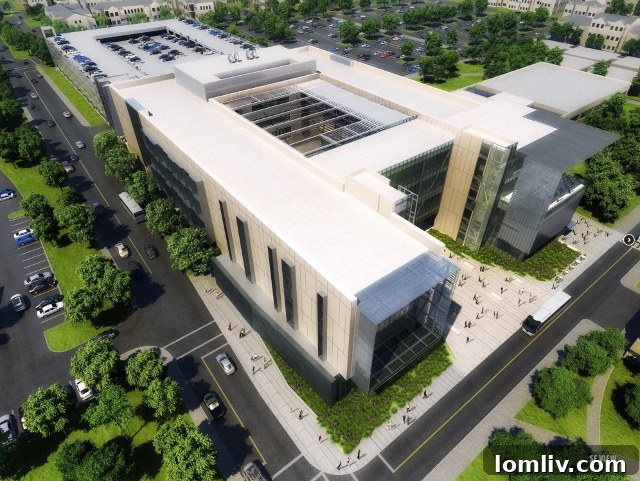
Another Texas entry, a proposal for a new engineering building at the University of Texas in Richardson, similarly features acres of white roofs. This design is further surrounded by a multi-story above-ground car park and extensive surface parking lots, presenting a significant environmental footprint. The only visible concession to energy efficiency on the building’s exterior appears to be a series of louvers over the central courtyard and front elevations, designed to control solar gain. The absence of green roofs on both the main building and the adjacent car park represents a substantial missed opportunity. Beyond the crucial environmental and economic benefits, such as reduced energy costs and improved air quality, integrating green infrastructure here could have transformed the site into a living laboratory for engineering students, fostering hands-on learning in sustainable building practices and urban ecology. It’s a chance to literally build green principles into the educational fabric.
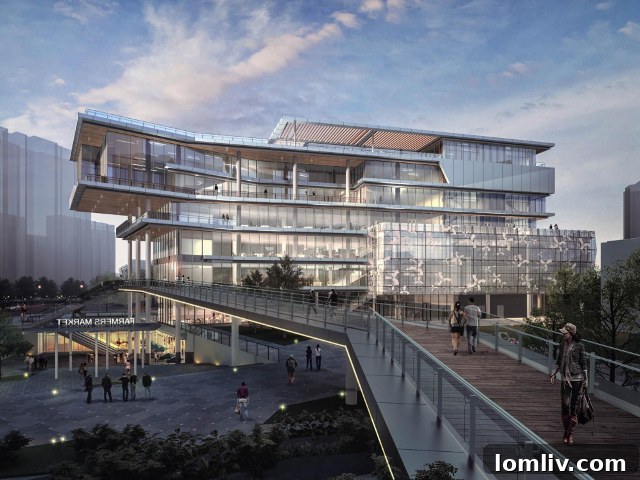
Neighborhood Center: Hangzhou, China – A Hub of Green Community Life
In stark contrast to some of the Texas designs, this bolder and more integrated concept for a neighborhood center in Hangzhou, China, masterfully weaves together various community functions with pervasive greenery. Located adjacent to a kindergarten, this design aims to create a vibrant, interconnected community space. It intelligently combines essential public amenities, including a library, a dynamic playground, open-air plazas designed for community performances and gatherings, and versatile multi-purpose spaces. These diverse areas are seamlessly linked by an intricate network of pedestrian walkways and bridges, promoting ease of access and fostering social interaction.
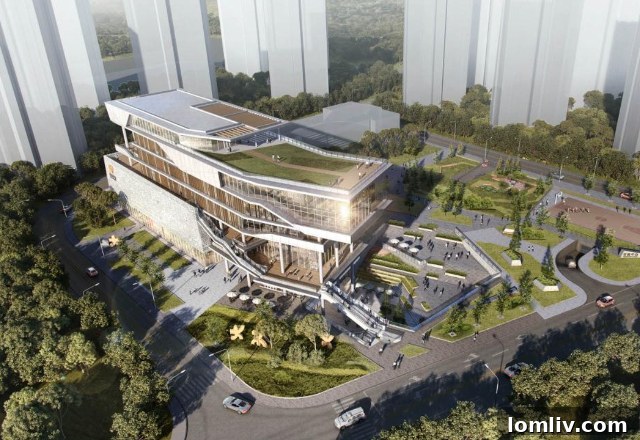
The true genius of this design, however, becomes most apparent from an aerial perspective. From above, one can fully appreciate the sheer pervasiveness of green elements integrated throughout the complex. A stunning variety of terraces, each thoughtfully designed, not only provide inviting spaces for outdoor gatherings and impromptu performances but also offer a lush, continuous swath of green. This verdant landscape creates a beautiful visual amenity for the residents of the surrounding high-rises, transforming what might otherwise be a concrete jungle into an expansive urban garden. It exemplifies how thoughtful design can merge function with nature, elevating the quality of urban life.
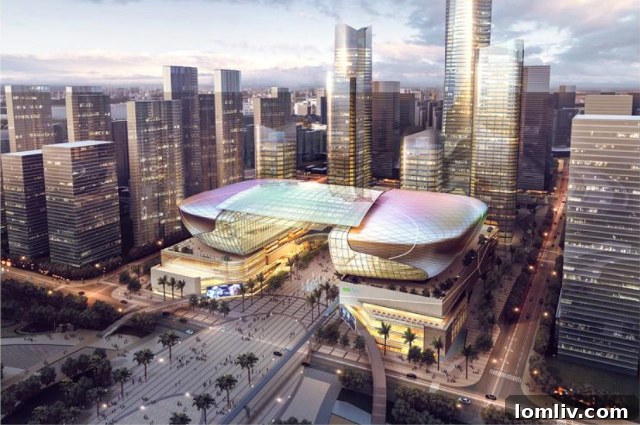
OCT Wuhan Mixed-Use: Wuhan, China – Revealing Inner Energy
Another compelling Chinese entry in the unbuilt awards is the OCT Wuhan Mixed-Use project, an ambitious ensemble of buildings poised to integrate office, residential, and retail spaces. What particularly captures the imagination here is the concept behind its main entry plaza and event space. Should Dallas ever seek to construct a sports arena with a truly distinctive and profound design narrative, they would do well to study this firm’s philosophy. Their design brief for OCT Wuhan is deeply rooted in Asian philosophical principles, beginning with the conceptualization of a three-dimensional rectangle from which a central void was carefully “removed.” This act of subtraction created a spatial phenomenon they describe as “hidden energy.” Subsequently, the decision to further break this space into two distinct halves was intended to “reveal the inner energy,” transforming an abstract concept into a tangible, dynamic architectural experience.
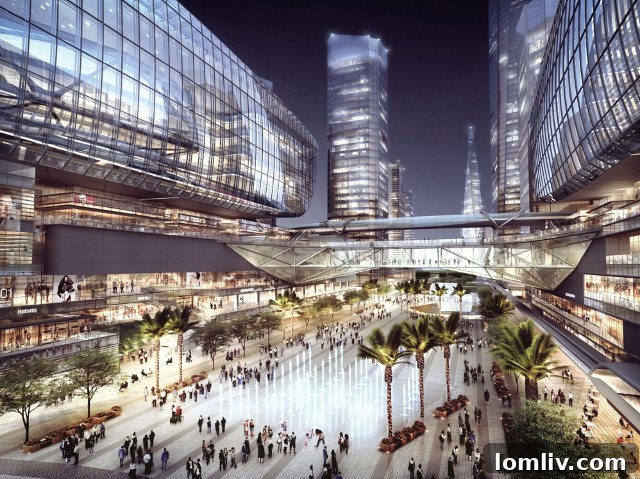
This “inner energy” manifests itself in the form of a bustling, lively space dedicated to shopping and dining, thoughtfully bisected by a generously wide, inviting walkway. The two resulting halves of the complex are envisioned to house a variety of public amenities, including state-of-the-art performance venues, a multi-purpose sports arena, and additional commercial establishments. While the primary roofs of these structures are not specified as green, the design compensates with numerous outdoor green terraces that provide lush respite and enhance the overall aesthetic. Critically, all parking for this expansive development is planned to be underground, a strategic decision aimed at preserving a large, vibrant park shown prominently in the initial rendering’s foreground. Furthermore, the entire complex is designed to sit atop a high-speed rail station, ensuring exceptional connectivity and embodying a forward-thinking approach to urban integration and sustainable transportation.
Elevating Therapy, Ukraine: A Sanctuary of Sustainability and Hope
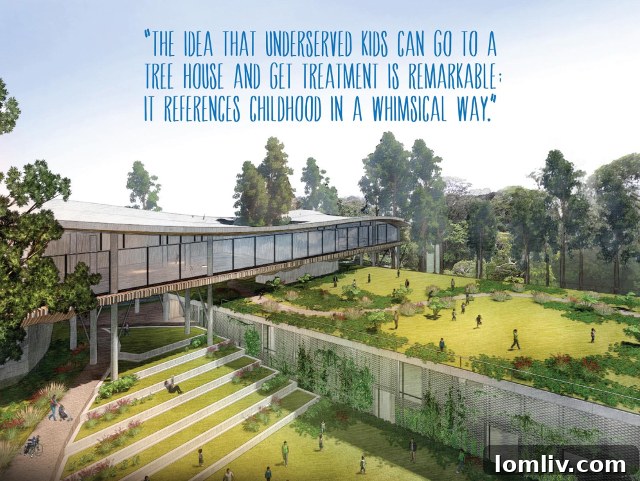
The “Elevating Therapy” project from Ukraine stands out as a deeply moving and functionally brilliant design. Its core mission was to create a specialized facility dedicated to serving the unique needs of disabled children, a population often marginalized and underserved. The design brief eloquently describes these children as frequently isolated, neglected, and living in poverty, highlighting the profound societal impact such a center could have. The architectural response is both imaginative and compassionate: a modern medical and education center inspired by the universal joy of a treehouse. This metaphor not only evokes a sense of wonder and playful escape, which every child deserves, but also informs the building’s multi-level, interconnected spaces designed to foster growth and healing in an engaging environment.
This project is far more than aesthetically pleasing; it is a masterclass in advanced sustainable design and operational efficiency. It boldly integrates various green technologies specifically chosen to insulate the building, generate its own power, and effectively mitigate stormwater runoff. The ambitious goal, successfully achieved in the design, was to achieve a remarkable $0 energy operating cost. To realize this, the building’s energy efficiencies are meticulously calculated to drastically reduce consumption: requiring 62 percent less cooling, 27 percent less heating, and utilizing 40 percent less water compared to conventional buildings. This holistic approach to sustainability ensures that “Elevating Therapy” would not only provide a nurturing environment for its young occupants but also serve as a beacon of ecological responsibility and energy independence, demonstrating a powerful commitment to both human well-being and planetary health.
Droneport: Arlington, Texas – The Future of Logistics (or Luxury Living?)
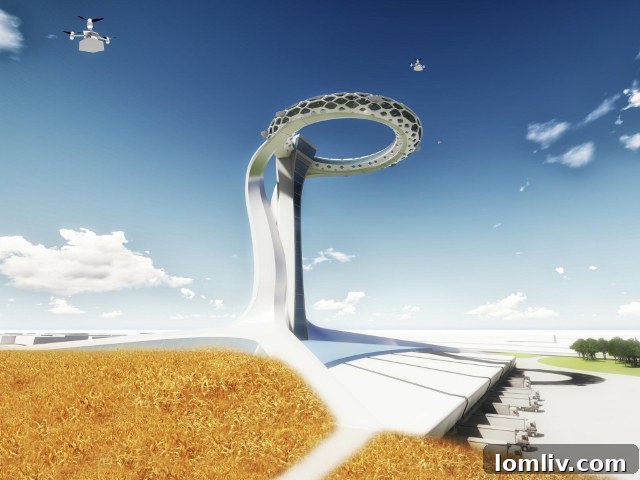
The “Droneport” project proposed for Arlington, Texas, offers a fascinating glimpse into the future of urban logistics. Conceived as a cutting-edge warehouse and distribution center, it is designed to facilitate a sophisticated network of delivery drones. Its modern, almost sculptural form reimagines the traditional industrial facility. For some, it represents a vision of efficient, automated commerce. For me, however, it instantly sparks a more personal fantasy: this is my ultimate lottery home. I envision acquiring a prime, bustling urban location and transforming this impressive, airborne “Hula-Hoop” into a private, futuristic residence. The panoramic views, the sleek, minimalist design, and the inherent novelty of living in such a unique structure would be unparalleled.
Alas, without the winning lottery ticket, the Droneport remains dedicated to its original purpose. It is presumed to operate as a hub for a non-stop parade of delivery trucks on the ground, feeding into its complex internal system. Inside, dedicated staff or advanced robots would efficiently pick and pack orders before dispatching delivery drones from elevated launch pads on the roof. The reason for these high-flying launch points is purely functional: drones expend a significant 20 percent of their battery power simply gaining altitude. By launching from a height, they can conserve energy and travel considerably further on a single charge, optimizing delivery routes and expanding their operational range. While its primary function is pragmatic and forward-thinking, the Droneport’s striking aesthetics and innovative form make it a compelling subject for architectural discussion, whether as a logistical marvel or a dream home.
Bao 5 and Bao 7 Transit Hub: Hangzhou, China – A Vision for Integrated Urban Mobility
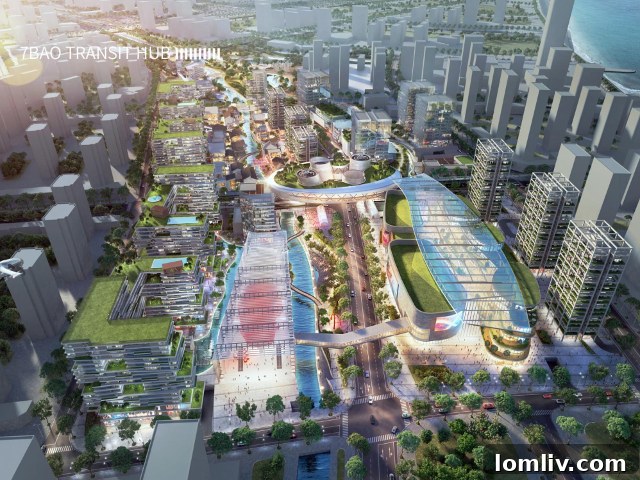
The “Bao 5 and Bao 7 Transit Hub” proposal for Hangzhou, China, is nothing short of enormous in its scope and ambition, representing a monumental leap in integrated urban planning. This conceptual design envisions a colossal transportation nexus, seamlessly consolidating infrastructure for an impressive nine subway lines, multiple bus routes, a monorail system, and even anticipating a future vertical take-off and landing (VTOL) aircraft facility – an exciting nod to emerging technologies like Uber’s sky taxis. Surrounding this central hub, the master plan includes a vibrant array of residential and commercial buildings, many of which (as indicated by the line of green-roofed structures on the left) incorporate sustainable design principles, further integrating nature into the urban fabric.
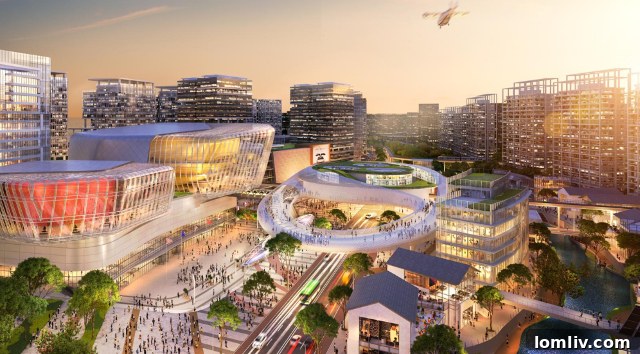
Viewed from another angle, the sheer scale and intricate connectivity of the proposed spaces become evident. This design emphasizes vast, interconnected environments that allow travelers to effortlessly transition between their chosen modes of transportation within an atmosphere that is both vibrant and verdant. Such forward-thinking transit-oriented development (TOD) stands as a powerful example for other burgeoning metropolises. As Dallas continues to advance its discussions regarding a high-speed rail link to Houston, it faces a crucial question: how will it welcome future travelers to the city? Will it opt for a utilitarian, perhaps uninspired, box-like structure, or will it embrace a truly transformative and modern design that would make even Houstonians green with envy? While fully developed TOD systems are more common in cities with advanced public transit networks, nascent inklings of this approach are beginning to emerge in parts of Dallas. The hope is that this momentum towards integrated, sustainable urban mobility will continue to build, creating more livable and connected cities for the future.
The Anticipation Builds: Discovering the Unbuilt Award Winners
Are you eager to discover which visionary project will claim top honors? The annual awards show and celebratory party are scheduled for May 17th, taking place at Common Desk, located at 2919 Commerce Street in Deep Ellum. Tickets for this exciting event are available for $30, with a discounted rate of $15 for students. You can secure your tickets here. Regrettably, I will be out of town on the day of the event; otherwise, wild horses couldn’t keep me away from witnessing these architectural marvels being recognized.
For those who, like me, are unable to attend in person, there’s still a fantastic opportunity to participate. Remember, you can cast your vote for your favorite unbuilt design online, right up until the day of the awards ceremony (Thursday). Even if you find yourself torn between several exceptional entries, I highly encourage a visit to the official website. The scaled-down images featured in this article, by necessity, simply do not do justice to the intricate detail and expansive vision of these designs. Viewing them full-screen provides a much richer and more immersive experience, allowing you to truly appreciate the depth and creativity of each proposal. Engaging with these projects, even remotely, is a powerful way to celebrate architectural innovation and contribute to the discourse on the future of our built world.

Remember: My primary focus areas are high-rises, Homeowners Associations (HOAs), and renovation projects. However, I also hold a deep appreciation for both modern and historical architecture, always balancing these interests against the dynamic principles of the YIMBY movement. My writing has been recognized by the National Association of Real Estate Editors, earning me two Bronze awards in 2016 and 2017, and two Silver awards in 2016 and 2017. If you have a compelling story to share, a project to discuss, or even a marriage proposal to make, please don’t hesitate to reach out via email at [email protected]. You’re also welcome to look for me on Facebook and Twitter, though finding me there might prove to be an elusive quest!