As the festive season winds down and the new year takes hold, Dallas is gearing up for a pivotal election season. With every Dallas City Council seat and the mayoral position on the ballot, the upcoming May 6 election promises to shape the city’s future for the next two years. Understanding the candidates, key issues, and election mechanics is crucial for every Dallas resident looking to make an informed choice.
This comprehensive guide delves into the dynamics of the 2023 Dallas municipal elections, offering insights into term limits, redistricting impacts, and the pressing concerns that are defining the campaigns. From long-serving incumbents seeking re-election to fresh faces vying for open seats, the political landscape of Dallas is vibrant and active. Your vote on May 6 will determine the leadership that guides Dallas through its next phase of growth and development, impacting everything from housing and infrastructure to public safety and economic opportunity.
Understanding the Dallas Election Landscape: Key Dates and Term Limits
The Dallas City Council operates on a two-year term cycle, with elections exclusively held in odd-numbered years. This unique system means that all 14 council seats, representing distinct districts across the city, are up for grabs simultaneously every two years. Unlike staggered terms seen in many other municipalities, this ensures a complete overhaul or reaffirmation of the city’s leadership in one fell swoop, unless a mid-term vacancy arises. This unified election cycle underscores the critical importance of each municipal election, as it offers a fresh mandate to the city’s legislative body.
Beyond the council seats, the Mayor, who occupies Place 15, serves a four-year term. Dallas city regulations permit the Mayor to serve a maximum of two four-year terms. Similarly, city council members can serve up to four two-year terms. These term limits are a cornerstone of Dallas’s local governance, designed to encourage fresh perspectives and prevent political stagnation. Once a member reaches their term limit, they are ineligible to run for re-election immediately. However, after a hiatus of one term, they are permitted to seek office again, offering a pathway for experienced individuals to potentially return to public service after a break.
The road to the May 6 election officially began with candidates able to start filing their paperwork to appear on the ballot on January 18. The filing deadline is set for February 17, marking a critical period for both established politicians and aspiring leaders to formalize their campaigns. While these official dates are important for logistical reasons, many candidates begin their outreach, fundraising, and announcement processes well in advance, demonstrating their commitment and building momentum early in the election cycle.
Incumbents Gear Up for Re-election: A Look at the Current Council
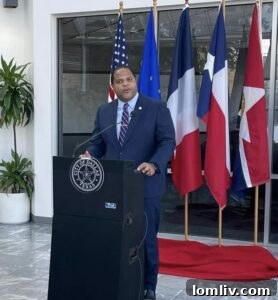
The 2023 Dallas City Council election sees a significant number of current officeholders seeking to retain their positions, signaling a desire for continuity and the completion of ongoing initiatives. Mayor Eric Johnson has been at the forefront of this movement, having already announced his candidacy and actively campaigning to build support for his re-election bid. His campaign focuses on continuing the work initiated during his first term, which has seen considerable attention given to core city services and economic development.

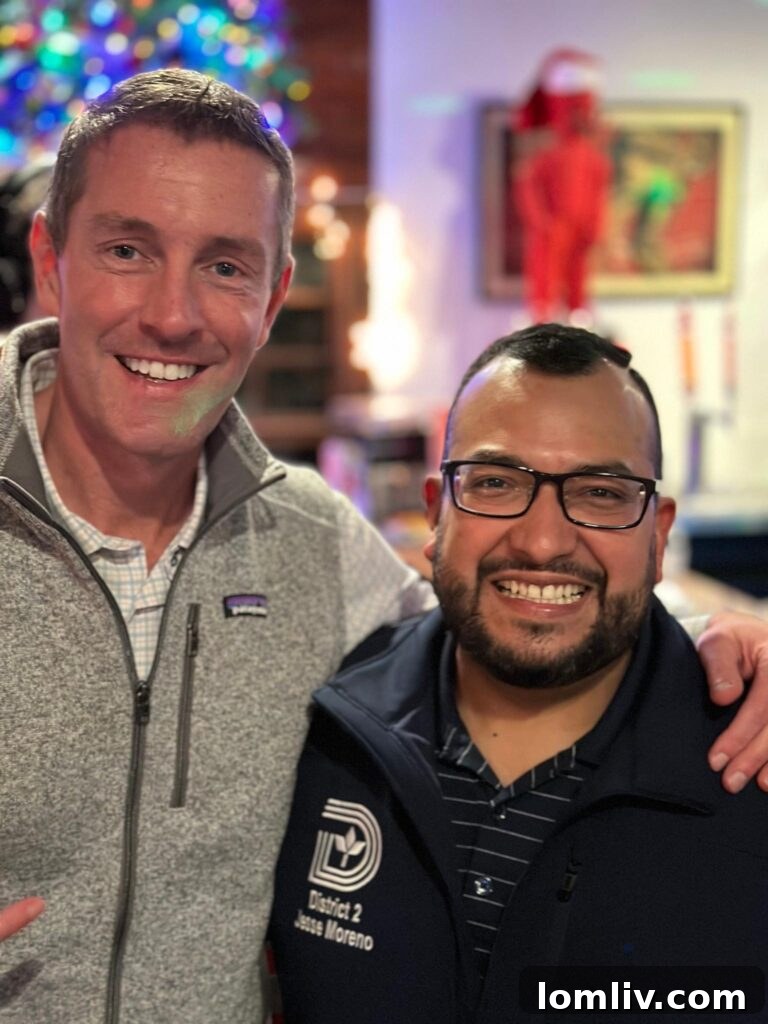
Alongside the Mayor, a strong contingent of sitting council members has also formally announced their intentions to seek re-election. These include dedicated public servants such as District 1 Councilman Chad West, District 2 Councilman Jesse Moreno, District 4 Councilwoman and Mayor Pro Tem Carolyn King Arnold, District 7 Councilman Adam Bazaldua, District 9 Councilwoman Paula Blackmon, District 12 Councilwoman Cara Mendelsohn, and District 13 Councilwoman Gay Donnell Willis. Their active presence on the campaign trail highlights the competitive nature of even incumbent-led races and their commitment to continued service.
Further strengthening the incumbent roster, District 11 Councilwoman Jaynie Schultz and District 14 Councilman Paul Ridley have confirmed their forthcoming re-election announcements to daltxrealestate.com. Councilwoman Schultz even shared details of her official campaign launch, planning a drive-through petition-signing party for January 22, indicating an innovative approach to early campaign engagement. District 5 Councilman Jaime Resendez also confirmed his intention to seek another term, expressing excitement about the campaign season ahead.
While some council members, such as District 6 Councilman and Deputy Mayor Pro Tem Omar Narvaez and District 8 Councilman Tennell Atkins, had not yet made public announcements at the time of this report, the general sentiment within political circles suggests that all eligible sitting council members are expected to seek re-election. This widespread pursuit of another term by incumbents signifies a strong belief in their current work and a desire to continue contributing to Dallas’s progress.
Open Seats, New Challengers, and Key Endorsements in Dallas
While many incumbents are seeking re-election, term limits present unique opportunities for new leadership in several districts. These open seats often become focal points of intense campaigning, attracting a diverse array of newcomers and community leaders. The 2023 election is no exception, with two significant districts seeing new faces emerge to vie for council positions.
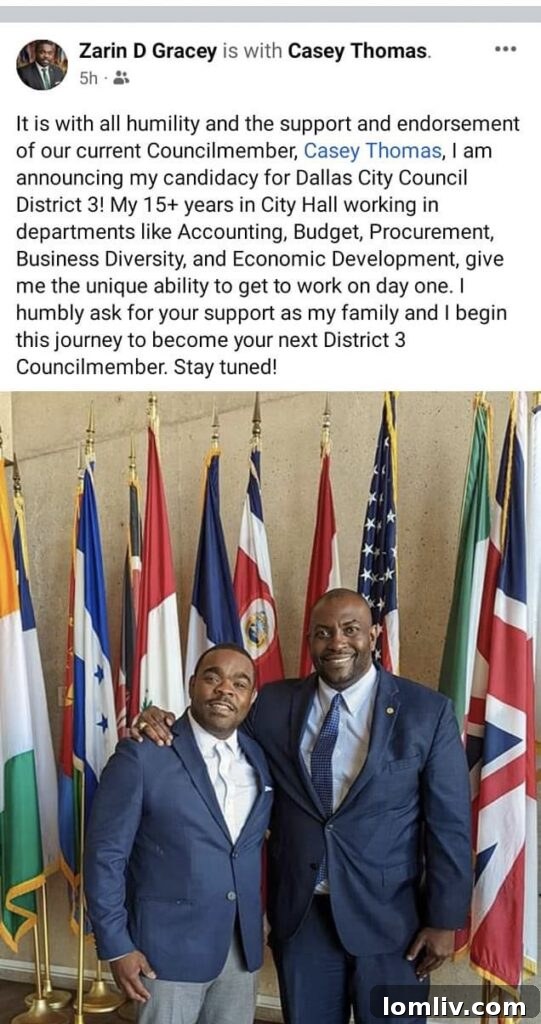
District 3 is one such district, where Councilman Casey Thomas, after serving his maximum number of terms, is stepping down. Thomas, a respected figure in Dallas politics, has publicly endorsed candidate Zarin Gracey. Gracey, a pastor with a robust background in city service, having worked for 15 years in Dallas’s Office of Business Diversity and Business Inclusion Development offices, brings a wealth of experience in community and economic development. His candidacy, bolstered by Thomas’s endorsement, immediately positions him as a strong contender in the race to represent District 3.
Similarly, District 10 will also welcome a new representative, as Councilman Adam McGough, first elected in 2015, is also term-limited. The race for District 10 has already drawn two prominent challengers. Brian Hasenbauer, the vice president of marketing for Astanza Laser, has announced his candidacy. Hasenbauer boasts an impressive record of civic engagement, having chaired the city’s HOME and Economic Development Committee and served on the Citizen Participation and Rules Committee. His deep understanding of city policy and economic drivers makes him a formidable candidate. Joining him in the D10 race is Kathy Stewart, the former Executive Director of Uptown Dallas Inc. Stewart’s experience in urban development and her active role in the Lake Highlands Public Improvement District position her as another strong contender with a clear vision for the district’s future. The competition in District 10 underscores the value of experience in both the private sector and community activism.

Outgoing Councilman Casey Thomas has offered valuable advice to those considering a run for public office, emphasizing the importance of volunteerism and community service as prerequisites. In a post in the popular Reform Dallas Facebook group, Thomas articulated, “Serve BEFORE you run. Serve not only on a school board committee or city board or commission, but serve in the community that you plan to run in. Know the issues that are important to the people you will ask to vote for you. Spend some time listening to what’s important to them.” This sentiment highlights a critical aspect of effective local governance: genuine understanding and connection with the constituency.
In the high-profile mayoral race, political newcomer Kendal Richardson has announced his intention to challenge Mayor Eric Johnson. While initial speculation had focused on former Dallas ISD Superintendent Michael Hinojosa as a potential challenger, Hinojosa clarified in December that he would not enter the race. This leaves Richardson as a notable contender seeking to bring a fresh perspective to the city’s highest office, setting the stage for an engaging mayoral contest.
Redistricting: Reshaping Representation in Dallas
A significant factor influencing the 2023 Dallas City Council election is the recent redistricting process. In June, the Dallas City Council approved new city council district boundaries, a crucial undertaking completed just two days before the U.S. Justice Department’s deadline. This once-a-decade process, mandated after each decennial U.S. Census, aims to redraw electoral boundaries to reflect population shifts and ensure each district has a roughly equal number of constituents, upholding the principle of “one person, one vote.”
The process of redrawing these boundaries was fraught with challenges and intensive negotiations among elected officials. Reaching a compromise on the new map required careful consideration of demographic data, community feedback, and political implications. The approved boundaries redistribute the city’s population so that each council member will now represent approximately 91,000 constituents. This adjustment inevitably leads to significant changes for residents, as long-established community ties within districts may be altered.
One of the most immediate impacts of redistricting is that some residents who previously worked closely with an elected official on local issues, such as rezoning proposals or neighborhood improvements, might find themselves in a new district. This means they will be represented by a different council member, potentially requiring them to build new relationships and adapt to a new political liaison. This shift can be disorienting for voters and can affect the continuity of local projects and advocacy efforts.
The new district boundaries are set to become effective with the May 2023 council election and will remain in place for the next 10 years, until the next round of adjustments following the 2030 U.S. Census. Councilwoman Paula Blackmon, who played a pivotal role in introducing the map that ultimately gained approval, shared with daltxrealestate.com how these changes directly affect her. She noted that her district, District 9, has shifted westward, and she has lost the eastern side of her previous district, including a significant portion of the Ferguson Road area. Such direct impacts highlight the personal and political ramifications of redistricting for both elected officials and their constituents, underscoring the importance of understanding these new geographical parameters before heading to the polls.

Key Election Issues: Housing, Public Safety, and Infrastructure Take Center Stage
As Dallas voters prepare to cast their ballots, several critical issues are dominating the conversations among candidates and constituents alike. These overarching concerns reflect the city’s rapid growth, evolving demographics, and the challenges inherent in managing a major metropolitan area. Among the most frequently cited priorities for the coming year are housing affordability, robust infrastructure, efficient transportation corridors, and enhanced public safety.
Housing as a Central Pillar of Dallas Elections
Housing, in particular, has emerged as a cornerstone issue in the Dallas municipal elections. The city has experienced significant growth and gentrification, leading to concerns about affordability, equitable access to housing, and the impact of short-term rentals on neighborhood character and housing supply. Recognizing the urgency of these challenges, grassroots organizations are playing a vital role in shaping the dialogue.
The Dallas Neighbors for Housing group, a prominent advocacy organization, convened on December 15 to initiate its endorsement process for the upcoming Dallas City Council election, as well as races in other area municipalities. Adam Lamont, one of the group’s founders, emphasized their mission: “The goal is to foster greater community and collaboration.” This collaborative spirit aims to ensure that housing policies are developed with broad community input and serve the diverse needs of Dallas residents.

A reporter from daltxrealestate.com had the opportunity to observe the group’s discussion, which delved into a range of interconnected housing-related topics. These included the overarching challenge of housing affordability, the regulation of short-term rentals, the need for parking reform in dense urban areas, the promotion of accessory dwelling units (ADUs) as a solution for increased housing density, and the influence of state legislation on local housing policy. The organization’s website succinctly encapsulates its philosophy: “Dallas Neighbors for Housing is a grassroots organization that advocates for more housing, more opportunity, and more compassion in the City of Dallas. We are bringing together Dallas residents from all walks of life because housing policy affects us all.” This statement underscores their commitment to inclusive and compassionate housing solutions that benefit all segments of the city’s population.
To inform voters and guide their endorsements, Dallas Neighbors for Housing plans to issue detailed questionnaires to candidates in late January or early February. These questionnaires will likely delve into candidates’ stances on specific housing policies, their vision for addressing affordability, and their approach to development. Following this rigorous evaluation, the group anticipates releasing its endorsements in March, providing a valuable resource for voters seeking alignment with their own values regarding housing.
Beyond Housing: Public Safety and Infrastructure
While housing takes a central role, public safety remains a perennial concern for Dallas residents. Candidates are expected to present their strategies for crime reduction, police reform, and community-based safety initiatives. Ensuring the well-being of all neighborhoods is a top priority, and voters will be keenly looking for comprehensive and effective plans from their prospective council members.
Infrastructure and transportation corridors also feature prominently in the election discourse. As Dallas continues to grow, maintaining and upgrading its roads, bridges, public transit systems, and utilities becomes increasingly critical. Candidates will need to articulate their vision for sustainable infrastructure development, alleviating traffic congestion, and ensuring that the city’s foundational systems can support its expanding population and economic activity. These issues directly impact residents’ daily lives, from their commutes to the reliability of essential services, making them key determinants in how voters will choose their representatives.