The Implosion of a Vision: Dallas’s ACS/Xerox Building and the Sam’s Club Controversy
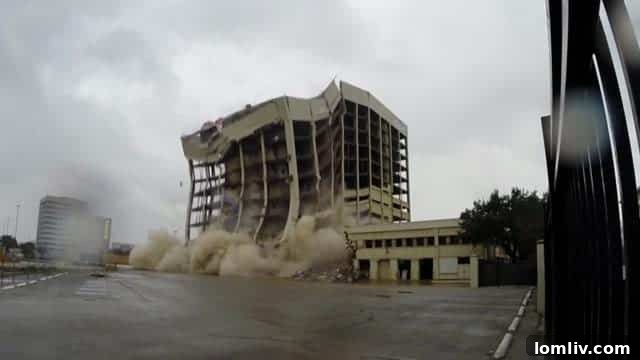
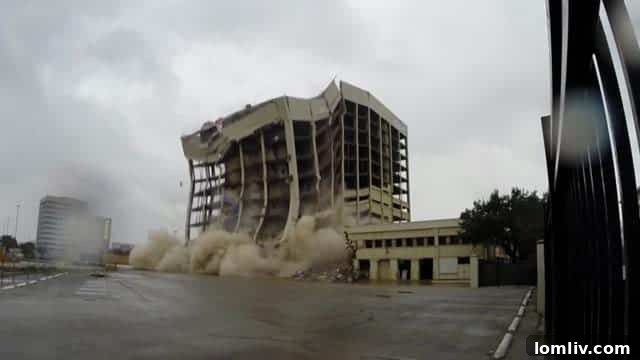
In a mere hour on a Sunday morning, the ACS/Xerox Building on North Central Expressway became a pile of dust, swiftly erased from the Dallas skyline. Yet, the physical demolition of this structure barely scratched the surface of the deep-seated anger and frustration within the community. This development, spearheaded by Trammell Crow CBRE, has left behind a trail of negative publicity and a stark reminder of what many consider a profound planning misstep in Dallas’s urban landscape.
The controversy dates back to spring, when whispers first began to circulate within the real estate community. There were even rumors, though unconfirmed, that the heirs of the original Trammell Crow company were considering buying back the entity they had sold to the CB Richard Ellis group for a staggering $2.2 billion in 2006. Such speculation underscored the magnitude of the discontent. Developers and urban planners, while understanding the intricate financial mechanics of real estate, universally felt that this particular project was profoundly misguided.
The Dubious Choice: A Big Box Store in a Prime Location
The central question echoing through Dallas’s urban planning circles was simple: Why erect a massive Sam’s Club at the highly visible intersection of Central and Fitzhugh? This decision raised several eyebrows for compelling reasons:
- Existing Proximity: A Sam’s Club already operates just a few miles northeast, off Skillman. The need for another similar big-box retail outlet so close by was questionable at best.
- Untapped Potential: Crucially, this site sits directly across the street from the Cityplace light rail rapid transit station. This prime location, perfectly positioned for public transportation access, screamed for a residential or truly mixed-use development. Imagine a vibrant frontage lined with shops and restaurants, transitioning into modern apartments or condominiums behind – a model that would significantly enhance the urban fabric and appeal of the area.
However, the allure of immediate financial returns often overshadows long-term community benefits. A big-box store offers a quicker and larger return on investment. Construction is faster, costs are generally lower, and rent payments commence sooner, kicking off profits rapidly. This quick-turnaround model, while financially appealing to developers and investors like Metropolitan Insurance of New York (whose involvement was seen by some as a final nail in the coffin), often comes at the expense of sustainable urban growth and neighborhood character.
In contrast, a thoughtfully designed mixed-use development, while more expensive and requiring an estimated three years to begin showing profit, contributes far more to a city’s tax base, fosters walkability, and creates a sense of place. The real estate business is undeniably reliant on timing; a three to four-year development cycle would have pushed profitability to around 2019, with reports suggesting a potential market cooling by 2017. This perceived risk likely influenced the developer’s decision, prioritizing speed and certainty over community integration and forward-thinking urbanism.
A Cascade of Missteps: The Anatomy of a Zoning Fiasco
The journey from conception to implosion for the ACS/Xerox site was fraught with controversy, marked by what many described as a “perfect cluster-storm” of issues. A key grievance was the alleged lack of transparency surrounding the zoning process.
Allegations of Deception and Developer Tactics
Critics accused Trammell Crow of initially presenting charming renderings of a “West Village-style” development, only to embed obscure phrases deep within the proposal that would allow them the flexibility to construct a big-box store if desired. While the developer vehemently denied these allegations, other developers acknowledged that such conditional clauses are not uncommon in large-scale proposals, offering flexibility in response to market changes or unforeseen challenges.
City Council’s Lapse and Staff Oversight
Compounding the problem was the perceived inaction of the area’s then-City Councilwoman, Pauline Medrano. As she transitioned out of office, some argue that her attentiveness to the zoning details waned, allowing the contentious proposal to slip through. The question lingers: would a more engaged council representative have steered the project towards a different, more community-aligned outcome?
Even more concerning was the role of the City Staff itself, whose responsibility it is to scrutinize such proposals. They either failed to detect the “Big Box zinger” hidden in the fine print, or, more troubling still, perhaps they chose to overlook it. Sources within the community have whispered about a revolving door, where many city staff members transition into roles at private sector consultancies, notably MasterPlan, after their public employment. Coincidentally, MasterPlan’s Dallas Cothrum represented Trammell Crow on this very case. While professional relationships are a given in business and the movement between public and private sectors occurs in many major cities, including Washington D.C., the close alignment between Dallas city planning and firms like MasterPlan raised uncomfortable questions about potential conflicts of interest and undue influence.
Many believed a multi-use development, akin to Preston Hollow Village on the east side of Central, would have significantly boosted Dallas’s tax base and inspired further “West Village”-type growth. It would have fulfilled the promise of an “East Village”: a dynamic live-work, walkable urban hub conveniently located across from Cityplace and a short distance north of downtown Dallas. However, some developers remained skeptical, suggesting the neighborhood wasn’t quite ready for such a transformation, highlighting a potential disconnect between community aspirations and market perceptions.
Community Resistance: The East Village Association’s Valiant Fight

In response to the growing apprehension, the East Village Association spearheaded a determined campaign against the development. They ultimately filed for a temporary injunction, a bold legal move reflecting the community’s resolve. At the forefront of this admirable fight was Jonas Park, a young man who garnered immense respect for his unwavering commitment. (Jonas, away during the actual implosion, found himself unable to witness the demolition, a testament to his deep emotional investment in the cause.) His background as an immigrant, perhaps, fueled a heightened appreciation for property rights and the necessity of standing firm to protect them—a sentiment sometimes taken for granted by long-time citizens.
Despite their valiant efforts, a judge ultimately ruled against the East Village Association’s injunction. However, the ruling was not without its censure of the developers and the city. The judge verbally chastised both for their evident “lack of transparency” in the zoning documents and the notices dispatched to residents impacted by the big-box project. She made it abundantly clear her displeasure with a process that, in her view, had failed the residents facing the prospect of a 150,000-square-foot big-box store virtually in their front and back yards. She acknowledged the “difficult” nature of her decision.
Yet, the narrative took an unexpected turn in October when the neighbors scored a significant victory:
The East Village Association, the neighborhood group that has spearheaded the fight against a Trammell Crow’s Sam’s Club-anchored development planned for the former ACS campus at Cityplace, won a significant ruling against the developer. The judge in the case sided with the East Village Association, recognizing their right to sue the developer on behalf of neighbors.
This victory, however, proved bittersweet. The City of Dallas was compelled to appeal the decision. The underlying concern was the immense financial liability the city could face if Trammell Crow were to sue for damages, having been granted permission to demolish the building, contract for, and begin construction of a new store. With the building already reduced to rubble, the “horse is out of the barn,” as sources indicated, rendering a neighborhood victory highly improbable in the long run. This unfortunate reality highlights a critical flaw in the system: how could a city’s planning result in such a predicament, leaving taxpayers to potentially foot a hefty bill?
A Glimmer of Hope: The Fight for Ancient Trees and Community Goodwill
Undeterred by legal setbacks, Jonas Park, ever the hopeful activist, turned his attention to a new potential barrier: a cluster of 100-year-old Post oak trees on the eastern edge of the lot, likely remnants from a former golf course. These majestic trees would need to be cleared to accommodate the Sam’s Club. Under Dallas’s city tree ordinance, depending on the species, trees can be removed if developers commit to replacing them. Jonas, holding onto the slimmest thread of hope, continued his fight.
In this spirit of seeking common ground, a suggestion arises for Trammell Crow CBRE: why not use this opportunity to mend fences with the neighborhood? A voluntary commitment to save those ancient trees, perhaps by integrating them into a small arbor or a dedicated park area, could serve as a powerful olive branch. Such a gesture could begin to heal the deep wounds of distrust and resentment.
Reflecting on a June meeting held at Agape Methodist Church on Columbia Ave. in East Dallas, where Trammell Crow CBRE presented their plans for the Sam’s, the attendance was notably sparse – perhaps only a dozen residents. Despite the low turnout, Scott Dyche, general counsel for Trammell Crow (CBRE), Joel Behrens, and others engaged sincerely in one-on-one and small-group conversations, illustrating an attempt to connect, albeit perhaps too late in the process.
Bridging Divides: Connecting Dallas’s Urban Fabric
Among the few attendees at that meeting was Bill Arnquist, a Dallas native and architect who has resided in East Dallas for 35 years. Arnquist, while accepting the approved zoning for the Sam’s Club, passionately advocated for essential urban improvements. “Since the PD for this development was approved by the CPC and City Council last May, I am not in opposition to the Sam’s Club,” he stated. “I do, however, feel very strongly that the city should require the developer to provide a pedestrian/bicycle access from Carroll to Haskell on the East side of the site. They must be required to do something to make a viable connection for access to the DART station at Cityplace. This is completely consistent with the urban development goals of the city.”
Arnquist also shared fascinating historical insights, noting that Raymond Nasher commenced his real estate empire by constructing family homes in the vicinity, north of Carroll and across Capital—some of which still stand today. A 1954 map reveals a public golf course once graced the land just north of the current Sam’s site, a poignant reminder of the area’s evolving landscape.
While we cannot resurrect the golf course or the original building, the community can strive to rebuild goodwill and ensure that future developments serve the broader public interest. As one attendee at the meeting powerfully articulated, “Highway 75 should not be the Berlin Wall of East and West Dallas.” This sentiment echoes the observations of Howard Parker, FAIA, an esteemed 86-year-old architect who, despite his aversion to protests, drew parallels between the proposed Trinity Tollway and the Berlin Wall. These metaphors highlight a critical lesson for Dallas: the importance of fostering connectivity and unity within its urban fabric, rather than creating new barriers through thoughtless planning.
It is high time for Dallas to cease constructing metaphorical “Berlin Walls” and instead focus on mending fences, nurturing its neighborhoods, and prioritizing transparent, community-centric urban development for a truly interconnected and vibrant future.