Highland House: The Optimal Path for Preston Center’s Future
Guest post by Claire Stanard
As a concerned resident living in the immediate vicinity of Preston Center, I recently attended a Town Hall meeting hosted by Jennifer Gates. My objective was to articulate, within the stringent three-minute time limit, my steadfast support for Crosland Development’s proposed Highland House project. Unlike some speakers, I chose to respect the allocated time, believing that a concise, well-researched argument holds more weight. My support stems from a thorough examination of the project’s advantages and a stark realization of the far less desirable alternatives facing our community.
I firmly believe that supporting Highland House is crucial because rejecting it would pave the way for an alternative that will exacerbate Preston Center West’s already significant traffic and congestion challenges.
The Inevitable Alternative: A Burdensome Office Building
Many neighbors left the Town Hall meeting with a dangerous misconception: that denying Highland House would simply preserve the current property as is. This could not be further from the truth. The reality is that an alternative development, one far more detrimental to our community, is readily available to any developer without the need for a single zoning commission hearing or variance. This alternative is a 66,000 square foot, TEN-story office building. Such a structure could commence construction tomorrow, and neither former Mayor Laura Miller nor the Dallas City Council would possess the authority to prevent it. Their power in this specific context is simply non-existent.
The implications of a new 66,000 square foot office building on Preston Center’s infrastructure are staggering. Based on industry standards, an office building typically generates traffic at a rate of one person and one car per 175 square feet. This translates to approximately 360 vehicles just for the employees commuting daily. Beyond the core workforce, one must account for an endless stream of clients, patients, deliveries, and couriers traversing in and out throughout the day. This proposed office building, significantly larger than the existing structure on the site, would lack essential amenities like a dedicated loading dock for trucks and adequate valet parking facilities. The result would be an undeniable logistical nightmare, creating unprecedented chaos and congestion in an already strained area.
This is, in my informed opinion, precisely what Preston Center will face if Crosland’s re-zoning request for Highland House is denied, allowing another developer to swoop in with a by-right office project. If you doubt the severity of this prediction, consider the colossal 180,000 square foot office park currently under construction just down the street, adjacent to the Chase Bank drive-through. Combining this with a potential new 66,000 square foot office building on the Highland House site means we could be staring down a total of 250,000 square feet of new office space within a single city block. This would introduce an astounding 1,300 additional cars daily, solely from the people working there. Such a transformation would effectively convert Preston Center from the vibrant, family-friendly, multi-use hub we cherish into an overwhelmingly congested “office park.”
Residential Versus Office: A Clear Choice for Traffic Management
The fundamental operational differences between an office building and a luxury residential complex are key to understanding their respective traffic impacts. Offices, by their very nature, depend on a constant ebb and flow of clients and patients throughout the business day, often failing to provide sufficient visitor parking within their garages. This leads to continuous vehicle movement and spillover parking onto surrounding streets.
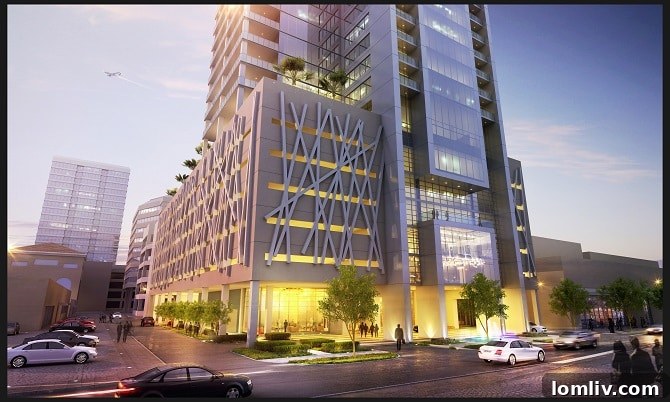
Conversely, a residential development like Highland House, despite its height, would generate significantly less traffic. For each 1400 square feet of living space, you typically have one or two occupants and one or two cars. Highland House proposes 26 floors, but five of these are dedicated to screened parking, one for the lobby, and two more floors for underground parking. This thoughtful design minimizes the footprint of vehicles on the streets and efficiently accommodates resident parking. The residents, largely empty nesters with discretionary income, are often seeking a lifestyle where they can walk to amenities, further reducing reliance on cars for daily errands. Therefore, a 20-floor apartment residence will, in my assessment, produce considerably less traffic and congestion than a 66,000 square foot office building.
Crosland Development’s Vision for a “Living Community”
Luke Crosland, the developer behind Highland House, has a long-standing commitment to the area, having owned the Berkshire Court building at the corner of Preston Road and Northwest Highway for 27 years. This vested interest ensures a dedication to quality and community integration. However, the financial viability of such a project is delicately balanced. Should Crosland be compelled to reduce the number of floors by more than three stories—a reduction that would align it with other existing high-rises in Preston Center—the income stream necessary for a substantial investment return would become unsustainable. This could force the developer to abandon the project, leaving the door open for the aforementioned office building alternative.
The residences at Highland House are envisioned as a catalyst for a true “living community.” With luxury apartments leasing for $4,000 to $5,000 per month, the target demographic is affluent empty nesters, many of whom may have second residences. The very appeal of living in Preston Center for this demographic is the ability to walk to a myriad of amenities. This influx of residents would attract essential neighborhood retail, such as a high-quality grocery store and various delis, transforming the western side of Preston Center into a vibrant, pedestrian-friendly area. This would mirror the success of Preston Center East, an area characterized by retail rather than office buildings, and is notably easier to navigate. This is a stark contrast to Transwestern’s “Behind the Pink Wall” model, which caters to a different market entirely.
Navigating Preston Center’s Unique Development Landscape
It is imperative for citizens to understand the unique planning context of Preston Center. It is already designated as a “Planned Development,” meaning it cannot and will not be re-zoned wholesale by the City Council. With the exception of the central parking deck, which is owned by the City of Dallas, the entirety of Preston Center is privately owned, with land titled in the names of individual owners and family trusts. This critical detail means the City of Dallas cannot impose a master plan or re-zone the area at will.
Developers like Trammell Crow, which recently acquired the entire block from Chipotle to Marshall’s, are free to remodel and develop their properties according to their preferences, provided they adhere to proximal slope requirements related to single-family residences. In these instances, the City of Dallas possesses limited authority to intervene.
While I respect former Mayor Laura Miller, I believe she inadvertently misled citizens and neighbors by implying that the Dallas City Council holds significant control over Preston Center’s overall development plan. This simply isn’t true for a Planned Development with individually titled land. The City Council’s role is primarily to review each project on its individual merits, a process often described as “piecemeal.” This crucial reality, which I would have elaborated upon had I not been constrained by the three-minute speaking limit (a limit Laura Miller herself did not observe), was largely misunderstood at the recent meeting.
Beyond Traffic: Shaping Preston Center’s Future
A tall apartment residence at the heart of Preston Center offers far more than just reduced traffic and congestion compared to another office building. It fosters a genuine mixed-use environment that enriches the community. The Highland House demographic, consisting predominantly of empty nesters, means there is no need for the Highland Park School system to express concern. Any potential children residing in this project would likely already be enrolled in the system, perhaps living at Highland House during a temporary period of home renovation.
We must acknowledge the fundamental truth that this property will inevitably be sold and developed. Given this certainty, my strong preference is for a local developer with deep ties to the neighborhood, a proven reputation for delivering quality projects, and a profound understanding of luxury real estate. Crosland Development has thoughtfully crafted a design that prioritizes minimizing traffic impact on our streets, rather than exacerbating existing congestion. This is not merely about building a structure; it’s about thoughtfully integrating a development that enhances, rather than detracts from, the fabric of our community.
Preston Center deserves to evolve into a truly mixed-use development—a dynamic hub that attracts desirable neighborhood retail and services, rather than succumbing to the fate of becoming yet another sprawling office park, solely bustling during lunch hours. Highland House represents a strategic, community-focused investment in Preston Center’s vibrant future.
Claire Wright Stanard