The Ascendancy of Million-Dollar Neighborhoods: Unpacking the US Luxury Real Estate Boom
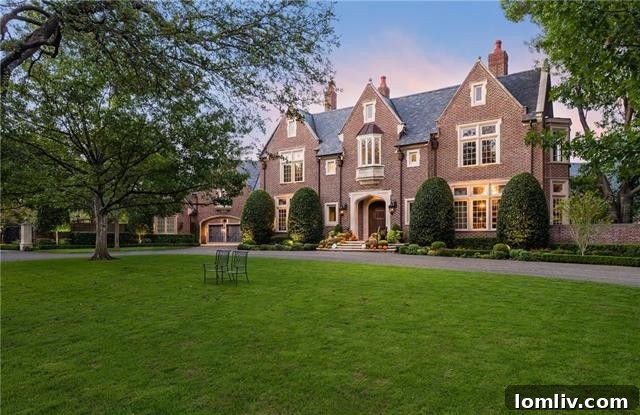
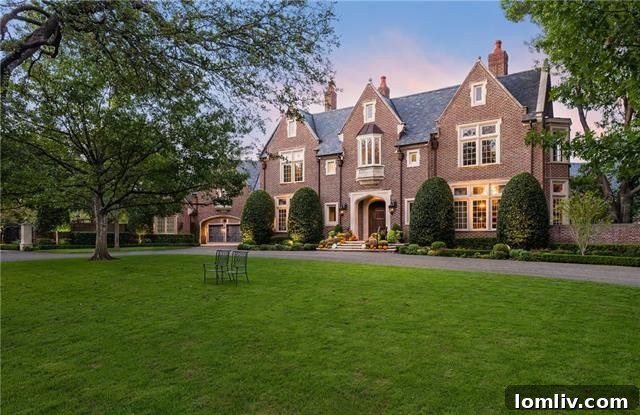
Across the United States, a significant shift is reshaping the residential real estate landscape. What were once considered aspirational homes, priced in the $700,000 to $800,000 range just a few years ago, are now routinely crossing the coveted $1 million threshold. This nationwide phenomenon signals a robust, albeit increasingly competitive, housing market, driving up property values and redefining the very concept of luxury living. This trend isn’t confined to a few coastal enclaves; it’s a dynamic force influencing markets from burgeoning tech hubs to established metropolitan centers, creating more and more “million-dollar neighborhoods” where the median home value comfortably sits above seven figures.
National Trends: The Million-Dollar Home Landscape
Recent insights from a comprehensive Trulia report shed light on the accelerating pace of this luxury market expansion. The analysis revealed a remarkable surge in the share of single-family homes listed with asking prices of $1 million or more. This segment has grown by an impressive 7.6 percent in just the past year, representing a doubling of its size since 2012. Today, homes valued at $1 million or higher constitute nearly 4 percent of the entire housing market inventory, indicating a powerful and sustained demand for premium properties. These statistics are not merely numbers; they reflect underlying economic shifts, including rising incomes, increased wealth accumulation, and a persistent desire for spacious, well-appointed homes in desirable locations.
Felipe Chacón, a housing economist with Trulia’s Housing Economics Research Team, emphasized the broad impact of these rising valuations: “Over the past year, as prices continued to rise, the median home value in more than 100 neighborhoods crossed into $1 million territory.” This rapid transition underscores the widespread nature of the trend. Chacón further noted, “More than 3,000,000 U.S. homes are currently worth $1 million or more,” a staggering figure that highlights the growing affluence within certain segments of the population and the escalating costs of homeownership. Trulia’s extensive study, encompassing 15,100 neighborhoods nationwide, identified 838 distinct communities where the median home value now exceeds $1 million, firmly placing them in the “million-dollar neighborhood” category. This robust growth signifies a significant re-evaluation of property values across various regions.
The Geographic Divide: California’s Dominance vs. Texas’s Rise
While the phenomenon of million-dollar neighborhoods is national, its distribution is far from uniform. The geographic concentration of these high-value communities reveals fascinating regional dynamics. Unsurprisingly, the vast majority of these affluent enclaves are concentrated in California, where approximately two-thirds of all such neighborhoods are located. The Golden State, with its robust tech industry, limited developable land, and high demand, sees 29 percent of its neighborhoods fitting the million-dollar bill. San Francisco, a global hub of innovation and wealth, stands out in particular; a mere 15 of its neighborhoods boast median home values below the seven-figure mark, showcasing the extreme premium placed on real estate in this iconic city.
In contrast, Texas, despite its booming economy and attractive relocation prospects, presents a different landscape. While its luxury market is rapidly expanding, the state’s overall cost of living and housing affordability, particularly when compared to California, remain key drawcards. This balance contributes to Texas’s sustained appeal for individuals and businesses seeking growth opportunities without the prohibitive housing costs often associated with coastal megacities. The state’s diverse economy, business-friendly policies, and increasing population continue to fuel demand across various price points, including the luxury sector, yet maintain a relative degree of accessibility for a broader range of homebuyers.
Texas Spotlight: Houston, Dallas, and Austin’s Expanding Luxury Markets
Within Texas, a closer look at its major metropolitan areas reveals a dynamic and competitive luxury housing market. Houston leads the charge, with 7.6 percent of its neighborhoods boasting a median home value of $1 million or more. This reflects Houston’s strength as a global energy capital, its diverse economic base, and its appeal to high-net-worth individuals. Dallas follows closely, securing the second spot with 3.6 percent of its neighborhoods falling into this elite category. Notably, Dallas even features a unique neighborhood where every single home is valued at $1 million or higher, underscoring pockets of extreme affluence within the city.
Austin, the state capital and a burgeoning tech hub, comes in third with 1.5 percent of its neighborhoods reaching the million-dollar benchmark. What makes Austin’s performance particularly noteworthy is its recent growth: among these three Texas cities, Austin was the sole metro to add a new neighborhood to the ranks of million-dollar communities in the last year. This expansion speaks volumes about Austin’s accelerating growth and its magnetic pull for technology companies and talent.
Felipe Chacón elaborated on Austin’s significant addition: “Among the 100 largest metro areas, three got their first million-dollar neighborhood in the past year. In Austin, the median home value in Barton Creek increased to $1.02 million in October, up from $935,000 a year ago. Roughly a 30-minute drive from downtown Austin, homes in this area tend to be very large and relatively new.” Barton Creek exemplifies a trend seen in many growing cities: affluent buyers seeking large, modern homes within reasonable proximity to urban amenities, yet enjoying the tranquility and space of a more suburban setting. Austin’s vibrant culture, outdoor lifestyle, and strong job market continue to drive demand for luxury properties, making it a key player in the Texas luxury real estate scene.
Dallas’s Evolving Luxury Landscape: Expert Insights
Karen Eubank, a seasoned real estate expert and author of the popular “Monday Morning Millionaire” feature for Daltxrealestate.com, offers an insider’s perspective on Dallas’s booming luxury market. She expresses no surprise at the city’s significant representation in the million-dollar neighborhood report, a testament to the sheer volume of seven-figure properties she encounters weekly. Eubank’s discerning eye for high-end real estate extends beyond mere price tags; she seeks out homes that offer a distinct “wow factor.”
According to Eubank, a luxury home in Dallas must be “architecturally significant, beautifully finished-out, with great design or staging, and of course, flawless photography.” It’s not enough for a home to simply be expensive; it must embody a blend of artistic vision, meticulous craftsmanship, and sophisticated presentation. This emphasis on aesthetic excellence and high-quality finishes defines the upper echelon of Dallas’s luxury market, catering to buyers who demand nothing less than perfection.
Eubank further highlights the changing dynamics of the Dallas market: “The $1-2 million range is frankly a dime a dozen now in Dallas. One million is something I seldom even look at. When I hunt for a Monday Morning Millionaire, I look at $2.5 million and up, and I prefer over $4 million.” This statement dramatically illustrates the upward shift in Dallas’s luxury segment. What was once considered the pinnacle of luxury is now commonplace, pushing the truly exclusive properties into multi-million dollar echelons. For Eubank’s discerning readership, the appeal lies in discovering “fantasy homes,” properties that inspire and showcase the ultimate in luxurious living.
Premier Luxury Enclaves and Buyer Behavior in Dallas
Certain Dallas neighborhoods consistently deliver on this promise of opulence. Eubank identifies Bluffview, Lakewood, Highland Park, University Park, Preston Hollow, and Turtle Creek as reliable strongholds for million-dollar homes. Each of these areas offers unique charms and advantages. Bluffview, for instance, is currently undergoing a significant transition, with its proximity to Love Field airport driving up property values and desirability. This area, along with others, appeals to a specific type of buyer – often those relocating from other high-cost areas like California.
These buyers, Eubank explains, are seeking a particular lifestyle: “People who choose Dallas, say over Vaquero or Westlake — which have fantastic homes as well — want that large home on a decent amount of land, but they choose Dallas because they want to be near the city amenities, the Arts District, the trails. I think we see more of this with out-of-town buyers. They expect a city lifestyle but want that big beautiful home.” This highlights a key demographic trend: the influx of high-net-worth individuals who desire the expansive living spaces and traditional luxury associated with Texas, combined with the vibrant cultural and urban conveniences of a major city like Dallas.
The buyer base for Dallas’s most exclusive properties exhibits a distinctive pattern. Eubank observes, “We have an amazing Monday Morning Millionaire buyer base — they will purchase a house for $4 or $5 million, then go in and spend $1 or $2 million more to put their stamp on it, then sell it in three years. Then the next buyer comes in and does it again.” This trend points to a sophisticated and active luxury market driven by discerning individuals who view high-end homes not just as residences but as opportunities for bespoke renovation and, often, strategic investment. This cyclical pattern of acquisition, customization, and resale further fuels the upward trajectory of property values in these elite neighborhoods.
The Business of Luxury and Future Prospects
Candy Evans, founder and publisher of Daltxrealestate.com, offers a macro-level perspective on the motivations behind the luxury boom. She notes, “It’s no surprise that some of the most overbuilt segments of the market are million-dollar-plus homes.” This seemingly counter-intuitive observation underscores the economic rationale for developers and investors. Evans clarifies, “Why does everyone want to build luxury homes? Because profit is all about margins, and the more expensive the property, the bigger the margins.” The higher price points of luxury properties inherently offer greater profit potential, incentivizing builders to focus on this segment, even if it leads to a perception of oversupply in certain areas. This dynamic ensures a continuous influx of high-end inventory, catering to the ever-present demand from affluent buyers.
Looking ahead, the question for Dallas is: where will the next wave of million-dollar neighborhoods emerge? Evans provides insightful predictions, suggesting that as land values in the central core continue their relentless ascent, “peripheral neighborhoods like the Bird Streets, Little Forest Hills, and maybe even Casa Linda could see million-dollar estate homes next.” She points to Midway Hollow as a compelling case study, where just seven years ago, a home could be purchased for a mere $250,000, a stark contrast to the million-dollar homes now penetrating the area. This rapid appreciation illustrates how quickly an area can transform as development spills over from more established luxury zones.
Evans concludes with a confident outlook: “I wouldn’t be at all surprised to see a million-dollar home or two penetrating these ‘outer rings’ in the next couple of years.” This forecast suggests a continued expansion of Dallas’s luxury footprint, driven by land scarcity, urban migration, and the persistent desire for larger, more upscale homes. The evolving definition of a “million-dollar neighborhood” will undoubtedly continue to surprise and reshape urban landscapes across Texas and the nation.
Conclusion: A Shifting Definition of Luxury
The proliferation of million-dollar neighborhoods across the U.S. signifies a profound transformation in the real estate market. Fueled by economic growth, limited inventory, and shifting buyer preferences, what was once considered ultra-luxury is now becoming increasingly common. While California continues to dominate, dynamic markets in Texas, particularly Houston, Dallas, and Austin, are rapidly expanding their luxury footprints, offering attractive alternatives for affluent buyers. The insights from industry experts highlight that the allure of a million-dollar home extends beyond its price tag; it encompasses architectural excellence, bespoke finishes, strategic location, and a desired lifestyle. As land values continue to climb and demand for high-quality living spaces remains robust, we can expect the map of million-dollar neighborhoods to continue expanding, redefining luxury real estate for the years to come.