The Silent Burden: How Debt Disparities Shape Economic Opportunity in Dallas County
Across the nation, the escalating burden of personal debt—particularly student loans and medical bills—has become a formidable barrier to fundamental economic milestones, notably homeownership. While debt is a widespread challenge, its impact is far from uniform, exhibiting profound disparities that are often linked to race and income. An in-depth analysis of debt patterns in Dallas County reveals a stark landscape where historical inequalities continue to influence financial outcomes, significantly impeding the economic mobility and stability of diverse communities.
The Urban Institute’s comprehensive study on debt, specifically focusing on student loans and medical expenses, casts an illuminating light on the intricate financial dynamics at play within Dallas County. This research provides crucial data points that underscore how deeply intertwined debt is with demographic factors, painting a vivid picture of the challenges many residents face in achieving financial solvency and long-term prosperity.
Unpacking the Urban Institute’s Findings: Debt Across Demographics in Dallas County
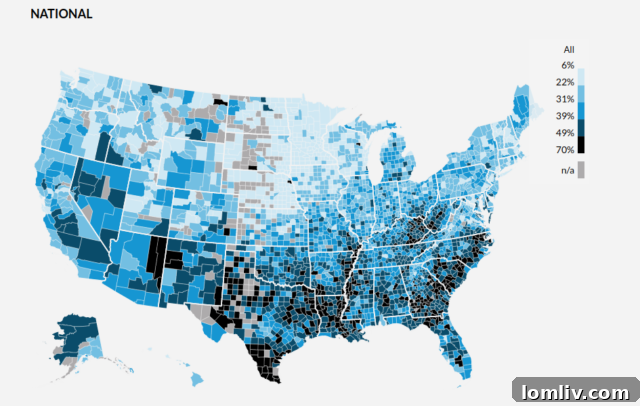
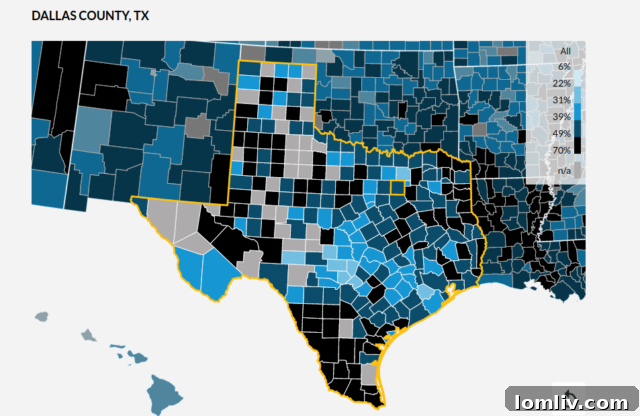
Dallas County presents a compelling case study for understanding the multifaceted nature of debt. A striking 48 percent of all debt in the county is currently in collections, signaling a pervasive struggle with repayment. Delving deeper into these figures reveals a significant racial disparity: white citizens account for approximately 25 percent of obligations in arrears, while non-white citizens bear a disproportionate 55 percent of this debt in collections. This imbalance highlights not only the volume of debt but also the systemic challenges faced by communities of color in managing their financial obligations.
Student Loan Debt: A Racial Divide in Repayment and Income
Student loan debt stands as a major financial hurdle for many seeking higher education and subsequent career advancement. In Dallas County, the median student loan debt hovers around $16,828. Interestingly, white citizens carry a higher median student loan debt, exceeding $24,000, while residents in predominantly non-white zip codes carry approximately $15,000. On the surface, it might appear that non-white individuals hold less student loan debt. However, the true narrative unfolds when examining the percentage of this debt that ends up in collections, coupled with significant income disparities.
Across Dallas County, a modest two percent of the total student loan debt is in collections. For white individuals, this figure drops to just one percent. In stark contrast, three percent of student loan debt among non-white citizens is in collections. This seemingly small percentage difference takes on greater significance when viewed through the lens of income. While non-white citizens may have slightly less principal student loan debt, the weight of this debt constitutes a significantly larger percentage of their household income, making repayment far more challenging.
The average household income in Dallas County is just over $79,000. However, the gap between racial groups is pronounced: non-white Dallasites have an average household income of $58,243, while white individuals with student loan debt boast an average household income of $111,379. This income disparity is a critical factor, illustrating that even a smaller debt load can become an insurmountable burden when household income is substantially lower, leading to higher delinquency and collection rates among non-white populations. The struggle to repay is less about the absolute amount borrowed and more about the relative capacity to pay, which is intrinsically linked to earning potential and systemic economic barriers.
Medical Debt: A Staggering Disparity in Health and Wealth
Perhaps the most alarming disparities emerge when examining medical debt. Healthcare costs in the United States are notoriously high, and unexpected medical emergencies or chronic conditions can quickly accumulate into crippling debt. In Dallas County, 27 percent of all medical debt is in collections. However, the racial gap here is exceptionally wide and deeply concerning. A staggering 32 percent of all medical billing for non-white citizens is in collections, while a mere 13 percent of medical debt among white individuals falls into this category.
This profound difference in medical debt in collections highlights potential systemic issues related to healthcare access, insurance coverage, and the availability of financial safety nets. Non-white communities often face greater hurdles in accessing affordable healthcare, may have less comprehensive insurance plans, or lack the liquid assets to cover high deductibles and out-of-pocket expenses. When medical bills become unmanageable, they quickly spiral into collections, severely damaging credit scores and creating long-term financial instability, thereby perpetuating a cycle of economic hardship that disproportionately affects these communities.
Debt’s Ripple Effect: Hindering Homeownership and Economic Mobility
The accumulation of various forms of debt—student loans, medical bills, and credit card balances—has far-reaching consequences that extend beyond individual financial statements. For many, debt acts as a significant impediment to achieving key markers of economic success, most notably homeownership. Homeownership is often considered a cornerstone of wealth accumulation and intergenerational prosperity, yet for a growing segment of the population, it remains an elusive dream due to the weight of their financial obligations.
The Center for Public Policy Priorities and the Communities Foundation of Texas recently released the Dallas Economic Opportunity Assessment (DEOA), which reinforces these concerns. The report indicates that nearly half of the student loan debt carried in Dallas County is held by 393,000 residents who possess subprime and deep subprime credit scores. These individuals are inherently harder pressed to repay their loans, particularly if confronted with unexpected financial setbacks, such as job loss or medical emergencies. Their precarious financial standing makes them highly vulnerable and less likely to secure favorable terms for major investments like a home.
The Subprime Predicament in Dallas County: A Major Hurdle
Credit scores are powerful gatekeepers to economic opportunity, influencing everything from loan eligibility to insurance premiums. The DEOA report meticulously differentiates between credit profiles: “Prime borrowers, with scores 680 and above, have an average serious delinquency rate close to zero.” This group enjoys access to the most favorable lending terms, which facilitates their economic advancement. In stark contrast, “Deep subprime borrowers, with scores below 550, have serious delinquency rates over 30 percent.” This segment faces a challenging uphill battle, often trapped in a cycle of high-interest rates and persistent debt, which further erodes their credit and limits future opportunities.
In Dallas County, while a little over half of its residents boast prime credit, a substantial 30 percent—or 393,000 borrowers—are burdened with subprime or deep subprime scores. The bulk of these delinquencies are attributed to auto and student loans, indicating widespread struggles with managing these significant financial commitments. For individuals with compromised credit, obtaining a mortgage becomes exceedingly difficult, if not impossible. Even if they qualify, the interest rates will be considerably higher, leading to larger monthly payments and significantly increasing the overall cost of homeownership, thereby making the dream financially unattainable for many.
Navigating the Landscape of Credit Card and Mortgage Debt
Beyond student loans and medical bills, credit card debt continues to be a pervasive financial challenge for many American households. Last year, NerdWallet’s assessment of credit obligations revealed that the average household carrying a credit card balance owes almost $16,000 nationally. When all forms of credit obligations, including mortgages, are considered, the average household debt balloons to approximately $134,000.
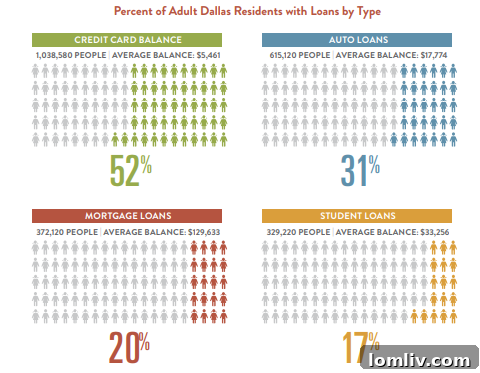
In Dallas County, the DEOA provides a localized perspective on these figures. Fifty-two percent of adult residents carry credit card balances, with an average balance of $5,461. While this average may appear lower than the national figure, it still represents a significant recurring burden for more than half of the adult population. Furthermore, only 20 percent of Dallas County residents currently hold a mortgage, with an average balance of $129,633. This relatively low rate of homeownership, combined with high levels of other forms of debt, paints a clear picture of the barriers to wealth creation and long-term financial security for many families in the region.
Beyond the Numbers: Addressing Systemic Challenges and Promoting Financial Health
The pervasive nature of debt and its disproportionate impact on certain demographics within Dallas County underscore a critical need for comprehensive solutions that extend beyond individual financial management. While personal responsibility plays a role, the data strongly suggests that systemic factors significantly contribute to these challenging economic realities.
The Urgency of Financial Literacy and Systemic Support
The National Foundation for Credit Counseling’s (NFCC) 2018 Financial Literacy Survey revealed concerning national trends that resonate deeply with the situation in Dallas County. The survey indicated that one in four Americans admits to not paying all their bills on time, and nearly one in ten currently has debts in collection. These figures highlight a widespread struggle with financial management that can quickly escalate into serious credit problems. Furthermore, the NFCC’s survey found that almost half of the 79 percent of U.S. adults who attempted to purchase a home in the preceding year encountered significant barriers. Poor credit history was cited by 13 percent of respondents as the reason they couldn’t purchase a home, while 14 percent reported that existing debt was the primary obstacle. This data reinforces the direct link between mounting debt, compromised credit, and the inability to achieve key life goals like homeownership.
While financial literacy is undoubtedly crucial, providing individuals with the knowledge and tools to manage their money effectively, it is not a panacea for deeply rooted systemic issues. The racial disparities in debt in collections and average household income point to broader challenges such as historical underinvestment in minority communities, unequal access to quality education and high-paying jobs, discriminatory lending practices, and inequities in healthcare access. Addressing these underlying factors is paramount to creating a truly equitable economic landscape.
Towards Equitable Economic Opportunity for All Dallasites
The picture painted by the Urban Institute, the Dallas Economic Opportunity Assessment, and other reports is one of significant economic challenge and stark disparity within Dallas County. The burden of student loan and medical debt, compounded by issues of credit health and income inequality, creates formidable barriers to upward mobility, particularly for non-white residents. These challenges are not merely individual misfortunes but symptoms of broader structural and historical inequities that require concerted, community-wide efforts to address.
Fostering true economic opportunity in Dallas County demands a multi-faceted approach. This includes initiatives to improve financial literacy, expand access to affordable healthcare and quality education, advocate for equitable lending practices, and support policies that aim to close income and wealth gaps. Only by understanding and tackling the systemic roots of these disparities can Dallas County move towards a future where all its residents have a genuine chance to build wealth, achieve financial stability, and realize their full economic potential.
Bethany Erickson is the education, consumer affairs, and public policy columnist for Daltxrealestate.com. Contact her at [email protected].