Preserving the Soul of Bishop Arts: A Blueprint for Human-Centered Urban Development in Dallas
The vibrant and historically rich Bishop Arts District stands as a beacon of community, culture, and independent spirit in Dallas. Yet, like many thriving urban enclaves, it faces the complex challenge of managing growth without sacrificing its unique character. A recent crucial discussion held at the Texas Theater, following a screening of the insightful film The Human Scale, didn’t devolve into the expected complaints. Instead, it blossomed into a constructive dialogue focused on a pivotal question: “How do we get more of what’s great about Bishop Arts?”
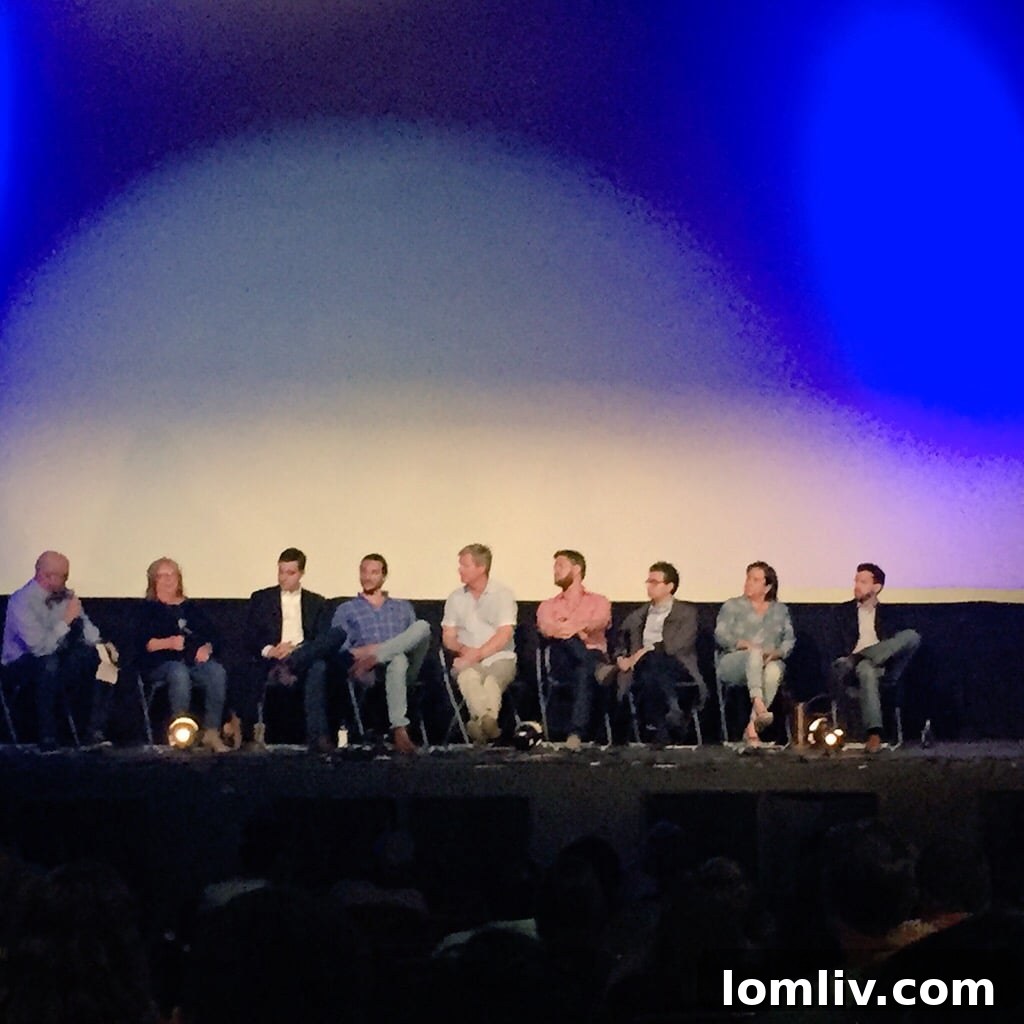
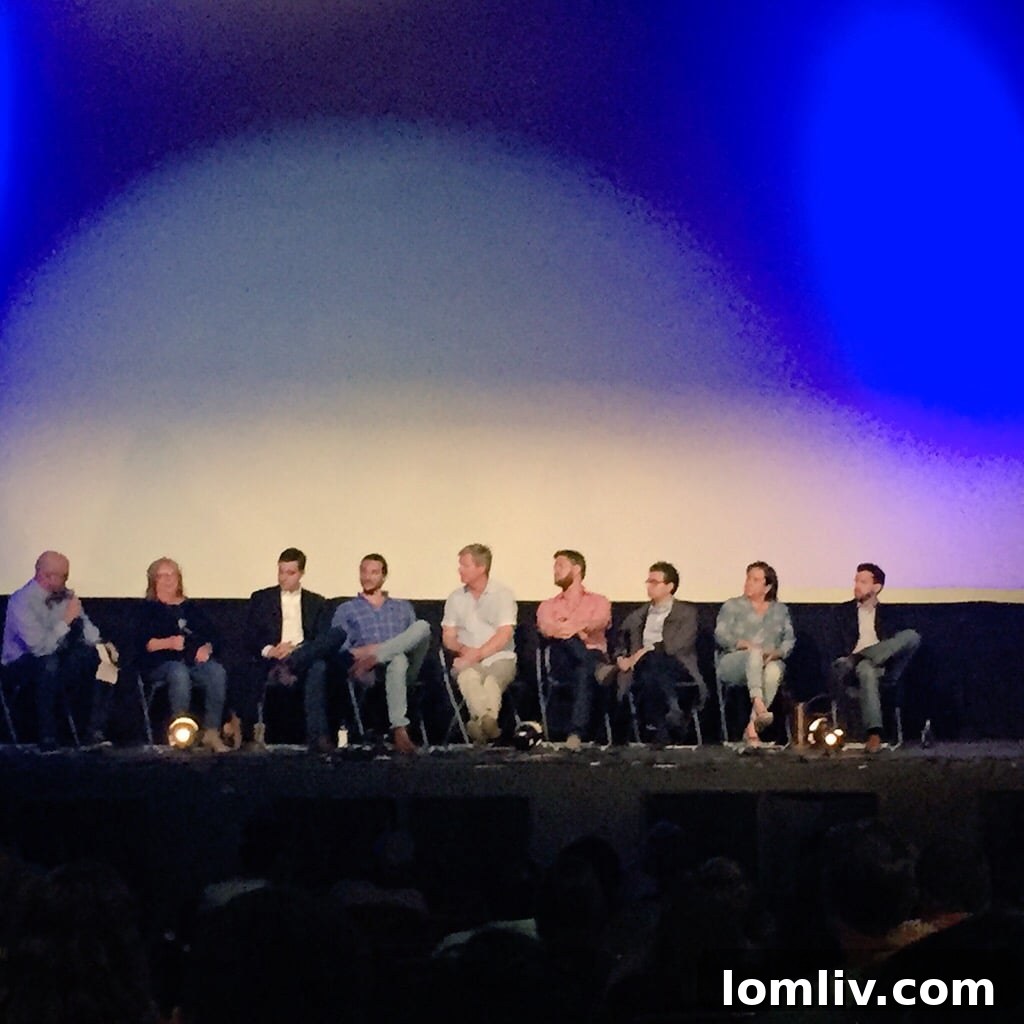
This pivotal evening brought together local business owners, urban planning experts, and engaged citizens to collectively envision a future for North Oak Cliff. The conversation, expertly guided by Rob Shearer, principal at Kickstand Marketing, acknowledged the impending wave of development: thousands of new apartments and hundreds of thousands of square feet of retail space are slated for the neighborhood in the coming years. This impending transformation underscores the urgent need for thoughtful, community-driven urban planning.
The Human Scale: Understanding Our Cities and Communities
The discussion kicked off with a powerful foundation provided by The Human Scale, a documentary by acclaimed Scandinavian architect Jan Gehl. Gehl’s work passionately explores the state of modern cities and advocates for an understanding of the human habitat that prioritizes people over cars and towering structures. His philosophy is simple yet profound: design cities for human interaction, comfort, and well-being. The film serves as a compelling reminder that truly great cities are those that cater to the scale of human life, fostering connection and vibrant public spaces.
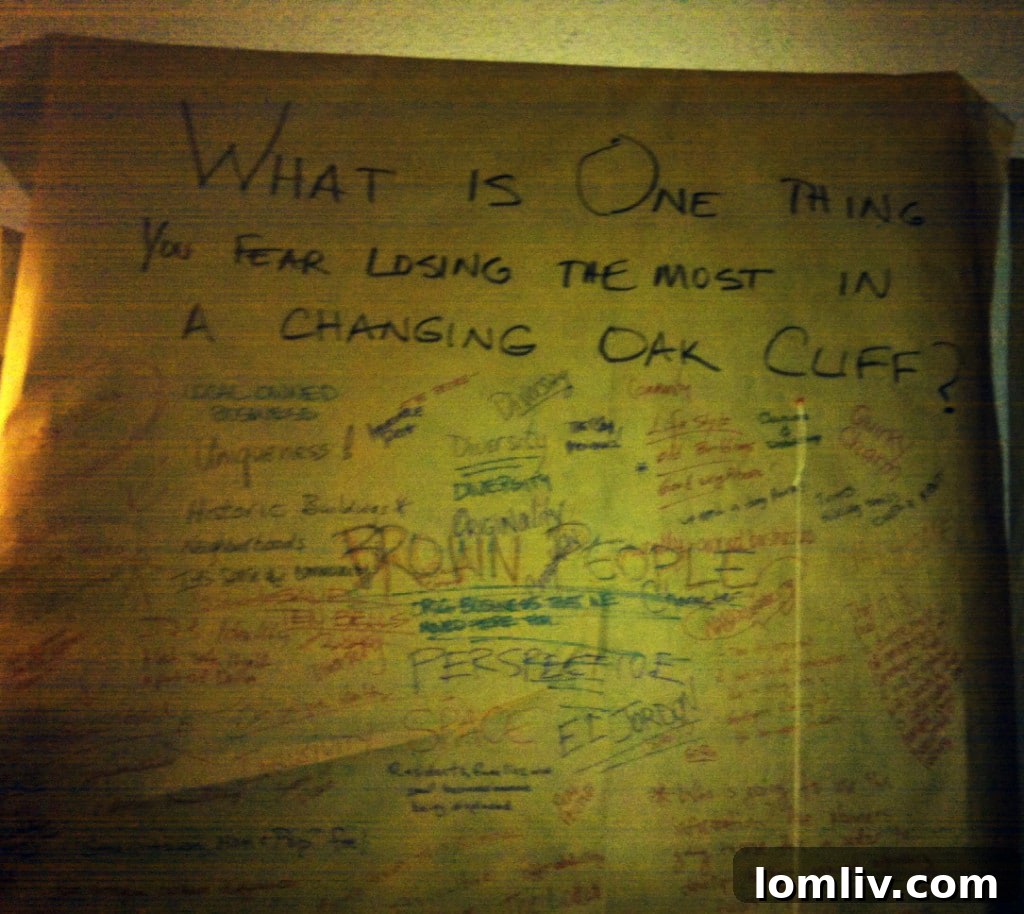
In the lobby of the Texas Theater, the organizers set the stage for public engagement, inviting attendees to share their deepest fears and most positive feelings about Oak Cliff on large butcher paper boards. This immediate, unfiltered feedback highlighted the community’s emotional investment in their neighborhood, laying bare the stakes of the upcoming development discussions. The collective sentiment revealed a strong desire to preserve the essence of Oak Cliff while embracing thoughtful progress.

Navigating Growth: The Bishop Arts District at a Crossroads
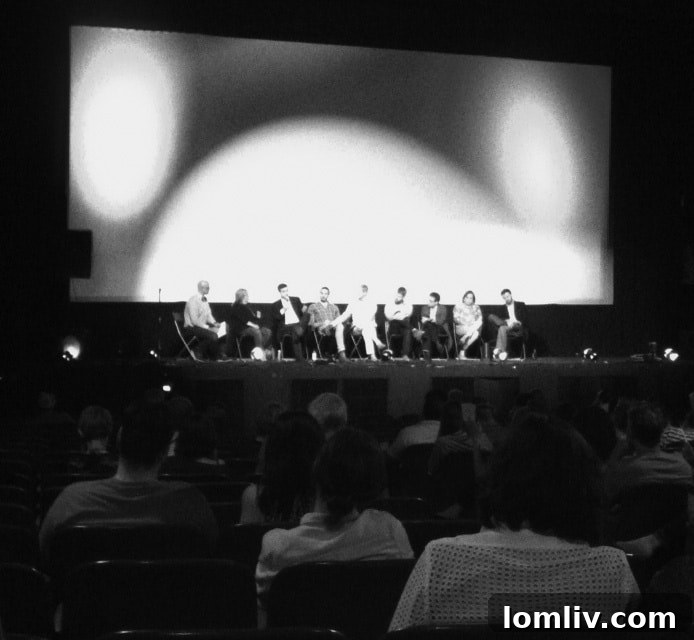
Following the film, a distinguished panel of local business owners and urban planning experts convened to delve deeper into Bishop Arts’ future. The panelists, representing a diverse range of perspectives, emphasized the undeniable importance of the district’s pedestrian-centric design. “The pedestrians make Bishop Arts District what it is,” asserted Jim Lake Jr., whose firm has been deeply invested in Bishop Arts properties since 1995. He eloquently described the district’s charm: “It’s running into people you know, and the walk-ability — it slows traffic so you feel comfortable.” This sentiment highlights the intimate, human-scale interactions that define the area’s appeal.
Patrick Kennedy, known for D Magazine’s Streets Smart column and his work at Space Between Design Studio, echoed this focus, pointing out that “what’s most important is what happens between the buildings.” He invoked a powerful image from The Human Scale, where residents described their streets as extensions of their living rooms. This ideal of a vibrant public realm, however, often remains unaddressed in development plans. Developers frequently lack clear design guidelines or requirements to foster such spaces, leading to missed opportunities. The panel stressed that if communities don’t proactively decide where they want plazas, green spaces, or pedestrian-friendly zones, such amenities simply won’t materialize.
Beyond Buildings: Designing for the Public Realm
The concept of “pedestrian-scale” emerged as a recurring motif throughout the evening, influencing discussions on both architectural design and the crucial spaces between structures. The panelists collectively questioned why Dallas, and particularly Bishop Arts, isn’t more discerning about the types of developments permitted in its neighborhoods. The consensus was clear: “We don’t NEED development AT ANY COST. We need GOOD development that will contribute to the value of our places and spaces over the longer-term.” This distinction is critical, emphasizing that growth must be qualitative, not merely quantitative, ensuring that new projects enhance, rather than detract from, the community’s well-being and unique identity.

Unpacking Development Mechanisms: TIFs and Community Oversight
Audience questions flowed to the stage, notably probing how residents could stay informed about the numerous projects underway in Bishop Arts. Councilman Scott Griggs, representing District 1, underscored the importance of transparency and accessible information. He generously offered his email and phone number, encouraging direct communication. He also highlighted critical resources such as his weekly newsletter, the Planning and Zoning agenda, and local publications like The Advocate (and CandysDirt, he quipped) as essential sources for up-to-the-minute development details.
Councilman Griggs further illuminated the complexities of urban development by explaining Tax Increment Finance (TIF) districts. TIFs are public financing tools used to subsidize redevelopment, infrastructure, and other community-development projects. He emphasized that an informed TIF Board serves as the primary safeguard against undesirable development within these districts. However, a critical limitation of TIFs became apparent in his explanation.
The Limitations of TIFs: A Call for Stronger Protections
Despite the inclusion of an Urban Design Peer Review Panel within the TIF process – a unique feature at City Hall intended to ensure design quality – TIFs ultimately lack significant leverage. As Griggs explained, “there’s really no teeth in a TIF.” A developer, if recommendations from the TIF Board or the Peer Review Panel set standards deemed too high, can simply opt not to accept the TIF funds. This allows them to proceed with their development largely unburdened by community-driven design or public realm impact considerations. There’s no other city-mandated requirement to thoroughly analyze a project’s broader impact on the public realm, leaving a significant gap in Dallas’s urban planning framework.
Empowering the Community: The Best Defense Against Poor Development
The panel unequivocally agreed that a community’s most effective defense against poorly-designed development lies in active organization and sustained attention. Jim Lake Jr. echoed this sentiment, stressing the imperative for residents to demand higher standards from developers. He acknowledged the inherent difficulty, particularly with projects funded by institutional money, where community benefits and high design standards aren’t typically factored into the developer’s pro forma (financial projections). This highlights the disconnect between profit-driven development and community-centric urbanism.
However, examples of successful, community-aligned development do exist. Michael Nazarian, the developer behind Bishop Village, appears to have won over Oak Cliff residents through his meticulous attention to detail, not just in design, but also in his business model. Nazarian’s philosophy challenges conventional retail wisdom: “Large retailers, (The GAPs of the world) are on the way out.” he quipped. He champions small, strategically sized retail spaces designed to incubate local entrepreneurs and startups, a model that often doesn’t align with the requirements of national credit tenants. This intentional, long-term investment strategy prioritizes the unique fabric of Bishop Arts over generic commercialization.
Addressing Dallas’s Affordable Housing Imperative
Rob Shearer brought another critical dimension to the conversation: affordable housing. He highlighted a significant disconnect in how “affordable” rates are determined. The algorithm typically relies on the region’s median household income, which stands at approximately $58,000. However, for the city of Dallas, the median household income is closer to $42,000, and in the Census tract just south of Davis and Bishop, it plummets to $26,000. This disparity reveals a looming crisis: how can service-industry employees, teachers, and firefighters — the very backbone of any thriving community — afford to live in neighborhoods like Bishop Arts when housing costs are benchmarked against significantly higher incomes?
Mark Lamster added that smart development from earlier eras, specifically the 1920s, created lasting value that is still appreciated today. He proposed an inspiring vision: the potential for an entire amazing neighborhood to flourish beyond the immediate confines of the Bishop Arts District. This expansion, however, must be done thoughtfully, learning from the successes and failures of past development.
A Broader Vision for Dallas: Scaling the Success of Bishop Arts
The panel underscored the imperative to replicate the walkability and human-centered design found in Bishop Arts across the entirety of Dallas. Currently, areas like Bishop Arts are among the few places where residents and visitors can experience this quality of urban life. Expanding such “walk-friendly” zones across the city is not just an amenity; it’s a fundamental component of a healthy, equitable, and sustainable urban fabric. This broader distribution of desirable, walkable neighborhoods would naturally influence the supply-and-demand algorithm, contributing significantly to improved affordability across the city.
Echoing a core message from The Human Scale, the panelists reminded the audience: “we measure what we care about.” This principle should guide Dallas’s future development strategies, shifting focus from mere economic growth to metrics that truly reflect the quality of life for its citizens.
Redefining Our Development Priorities for a Thriving City
To cultivate a genuinely human-centered city, Dallas should recalibrate its development priorities, focusing on:
- Measuring a Well-Designed Public Realm: Prioritizing pedestrian comfort, green spaces, public art, and opportunities for social interaction.
- Long-Term Quality Investments: Favoring durable, aesthetically pleasing, and functional developments that contribute lasting value to the community, rather than prioritizing short-term financial gains.
- Diverse Neighborhoods with a Variety of Housing Price Points: Actively implementing policies and incentives that ensure a true mix of housing options, allowing individuals and families from all income levels to reside within the community they serve.
- Pro Formas that Favor Local Retail: Encouraging development models that support independent businesses and local entrepreneurs, safeguarding the unique character and economic vitality of neighborhoods.
Fortunately, District 1 benefits from a councilman, Scott Griggs, who demonstrates a keen interest in the principles of good public realm design and active constituent involvement. This engaged leadership serves as an essential starting point for fostering more thoughtful urban development in the area.
Lessons from Christchurch: Citizen Power in Urban Regeneration
The film The Human Scale presented a powerful case study in citizen engagement: the post-earthquake redevelopment of Christchurch, New Zealand. After a devastating earthquake decimated the city center in 2011, its citizens rallied, united by a clear vision for their city’s future. They collectively decided that new buildings in the city core should not exceed seven stories, a direct response to a desire for a more human-scale urban environment. Crucially, the City government listened, passed a resolution reflecting the community’s will, and fought vigorously to ensure its enforcement. This example serves as a powerful testament to the transformative potential of collaboration between engaged citizens and a responsive municipal government in shaping the urban landscape.
Charting a Course for Bishop Arts’ Future: A Collaborative Endeavor
The future of Bishop Arts, and indeed many other unique Dallas neighborhoods, hinges on a delicate balance and active cooperation. Without a concerted effort involving citizens, City Hall, and developers, committed to crafting great places for people, the cautionary warning from The Human Scale rings true: “There are bigger economic forces at play that will determine the future of our city.” In such a scenario, where unchecked market forces dictate growth, it is often the citizens, the very soul of the community, who will not be the beneficiaries. The time for proactive, human-centered urban planning in Bishop Arts and across Dallas is now, ensuring that future generations inherit a city designed for life, connection, and enduring value.