Dallas’ Shifting Landscape: Urban Core Challenges Amidst Suburban Boom
The rhythm of short weeks often leaves one feeling disoriented, blurring the days into a continuous hum. It’s in this haze that the profound shifts within our region become even more stark. A recent report, echoing sentiments that have long simmered, highlighted a critical concern for Dallas: the explosive growth of its northern neighbors – Denton and Collin Counties – a phenomenon that ironically threatens to leave Dallas County with an increasingly stark demographic divide, populated predominantly by the very rich or the very poor.
The continuing population boom in Dallas’ northern suburbs isn’t necessarily a good thing for the entire region, especially the urban core.
Collin and Denton Counties continue to draw highly educated, middle-class newcomers from across the country. Meanwhile, Dallas continues to grapple with serving a poorer population. And the city must do so without the benefit of increased tax revenue that comes with exploding new developments and neighborhoods its northern neighbors enjoy.
This reality hits particularly hard as residents annually confront property tax assessments, determining the cost of residing in Dallas County. Many find themselves contributing to public services, such as schools, that they may not personally utilize. This ongoing financial burden, coupled with the rising cost of living, forces potential residents and newcomers to meticulously weigh their options. Areas like Downtown, Uptown, Oak Lawn, Kessler & Oak Cliff, Lakewood & East Dallas, Park Cities, Preston Hollow, Bluffview, Midway Hollow, and North Dallas, while offering distinct charms, are increasingly compared against the allure of the northern suburbs. These burgeoning communities – Frisco, McKinney, Allen, and even the idyllic Lucas – offer not just competitive home prices and amenities, but often closer proximity to new employment hubs, making them increasingly attractive destinations.
The Great Exodus: Why Dallas’ Middle Class is Moving North
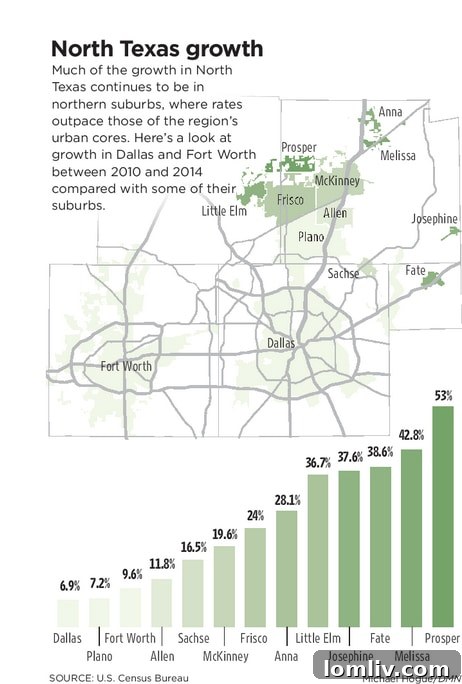
Between 2010 and 2014, the Dallas-Fort Worth area grew by 528,000 people to about 7 million people. Much of that growth came in northern suburbs such as Frisco and McKinney, which were among the state’s fastest growing cities with populations over 50,000. They saw respective growth rates of 24 and 19.6 percent.
Meanwhile, Dallas’ population grew 6.9 percent. Those same norther counties that draw domestic migration from Dallas also drew more people moving in from elsewhere in the country than Dallas did.
The statistics paint a clear picture: while the DFW metroplex experiences robust growth, Dallas itself struggles to keep pace, particularly with the influx of middle-class families. This disparity isn’t just about raw numbers; it’s about the erosion of Dallas’s economic diversity and social fabric. Conversations with Dallas developers, real estate investors, and landlords reveal a deeper systemic issue. While public discourse often fixates on grand infrastructure projects like new toll roads or highway demolitions, the grassroots challenges of urban revitalization remain largely unaddressed.
Barriers to Redevelopment: Dallas’ Unfriendly Regulatory Environment
A significant pain point for those dedicated to improving Dallas’s housing stock is the city’s approach to redevelopment. Entrepreneurs who seek to transform neglected properties into thriving assets often face immense bureaucratic hurdles. The consensus among these developers is that Dallas does not adequately encourage affordable redevelopment. Instead, the regulatory framework often appears to treat all landlords with suspicion, imposing rules, regulations, and inspections seemingly geared towards Section 8 Housing-type properties. This creates an environment where rules and inspectors operate with frustrating subjectivity, making it exceedingly difficult and costly to undertake projects that could otherwise benefit the city’s middle-income residents.
The logical path for urban renewal would be to encourage infill development within Dallas, leveraging existing infrastructure like roads and the limited public transportation network. However, when small-scale developers or landlords attempt to revitalize older areas, to “make a silk purse out of a sow’s ear,” they often encounter significant resistance. This blockade comes not only from the city itself and its cumbersome processes but also from Not In My Backyard (NIMBY) neighbors and even certain city council factions. Faced with these formidable obstacles, many developers opt for the path of least resistance: heading north, where land is more abundant and affordable, official processes are more streamlined and developer-friendly, and, critically, the schools are often perceived as superior.
Rethinking Urban Planning: The Case for Infill Development
Even seasoned transportation experts acknowledge the wisdom of prioritizing urban core renewal. Michael Morris, the Central Texas Council of Government’s transportation director, advocates for redeveloping existing city spaces to avoid the costly and expansive construction of new roads and transit systems in sprawling greenfield areas.
Michael Morris told the Young Constructors Council of the TEXO construction association last week that instead of an ever-extending transit network, the solution is dense infill developments where highway capacity and rail service already exist.
“The more development you can get to locate to areas that already have adequate transportation, the less you have to then build in the green-field areas,” Morris said in a subsequent interview.
Indeed, some progress is visible. Richardson is experiencing a boom in residential and office developments along Dallas Area Rapid Transit’s Red Line. Irving and Las Colinas are witnessing an explosion of apartment complexes, signaling vibrant growth. And the transformative work in Oak Cliff and Bishop Arts offers a glimmer of hope for localized urban revitalization.
Dallas’ Affordability Crisis: A Deeper Dive
Despite these pockets of growth, Dallas’s overarching challenge remains the flight of its middle class, the decline in median incomes, and a troubling rise in poverty. Land costs have escalated to a point where new construction is almost out of reach for middle-income families. The new apartments sprouting up, while often gorgeous and amenity-rich, command rents upwards of $2000 per month, a stark contrast to a time when a decent pad could be secured for $800. This dramatic shift is epitomized by the struggle at Preston and Northwest Highway, behind the iconic “Pink Wall.” Here, a developer attempted to redevelop aging properties. The cost of land was exorbitant, necessitating density and height to make the project financially viable for investors. However, resistance from neighbors, citing concerns about traffic and density, effectively thwarted the proposal. This incident underscores a critical paradox: while Dallas needs more housing, especially for the middle class, the existing community infrastructure and regulatory environment often impede such development. Older projects, like the three-story luxury condos built by the Corrigan family west of this area years ago, were feasible precisely because their initial land basis was significantly lower, allowing for a different economic model.
The Millennial Myth: Urban Dwellers Yearning for Suburbs?
For years, the narrative has been that Millennials are inherently urbanites, shunning the suburbs and flocking to city centers. This perception fueled much of the urban planning and development strategies aimed at attracting this demographic.
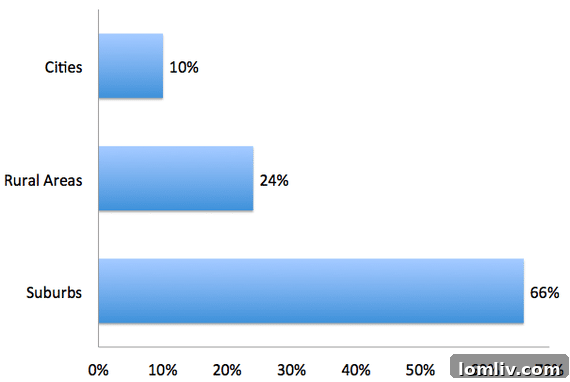
However, a significant counter-narrative emerged in early reports, indicating that many Millennials actually desire suburban living, but are economically constrained in urban areas. They are “stuck” in cities, unable to afford the move or secure the necessary mortgage for a suburban home.
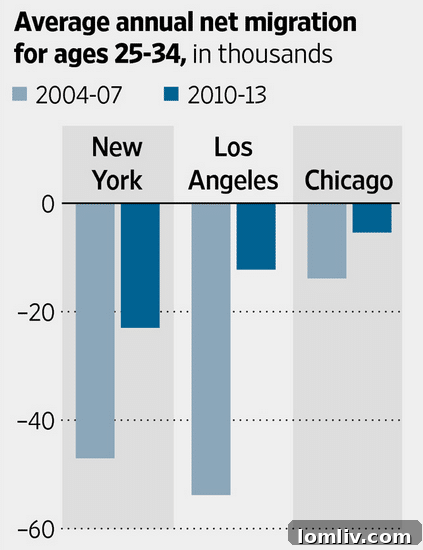
It’s now the case that after young people live in a prosperous city for a few years, they’re finding it increasingly hard to get the economic foothold that would allow them to leave. Median wages have fallen for this generation almost across the board, which means young people have had a hard time saving money and building the good credit needed to secure a mortgage and buy a house elsewhere. This inability to flee from cities might be masking the fact that many Millennials still yearn for a house in the suburbs.
The post-recession era has made securing a mortgage considerably more challenging, especially for a generation burdened with significant college and graduate school debt. While delaying major life milestones like having children and opting for less conventional consumer choices, many Millennials still harbor the desire for the space and lifestyle a suburban home offers. Master-planned communities in the northern suburbs, such as Light Farms, Phillips Creek Ranch, and Windsong in Prosper, exemplify what these areas deliver: meticulously planned environments where children can safely walk to school within a community featuring miles of manicured trails for walking, biking, or scootering. These communities offer a “Leave It To Beaver-style” quality of life, far from the urban bustle, representing a tangible, aspirational lifestyle for many families.
Charting a New Course: Solutions for Dallas’s Future
So, what concrete steps can Dallas take to reverse these trends and foster a more inclusive, thriving urban core? A foundational step would be to address the quality of public education, perhaps by supporting successful charter school alternatives or empowering parent-led initiatives. The positive impact is already evident in areas like Lakewood, where proactive parental engagement in schools has directly correlated with rising property values, demonstrating the potent link between educational quality and community desirability.
Of course, this success also creates a new challenge: making these areas more expensive to enter. Therefore, a multi-faceted approach is essential. Rather than engaging in large-scale, potentially disruptive projects like tearing down major highways, Dallas could start with more pragmatic, “baby steps.” This includes simplifying processes and making it genuinely easier for developers and landlords to improve existing properties and create affordable housing options within the city limits.
Morris’ comments about the sustainability of suburban sprawl came during a panel discussion about the fate of Interstate 345, which forms downtown Dallas’ eastern border. A group of urban planners and civic leaders called A New Dallas say the elevated I-345 is suppressing land values.
They also say it’s preventing what could be a renaissance of high-density, mixed-use development connecting downtown to Deep Ellum and East Dallas.
Many areas within Dallas are ripe for redevelopment, offering immense potential for revitalization. However, the critical question remains: where are the owners willing to navigate the existing complexities? Perhaps they are tied up in mandatory community crime watch meetings (four per year for every multi-family unit owned) or awaiting seemingly endless compliance inspections. These seemingly minor administrative burdens, when accumulated, contribute to a culture that discourages investment and innovation in the very areas that need it most.
The challenges facing Dallas are intricate and interconnected, demanding thoughtful analysis and actionable solutions. As we continue to gather insights and perspectives, your thoughts and comments on this critical issue are invaluable. Let’s collectively explore how Dallas can reclaim its middle class and forge a path towards sustainable, equitable growth.