In the esteemed architectural landscape of Dallas, particularly within the historic enclaves of Highland Park, University Park, and Preston Hollow, few voices resonate with as much authority and insight as that of architect Wilson Fuqua. His firm’s portfolio is a testament to the enduring beauty and timeless design principles found in the early 20th-century residences of these prestigious neighborhoods, serving as a profound wellspring of inspiration for his contemporary work. Fuqua’s deep understanding of classical architecture and meticulous approach to historical preservation made him the ideal steward for the recent updates to a magnificent Hal Thomson-designed English Country house located at 3801 Gillon Avenue. His involvement underscores a fundamental truth: preserving the integrity of a historic home requires an architect who not only understands its past but also possesses the vision to guide its future with respect and expertise.
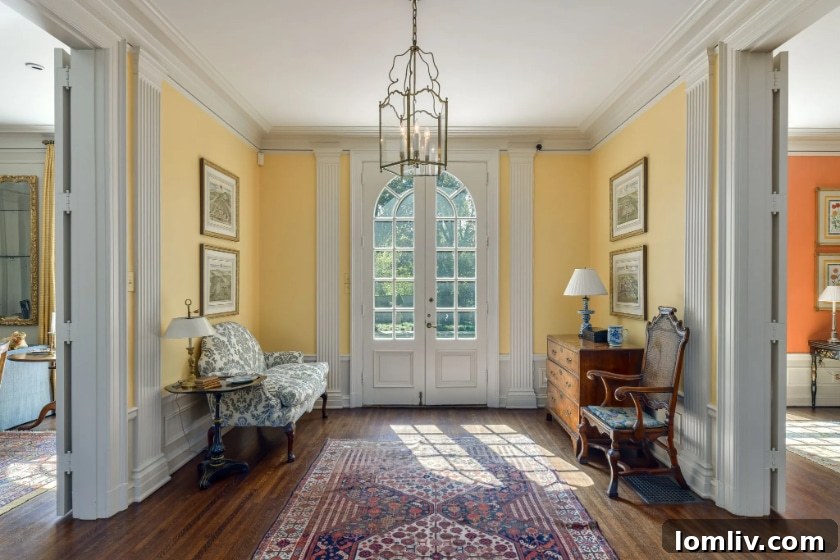
Fuqua himself holds this particular property in exceptionally high regard, stating, “This is my favorite house, per square foot, anywhere.” His admiration stems from the home’s intrinsic architectural excellence. He elaborates, “Architecturally, it hits all the fundamental aspects of what makes good architecture. The scale is right, and it’s beautifully proportioned.” This sentiment speaks volumes about the home’s inherent design quality, emphasizing that true architectural merit lies not just in grandeur but in the harmonious balance of scale, proportion, and aesthetic integrity. It embodies a design philosophy that transcends fleeting trends, offering a timeless sanctuary that continues to captivate and inspire.
The provenance of this exceptional English Country house dates back to 1917, when it was meticulously crafted by the legendary architect Hal Thomson for Lawrence Albert Hart and Grace McLain Hart. The Harts, prominent figures in Dallas society, were the esteemed owners of the Hart Furniture Company, a well-known establishment located at 1933 Elm Street. The meticulous research conducted by Briggs Freeman listing agent Joan Eleazer has unearthed fascinating details about the home’s early inhabitants, revealing that the Harts were among the exclusive individuals included in the inaugural 1925 edition of the Dallas Blue Book. This publication served as a definitive social register, akin to Britain’s venerable Debrett’s Peerage, cementing the Harts’ status within the city’s elite circles. Their home, therefore, is not merely a structure but a living relic, embodying a significant chapter in Dallas’s social and architectural history.
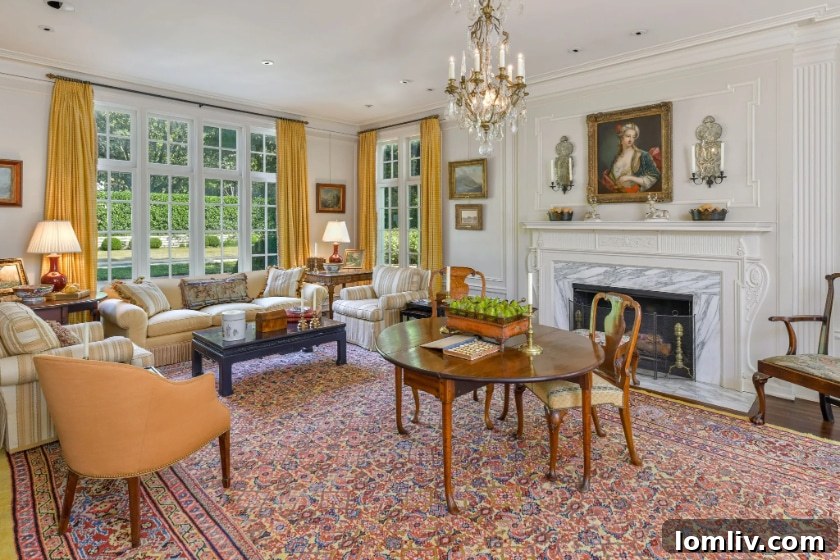
Indeed, 3801 Gillon Avenue stands as one of the most significant residences within Highland Park, a distinction earned not solely through its impeccable architectural lineage but equally for its profound historical resonance. It serves as a tangible link to the formative years of one of Dallas’s most prestigious communities, reflecting the aspirations and refined tastes of its earliest residents.
Hal Thomson and the Genesis of Highland Park Architecture
The story of Hal Thomson’s arrival in Dallas in 1908 is inextricably linked with the very genesis of Highland Park. His timing could not have been more propitious, as just a year prior, visionary developers John Armstrong and his sons-in-law, Edgar Flippen and Hugh Prather, were embarking on the ambitious endeavor of creating an elite, master-planned neighborhood on the then-northern periphery of the burgeoning city. This ambitious project was christened Highland Park, a name that would soon become synonymous with luxury, architectural excellence, and a distinguished way of life.
Thomson’s talents found fertile ground in this burgeoning environment. For the next four decades, he became the undisputed preeminent residential architect, his distinctive designs and masterful interpretations of classical European styles largely defining the iconic aesthetic of Highland Park. His work helped usher in what is often referred to as the “golden age of Dallas architecture,” where quality craftsmanship and sophisticated design were paramount. Thomson’s legacy is woven into the very fabric of the community, with countless homes bearing his indelible mark, each contributing to the unique character and enduring allure of Highland Park.
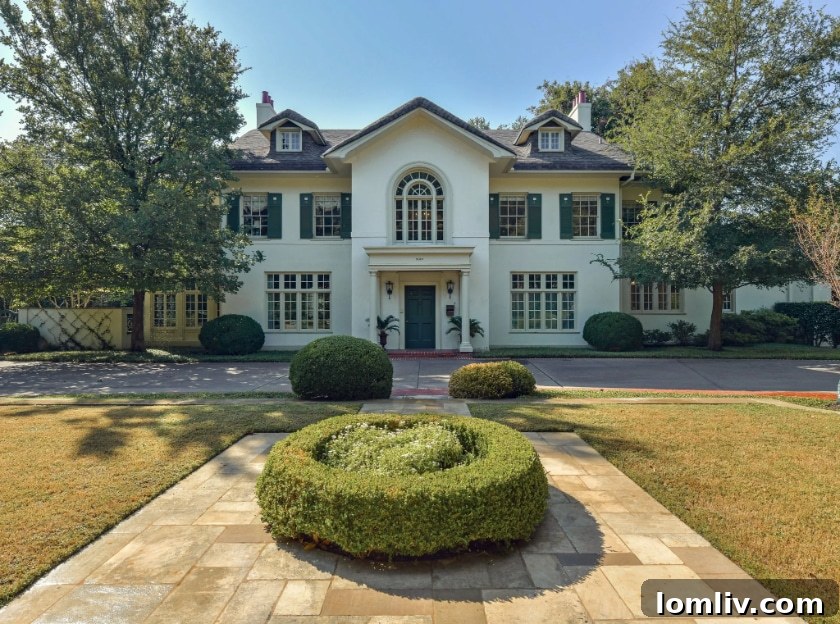
Wilson Fuqua’s reverence for Thomson’s work is evident in his approach to homes like 3801 Gillon Avenue. “Sometimes houses are so good you try to respect them and not change them much,” Fuqua observes. “This is one of those homes. It lives beautifully and is simply outstanding.” He particularly highlights a unique and rare feature: “It even has a faux thatched roof, which you seldom see. There were not many to begin with, and there are very few left.” This detail not only speaks to the home’s historical authenticity and unique charm but also to the meticulous craftsmanship and artistic vision characteristic of Thomson’s era. Such elements are increasingly rare in modern construction, making their preservation even more vital to the architectural heritage of Highland Park.
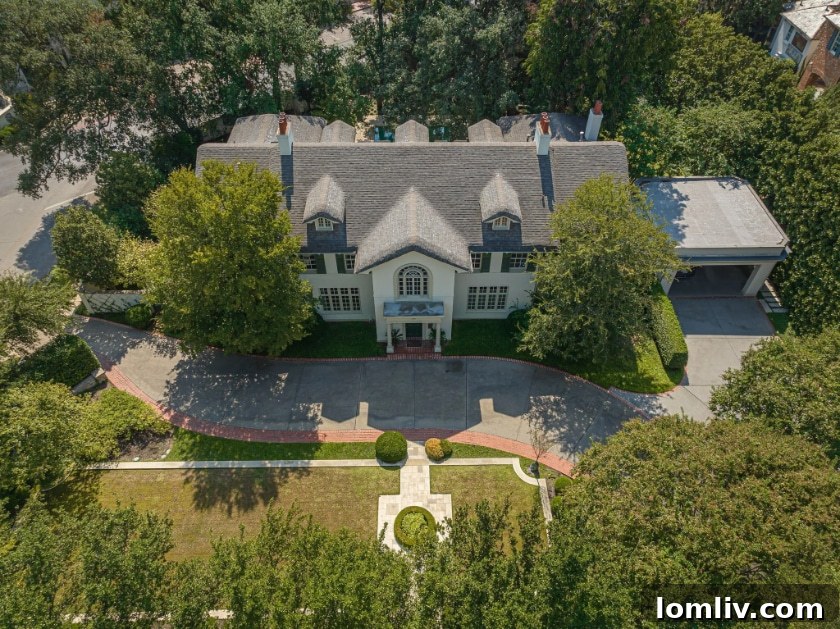
The Hart house demonstrates a symmetrical composition, with a narrow central bay flanked by a series of receding wall planes. The careful spatial manipulation illustrates the architect’s sophisticated sensibility to geometric discipline. The home’s divergent repertoire includes a Classical Revival entrance portico, second-floor sash windows and shutters that illustrate Colonial Revival influences, and an impressive Palladian window at the second-floor stair hall. English influences are evident both in the vertical proportions of the ground-level windows and in the ‘rolled’ roof eaves.
Great American Suburbs: The Homes of the Park Cities, Dallas, by Virginia Savage McAlester, Willis Cecil Winters, and Prudence Mackintosh.
The detailed description from Great American Suburbs: The Homes of the Park Cities, Dallas provides a profound insight into the architectural brilliance of 3801 Gillon Avenue. Its symmetrical composition, marked by a narrow central bay and strategically receding wall planes, showcases Thomson’s mastery of geometric discipline and spatial harmony. The house is a compelling blend of architectural styles, elegantly incorporating a Classical Revival entrance portico that exudes grandeur and formality. Meanwhile, the second-floor sash windows and their accompanying shutters subtly introduce Colonial Revival influences, adding a touch of understated elegance. A breathtaking Palladian window dominates the second-floor stair hall, not only flooding the space with natural light but also serving as a magnificent focal point. Furthermore, distinct English influences are discernible in the vertical proportions of the ground-level windows and the gracefully ‘rolled’ roof eaves, which contribute significantly to the home’s authentic English Country charm. This thoughtful synthesis of diverse architectural elements is a hallmark of Thomson’s genius, creating a residence that is both historically rich and visually captivating.
Bigger is Not Always Better: The Philosophy of Thoughtful Design
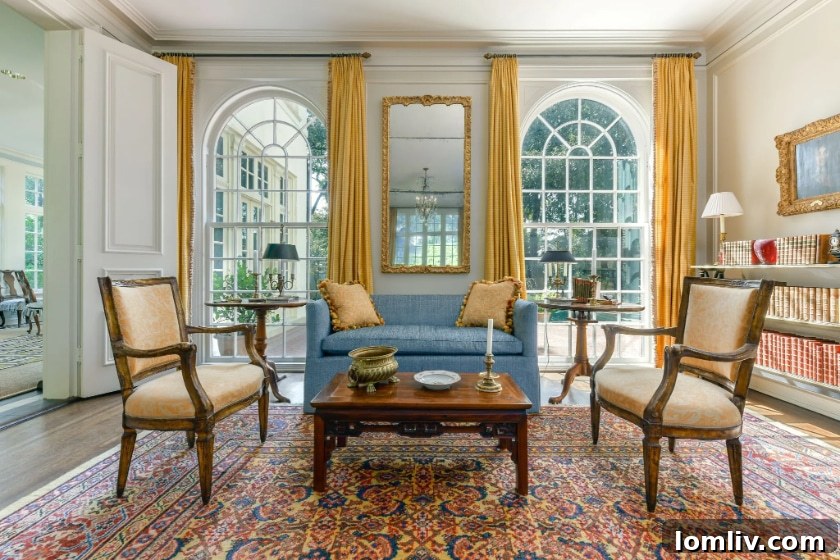
In an era often dominated by the pursuit of sheer square footage, these classic Highland Park homes, such as 3801 Gillon Avenue, offer a profound counter-narrative. They embody stability, tradition, permanence, and an understated elegance that, for too long, has been overshadowed by the proliferation of large, often characterless, spec homes. Many have, regrettably, lost sight of the intrinsic value and profound meaning of residing in an architecturally significant home, and why such distinction is perhaps more relevant today than ever before. The prevailing notion that “bigger is always better” often leads to cavernous, inefficient spaces that lack warmth and architectural integrity.
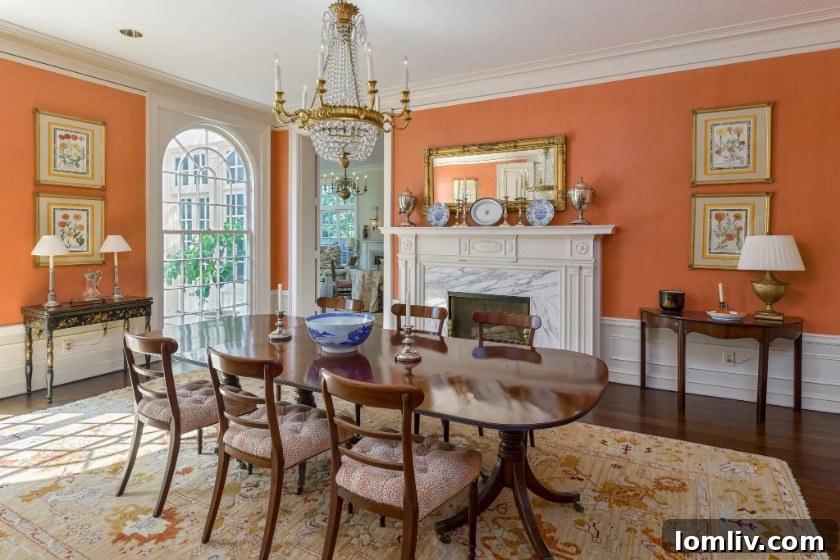
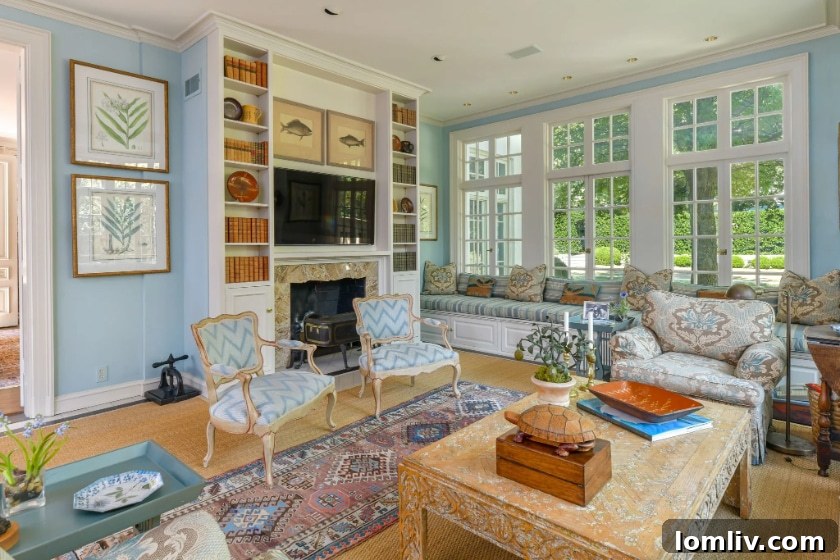
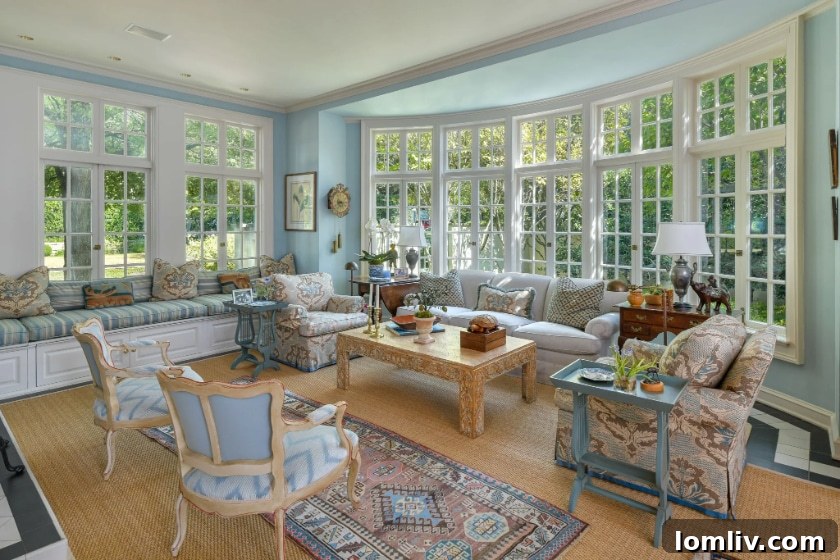
Fuqua passionately articulates this philosophy, particularly when discussing functional spaces like the kitchen. “If you analyze what it is like to cook in a kitchen, for instance, larger does not improve the experience,” he explains. His firm’s approach to the kitchen at 3801 Gillon Avenue exemplifies this belief. “We opened this kitchen to the breakfast room, and it’s enough.” This strategic renovation created a more connected, efficient, and inviting culinary space without unnecessary expansion. The result is a home that boasts “no wasted space. It’s all usable, and it feels very open and is very light with floor-to-ceiling windows on the north and south sides.” This thoughtful design, emphasizing natural light and functional flow, creates an environment that feels both expansive and intimate. Fuqua notes, “That simplicity and the lightness of the house are somewhat uncommon for that era. It feels pastoral,” highlighting how intelligent design can imbue a historic home with a surprisingly contemporary sense of openness and serenity, a testament to its timeless appeal.
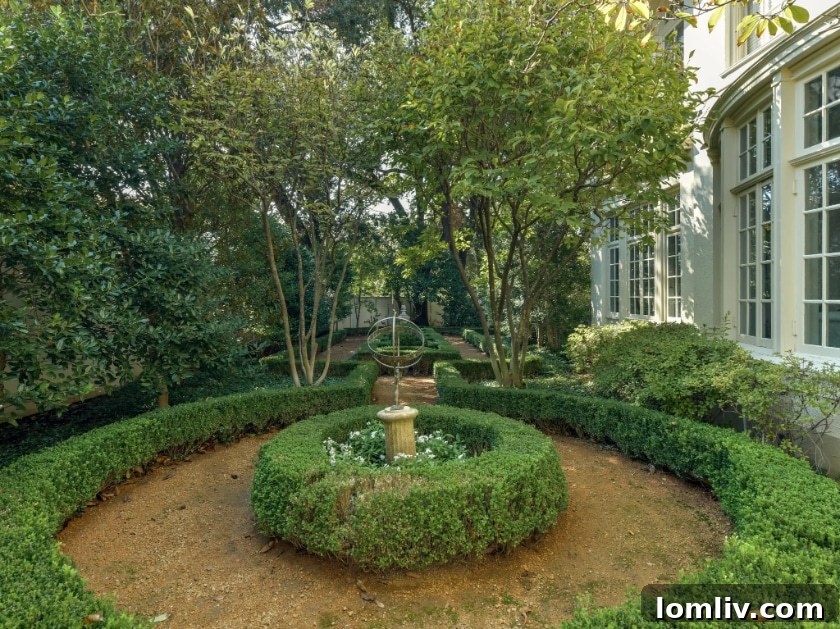
A significant contributor to that profound pastoral feeling is the meticulously designed landscape that gracefully envelopes the house. The property is cleverly concealed by a luxuriant boxwood hedge, featuring an inviting walk-through arch opening that offers tantalizing glimpses of the magnificent residence within. This thoughtful landscaping creates an immediate sense of intrigue and privacy. The renowned landscape architect Charles J. Stick, hailing from Charlottesville, Virginia, played a pivotal role in the conceptualization and execution of these exquisite gardens. Wilson Fuqua was also intimately involved in the conceptual design of the landscape, ensuring a seamless integration between the architectural grandeur of the home and the natural beauty of its surroundings. The collaboration resulted in a garden that not only complements the house but enhances its character and charm.
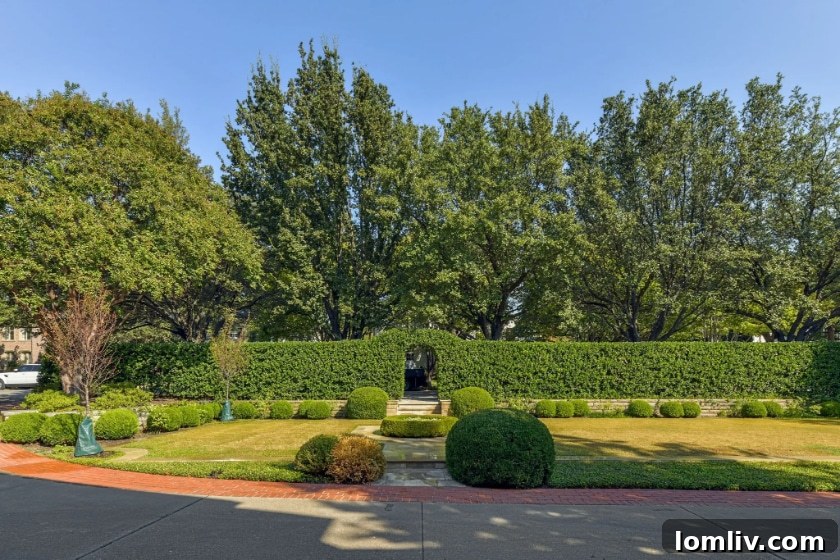
The transformation of the property’s exterior was a testament to innovative landscape architecture. Originally, the land gently sloped from the street down towards the driveway. Through ingenious design, the area was expertly leveled, creating a charming court nestled between the dense boxwood hedge and the driveway. This meticulous modification achieved a remarkable optical illusion: it made the hedge appear significantly taller, when in fact, the ground level had been lowered by almost four feet. This clever manipulation of topography not only enhances the home’s imposing presence but also cultivates the enchanting allure of a secret garden, a secluded oasis that feels both intimate and grand. The landscape design is an integral part of the home’s narrative, inviting discovery and promising tranquility.
“As light-filled and luxurious as modern houses, it has something that few can equal: an aura of history and permanence — the ultimate setting for the next generations of gatherings, milestones and quiet moments.”
Joan Eleazer, Briggs Freeman Sotheby’s International Realty
Joan Eleazer of Briggs Freeman Sotheby’s International Realty perfectly encapsulates the profound appeal of 3801 Gillon Avenue. Her words highlight a crucial distinction between this historic gem and newer luxury properties: while it offers the brightness and opulence expected of modern residences, it possesses an irreplaceable “aura of history and permanence.” This intangible quality transforms a house into a home, providing a deeply rooted setting for countless future memories—from joyous family gatherings to significant life milestones and cherished quiet moments. It’s an investment not just in real estate, but in a legacy.
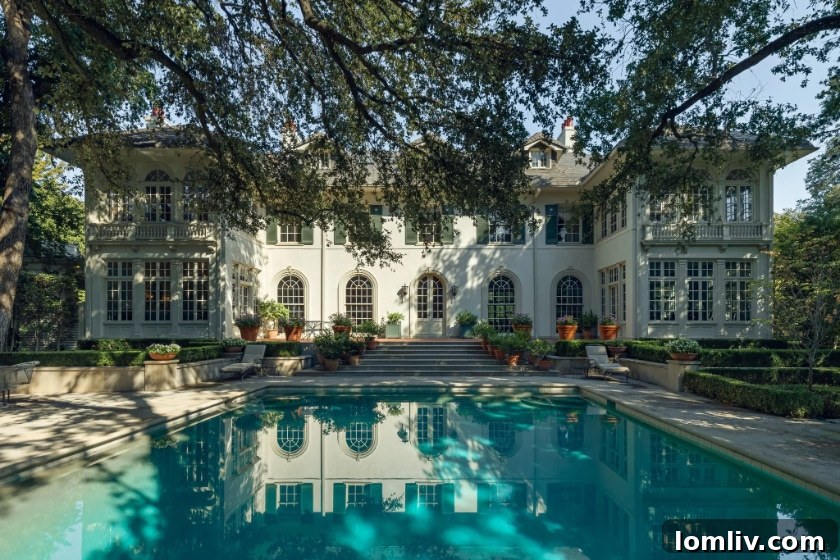
This is more than just a house; it is a quintessential representation of Highland Park’s enduring charm and architectural heritage. The property stands as a defining landmark within the neighborhood, embodying the elegance, history, and sophisticated design that homeowners aspire to. As this architecturally significant English Country house seeks its next owner, there is a collective hope that a prospective buyer will fully grasp and appreciate the immense importance of safeguarding the unique character and rich history of the neighborhood, ensuring its legacy remains intact for generations to come. Such homes are not merely transactions; they are transfers of stewardship.
Joan Eleazer has listed this truly exceptional and architecturally significant English Country house at 3801 Gillon Avenue for $11.995 million. This offering represents a rare opportunity to acquire a piece of Dallas history, a masterpiece of design, and a timeless residence within one of the country’s most desirable communities.