Navigating Energy Costs: A Deep Dive into Texas Electricity Rates and National Comparisons
As the heat intensifies and the mercury begins its inevitable climb, the thought of escalating electricity bills becomes a prominent concern for households and businesses alike. Understanding how much you pay for electricity per kilowatt-hour (kWh) is crucial, not just for budgeting, but also for making informed decisions about energy consumption. This comprehensive guide will explore the intricacies of electricity rates in Texas, compare them to national averages, and delve into the diverse factors that shape energy costs across the United States. We will examine how a state like Texas, with its unique energy market, positions itself within the broader national landscape of electricity pricing.
Texas Electricity Rates: A Closer Look at the Lone Star State
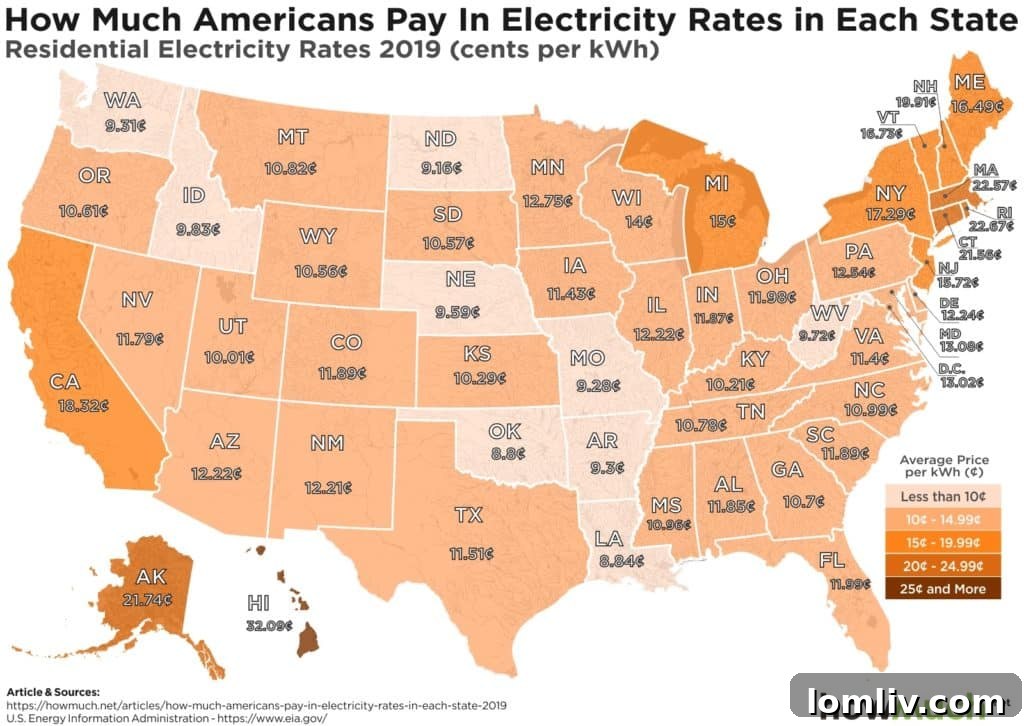
Texas, known for its expansive land and burgeoning population, also stands out with its distinctive electricity market. According to recent data from the U.S. Energy Information Administration (EIA), the average residential electricity rate in Texas hovers around 11.51 cents per kilowatt-hour (kWh). This figure, while a slight increase from the previous year’s average of 11.11 cents/kWh, remains notably below the national average of approximately 12.7 cents per kWh. This favorable pricing in Texas can be attributed to several key factors, including its deregulated energy market, abundant natural gas resources, and significant investments in renewable energy.
The Lone Star State operates largely under a deregulated electricity market managed by the Electric Reliability Council of Texas (ERCOT). This system allows consumers in most parts of the state to choose their retail electricity provider, fostering competition among companies that vie for customers through various plans and pricing structures. While this competition can lead to more competitive rates, it also requires consumers to be proactive in comparing plans and understanding their contracts to secure the best deal. The slight increase observed this year could be a result of various market dynamics, including rising fuel costs, increased demand due to population growth, or necessary infrastructure upgrades to maintain grid reliability.
The National Picture: How Texas Compares to the Rest of the U.S.
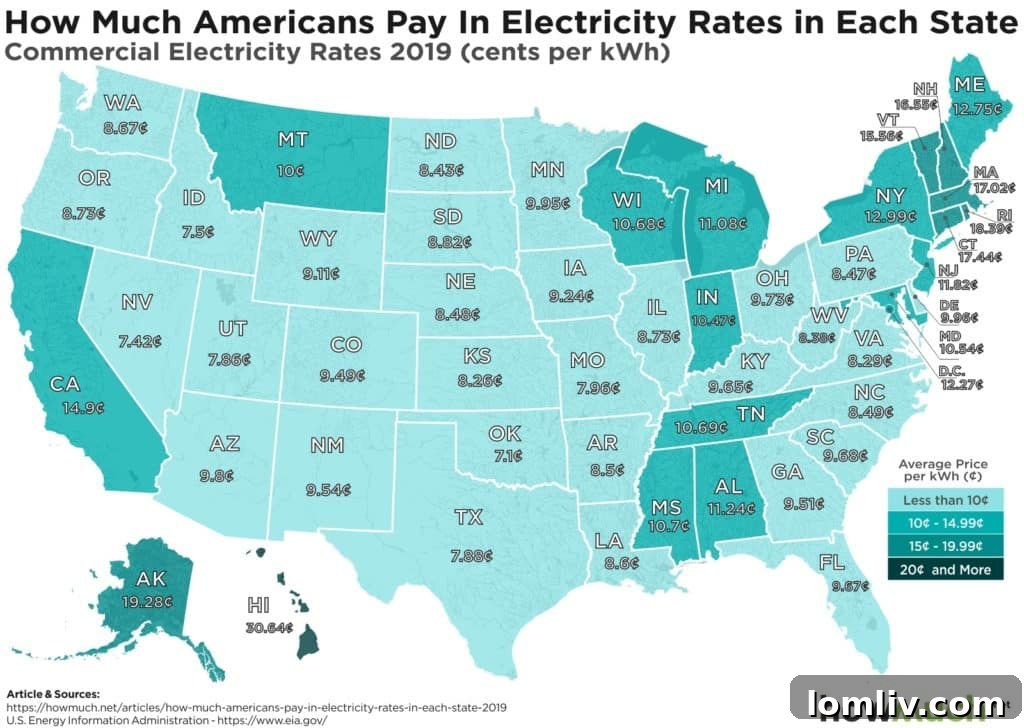
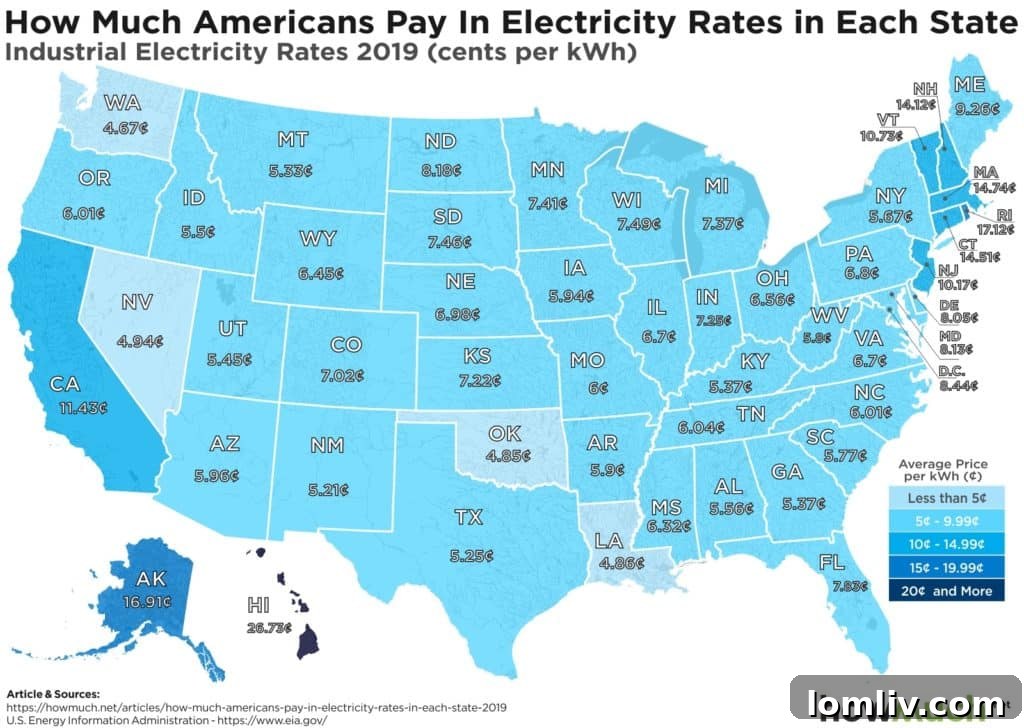
To truly appreciate Texas’s position, it’s essential to understand the national context of electricity pricing. The EIA serves as the primary source for comprehensive energy data, offering insights into average rates across all states. Data visualization websites, such as HowMuch.net, have masterfully transformed this complex information into easily digestible heat maps, illustrating the average residential, commercial, and industrial electricity rates across the country. These visual tools highlight significant regional disparities, driven by a multitude of economic, geographic, and regulatory factors.
Understanding these national trends helps consumers and policymakers grasp the broader influences on electricity costs. While the national average provides a benchmark, the specific rates in any given state are a product of its unique energy infrastructure, fuel mix, population density, and regulatory environment. Observing these variations reveals a fascinating tapestry of energy economics across the nation.
To provide a clearer comparison of rates, we’ve included a data visualization:
Mapping High and Low: Understanding Regional Price Variations
Electricity rates are far from uniform across the United States, exhibiting striking geographical disparities. Certain regions consistently experience higher costs, while others benefit from significantly lower rates. These differences are not arbitrary but are rooted in fundamental economic and logistical realities.
The Most Expensive Regions: Island States and the Northeast
Unsurprisingly, Hawaii and Alaska consistently rank as having the most expensive electricity rates in the nation. This is primarily due to their geographical isolation and heavy reliance on imported fossil fuels for generation. The logistical challenges and high transportation costs associated with moving fuel to these remote locations dramatically inflate prices. In Hawaii, for example, the cost of bringing in petroleum to fuel power plants is a major driver of its exorbitant rates.
Beyond these island states, the Northeast also stands out as a high-cost region, with California often joining this group. Factors contributing to higher prices in the Northeast include high population density, which strains existing infrastructure, and aging power grids that require costly upgrades. Furthermore, many Northeastern states have adopted stringent environmental regulations and ambitious renewable energy targets, which, while beneficial for the environment, can initially lead to higher operational costs or investments in more expensive energy sources. California faces similar challenges with high demand, significant investment in renewables, and complex regulatory frameworks.
Affordable Energy: The Advantages of the South and Central U.S.
In stark contrast, more rural states such as Oklahoma and Louisiana boast some of the lowest electricity rates in the country. As highlighted by HowMuch.net, a significant reason for this affordability is their proximity to abundant energy sources, particularly natural gas. These states sit atop vast reserves of natural gas, a relatively inexpensive and domestically sourced fuel for electricity generation. This reduces transportation costs and provides a stable, low-cost fuel supply for power plants.
Moreover, the availability of ample, affordable land in these regions facilitates the construction and expansion of energy plants and transmission infrastructure. This can lead to lower capital costs for utilities, which are then reflected in consumer rates. Less dense populations and potentially different regulatory environments can also contribute to keeping costs down. States like Arkansas and Idaho, benefiting from hydroelectric power, also often feature among those with lower electricity rates, showcasing diverse factors contributing to affordability.
Dissecting Electricity Bills: Residential, Commercial, and Industrial Rates
When examining electricity pricing, it’s crucial to recognize that rates often vary significantly between different consumer categories: residential, commercial, and industrial. This differentiation is not arbitrary but is based on fundamental differences in consumption patterns, load profiles, and the economics of supplying power to each segment.
In general, consumers (residential customers) typically pay a higher rate for electricity per kWh than businesses (commercial and industrial customers). This disparity arises for several reasons. Residential customers, while numerous, consume less electricity individually and exhibit less predictable demand patterns, particularly during peak hours (e.g., evenings when everyone returns home and turns on appliances). Servicing individual homes also requires extensive “last-mile” distribution infrastructure, adding to the cost. Commercial customers, such as retail stores and offices, usually have higher and more consistent consumption, while industrial customers, like manufacturing plants, consume vast amounts of electricity around the clock, often with very stable and predictable loads.
The larger volume and more stable demand from commercial and industrial clients allow utilities to achieve economies of scale, often leading to lower per-unit costs. These larger customers may also have the ability to negotiate bulk rates or receive power directly from high-voltage transmission lines, bypassing some distribution costs.
Interestingly, there are exceptions to this general rule. As noted in 2018 data, Tennessee and Louisiana were the only two states where residential consumers actually paid a better (lower) rate than their commercial counterparts. This anomaly could be attributed to specific state energy policies, subsidies designed to support households, or a unique mix of industrial activity and energy supply. Conversely, Pennsylvania showed the greatest disparity between the two rates, suggesting a highly robust industrial sector or particular regulatory structures that heavily favor commercial and industrial consumers with significantly lower rates.
Beyond the Meter: Core Factors Driving Electricity Prices
Electricity rates are a complex amalgamation of various interconnected factors, extending far beyond simple supply and demand. Understanding these underlying drivers helps explain why prices fluctuate and differ across regions.
- Fuel Costs: The cost of the fuels used to generate electricity (natural gas, coal, uranium, hydropower, solar, wind) is a primary driver. Fluctuations in global commodity markets, geopolitical events, and domestic supply can significantly impact generation costs. For instance, a surge in natural gas prices often translates to higher electricity bills in regions heavily reliant on gas-fired power plants.
- Infrastructure Investment: This includes the massive costs associated with building, maintaining, and upgrading power plants, transmission lines (high-voltage lines that move power over long distances), and distribution grids (the local lines that bring power to your home or business). Investment in smart grid technologies and resilience against extreme weather events also adds to these costs.
- Regulatory & Policy Environment: State and federal regulations play a crucial role. This encompasses everything from environmental mandates (e.g., carbon emissions targets, renewable portfolio standards) that may necessitate investments in cleaner but potentially more expensive technologies, to utility commission decisions on rate increases, taxes, and market structures (e.g., regulated vs. deregulated).
- Supply and Demand Dynamics: Basic economic principles apply here. High demand, particularly during peak hours or extreme weather events (like summer heatwaves or winter cold snaps), can strain the grid and drive up prices if supply cannot meet it efficiently. Conversely, excess generation capacity can lead to lower prices.
- Transmission & Distribution (T&D) Charges: These are the costs associated with moving electricity from generation sources to end-users. T&D charges cover the operation and maintenance of the vast network of power lines and substations, representing a significant portion of a typical electricity bill.
- Weather Events: Extreme weather can impact both supply (e.g., damage to infrastructure, reduced hydropower output during droughts) and demand (e.g., increased AC usage during heatwaves, heating during cold snaps), leading to price volatility.
Smart Energy Choices: Strategies for Managing Your Electricity Bill
Armed with a better understanding of how electricity rates are determined, consumers can take proactive steps to manage their energy consumption and reduce their monthly bills. Small changes and informed decisions can lead to significant savings over time.
- Embrace Energy Efficiency: This is arguably the most impactful strategy. Simple actions include setting your thermostat a few degrees higher in summer and lower in winter, ensuring your home is properly insulated, sealing drafts around windows and doors, and upgrading to energy-efficient appliances (look for the ENERGY STAR label). Switching to LED lighting throughout your home can also dramatically reduce electricity usage for illumination.
- Understand Your Electricity Plan: Especially in deregulated markets like Texas, take the time to compare different electricity plans. Fixed-rate plans offer price stability, while variable-rate plans can fluctuate with the market. Time-of-use (TOU) plans charge different rates depending on the time of day, encouraging users to shift high-consumption activities to off-peak hours when electricity is cheaper.
- Monitor Your Usage: Many utility providers offer online tools or smart meter apps that allow you to track your electricity consumption in near real-time. Regularly reviewing your usage patterns can help you identify energy hogs or peak consumption periods, allowing you to adjust your habits accordingly.
- Consider Renewable Energy Options: For those looking for long-term savings and environmental benefits, investing in rooftop solar panels can significantly reduce or even eliminate your electricity bill. If rooftop solar isn’t feasible, explore community solar programs or green energy plans offered by your electricity provider, which support renewable energy generation.
- Regular Maintenance: Ensure your HVAC system is regularly maintained, and air filters are cleaned or replaced. A well-maintained system operates more efficiently, consuming less energy.
The Future of Electricity Costs: Stay Informed and Empowered
Electricity rates are not static; they are a constantly evolving reflection of global energy markets, technological advancements, regulatory shifts, and environmental considerations. As we move forward, factors such as the transition to renewable energy, the modernization of aging infrastructure, and the increasing frequency of extreme weather events will continue to shape the cost and reliability of our power supply.
Understanding the dynamics of electricity pricing, both locally in Texas and across the nation, empowers consumers to make smarter energy choices. By staying informed about market trends, adopting energy-efficient practices, and actively engaging with their energy providers, individuals and businesses can better manage their electricity bills and contribute to a more sustainable energy future. The journey to lower energy costs begins with knowledge and proactive engagement.
For further exploration of this year’s numbers and detailed state-by-state comparisons, you can click here. To review last year’s data and see how trends have shifted, go here. For more practical advice on cooling your home more efficiently, you can check out our story from last year.